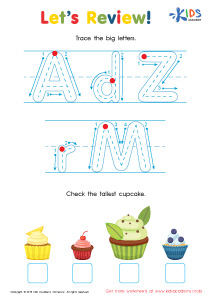
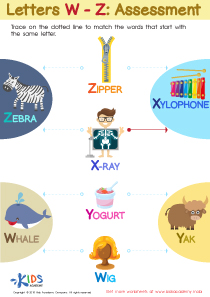
Fine motor skills development Preschool ABC Letters Worksheets
3 filtered results
-
From - To
Unlock your child's potential with our engaging Fine Motor Skills Development Preschool ABC Letters Worksheets! These thoughtfully designed worksheets provide a fun and interactive way to enhance your preschooler's fine motor skills while they explore the alphabet. Each activity encourages creativity, precision, and hand-eye coordination, essential for writing and daily tasks. With various exercises, including tracing, cutting, and coloring, children will build confidence as they master letter recognition and formation. Perfect for home or classroom use, these worksheets make learning the ABCs an enjoyable experience. Start your child's educational journey today while nurturing their fine motor development!
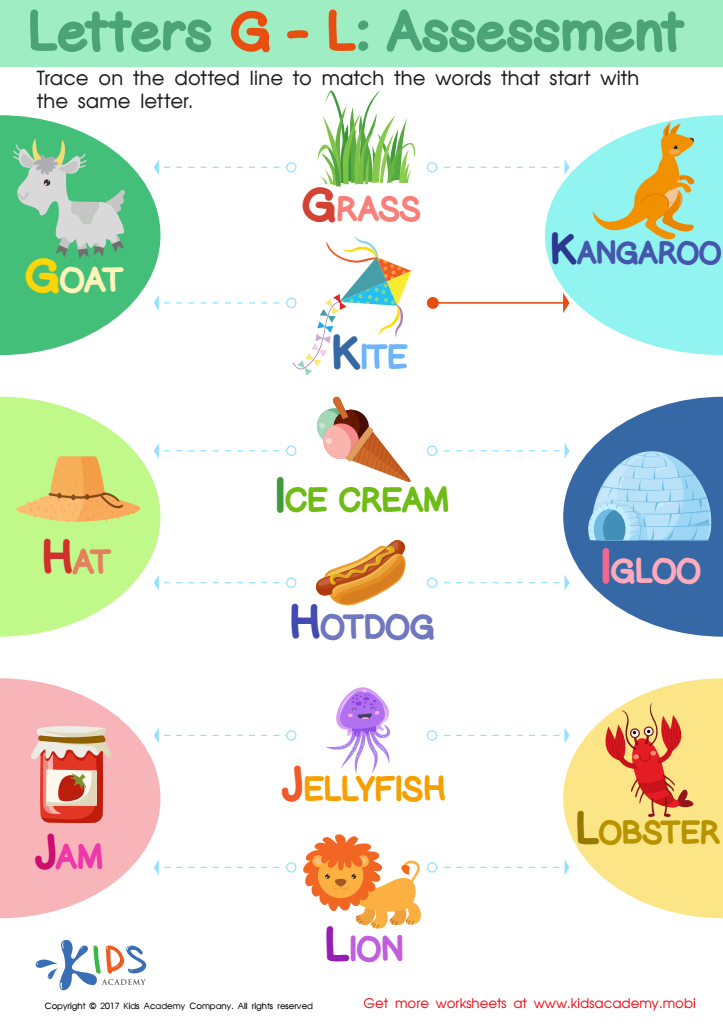
Letters G-L Worksheet
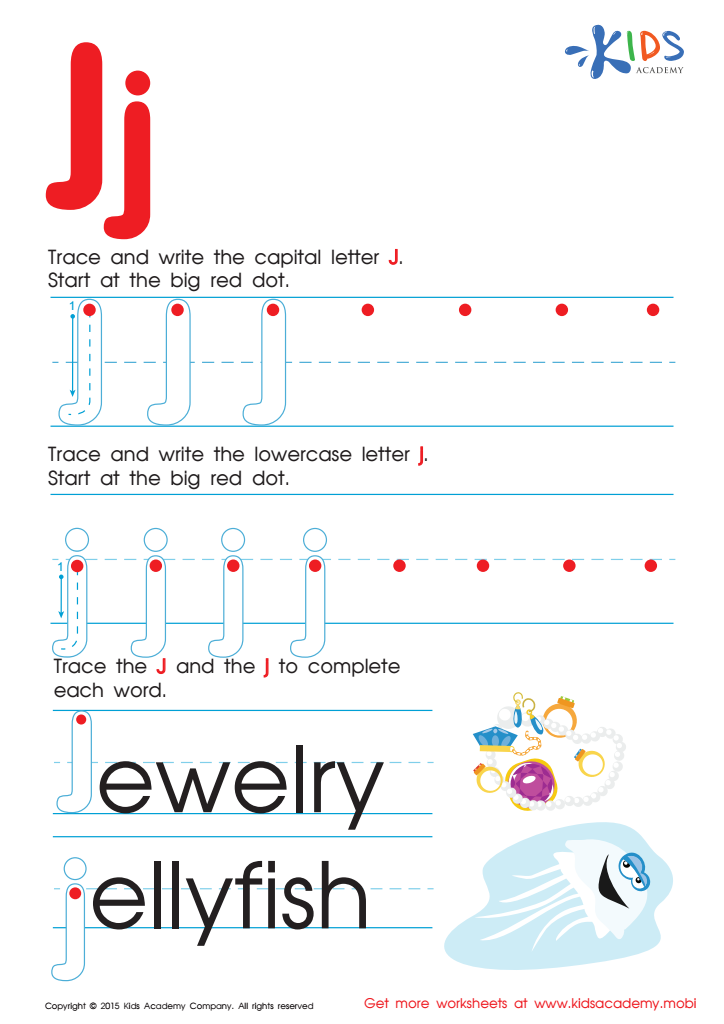
Letter J Tracing Page
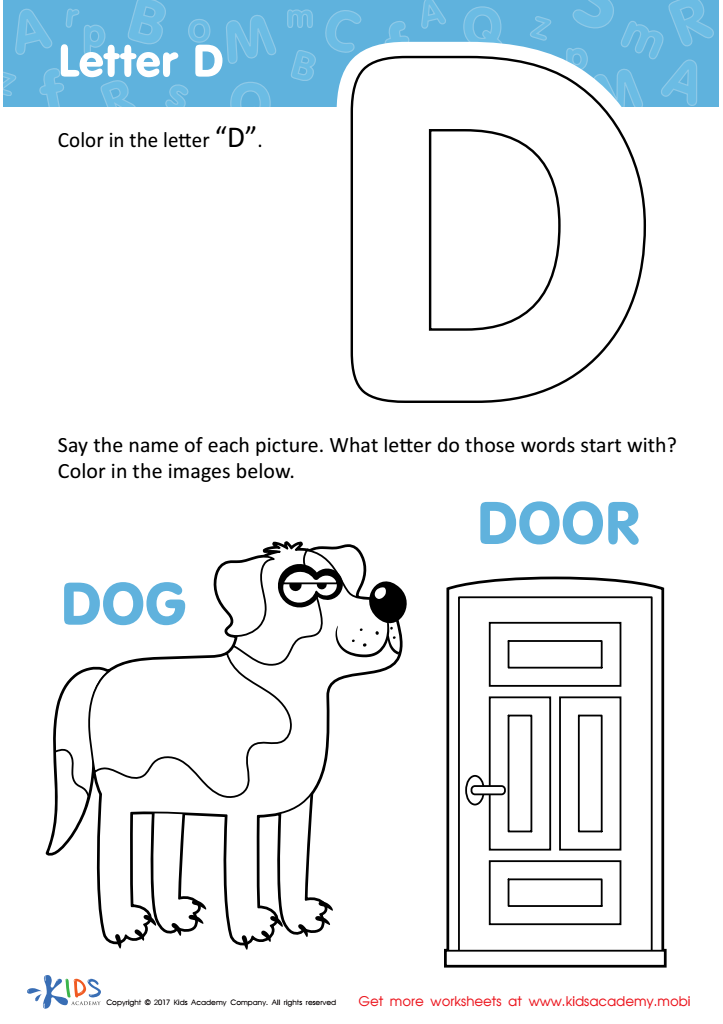
Letter D Coloring Sheet
 Assign to My Students






Fine motor skills development is crucial for preschoolers, as it lays the foundation for a range of essential abilities. Mastery of fine motor skills enables young children to manipulate objects effectively, improving their ability to write, cut, draw, and engage in various hands-on activities. The process of developing these skills through activities like tracing, coloring, or using play dough can significantly enhance a child’s dexterity and hand-eye coordination, which are vital for academic success.
For teachers and parents, fostering fine motor skills at this stage, especially through engaging with activities like ABC letters, aids not only in literacy development but also builds confidence and independence in children. As kids practice writing and recognizing letters, they also bridge the gap between physical coordination and cognitive understanding, linking the form of letters to their sounds and meanings.
Moreover, a solid grasp of fine motor skills can contribute to better social interactions—during group activities, for example, children need to share materials and work collaboratively. Finally, addressing fine motor skill development early on helps identify potential challenges, allowing for timely intervention and support. Prioritizing this area of growth ensures a well-rounded foundation for lifelong learning and practical daily skills.