Color Identification Preschool Alphabet Worksheets
4 filtered results
-
From - To
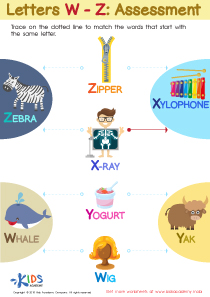
Discover our engaging "Color Identification Preschool Alphabet Worksheets," designed to enhance your child's learning experience! These interactive worksheets combine color recognition with alphabet practice, making learning fun and effective. Each worksheet encourages preschoolers to identify colors as they associate them with corresponding letters, reinforcing both their color and literacy skills. Perfect for at-home learning or classroom activities, these worksheets promote creativity and critical thinking. With vibrant illustrations and simple instructions, children will enjoy exploring the world of colors and letters. Equip your little ones with essential skills through playful learning that prepares them for future academic success! Download and print today!
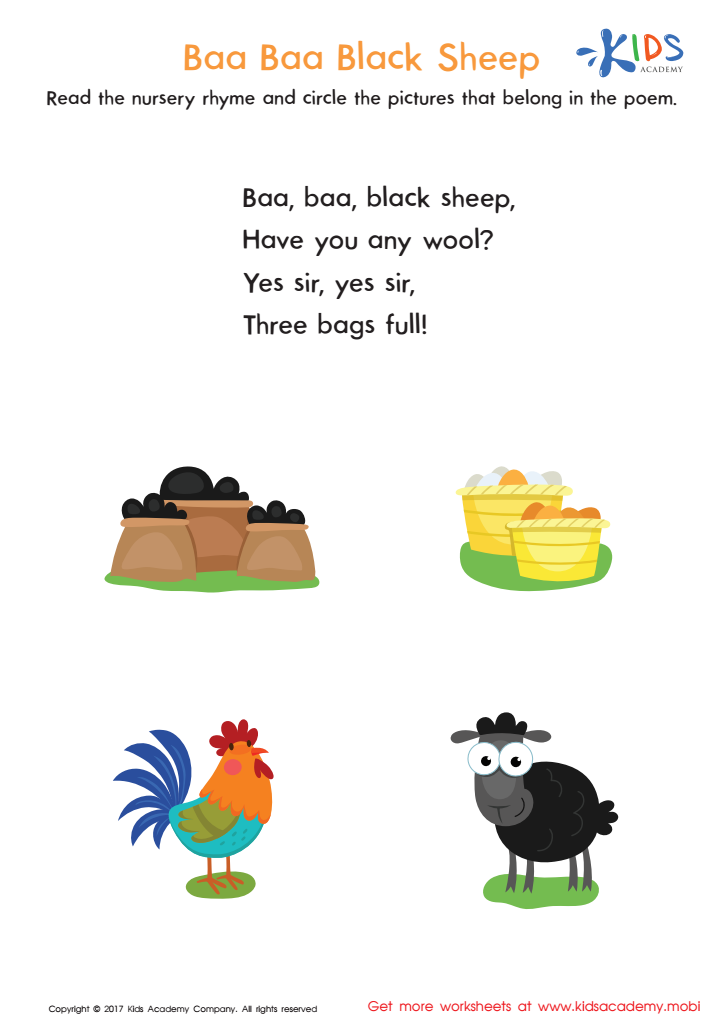
Baa Baa Black Sheep Printable
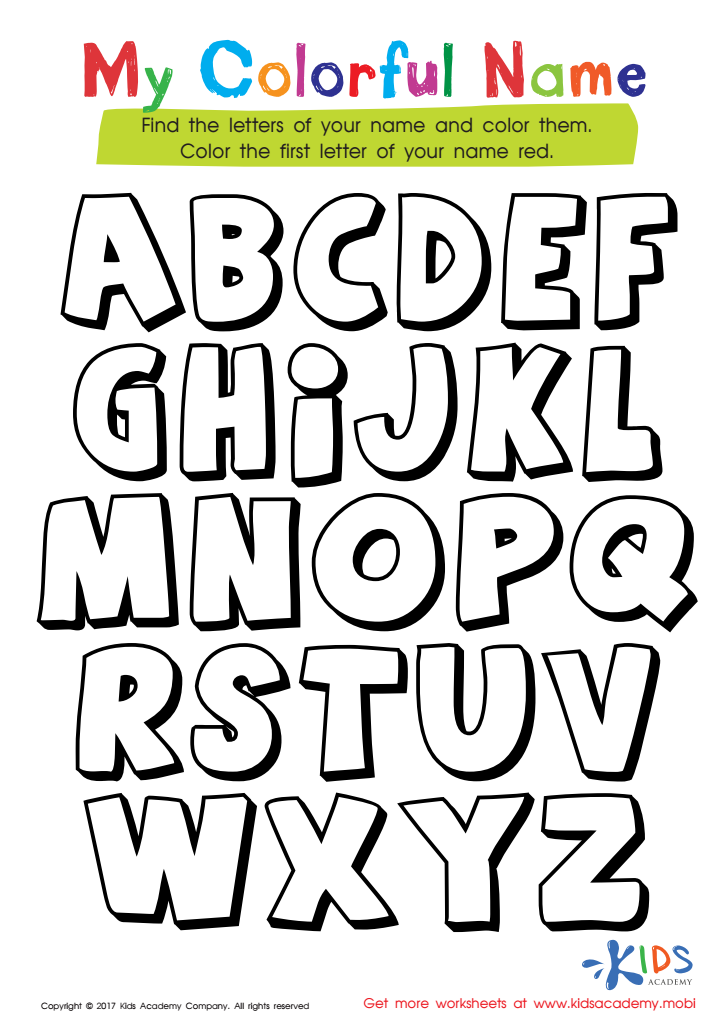
My Colorful Name Worksheet
 Assign to My Students
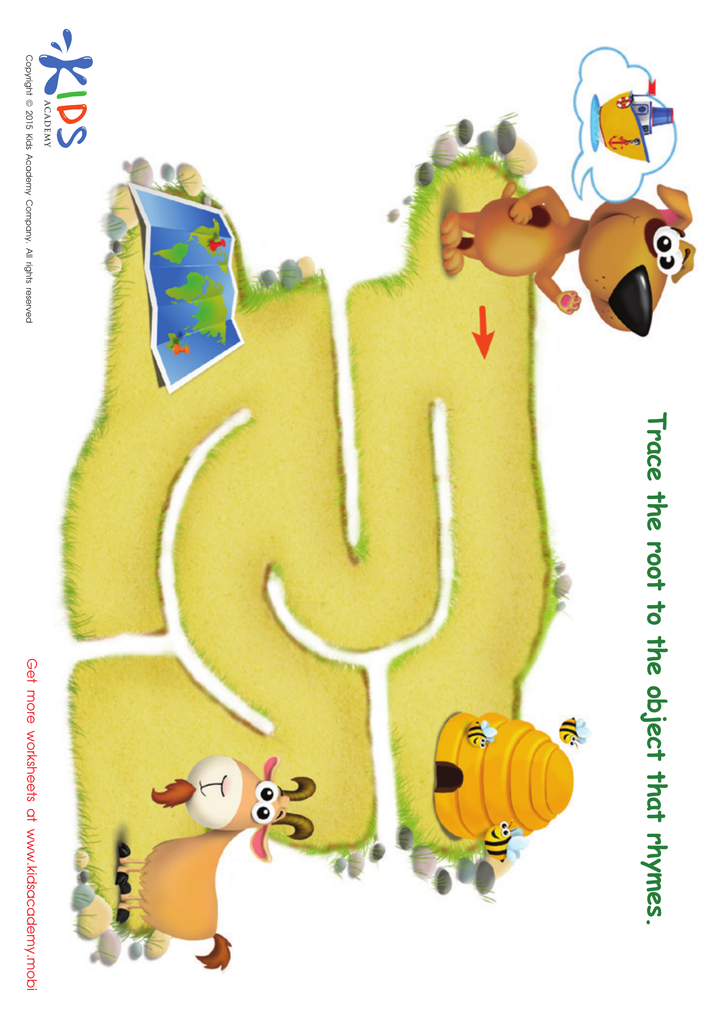
Boat Rhyming Words Worksheet
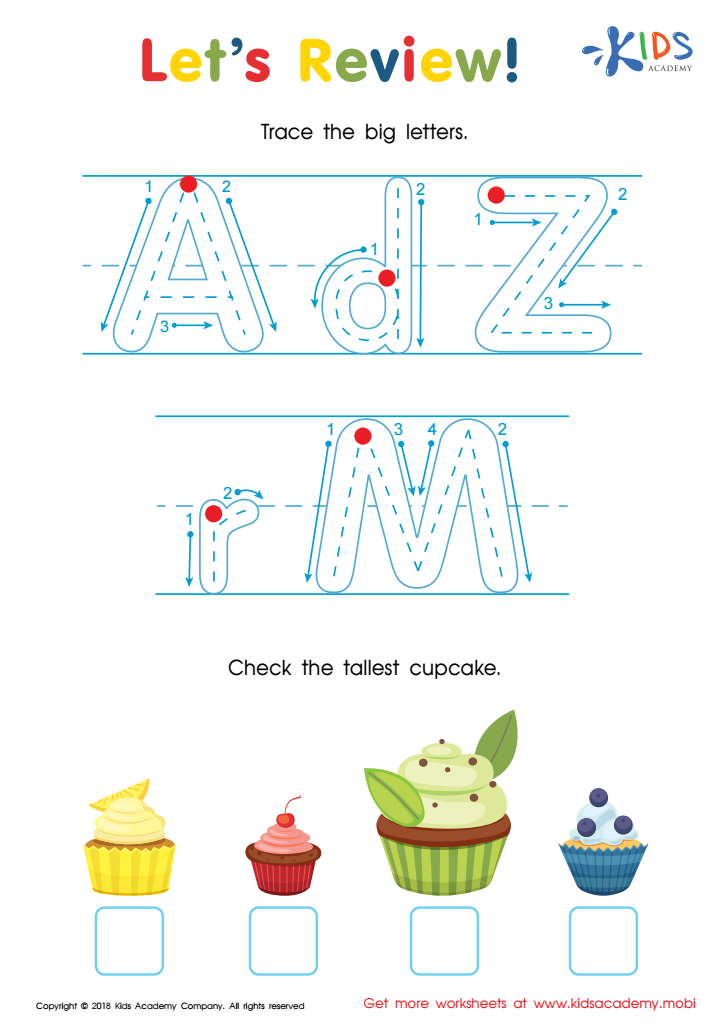
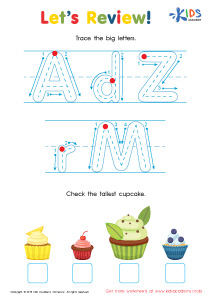
Let's Review! Big Letters Worksheet



.jpg)




Color identification is a crucial aspect of early childhood education, and it holds particular significance for preschool children's language development and cognitive skills. At this stage, children are naturally curious and highly impressionable. Engaging them with color identification linked to the alphabet fosters their observational skills and reinforces their ability to differentiate between various hues. This foundational skill prepares them for more complex learning tasks in reading and mathematics.
Parents and teachers should care about integrating color identification with the alphabet as it nurtures creativity and enhances memory. It allows children to build associations between letters and colors, making learning more enjoyable and dynamic. For instance, learning the letter 'A' may be associated with the color red (e.g., an apple), enhancing recall and engagement.
Furthermore, mastering color identification contributes to children’s expressive language skills. As children articulate colors and letters, they expand their vocabulary and confidence in communication, critical for social interactions. Ultimately, encouraging early familiarity with colors and letters sets the groundwork for literacy and helps develop a lifelong love for learning. When parents and teachers emphasize this engaging approach, they help nurture well-rounded, curious learners prepared for future academic challenges.