Letter tracing skills Preschool Letter Recognition Worksheets
3 filtered results
-
From - To
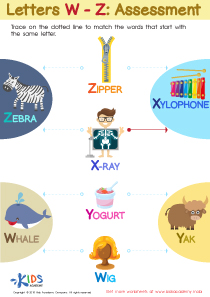
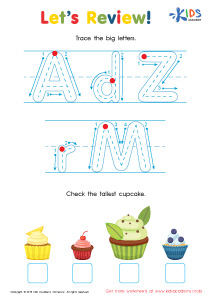
Enhance your child's literacy skills with our Preschool Letter Recognition Worksheets focusing on letter tracing. These engaging worksheets are designed to help young learners practice and perfect their letter formation, reinforcing their understanding of the alphabet. Each worksheet encourages fine motor skill development while making learning fun and interactive. By tracing letters, your preschooler will gain confidence in recognizing and writing both uppercase and lowercase letters. Perfect for at-home learning or classroom use, our resources create a strong foundational skill set that fosters a love for reading and writing from an early age. Download and watch your child's skills flourish!
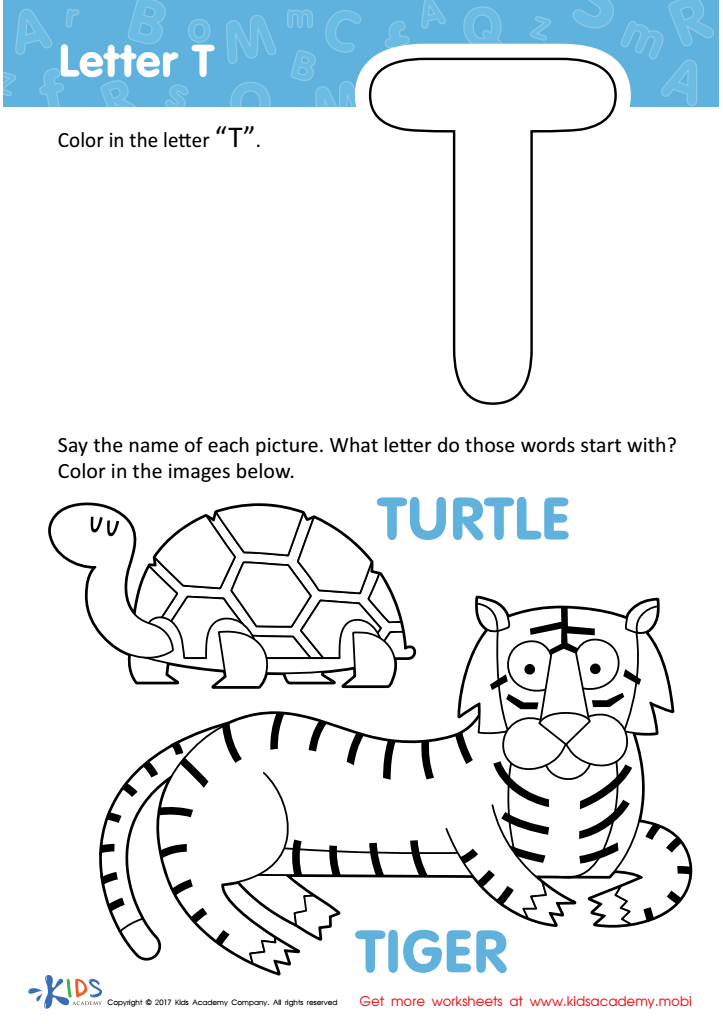
Letter T Coloring Sheet
 Assign to My Students

Letter C Tracing Page
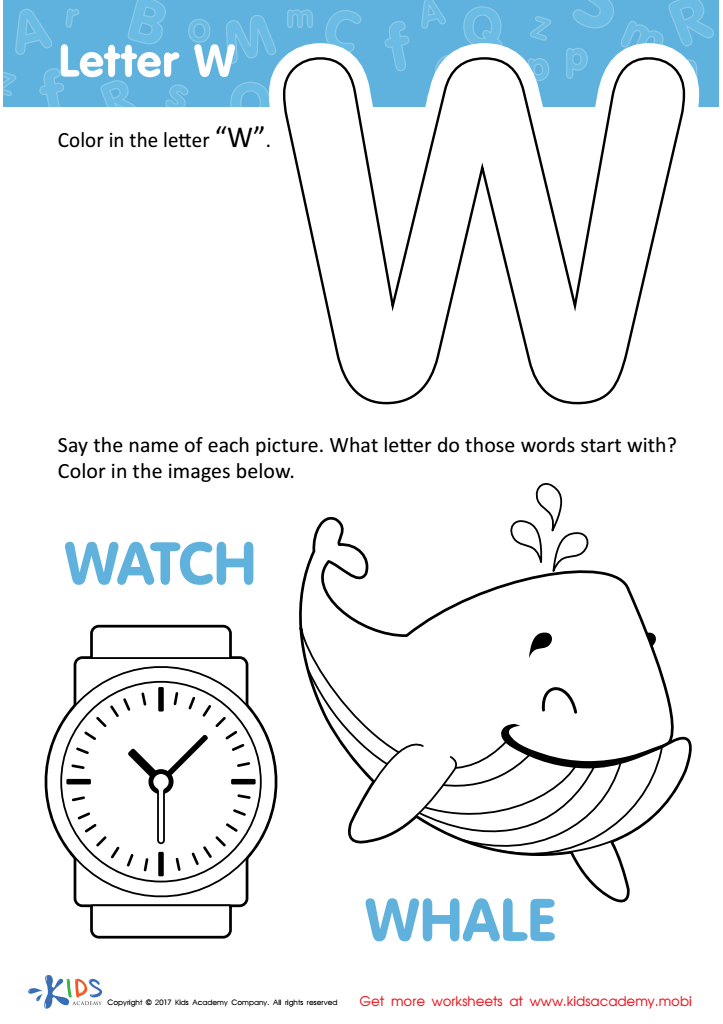
Letter W Coloring Sheet
Assign to My Students





Letter tracing skills and preschool letter recognition are foundational components of early literacy development, making them crucial for both parents and teachers to prioritize. These skills serve as a gateway to a child's reading and writing abilities, significantly affecting their overall academic success. Letter tracing helps children develop fine motor skills, hand-eye coordination, and muscle memory essential for writing. As children trace letters, they not only familiarize themselves with the shapes and sounds associated with each letter, but they also enhance their sensory experiences, engaging touch along with visual and auditory elements.
Furthermore, effective letter recognition supports phonemic awareness— critical for decoding words later on. When children can recognize and trace letters, they build a solid base for understanding the alphabetic principle, which asserts that letters represent sounds. This notion lays the groundwork for reading sentences and comprehension as they advance.
Parental and teacher involvement in strengthening these skills creates a supportive learning environment, fostering a love for reading and writing from an early age. Encouragement and practice not only boost children's confidence but also empower them to express their thoughts and ideas, paving the way for lifelong learning and success in school and beyond.