Letter-sound correlation Preschool Letter Sounds Worksheets
4 filtered results
-
From - To
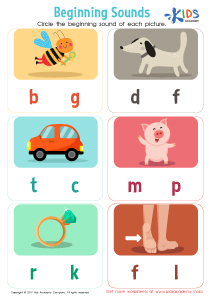
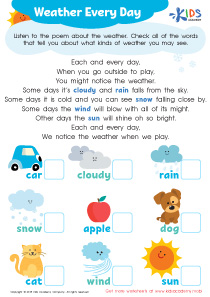
Enhance your preschooler's reading skills with our engaging Letter-Sound Correlation Worksheets! Designed specifically for young learners, these printable worksheets help children connect letters to their corresponding sounds, laying a strong foundation for literacy. Each worksheet features fun and interactive activities that encourage kids to practice recognizing and producing letter sounds, promoting phonemic awareness. With vibrant illustrations and easy-to-follow exercises, learning becomes enjoyable and effective. Perfect for at-home practice or classroom use, our worksheets are a valuable resource for early childhood educators and parents. Start your child's reading journey today with our comprehensive, playful approach to letter-sound correlation!
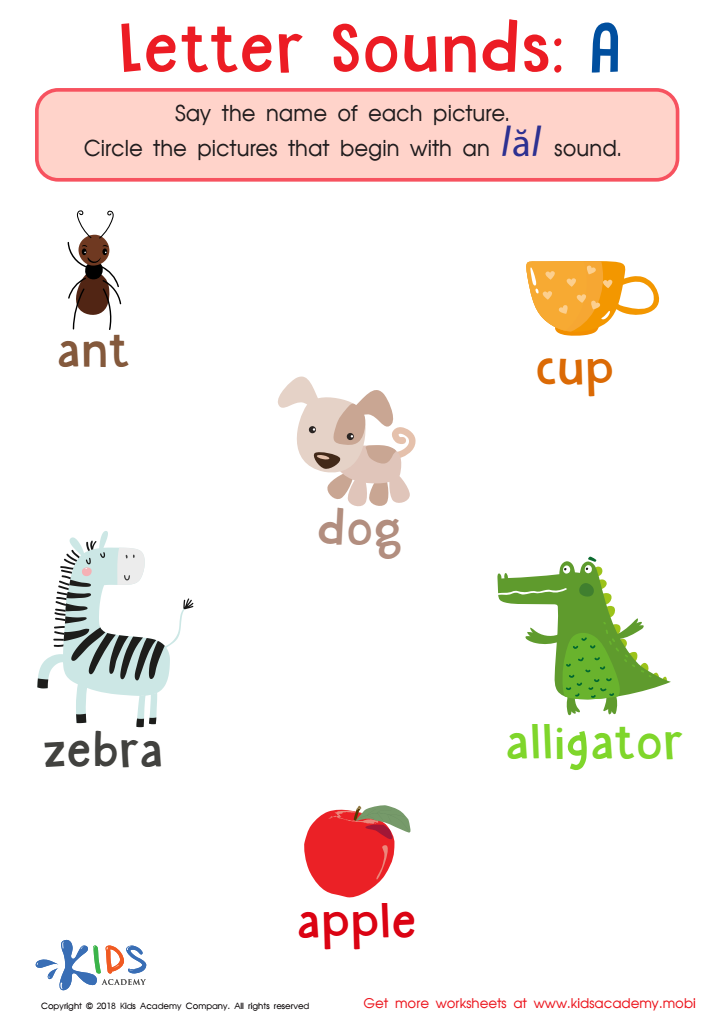
Letter A Sounds Worksheet
 Assign to My Students
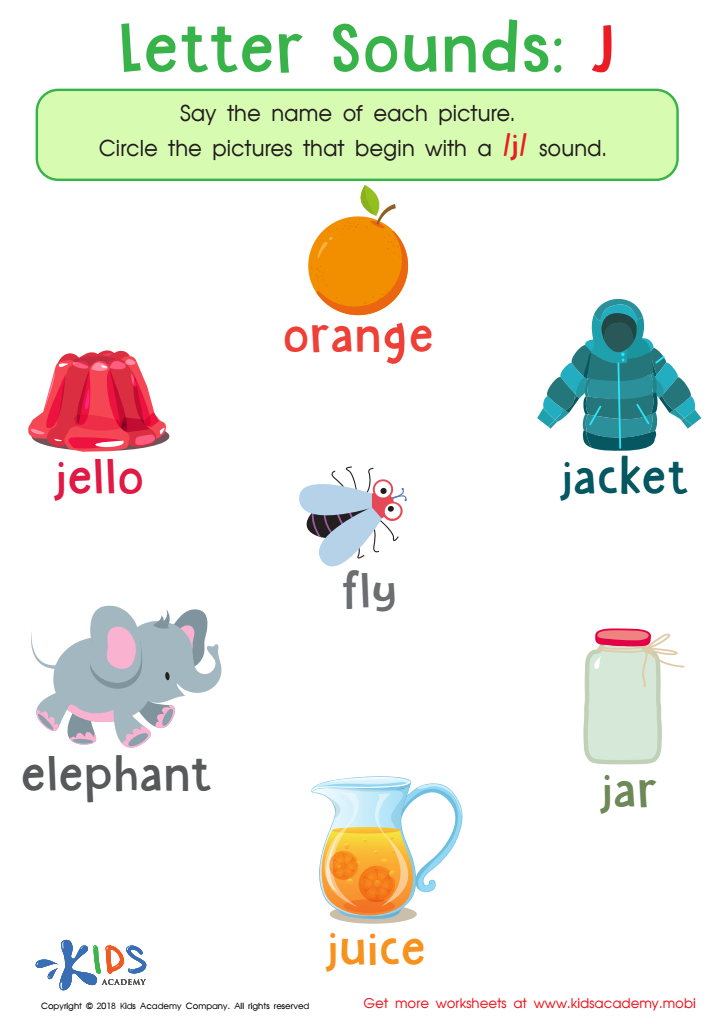
Letter Sounds: J Printable Worksheet
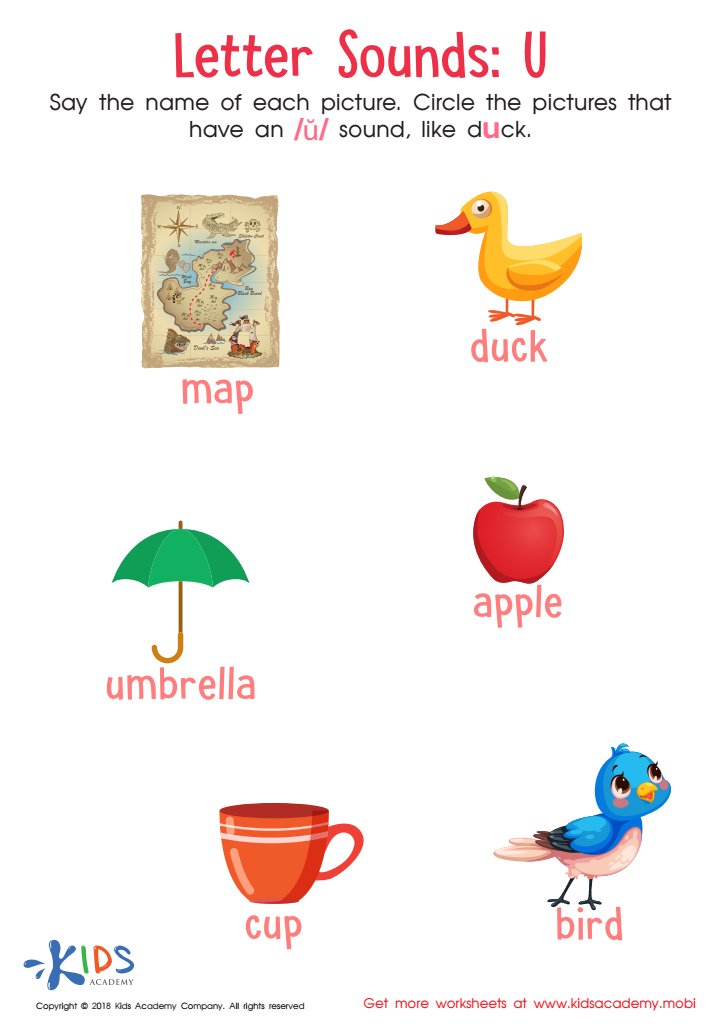
Letter U Sounds Worksheet
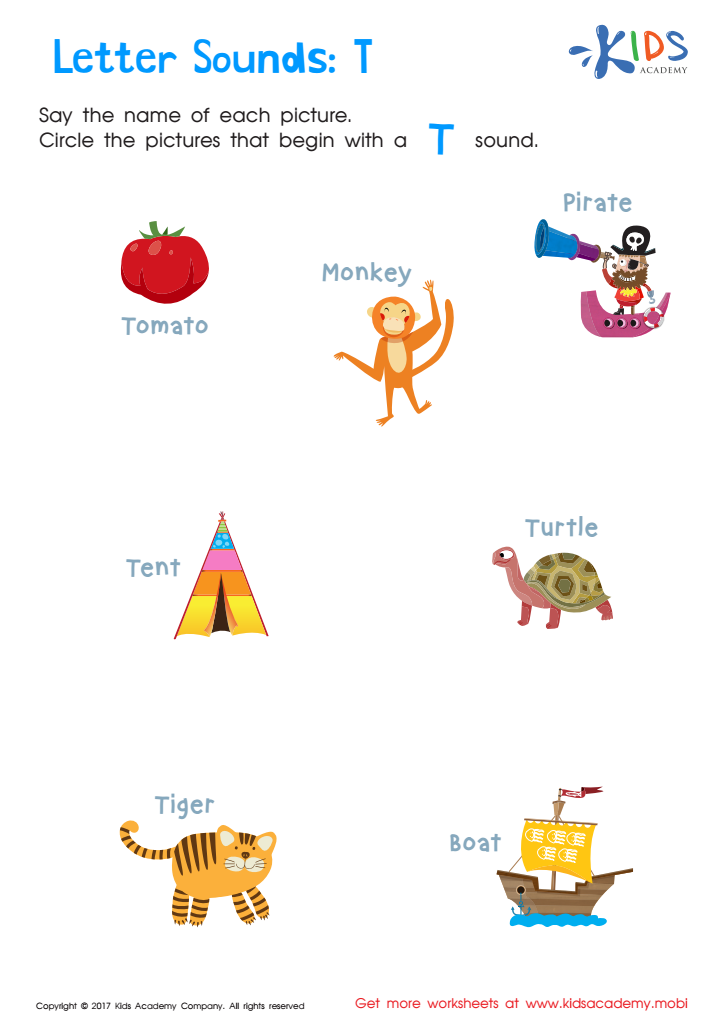
Letter T Sounds Worksheet





Parents and teachers should prioritize letter-sound correlation in preschool education because it lays the foundation for early literacy skills. Understanding the relationship between letters and their corresponding sounds is crucial for children as they begin to decode words. This skill enhances their ability to read and write, making it essential for academic success.
When children grasp letter-sound connections, they can phonetically decode words, which fosters independence in reading. This ability prevents reliance on memorization and rote learning, allowing young learners to tackle unfamiliar words more confidently. Additionally, early exposure to letter sounds promotes phonemic awareness, an essential skill that supports future spelling and writing abilities.
Furthermore, engaging with letter sounds in fun and interactive ways, such as through songs, games, and stories, can enhance vocabulary development and comprehension. This approach not only nurtures a love for reading but also encourages parents and teachers to collaborate in a child's literacy journey.
Ultimately, a strong grounding in letter-sound correlation is the first step towards becoming a proficient reader, which opens up a world of knowledge and understanding, setting the stage for lifelong learning. By focusing on this critical aspect of early education, adults can play a vital role in their children's literacy development.