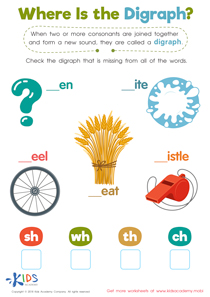
Sound recognition Beginning Consonants Worksheets for Ages 3-4
3 filtered results
-
From - To
Dive into our engaging "Sound Recognition Beginning Consonants Worksheets" designed specifically for children ages 3-4! These fun, interactive worksheets help young learners identify and practice the sounds of consonants at the beginning of words. With vibrant illustrations and simple activities, kids will become familiar with letter sounds, enhancing their phonemic awareness. Each worksheet creates a playful learning environment, making it easy for tots to connect sounds with letters while developing essential pre-reading skills. Perfect for parents and educators, these resources will inspire confidence in early literacy. Download now to equip your little ones with a strong foundation in sound recognition!
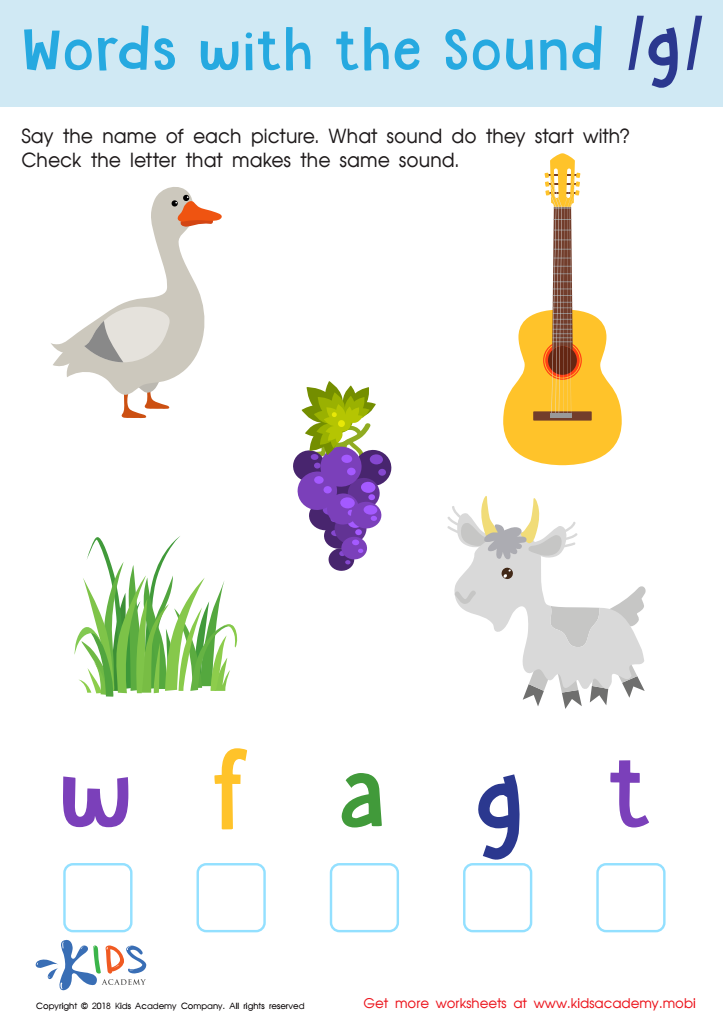
Words with sound g Reading Worksheet
 Assign to My Students
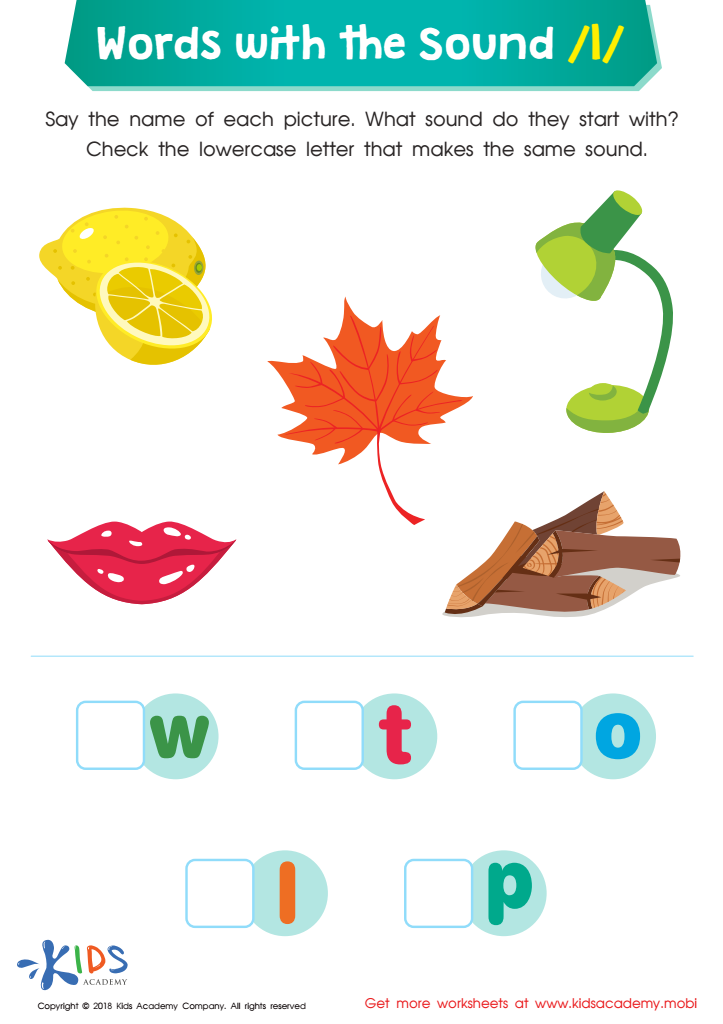
Words with Sound L Reading Worksheet
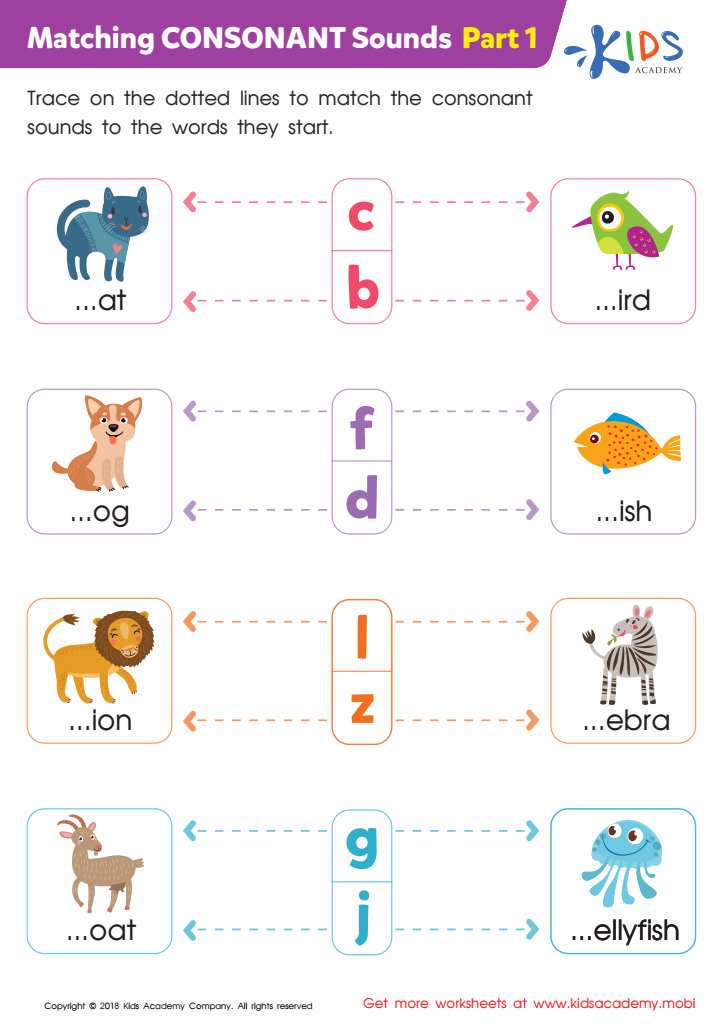
Matching Consonant Sounds: Part 1 Worksheet


Sound recognition, particularly beginning consonants, is crucial for children aged 3-4 as it lays the foundation for language development and literacy skills. During this critical age, children are rapidly developing their phonemic awareness, which is the ability to hear, identify, and manipulate sounds in spoken language. Recognizing beginning consonants helps young learners differentiate between sounds, which is essential for learning to read and write.
When parents and teachers focus on beginning consonants, they can enhance a child's vocabulary and comprehension. These skills enable children to decode words more effectively, laying the groundwork for future reading success. Engaging activities like singing songs, playing games, or using visual aids related to consonants can make learning fun and interactive, which keeps children motivated and enhances retention.
Additionally, understanding consonants contributes to a child's ability to express themselves verbally, fostering communication skills that are vital for social interactions and academic success. By prioritizing sound recognition, parents and teachers play a pivotal role in nurturing a child's cognitive development, preparing them for the educational challenges ahead and helping them become confident learners. Ultimately, fostering sound recognition in early childhood supports a lifetime of effective communication and literacy skills.