Vocabulary expansion Beginning Consonants Worksheets for Ages 3-4
4 filtered results
Difficulty Level
Grade
Age
-
From - To
Subject
Activity
Standards
Enhance your child's language skills with our engaging Beginning Consonants Worksheets, specially designed for ages 3-4. These interactive resources help young learners recognize and practice the initial sounds of words, expanding their vocabulary in a fun and stimulating way. Each worksheet features colorful illustrations and simple activities that captivate young minds while promoting literacy development. As your child identifies beginning consonants, they will gain essential phonemic awareness, forming a strong foundation for future reading and writing success. Discover the joy of learning together and watch your child's confidence flourish with our comprehensive vocabulary expansion tools!
Favorites
With answer key
Interactive
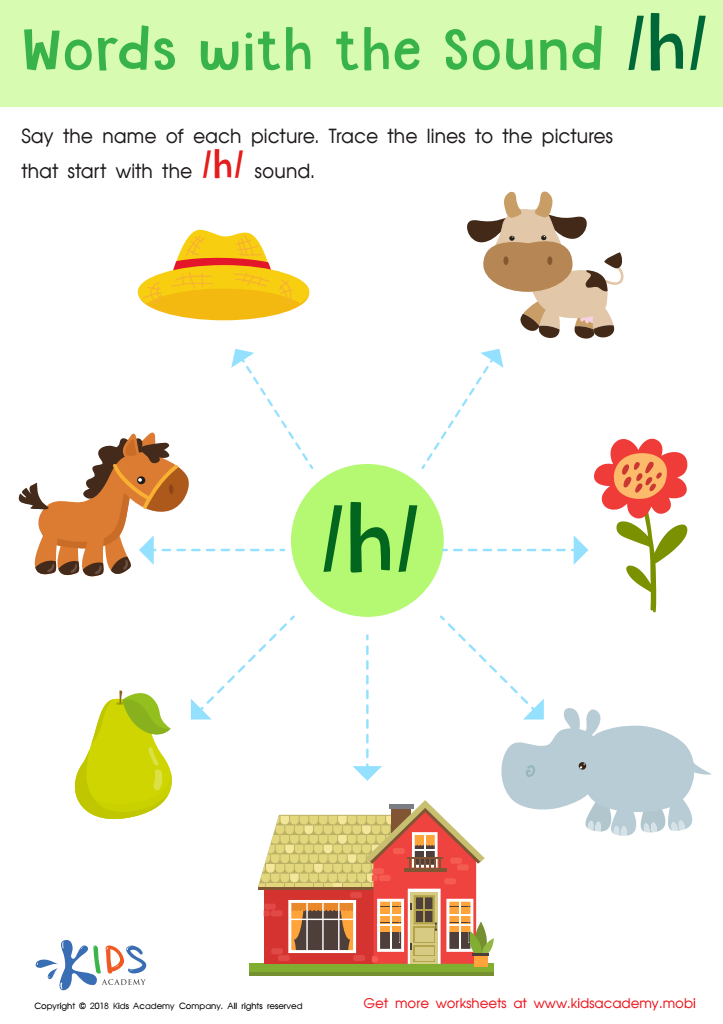
Words with sound h Reading Worksheet
The letter H can often be heard in words! Check your child's knowledge with an engaging worksheet from Kids Academy. Ask them to go around a circle and name each image aloud. Listen for the starting sound and trace the line from the middle letter to the images with the sound. This is a great way to practice phonics!
 Assign to My Students
Words with sound h Reading Worksheet
Worksheet
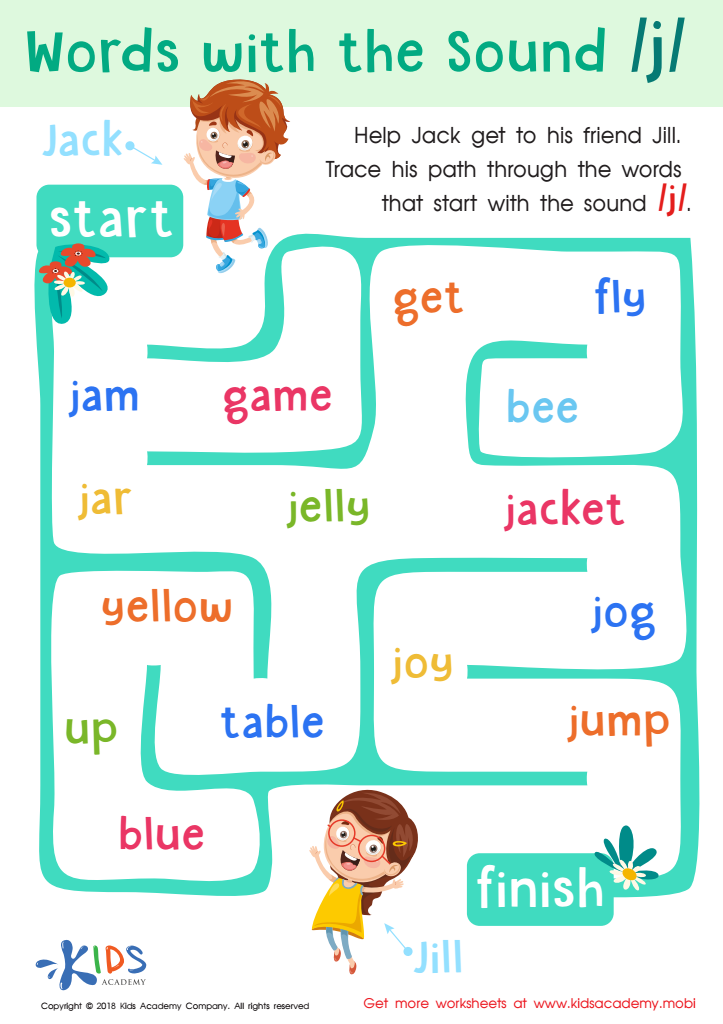
Words with sound j Reading Worksheet
Don't be fooled: The letter J sounds like G in this letter sounds maze! Kids will enjoy helping Jack find Jill by listening to beginning sounds and tracing a path to the exit. Choose words that start with the letter J sound to complete the challenging maze!
Words with sound j Reading Worksheet
Worksheet
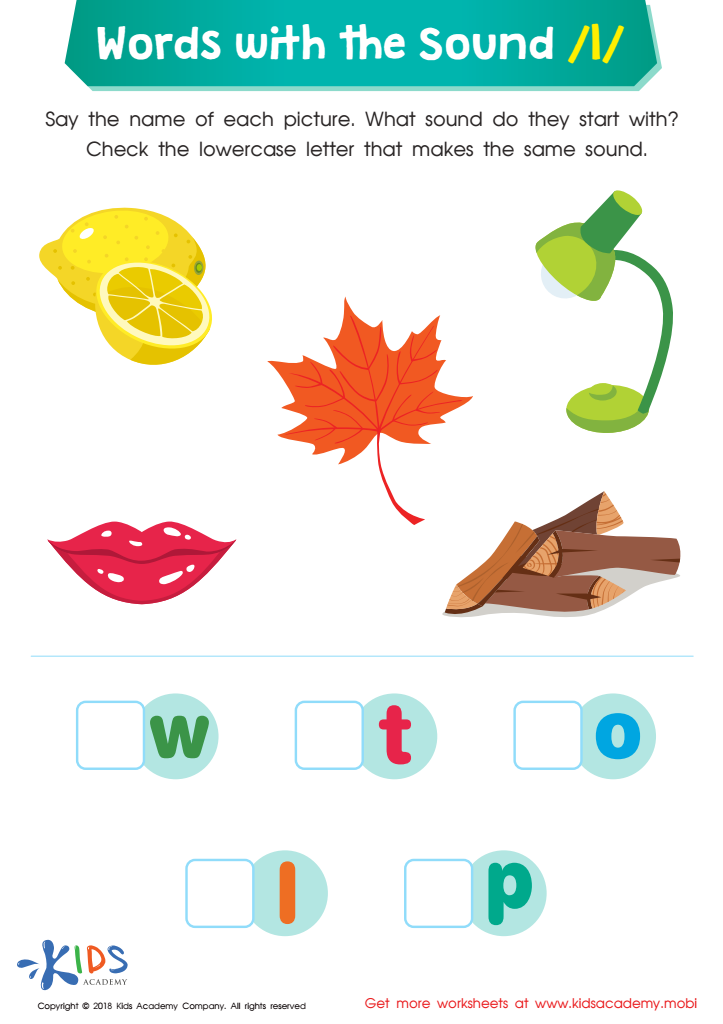
Words with Sound L Reading Worksheet
This PDF worksheet is great for helping emerging readers isolate initial sounds. Kids name familiar pictures, then identify the correct letter for the "l" sound. This worksheet strengthens fine motor skills, plus builds visual discernment. It's fun and colorful too!
Words with Sound L Reading Worksheet
Worksheet
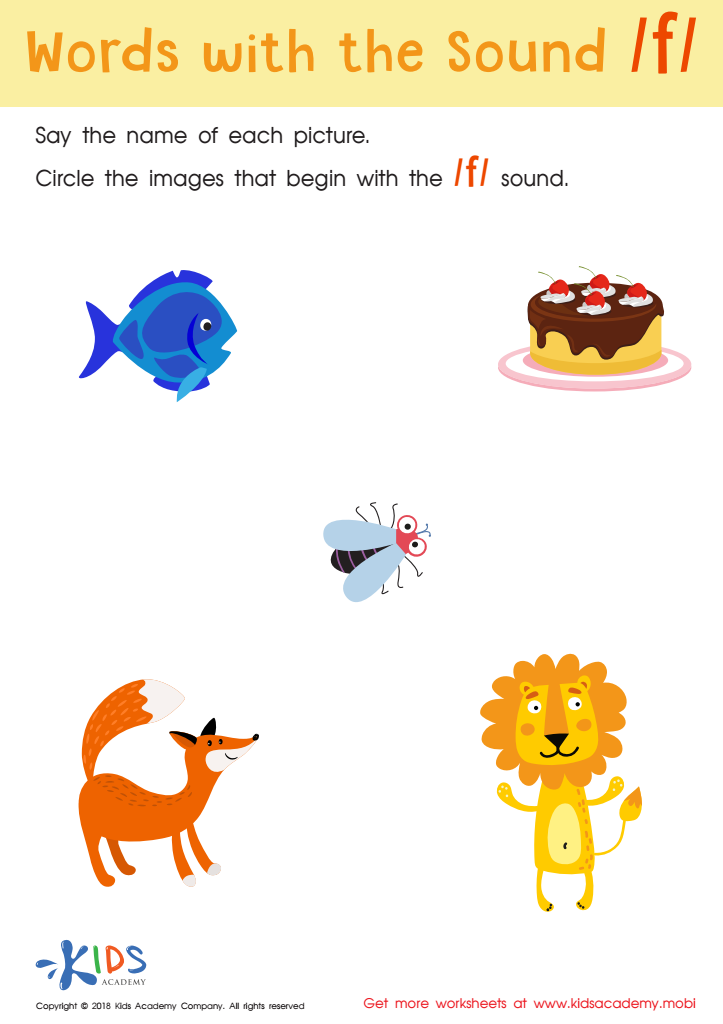
Words with sound f Reading Worksheet
This illustrated phonics worksheet is ideal for preschool or kindergarten. It helps boost learners' literacy skills with a focus on the letter "f". Ask your child to name all the pictures, listening for that sound. Examples are fish, fox, lion, bug. When they can identify which words start with "f", have them circle the images. Congratulate them on a job well done!
Words with sound f Reading Worksheet
Worksheet
Join Kids Academy for Free
Who is primarily going to use this learning content?


Vocabulary expansion, particularly through focusing on beginning consonants, is crucial for children aged 3-4 as it lays the foundation for their language development. At this age, children are eager to learn and absorb new words, and understanding beginning consonants helps them decode language, a skill essential for reading and effective communication.
Beginning consonants serve as a building block for phonemic awareness, which is the understanding that words are made up of individual sounds. Teaching children to recognize and articulate these sounds not only enhances their vocabulary but also boosts their confidence in speaking. By familiarizing young learners with consonants like "b" in "ball" or "s" in "sun," parents and teachers can encourage them to identify sounds in various words, thereby creating connections between sounds and meanings.
Moreover, an enriched vocabulary supports cognitive development by enhancing critical thinking and comprehension skills. Effective communication also enables social interaction, fostering relationships with peers. Therefore, focusing on expanding vocabulary through beginning consonants equips children with essential tools for success in reading, writing, and social engagement, making it a priority for parents and educators alike.