Vocabulary enhancement Beginning Sounds Worksheets for Ages 3-4
3 filtered results
-
From - To
Explore our engaging Vocabulary Enhancement Beginning Sounds Worksheets designed specifically for children ages 3-4. These interactive resources help young learners develop essential phonemic awareness by focusing on the initial sounds of letters in words. Featuring vibrant and playful illustrations, our worksheets encourage children to connect sounds with images, making language acquisition enjoyable and effective. Ideal for pre-K classrooms or home learning, these worksheets cultivate cognitive skills while supporting early literacy development. Parents and educators can easily access printable materials that promote interactive learning and bolster vocabulary. Start your child’s journey to reading success with our fun and educational beginning sounds activities!
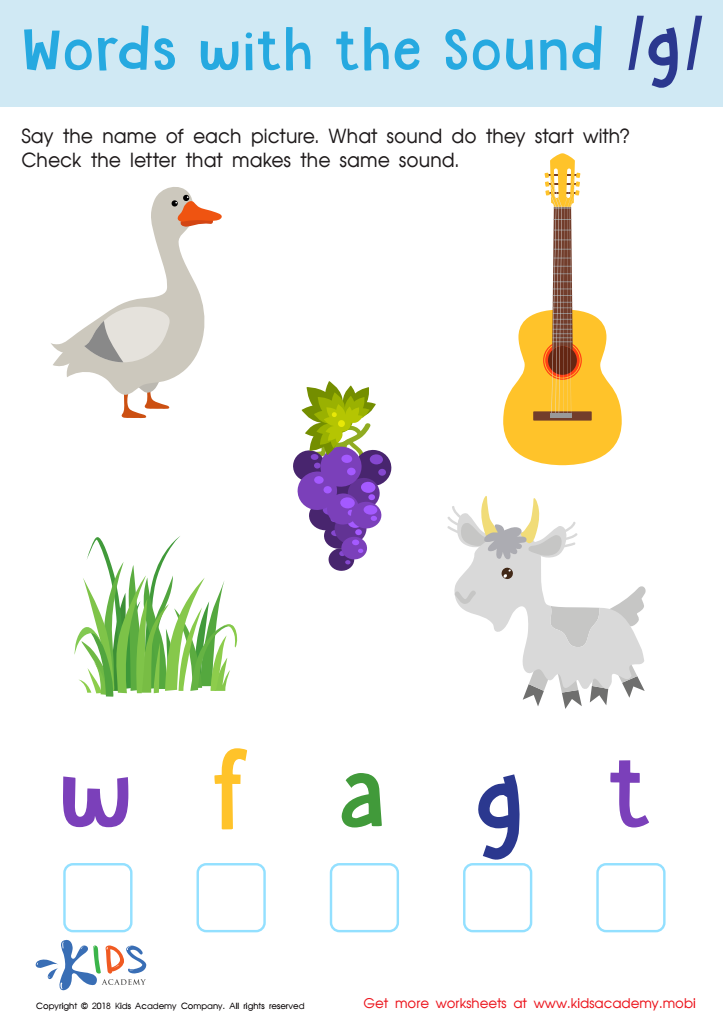
Words with sound g Reading Worksheet
 Assign to My Students
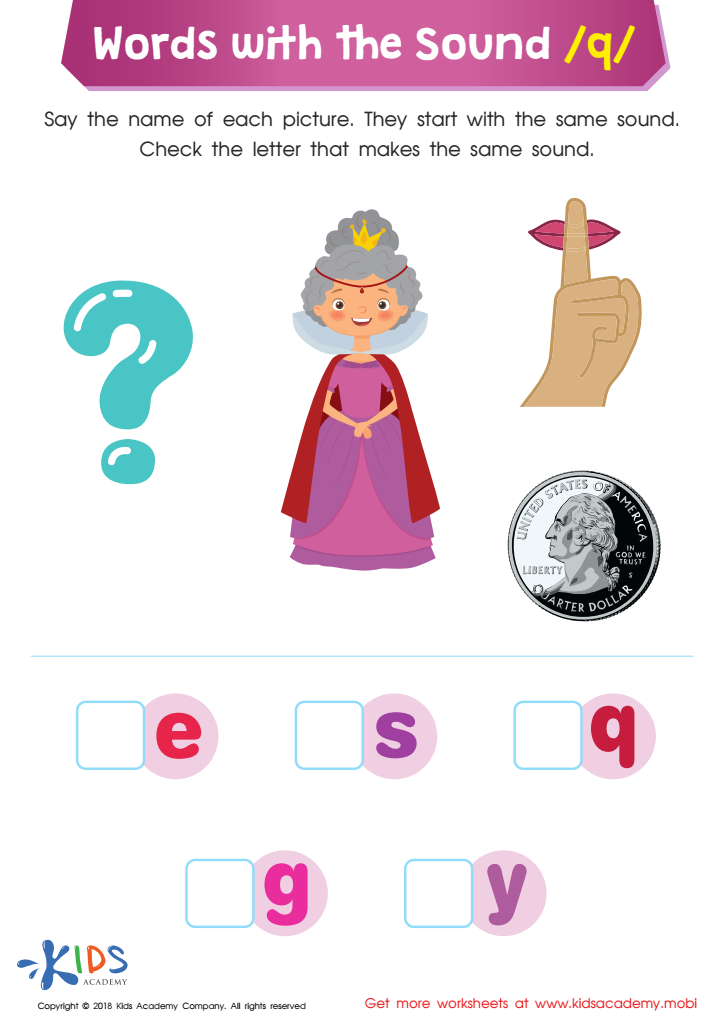
Words with Sound Q Reading Worksheet
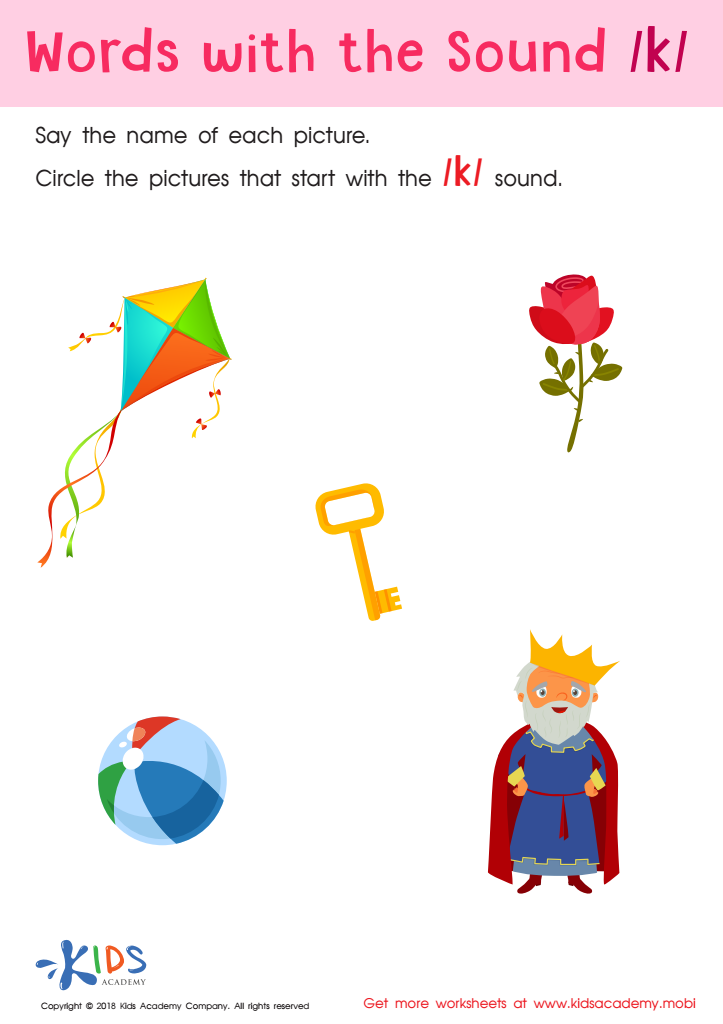
Words with sound k Reading Worksheet








Parents and teachers should prioritize vocabulary enhancement and beginning sounds for children aged 3-4 because these skills serve as the foundation for literacy development. At this age, children are naturally curious and eager to learn new words. By focusing on vocabulary enhancement, caregivers can expand a child's language skills, which is crucial for effective communication and cognitive growth.
Learning beginning sounds is especially vital, as it helps children develop phonemic awareness—a key predictor of reading success. Recognizing and articulating beginning sounds allows children to connect words with their corresponding letters, paving the way for early reading and writing skills. This can also enhance their ability to rhyme and manipulate sounds, further benefiting their language development.
Engagement in activities such as rhyming games, storytime, and singing can make learning exciting. It creates opportunities for social interaction and enhances listening skills. Additionally, children who are confident in their vocabulary and sound recognition tend to participate more actively in discussions and express their ideas clearly, fostering a love for learning. Ultimately, caregivers play a crucial role in shaping a child’s literacy journey, making early vocabulary and sound skills a top priority for academic success.







