Filters

6 filtered results

Clear all filters
Favorites
With answer key
Interactive

6 filtered results

Difficulty Level

Grade


Introduce young learners to the joys of language with our Vocabulary Expansion Beginning Sounds Worksheets, designed specifically for ages 3-4. These engaging and fun-filled activities help little ones identify and pronounce initial sounds in words, laying a strong foundation for early reading skills. Each worksheet features vibrant images and simple exercises that encourage children to match pictures with their corresponding beginning sounds. Ideal for home or classroom use, these worksheets make learning an enjoyable adventure. Boost your child's vocabulary and phonics skills today with Kids Academy's expertly crafted resources! Perfect for preschoolers starting their educational journey.

Check out this FREE Trial Lesson on Beginning Sounds for age 3-4!

The Letter J Sound

Favorites
With answer key
Interactive
  • 3-4
  • Vocabulary expansion
  • Beginning Sounds
Beginning Sounds Worksheet

Beginning Sounds Worksheet

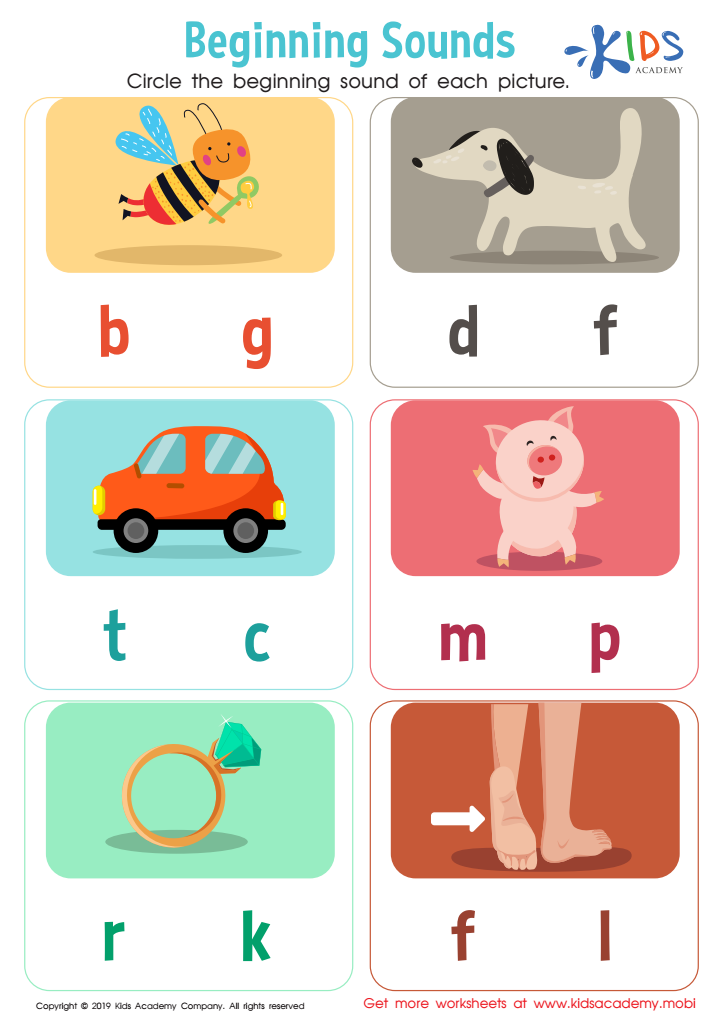
Test your child's knowledge with this colorful worksheet! Before beginning, have your kids recite the alphabet and sound them off. Give examples and ask them to do the same, then help them circle the beginning sound of each picture to complete the exercise.
Beginning Sounds Worksheet
Worksheet
Words with sound h Reading Worksheet

Words with sound h Reading Worksheet

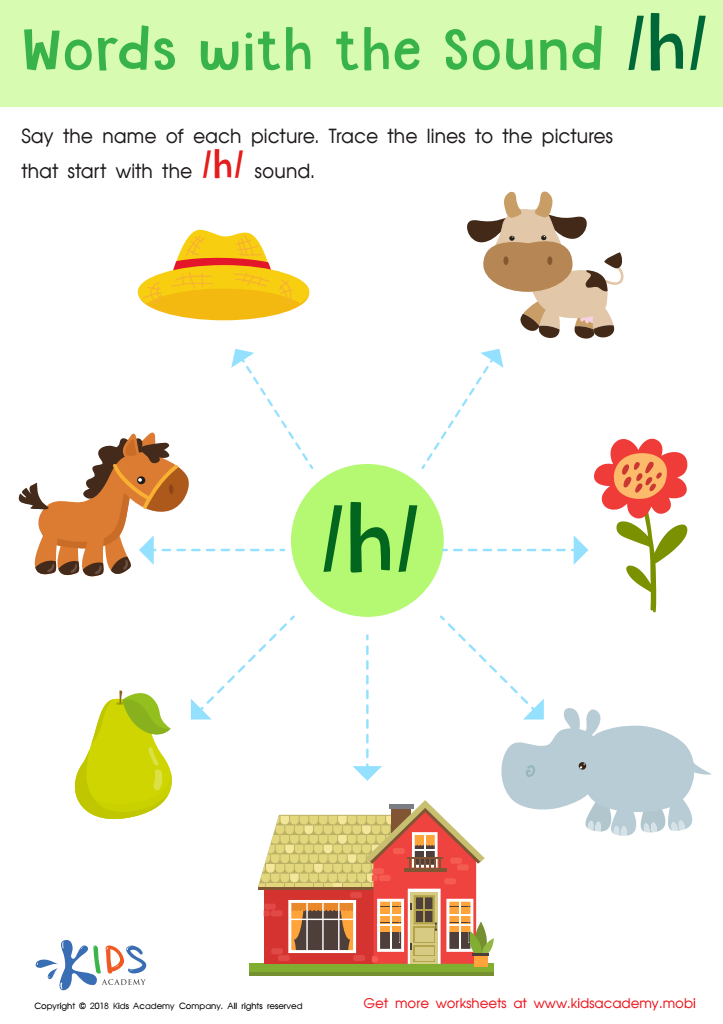
The letter H can often be heard in words! Check your child's knowledge with an engaging worksheet from Kids Academy. Ask them to go around a circle and name each image aloud. Listen for the starting sound and trace the line from the middle letter to the images with the sound. This is a great way to practice phonics!
Words with sound h Reading Worksheet
Worksheet
Words with sound j Reading Worksheet

Words with sound j Reading Worksheet

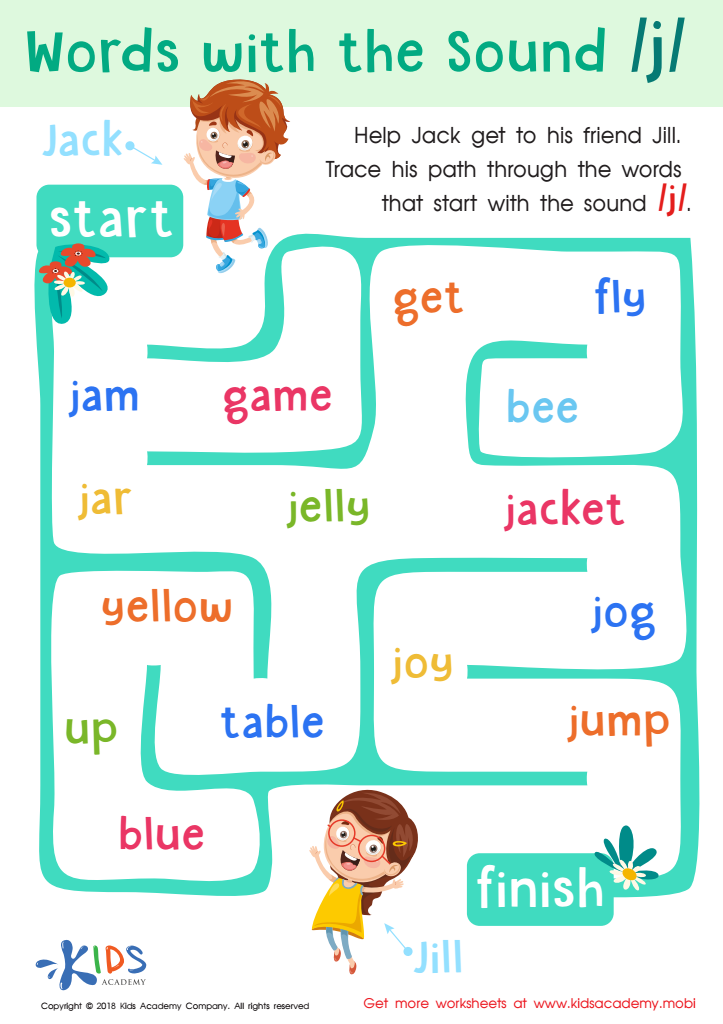
Don't be fooled: The letter J sounds like G in this letter sounds maze! Kids will enjoy helping Jack find Jill by listening to beginning sounds and tracing a path to the exit. Choose words that start with the letter J sound to complete the challenging maze!
Words with sound j Reading Worksheet
Worksheet
Can you Guess Which Letter? Worksheet

Can you Guess Which Letter? Worksheet

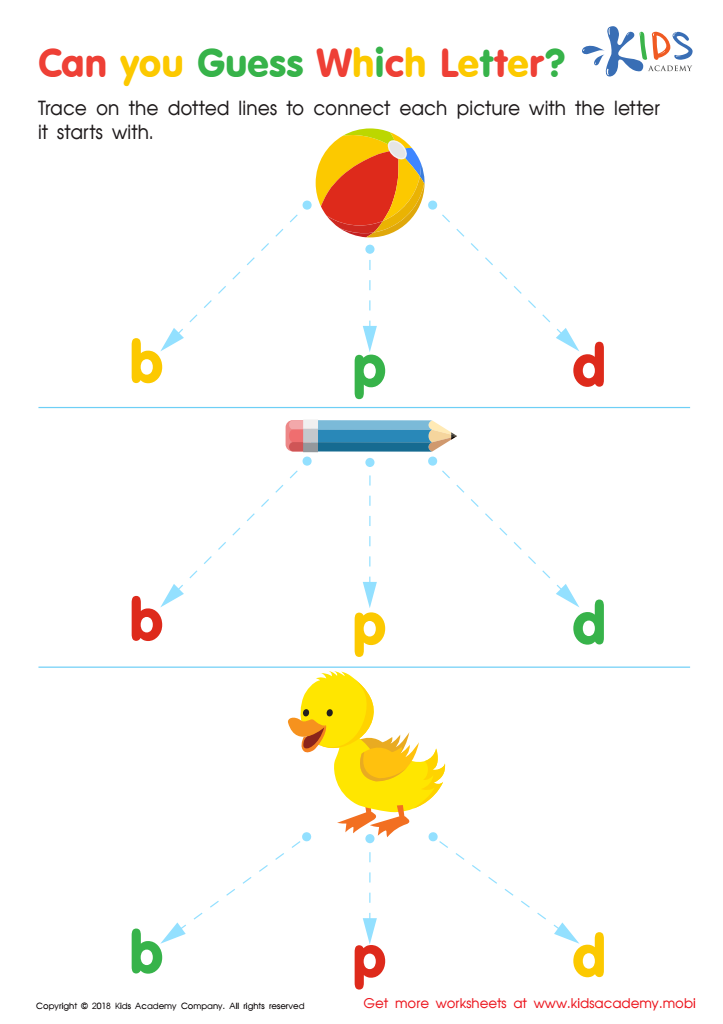
Connect the pictures with their corresponding letters with this fun worksheet! Ask your child what each picture is, then what letter it begins with. Download the PDF for colorful images and engaging texts to hold their attention, making learning an enjoyable activity.
Can you Guess Which Letter? Worksheet
Worksheet
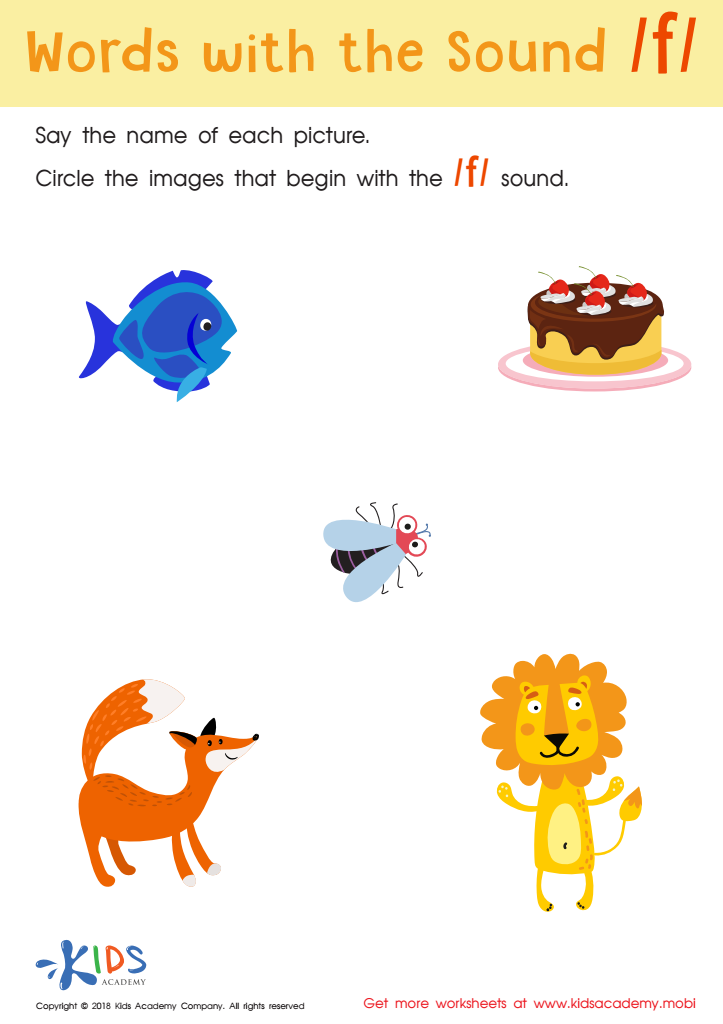
Words with sound f Reading Worksheet

Words with sound f Reading Worksheet

This illustrated phonics worksheet is ideal for preschool or kindergarten. It helps boost learners' literacy skills with a focus on the letter "f". Ask your child to name all the pictures, listening for that sound. Examples are fish, fox, lion, bug. When they can identify which words start with "f", have them circle the images. Congratulate them on a job well done!
Words with sound f Reading Worksheet
Worksheet
Beginning sound d worksheet

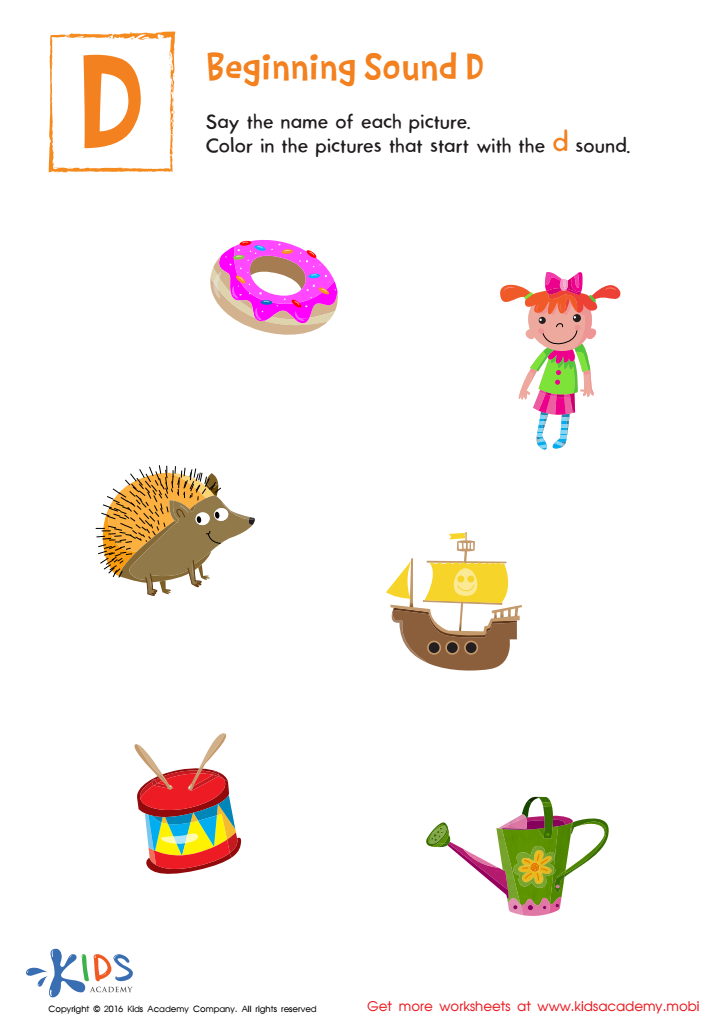
Beginning Sound D Worksheet

Reinforce phonics with this vibrant beginning sound d worksheet! Pictures help kids identify words beginning with 'd' and develop early reading skills. Sounding out each word increases literacy!
Beginning Sound D Worksheet
Worksheet


Parents and teachers should care about vocabulary expansion and beginning sounds for children aged 3-4 because these are foundational skills that significantly influence language development and future academic success. During this critical early developmental period, young children's brains are remarkably receptive to learning. Exposure to a rich vocabulary and the understanding of beginning sounds fosters crucial cognitive abilities such as phonemic awareness, which is the ability to hear, identify, and manipulate individual sounds in words.

By mastering beginning sounds, children start to understand the relationships between letters and sounds, paving the way for reading readiness. This skill is a key predictor of future reading success and overall literacy. Furthermore, expanding vocabulary enhances a child's ability to communicate effectively, express emotions, and engage in social interactions. A broader vocabulary allows children to better understand and follow instructions, improving their behavior and cooperation in both home and school settings.

Additionally, a rich vocabulary helps with comprehension skills once children begin reading, as they will be better able to understand the meanings of new words within different contexts. By supporting vocabulary expansion and phonemic awareness early on, parents and teachers provide children with the tools they need for confident and competent lifelong learning.