Alphabet Recognition Letter Sounds Worksheets for Ages 3-4
4 filtered results
Difficulty Level
Grade
Age
-
From - To
Subject
Activity
Standards
Introduce your little ones to the essential world of letters with our engaging "Alphabet Recognition Letter Sounds Worksheets for Ages 3-4". Perfectly crafted for young learners, these printable worksheets from Kids Academy make mastering the alphabet and letter sounds fun and effective. Each worksheet is filled with vibrant illustrations and interactive activities designed to keep kids entertained while they learn. By practicing with these worksheets, children will develop strong foundational skills in both letter recognition and phonetic awareness, setting the stage for early reading success. Download today and start your child's phonics journey on the right foot!
Favorites
With answer key
Interactive
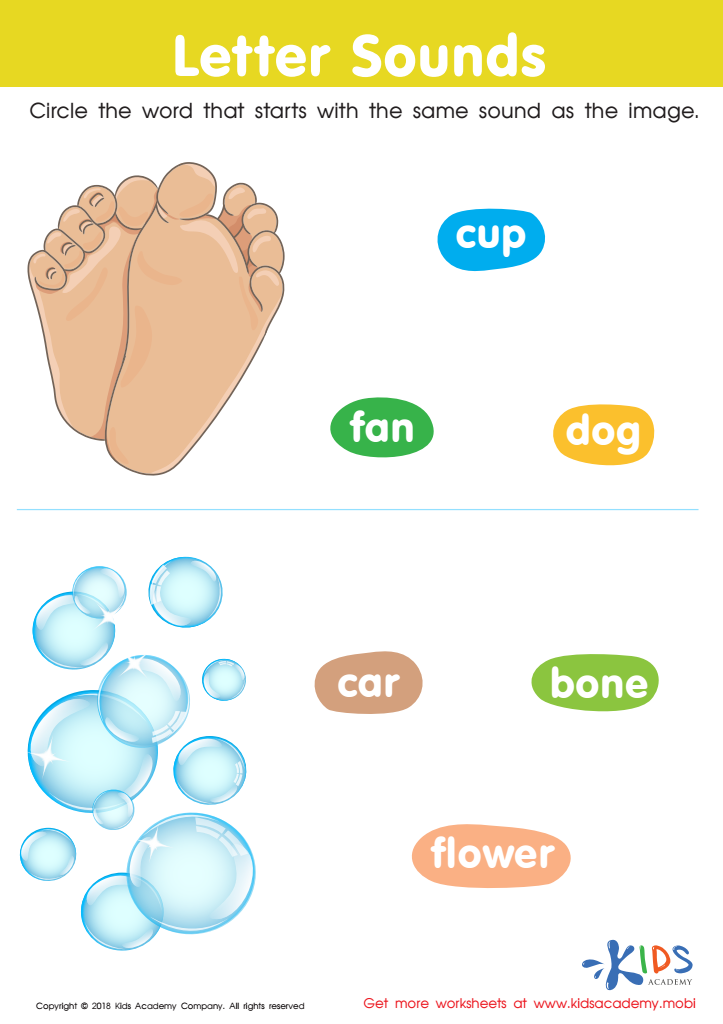
letter sounds Worksheet
Test your child's letter recognition skills with this worksheet. Match words to pictures and challenge them to say each image out loud and sound out the words beside it. Ask: Which word starts with the same letter as the picture? Then let them circle the right answer. Quick and easy!
 Assign to My Students
letter sounds Worksheet
Worksheet
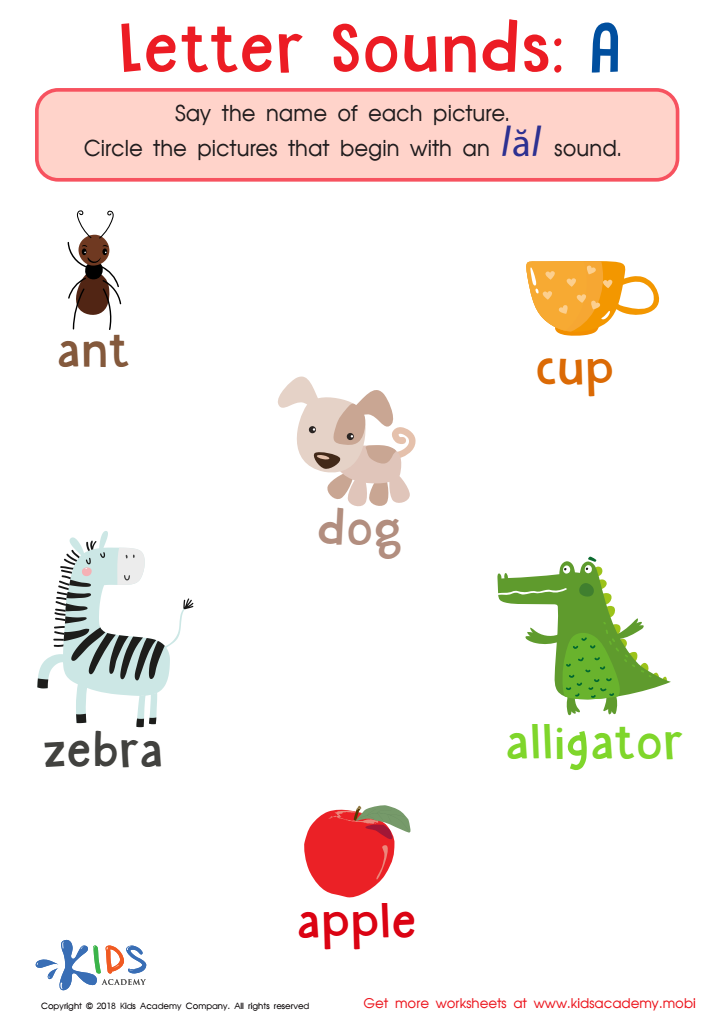
Letter A Sounds Worksheet
Encourage your new reader to practice the «ă» sound with this fun, free PDF worksheet. With the help of picture clues, they'll say the name of each word and trace circles around the items that start with «ă». This worksheet is an effective way to boost beginning sound skills while having fun!
Letter A Sounds Worksheet
Worksheet
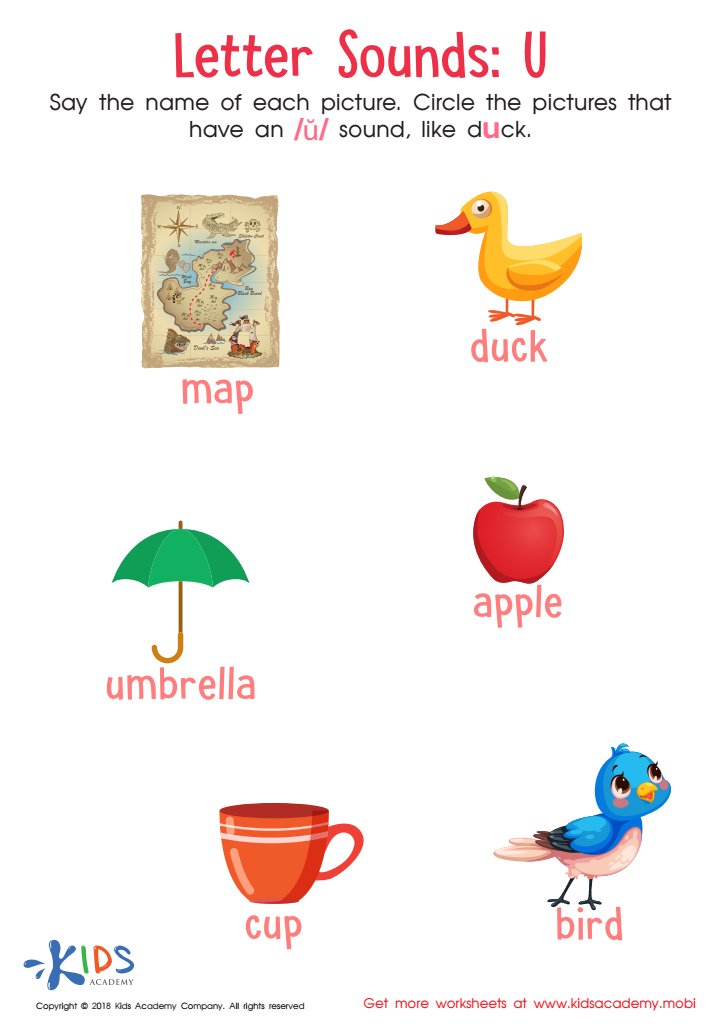
Letter U Sounds Worksheet
The letter U is special with multiple pronunciations. This worksheet helps kids identify the short «u» in words like duck and cup. Read the words aloud and listen closely to the sounds. Circle only words with the correct sound to complete the sheet. Kids will quickly know that words like "map" don't contain a U.
Letter U Sounds Worksheet
Worksheet
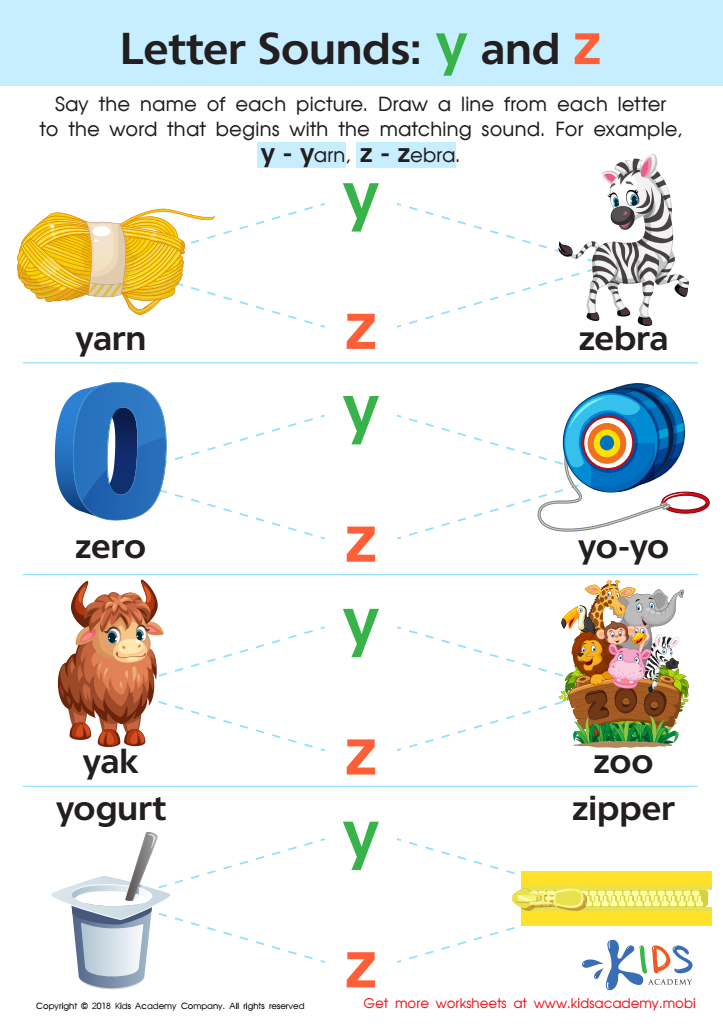
Letter Y and Z Sounds Worksheet
Y and Z can be tricky for kids to learn. Kids Academy has the answer with a great worksheet. "Yo-yo", "yak" and "zebra" help kids recognize, say and trace each letter. Plus, they can read the words and match them to images! Let your child try and help them master phonics at the end of the alphabet.
Letter Y and Z Sounds Worksheet
Worksheet
Join Kids Academy for Free
Who is primarily going to use this learning content?








Alphabet recognition and understanding letter sounds are critical milestones for children ages 3-4. These foundational skills not only enhance early literacy but are also pivotal for overall cognitive and language development. Recognizing letters allows young children to associate visual symbols with corresponding sounds. This phonemic awareness is the bedrock of reading and writing skills.
When children grasp the connection between letters and their sounds, they can begin to decode words, making reading more approachable and engaging. This early decoding experience builds confidence, fostering a positive attitude towards learning. Additionally, children who master letter sounds can use this knowledge to spell simple words, empowering them to communicate their ideas in writing.
Alphabet recognition also supports vocabulary acquisition as children start understanding that words are made up of letters. As they link letters to sounds, new words become easier to learn, promoting richer language development and comprehension skills.
For teachers and parents, emphasizing alphabet recognition and letter sounds creates a robust educational framework. Engaging activities like songs, games, and interactive reading sessions can make learning enjoyable, ensuring that children remain motivated and curious. Overall, investing time and effort into these early skills will pave the way for a smooth transition to formal education, providing children with the tools they need for future academic success.