Letter recognition Letter X Worksheets for Ages 3-4
4 filtered results
Difficulty Level
Grade
Age
-
From - To
Subject
Activity
Standards
Enhance your child's literacy skills with our engaging Letter X recognition worksheets designed for ages 3-4. These fun and interactive activities help young learners identify and familiarize themselves with the letter X through colorful visuals and relatable examples. Each worksheet encourages recognition through a variety of exercises, including tracing, coloring, and finding the letter X in different contexts. Perfect for preschoolers, our resources foster an early love for reading and writing while developing essential foundational skills. Equip your little ones with the tools they need to succeed as they embark on their alphabet adventure with our specially crafted Letter X worksheets!
Favorites
With answer key
Interactive
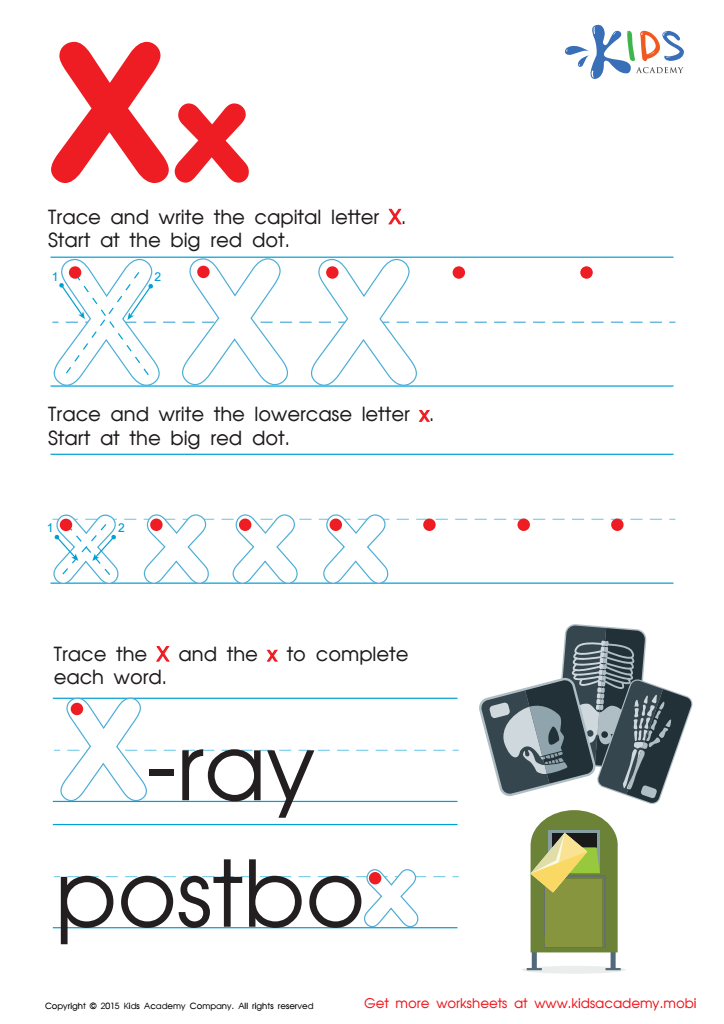
Letter X Tracing Page
Trace the uppercase letter "X" to learn, then write it yourself and practice. Then do the same with the lowercase "x" before completing the words "X-ray" and "postbox". Enjoy our alphabet printables!
Letter X Tracing Page
Worksheet
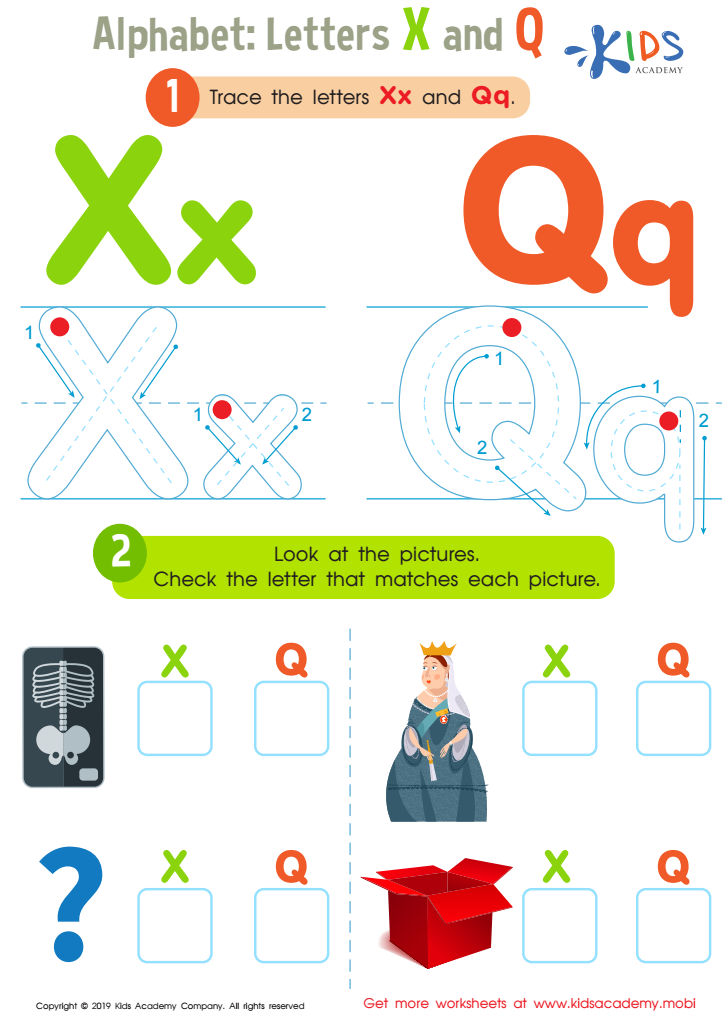
Letters X and Q Tracing Worksheet
Do you want your students to improve writing and letter recognition? This worksheet is a great place to start! Kids can trace the letters «X» and «Q» and identify pictures that match each letter. With a little encouragement, they'll do a great job!
Letters X and Q Tracing Worksheet
Worksheet
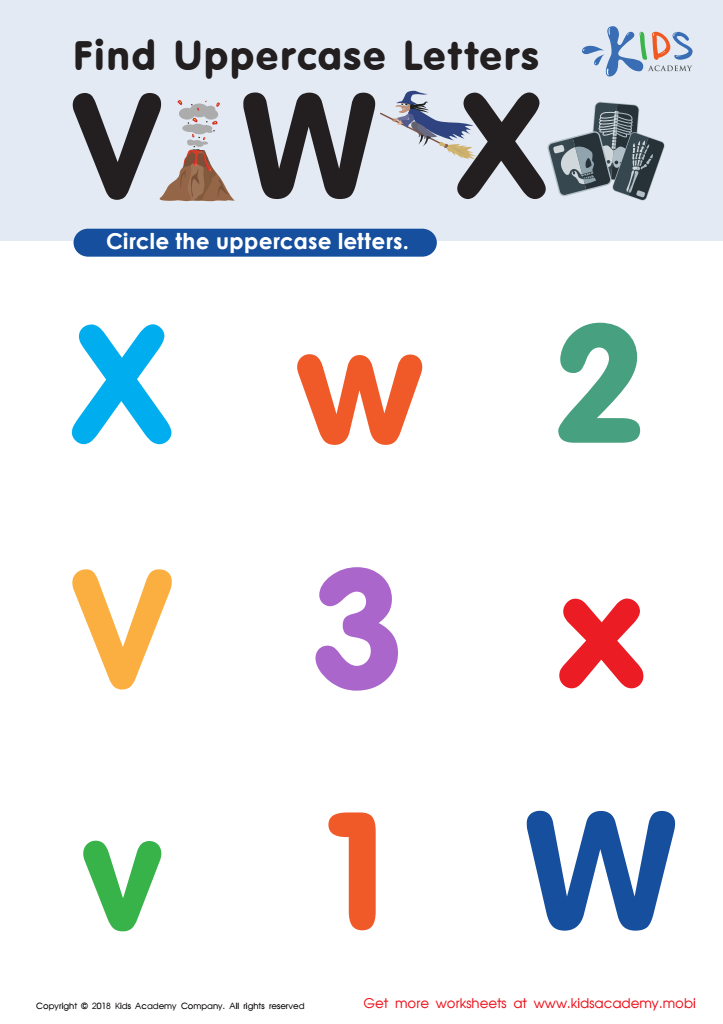
Find Uppercase Letters V, W, X Worksheet
Ask your kids if they can spot the uppercase letters V, W and X hidden in the lowercase letters and numbers, then have them circle them. After that, ask them to give you examples of words beginning with those letters. This worksheet will help them get started.
Find Uppercase Letters V, W, X Worksheet
Worksheet
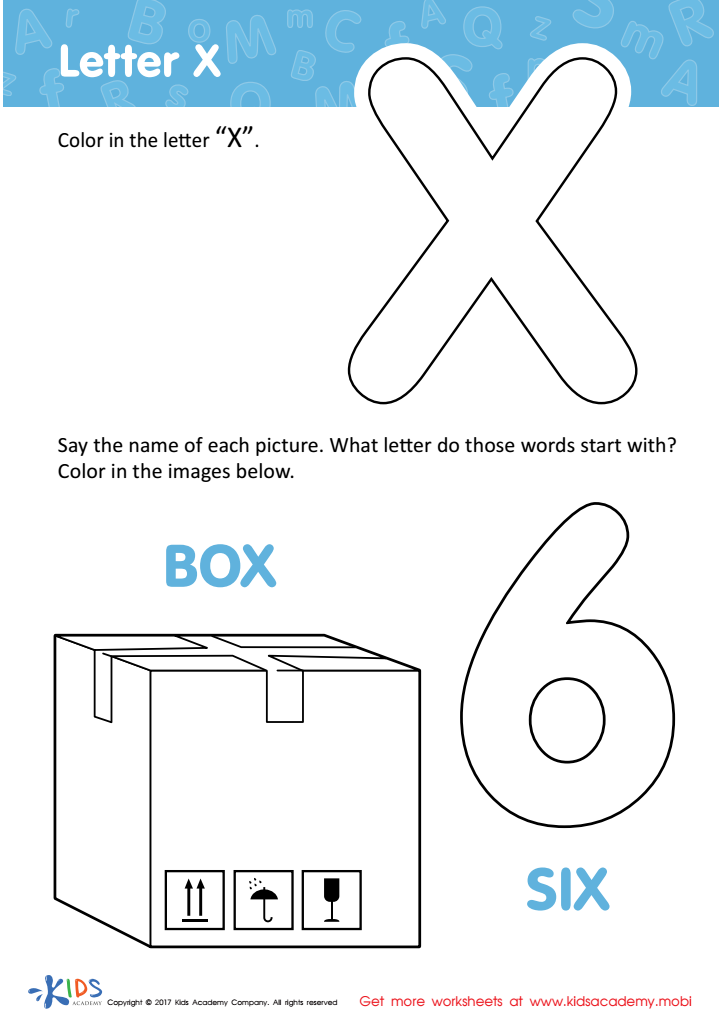
Letter X Coloring Sheet
Help your little learner find the letter "X" with this coloring page. Go over the sounds it makes and how to find it at the end of words. Unlock the mystery of this unique letter - it's one of the most challenging but rewarding letters to learn!
Download (PDF)
 Assign to My Students
Assign to My Students
Letter X Coloring Sheet
Worksheet
Join Kids Academy for Free
Who is primarily going to use this learning content?




Letter recognition is a crucial aspect of early childhood development, laying the foundation for literacy skills. Focusing on the identification of the Letter X is important for children aged 3-4 for several reasons. Firstly, it enhances cognitive skills by helping children distinguish between different shapes and sounds. Recognizing less frequently used letters like X fosters a more comprehensive understanding of the alphabet.
Moreover, learning the Letter X can expand vocabulary. It introduces children to words like "x-ray," "xylophone," and "box," which can pique their curiosity and encourage early language skills. Activities centered around the Letter X can also promote fine motor skills through drawing or crafting, making learning more engaging.
By incorporating the Letter X into play and learning activities, parents and teachers provide opportunities for children to practice phonemic awareness, which is key for later reading success. Recognizing and sounding out different letters helps children understand that letters represent sounds—a crucial perception for their reading journey.
Creating an environment rich in alphabetical exposure ultimately helps children develop confidence in their literacy skills, setting them up for future academic success. Thus, their focus on the Letter X carries not only immediate learning benefits but long-term advantages in language and reading development.