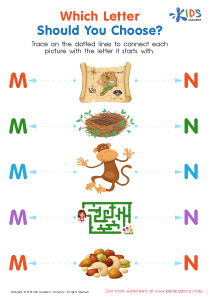
Letter-sound association Lowercase/Small Letters Worksheets for Ages 3-4
3 filtered results
-
From - To
Discover our engaging Letter-Sound Association worksheets designed specifically for children ages 3-4. These worksheets focus on lowercase letters, helping young learners connect sounds with their corresponding letters in a fun and interactive way. Boost essential pre-reading skills as your child practices identifying and pronouncing letters through a variety of enjoyable exercises. Our thoughtfully created activities enhance phonemic awareness while encouraging motor skills development and creativity. Perfect for early childhood education at home or in the classroom, these worksheets provide a strong foundation for your child's literacy journey. Start nurturing a love for reading with our captivating lowercase letter resources today!
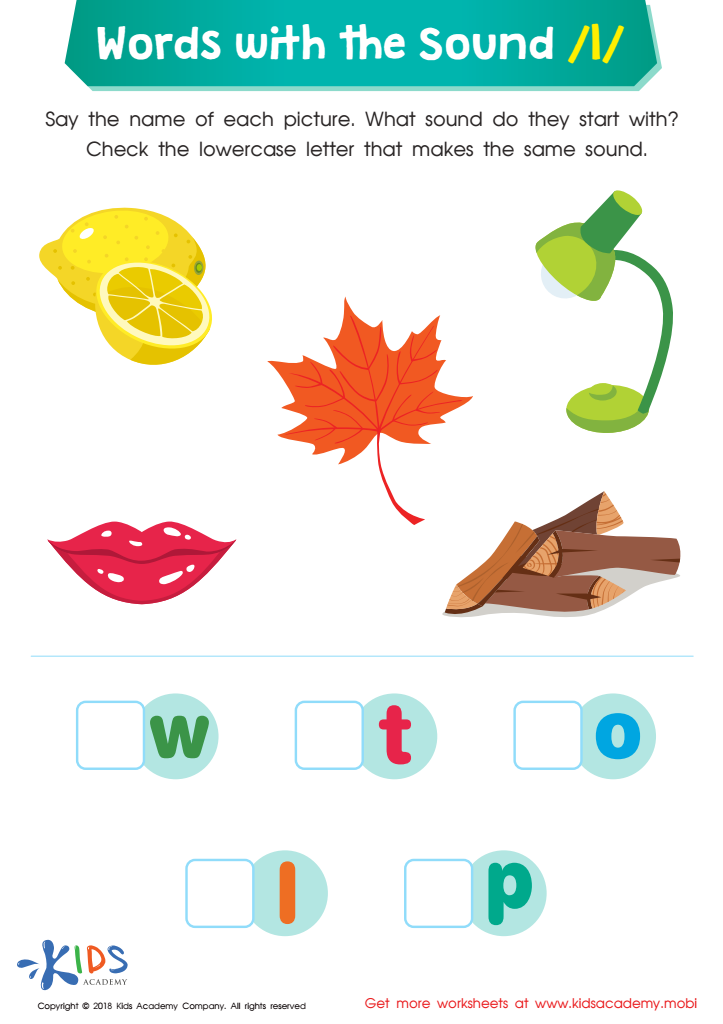
Words with Sound L Reading Worksheet
 Assign to My Students

Lowercase Letters m n o Worksheet
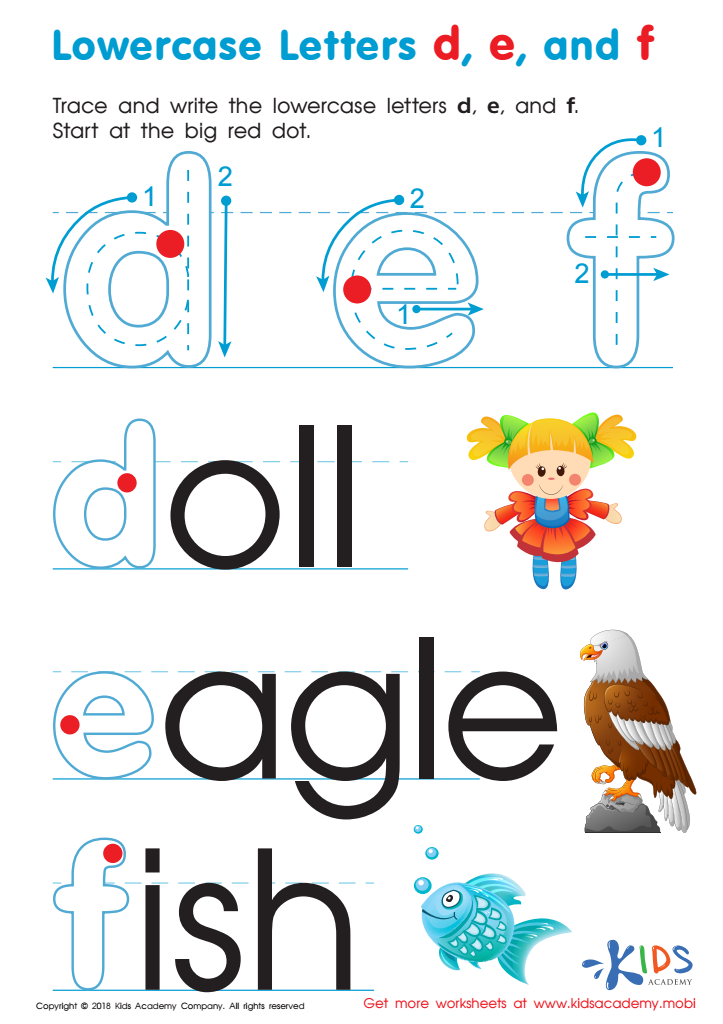
Lowercase Letters d e f Worksheet


Letter-sound association is a foundational skill critical for early literacy development, particularly for children ages 3-4. Understanding that letters represent specific sounds helps preschoolers begin to decode words, which is the first step toward reading. This skill is paramount as it lays the groundwork for future reading success. When parents and teachers emphasize lowercase letter-sound associations, they support young learners in recognizing letters in various contexts, such as books, signs, or labels.
Moreover, lowercase letters are predominantly used in everyday text, making it essential for young children to familiarize themselves with their shapes and sounds early on. By engaging in playful activities—like singing the alphabet song, using letter flashcards, or incorporating letter-themed games—parents and teachers can foster a love for letters, making learning enjoyable.
Additionally, building a strong literacy foundation aids in boosting children's confidence and motivation in school. As they start to decode words, children also enhance their vocabulary and comprehension skills. Ultimately, a solid grasp of letter-sound association not only accelerates literacy development but also cultivates a lifelong love for reading, making it crucial for parents and teachers to prioritize this early educational milestone.