Shape Recognition Tracing Lines and Curves Worksheets for Ages 3-4
3 filtered results
-
From - To
Elevate preschool learning with our "Shape Recognition Tracing Lines and Curves Worksheets for Ages 3-4". Specifically designed for toddlers, these engaging worksheets make learning fun by teaching the basics of shapes through traceable lines and curves. Perfect for supporting fine motor skills, each activity encourages little hands to draw geometric figures, enhancing visual-spatial skills and hand-eye coordination. Crafted by educational experts, these resources provide foundational skills essential for early development. Easy to download and print, they are ideal for both classroom environments and enjoyable at-home practice. Shepherd your child's first steps into the world of shapes effortlessly with our tailored worksheets.

Find the Curved Lines! Worksheet
 Assign to My Students
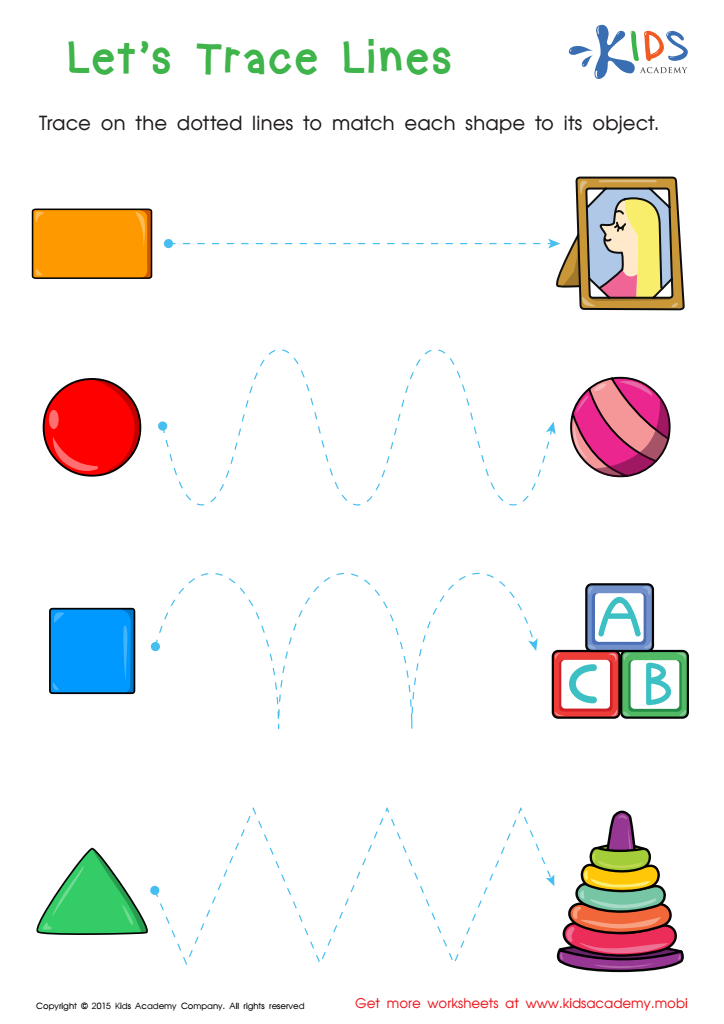
First Words: Let's Trace Lines Worksheet
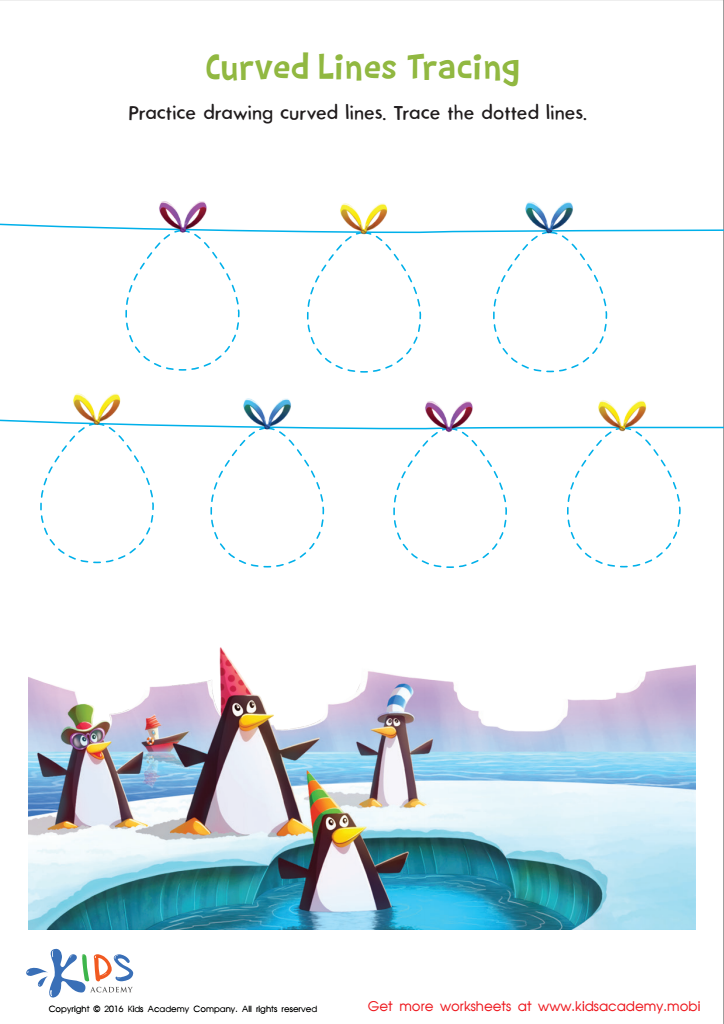
Curved Lines Tracing Worksheet




Shape recognition and the ability to trace lines and curves are fundamental skills for young children, and parents or teachers play an essential role in fostering these abilities in children aged 3-4. At this developmental stage, these activities are not just about learning shapes and drawing; they lay the foundation for critical cognitive, motor, and perceptual development.
Firstly, shape recognition helps children improve their spatial awareness and visual processing skills. Recognizing shapes is a precursor to identifying letters and numbers, which is crucial for future reading and math readiness. For instance, distinguishing a circle from a square can help in differentiating alphabet characters like 'O' from 'Q'.
Tracing lines and curves, on the other hand, enhances fine motor skills. It builds the muscle control needed for writing and other tasks requiring hand-eye coordination. Fine motor proficiency is essential for day-to-day activities, such as buttoning clothes and using utensils.
Finally, these exercises foster concentration and patience. As children focus on staying within lines and replicating shapes, they develop persistence and attention to detail. In a supportive environment where parents and teachers celebrate their progress, children also build confidence in their abilities. Thus, investing time in nurturing these skills pays off significantly, aiding holistic development and setting a strong academic and personal foundation.








