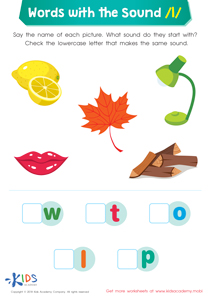
Uppercase identification Uppercase Letters Worksheets for Ages 3-4
5 filtered results
-
From - To
Introduce your child to the exciting world of uppercase letters with our engaging Uppercase Identification Worksheets for ages 3-4! Designed to make learning fun, these worksheets help young learners recognize, trace, and identify uppercase letters through vibrant illustrations and interactive activities. Perfect for preschoolers, these resources enhance vocabulary and fine motor skills, setting a solid foundation for literacy. Each activity fosters independence and confidence, ensuring your little ones enjoy every step of their educational journey. Explore our comprehensive collection of printable worksheets today and watch your child's love for letters blossom as they discover the alphabet in an enjoyable way!
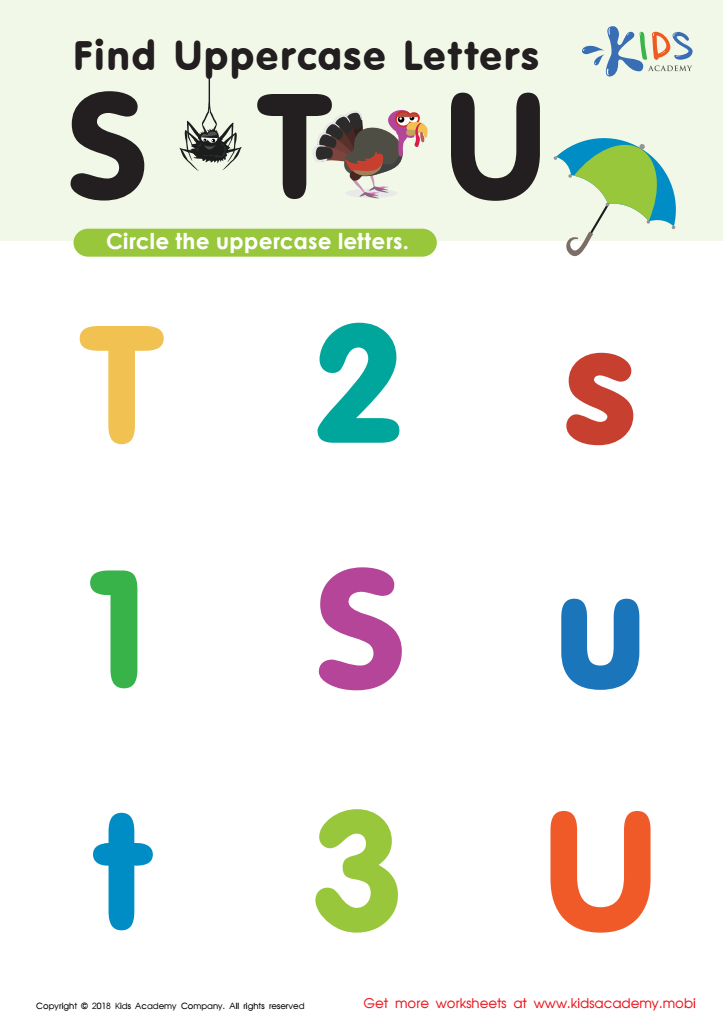
Find Uppercase Letters Worksheet
 Assign to My Students
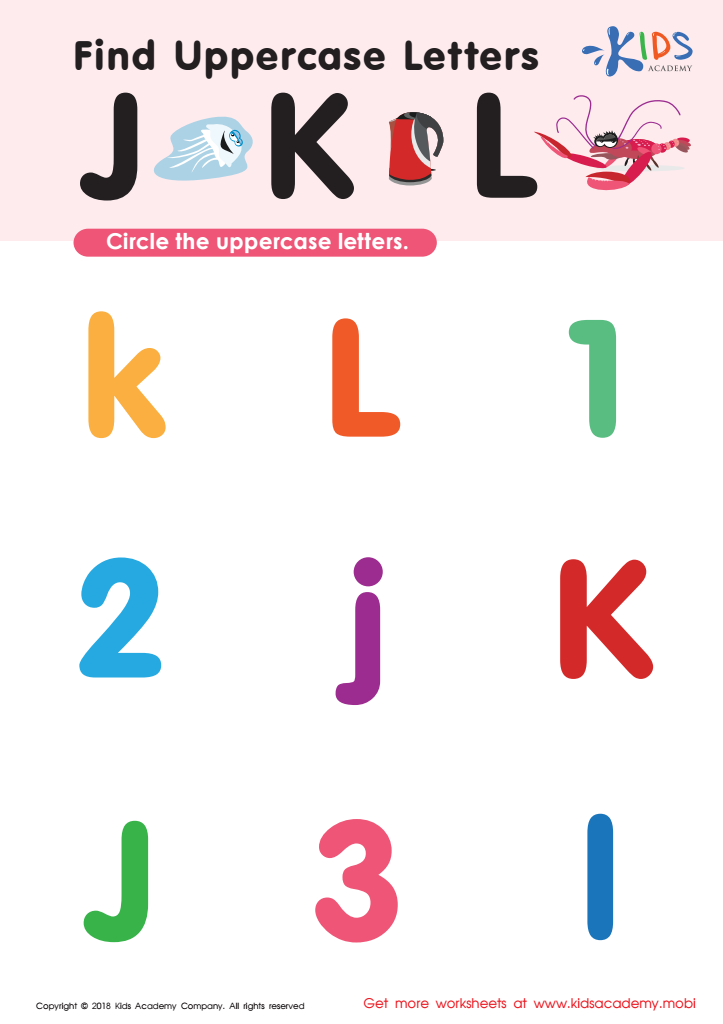
Find Uppercase Letters J, K, and L Worksheet

Find Uppercase Letters A, B, and C Worksheet
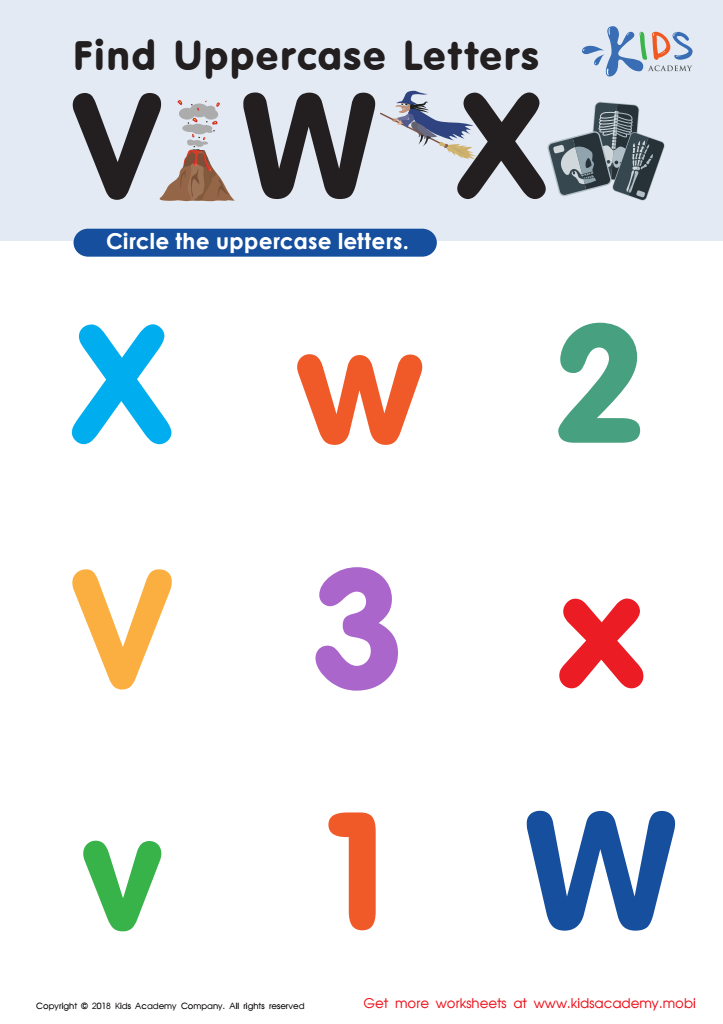
Find Uppercase Letters V, W, X Worksheet
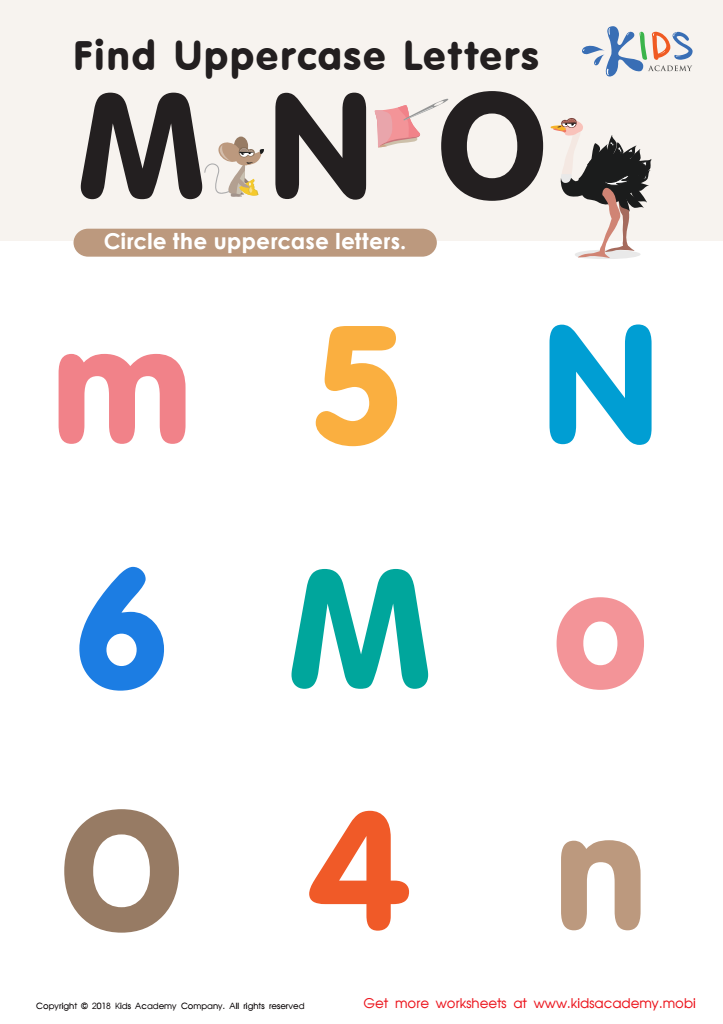
Find Uppercase Letters M, N, and O Worksheet








Uppercase letter identification is a fundamental skill for children aged 3-4, forming the backbone of early literacy development. Parents and teachers should prioritize this learning milestone as it lays the groundwork for later reading and writing abilities. Recognizing uppercase letters helps children understand the building blocks of language, paving the way for phonemic awareness and vocabulary expansion.
At this age, children are naturally curious and absorb information through play and interaction. By engaging in activities that promote uppercase letter recognition—such as singing the alphabet song, playing matching games, or using letter blocks—adults create a supportive learning environment that fosters cognitive growth. Furthermore, uppercase letters are commonly found in various contexts, from street signs to book covers, making their identification not just an academic exercise but a practical life skill.
Developing this skill also enhances children's confidence when they start to read and write. As they become comfortable with letters, their eagerness to explore literacy increases, preparing them for future educational success. Overall, encouraging uppercase letter identification is a vital investment in young children's cognitive and emotional development, setting a strong foundation in their lifelong learning journey.