Reading comprehension Vowels and Consonants Worksheets for Ages 3-4
4 filtered results
-
From - To
Boost early literacy skills with our engaging Reading Comprehension Worksheets focused on Vowels and Consonants, perfect for children ages 3-4. These fun and interactive worksheets are designed to introduce young learners to the essential concepts of letters while enhancing their understanding of sounds. Each activity promotes critical thinking, phonemic awareness, and language development as children practice identifying vowels and consonants in various words. Our user-friendly worksheets encourage a love for reading and help build confidence in early readers. Discover the joy of learning with our thoughtfully crafted exercises, ensuring a strong foundation for future academic success!
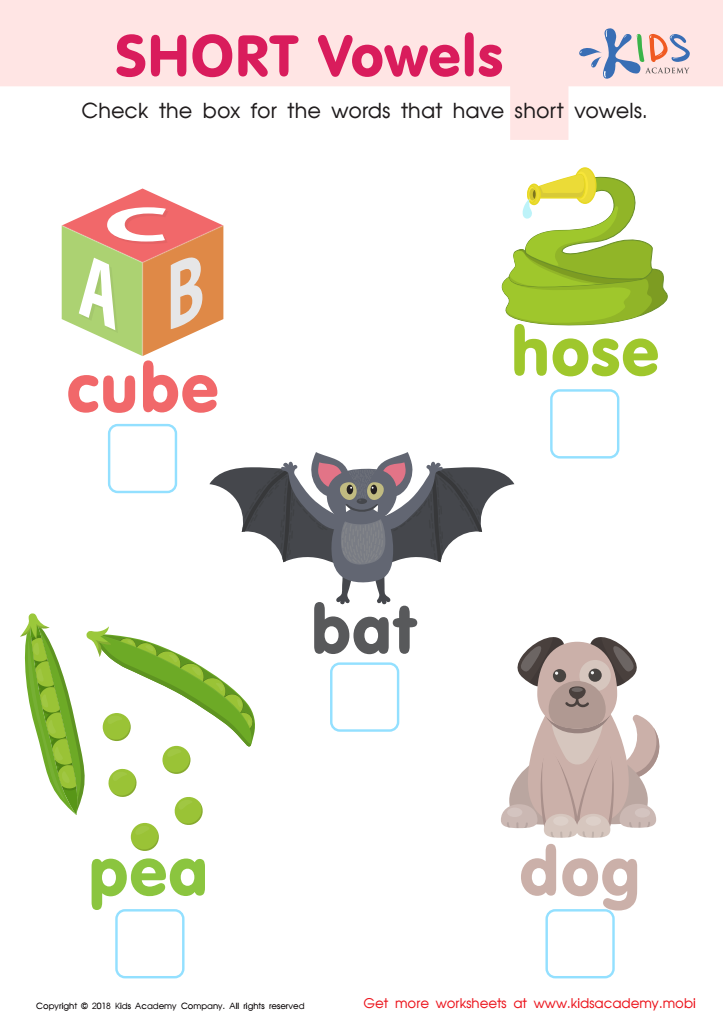
short vowels Worksheet
 Assign to My Students
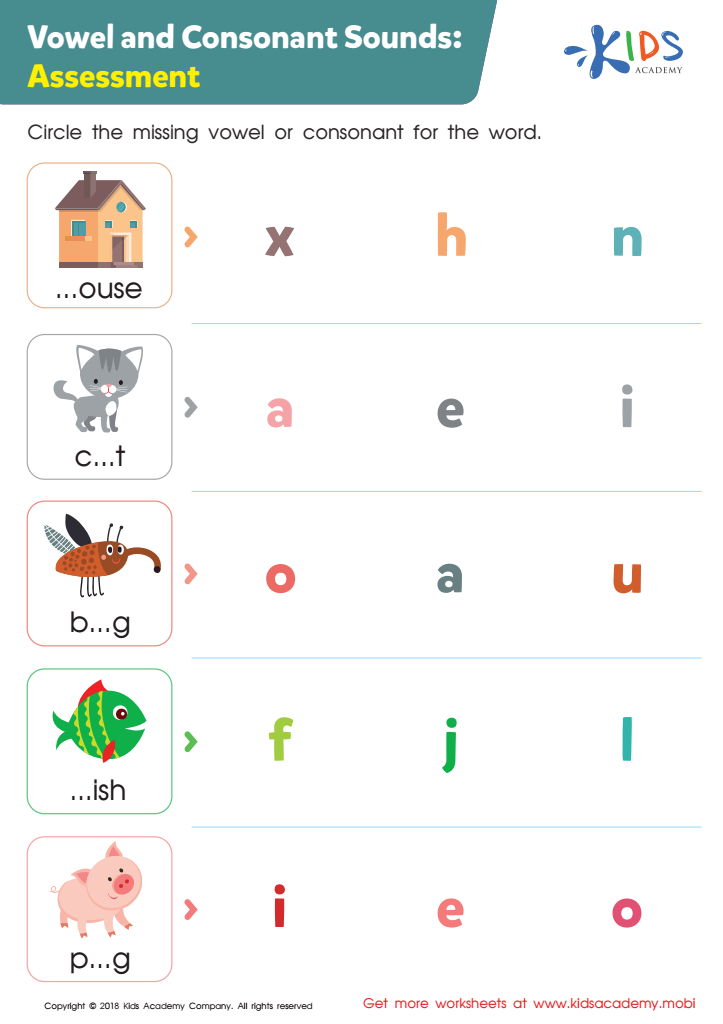
Vowel and Consonant Sounds: Assessment Worksheet
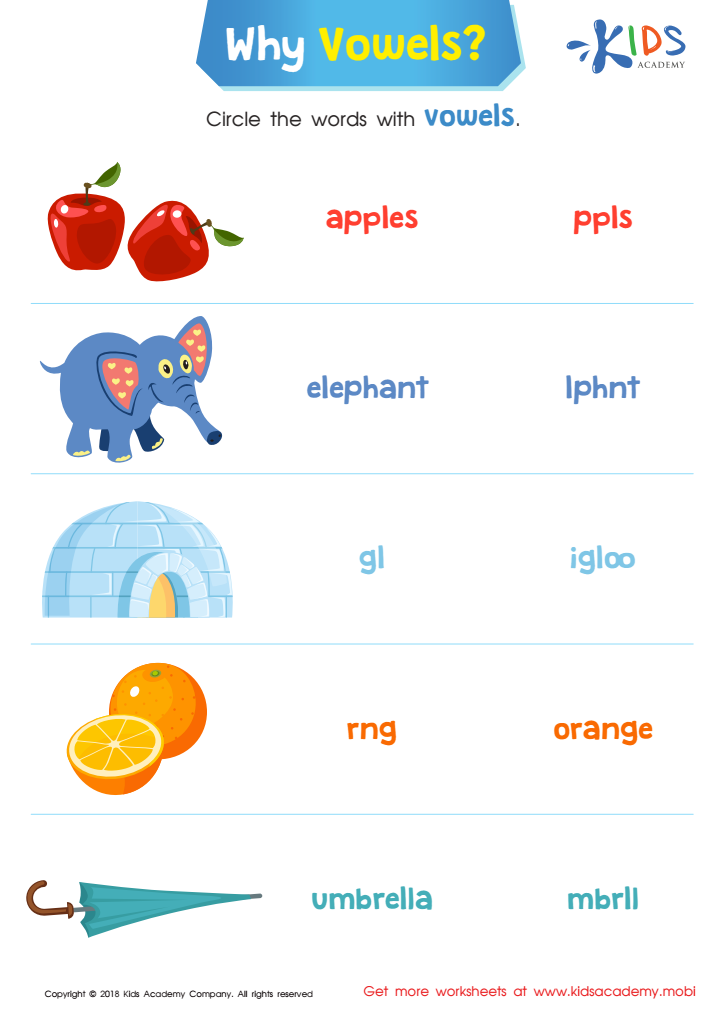
Why Vowels? Reading Worksheet
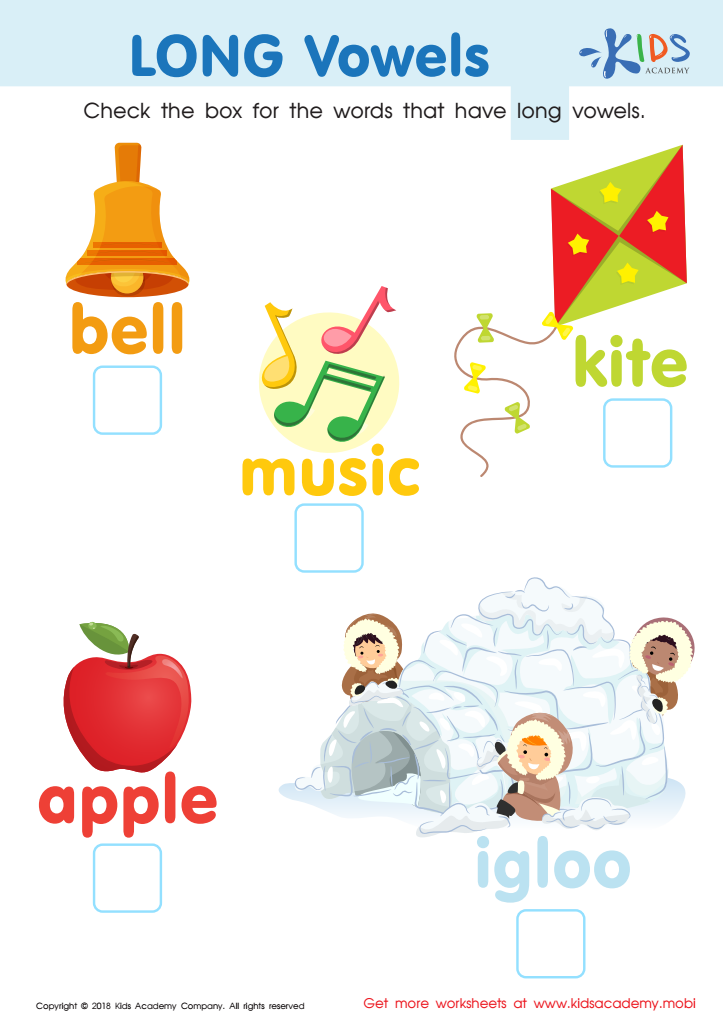
long vowels Worksheet



Reading comprehension, particularly understanding vowels and consonants, is crucial for children ages 3-4 for several reasons. At this age, children are developing foundational literacy skills that will serve as a springboard for their future reading success. Vowels and consonants form the backbone of our language, and recognizing them helps children decode words, leading to improved reading comprehension as they progress.
Understanding vowels and consonants also enhances phonemic awareness, allowing young learners to manipulate sounds, blend them to form words, and ultimately participate in storytelling or conversations. Early exposure to these concepts builds confidence in children, making them more eager to expand their vocabulary and engage with books, narratives, and language in general.
Moreover, parents and teachers play a vital role in sparking a love for reading and learning. By fostering an understanding of these essential components of language, they set children on a path toward better communication skills, critical thinking, and academic achievement. Encouraging activities like singing alphabet songs or reading together help reinforce these principles in enjoyable ways, solidifying a solid literacy foundation that supports lifelong learning and exploration. Ultimately, prioritizing reading comprehension in early childhood contributes to a child's overall cognitive and social development.







