Comparing lengths Worksheets for Ages 3-4
3 filtered results
-
From - To
Introduce your child to the exciting world of measurement with our "Comparing Lengths Worksheets" designed specifically for ages 3-4. These engaging activities will help young learners develop essential skills as they explore concepts of long and short. Through colorful illustrations and interactive exercises, children will practice identifying and comparing lengths, enhancing their observational skills and vocabulary. Perfect for home or classroom use, our worksheets offer a fun and educational way to build foundational knowledge in mathematics. Watch your little ones gain confidence as they enjoy hands-on learning experiences that set the stage for future success! Download your free worksheets today!
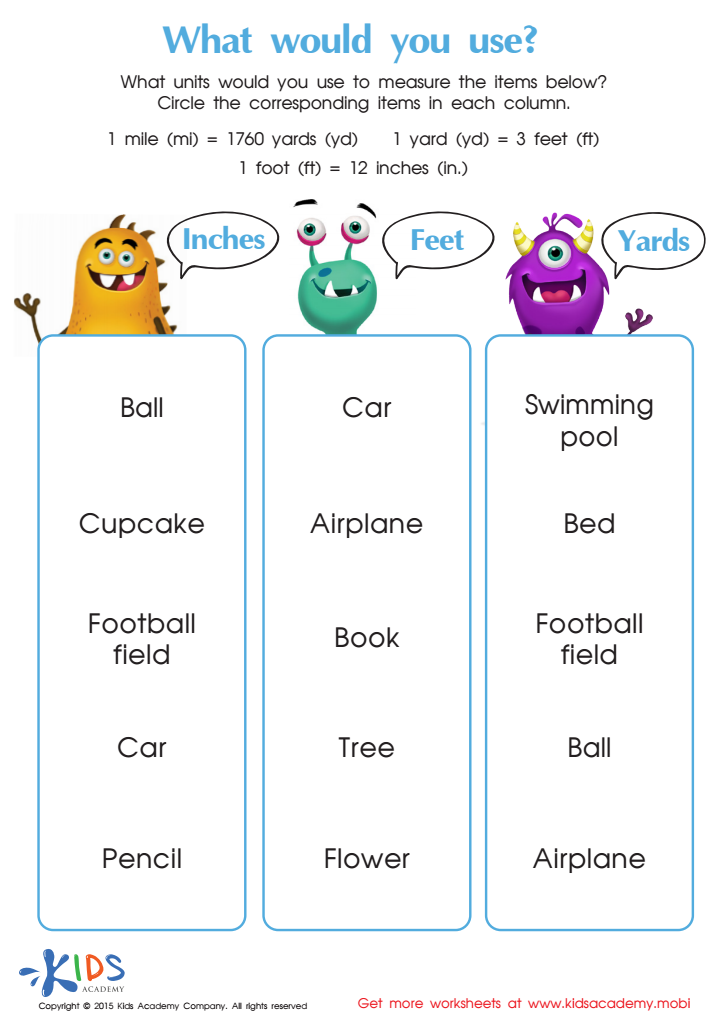
Learning about measuring objects in inches, feet and yards Worksheet
 Assign to My Students
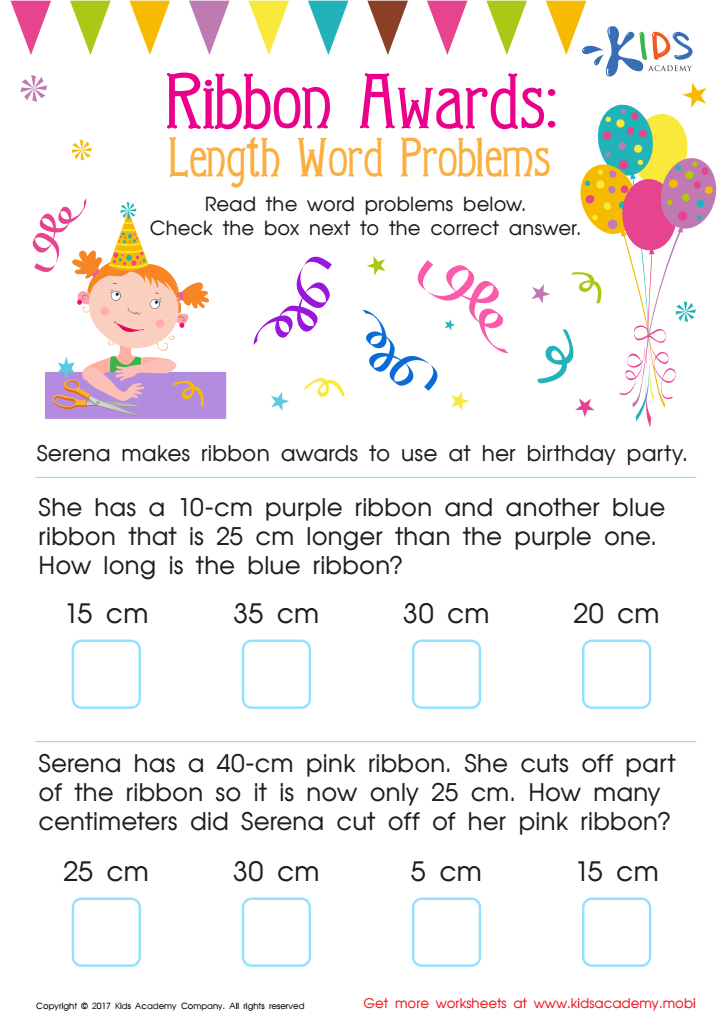
Length Word Problems Worksheet
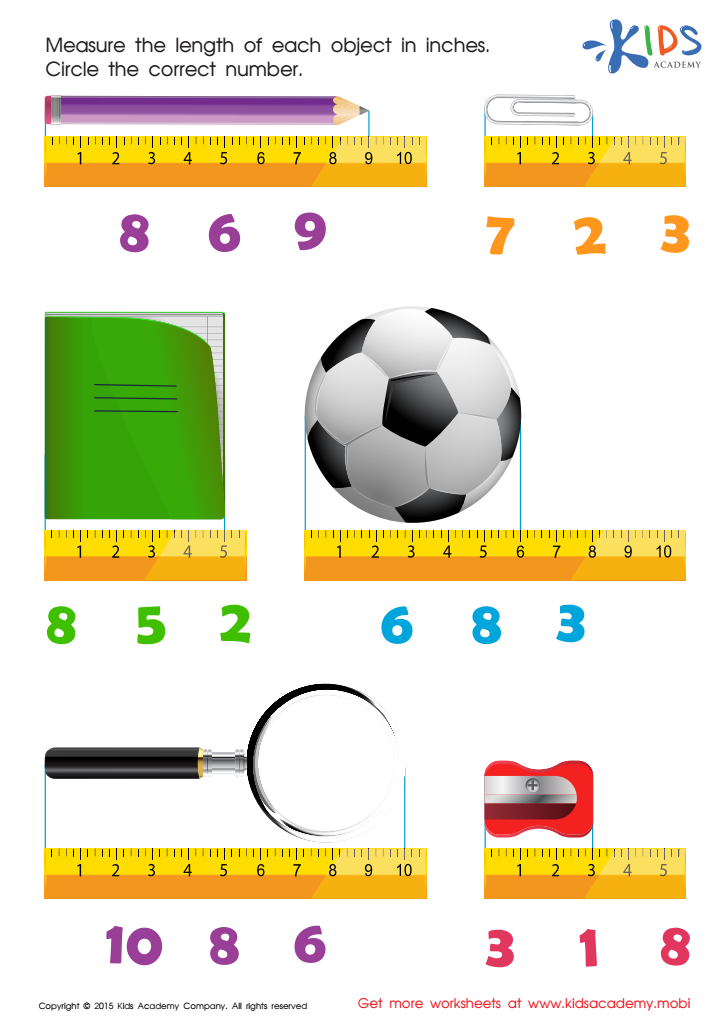
Learning measuring objects in inches Worksheet








For children ages 3-4, developing an understanding of comparing lengths is crucial for their early math skills. Engaging in activities that involve measuring and comparing lengths encourages cognitive development, promoting critical thinking and problem-solving abilities. Recognizing quantities and differences in lengths helps children establish foundational concepts that will support their future learning in mathematics and science.
Additionally, comparing lengths is instrumental in developing language skills. As children describe what they observe, they learn new vocabulary related to size, length, and measurement. This also provides opportunities for parents and teachers to engage in meaningful conversations, enhancing verbal skills and comprehension.
Furthermore, hands-on activities that involve comparing lengths—like measuring different objects or using strings of various sizes—align with the exploration and play-based approach that is essential for early childhood learning. Such activities encourage curiosity, motivate exploration, and foster a love for learning.
In summary, parents and teachers should care about comparing lengths at this age because it lays important mathematical foundations, enhances language development, and engages children in interactive learning experiences. Embracing these early concepts supports children's overall development and prepares them for more complex mathematical challenges in the future.








