Number comparison skills Worksheets for Ages 3-4
3 filtered results
-
From - To
Boost your little one's foundational math skills with our engaging Number Comparison Skills Worksheets for ages 3-4. Designed to captivate young learners, these worksheets introduce essential concepts of comparing numbers through fun activities. Kids will practice identifying which numbers are greater than, less than, or equal to each other, all while enhancing their critical thinking and problem-solving abilities. Colorful illustrations and interactive exercises make learning enjoyable, ensuring that your preschooler develops a strong mathematical foundation. Perfect for parents and educators alike, these worksheets are a vital resource for your child's early education journey. Explore our collection and foster a love for numbers today!
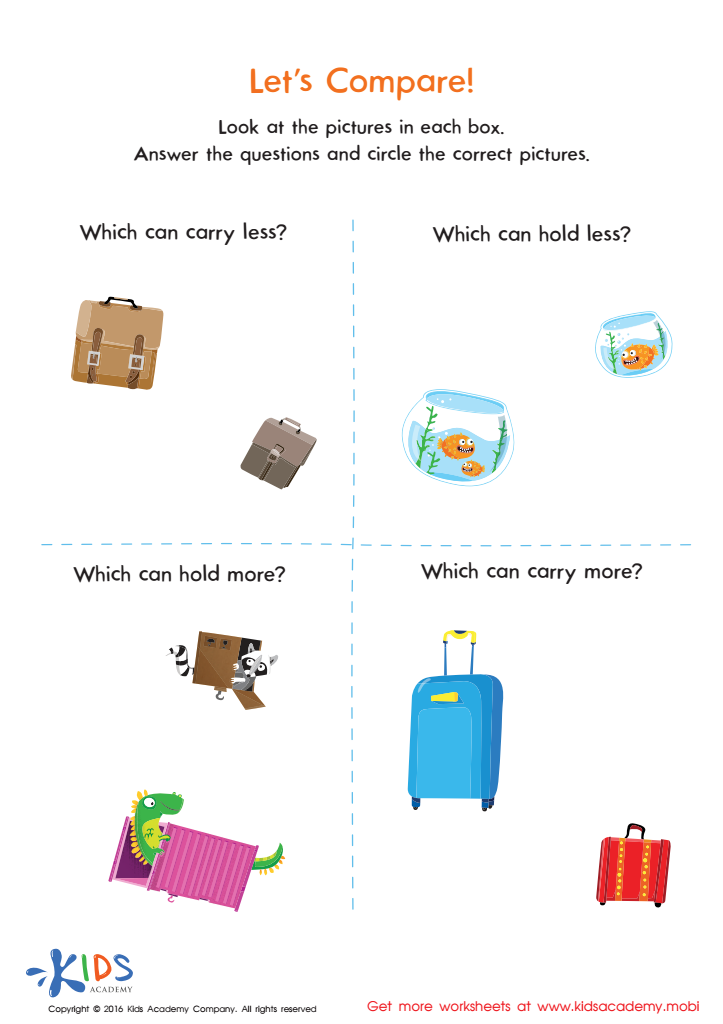
Let's Compare Worksheet: Big or Small
 Assign to My Students
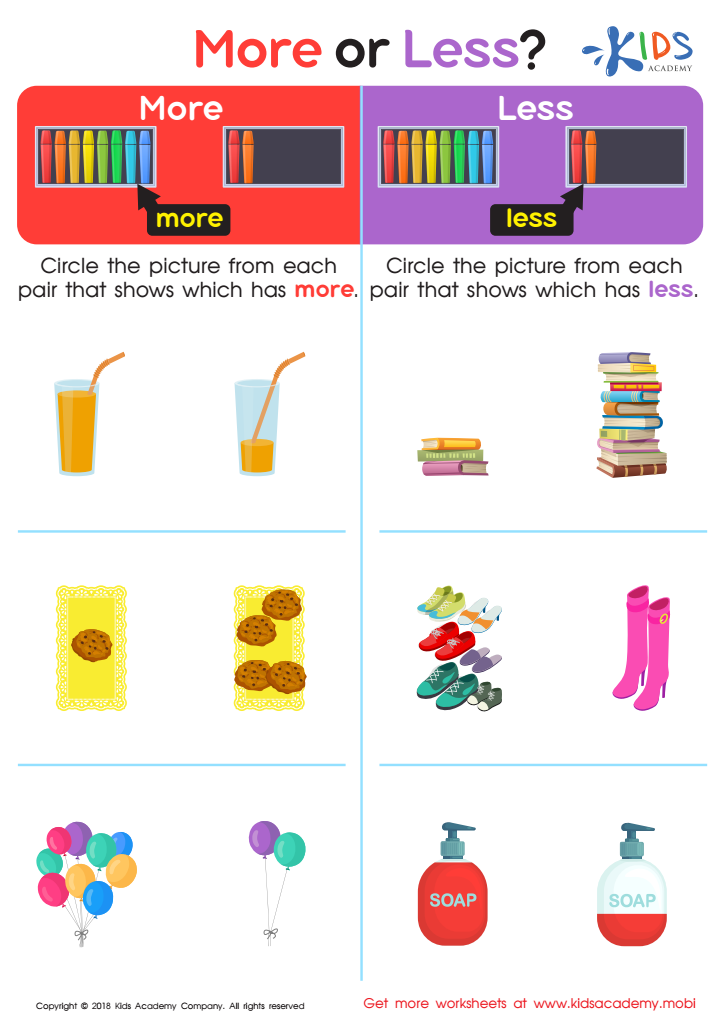
More or Less? Worksheet
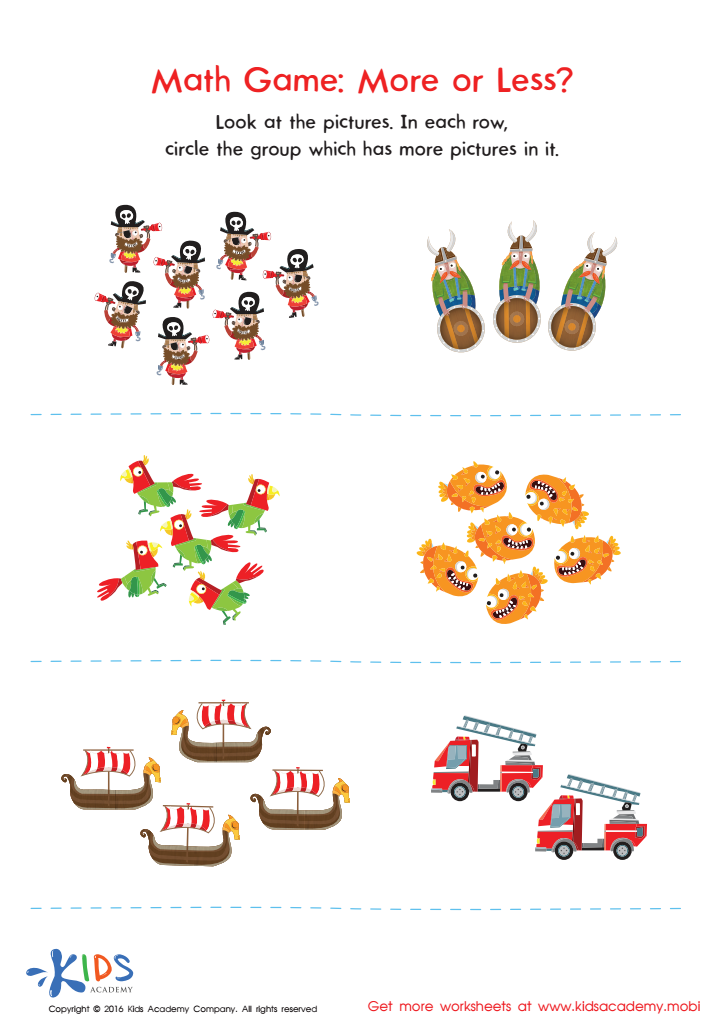
More or Less Worksheet








Number comparison skills are crucial for children aged 3-4 as they lay the foundation for mathematical understanding and cognitive development. At this age, children begin to explore the concepts of "more," "fewer," and "equal," which helps them make sense of their world. These skills are not only essential for counting but also contribute to problem-solving and critical thinking abilities.
When children learn to compare numbers, they develop better reasoning skills. For instance, recognizing that three apples are more than two engages their synthetic reasoning and logical thinking. Additionally, early number comparison sets the groundwork for more complex mathematical concepts in later years, including addition, subtraction, and even basic algebra.
Moreover, mastering these skills can enhance a child's confidence in their mathematical abilities, leading to a more positive attitude toward math education as they grow. For parents and teachers, fostering number comparison skills through fun and engaging activities can promote not only academic growth but also emotional development. By prioritizing these fundamental skills, caregivers can help cultivate a child's love for learning and increase their chances of academic success.








