
Phonics enhancement Worksheets for Ages 3-4
3 filtered results
Difficulty Level
Grade
Age
-
From - To
Subject
Activity
Standards
Discover our engaging Phonics Enhancement Worksheets for ages 3-4, designed to spark a love for reading and improve phonetic skills! These printable resources allow young learners to explore sounds, beginning letters, and simple word structures through interactive activities. Our worksheets are tailored to promote early literacy by integrating fun visuals and hands-on practice, making learning enjoyable. Ideal for parents and educators, these worksheets support phonemic awareness and help children develop critical listening and speaking skills. Empower your little learners with the foundational tools they need for a successful reading journey. Start fostering their love for language today!
Favorites
With answer key
Interactive
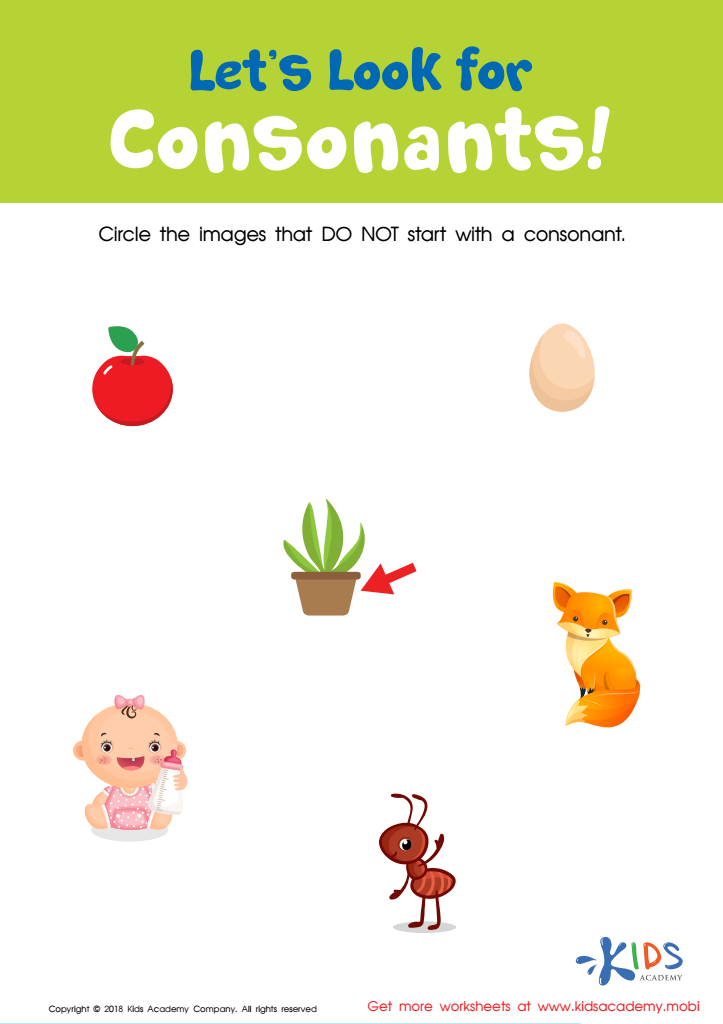
Let's Look for Consonants Worksheet
Help kids learn consonants and words that start with them. Ask them to recite the alphabet, then explain consonants are all letters but the 5 vowels. Use the worksheet to ask them to circle items without a consonant. Emphasize that's 21 consonants.
Let's Look for Consonants Worksheet
Worksheet
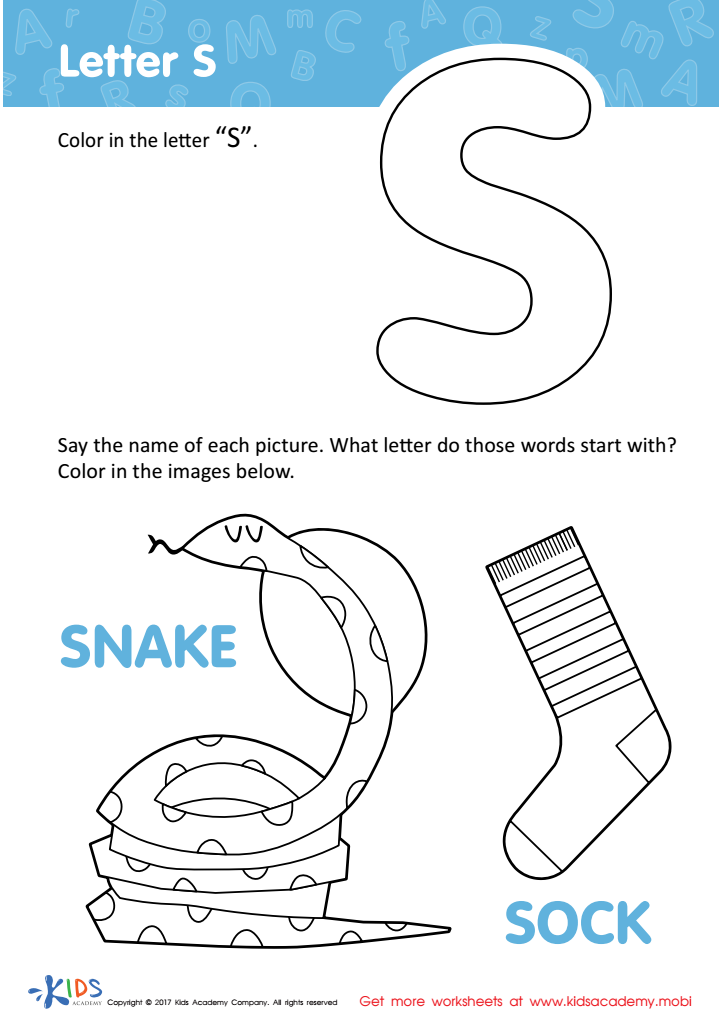
Letter S Coloring Sheet
Help your child practice recognizing the letter "S" and the sound it makes with this fun coloring page. It features a slippery snake, smelly sock and more! Give them extra practice by coming up with more "S" sounds and words.
Download (PDF)
 Assign to My Students
Assign to My Students
Letter S Coloring Sheet
Worksheet
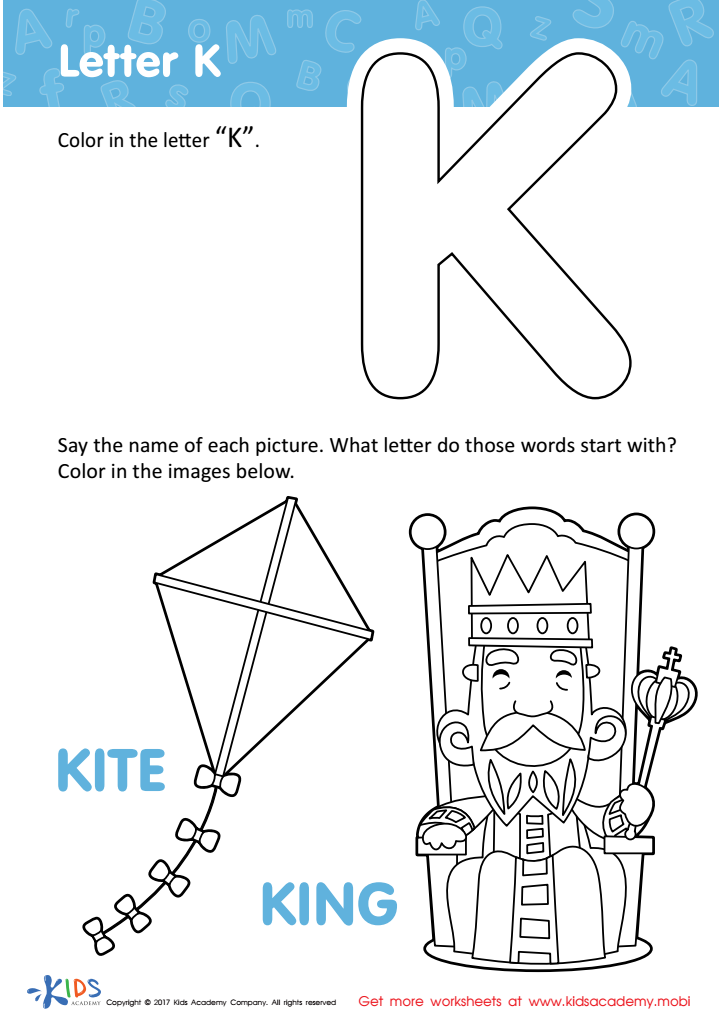
Letter K Coloring Sheet
This letter K coloring page captivates your child's creativity while learning the letter! Showcasing a king and kite, common words for their age group, it's sure to spark their imagination.
Download (PDF)
Assign to My Students
Assign to My Students
Letter K Coloring Sheet
Worksheet
Join Kids Academy for Free
Who is primarily going to use this learning content?



.jpg)




Phonics enhancement for children aged 3-4 is vital for their early literacy development and overall academic success. At this stage, children are rapidly developing their language skills and begin understanding the relationship between sounds and letters. Fostering phonics skills helps them identify sounds in words, which is crucial for later reading and writing. When parents and teachers actively engage in phonics enhancement, they lay a strong foundation for children’s reading abilities, enabling them to decode simple words independently as they grow.
Moreover, early exposure to phonics promotes critical thinking and cognitive development. It encourages children to play with language, increasing their vocabulary and comprehension skills, thereby facilitating better communication. Additionally, phonics instruction has been shown to build confidence in emerging readers. When children feel competent in identifying sounds, they are more likely to take risks with reading and writing.
Awareness around the significance of phonics resonates not just with literacy outcomes but also with emotional readiness for school. By integrating fun phonics activities at home and in the classroom, both parents and teachers can nurture a love for reading early on, cultivating lifelong learners who thrive in their educational journeys. Investing in phonics now means empowering children for future academic endeavors.








