Punctuation understanding Worksheets for Ages 3-4
4 filtered results
-
From - To
Introduce your little ones to the exciting world of punctuation with our engaging Punctuation Understanding Worksheets designed for ages 3-4! These worksheets are perfect for early learners, helping them grasp basic punctuation marks like periods, commas, and question marks through fun activities and illustrations. Each worksheet promotes cognitive skills, fine motor skills, and language development, making learning a delightful experience. Parents and educators will appreciate the ease of use, fostering independent learning. Whether at home or in the classroom, these resources spark curiosity and enhance literacy skills, laying a strong foundation for future reading and writing success. Download now and watch their skills grow!
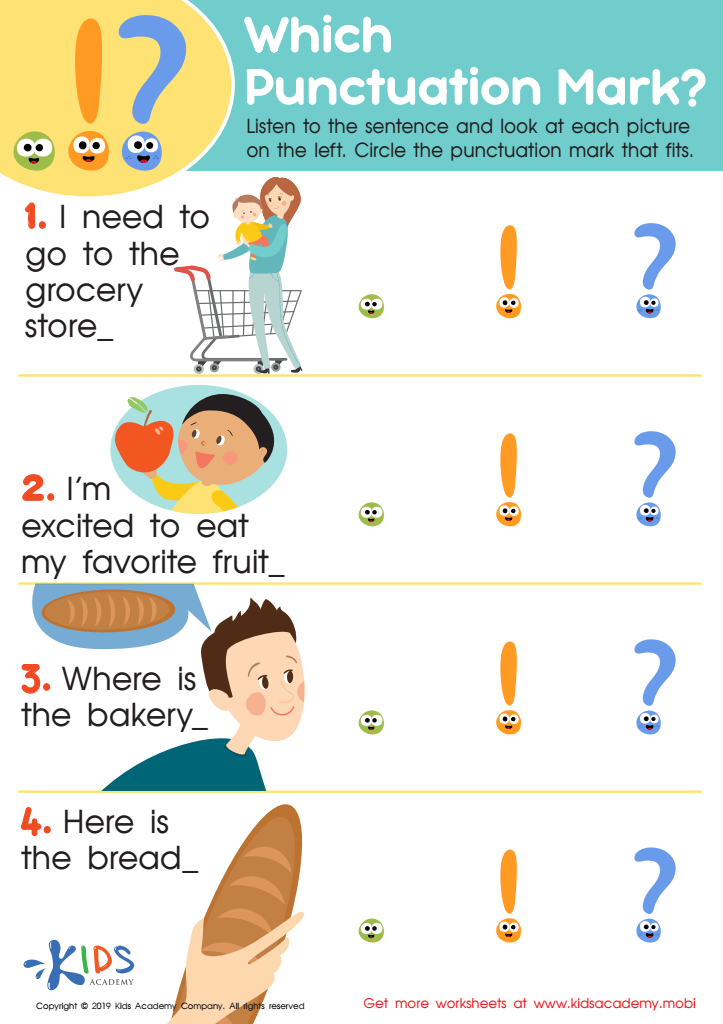
Which Punctuation Mark Worksheet
 Assign to My Students
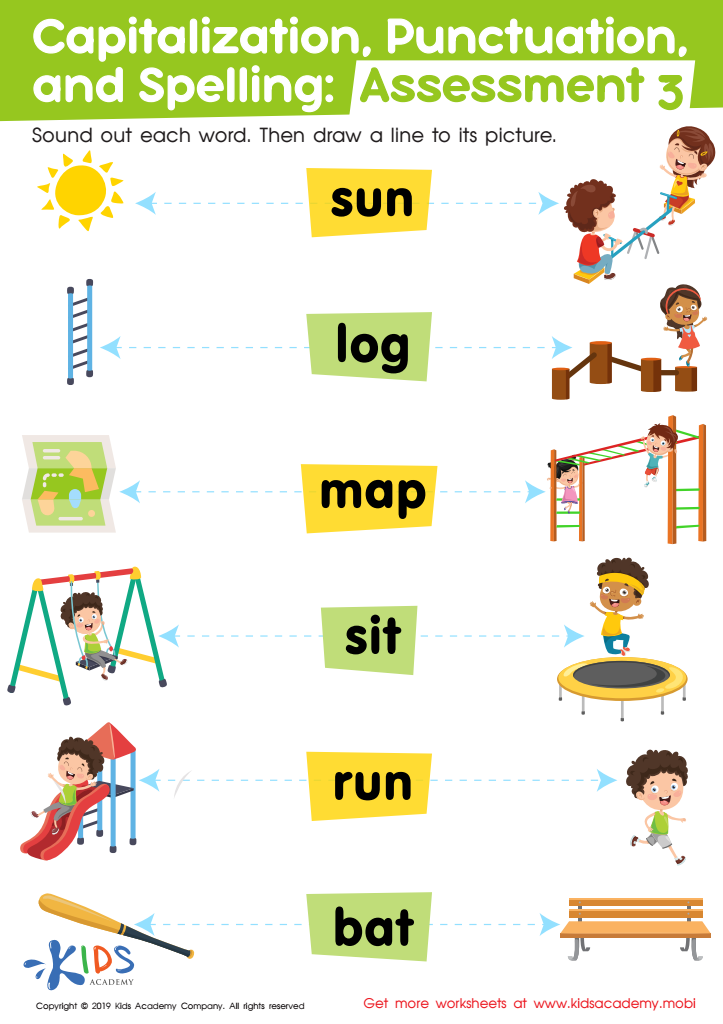
Capitalization. Punctuation. Spelling. Assessment 3 Worksheet
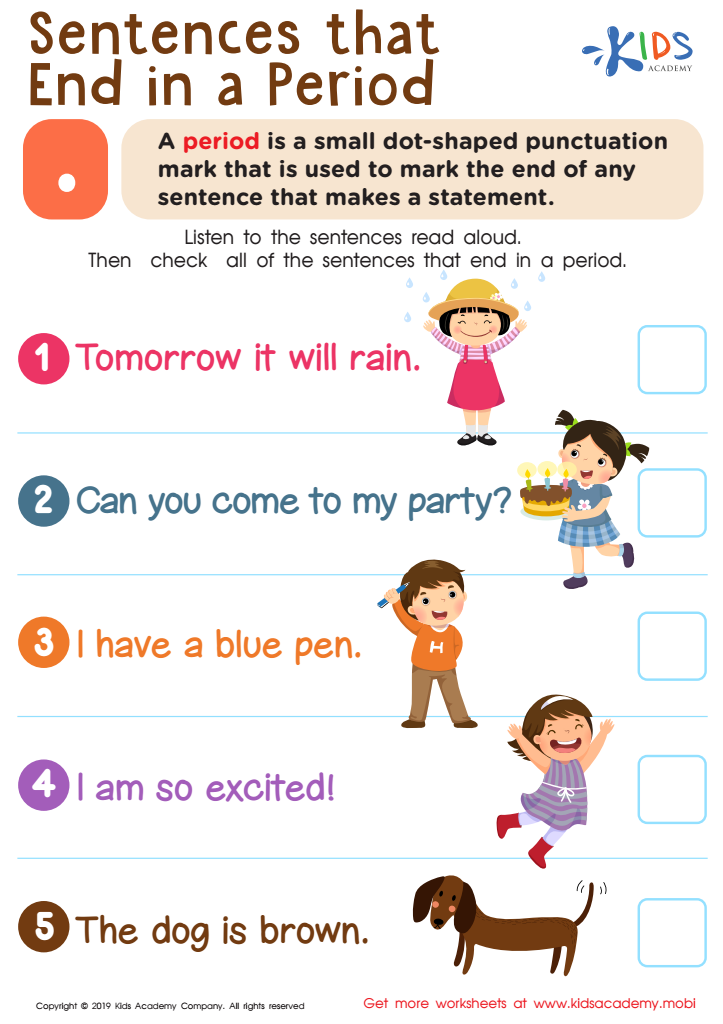
Sentences That End in a Period Worksheet
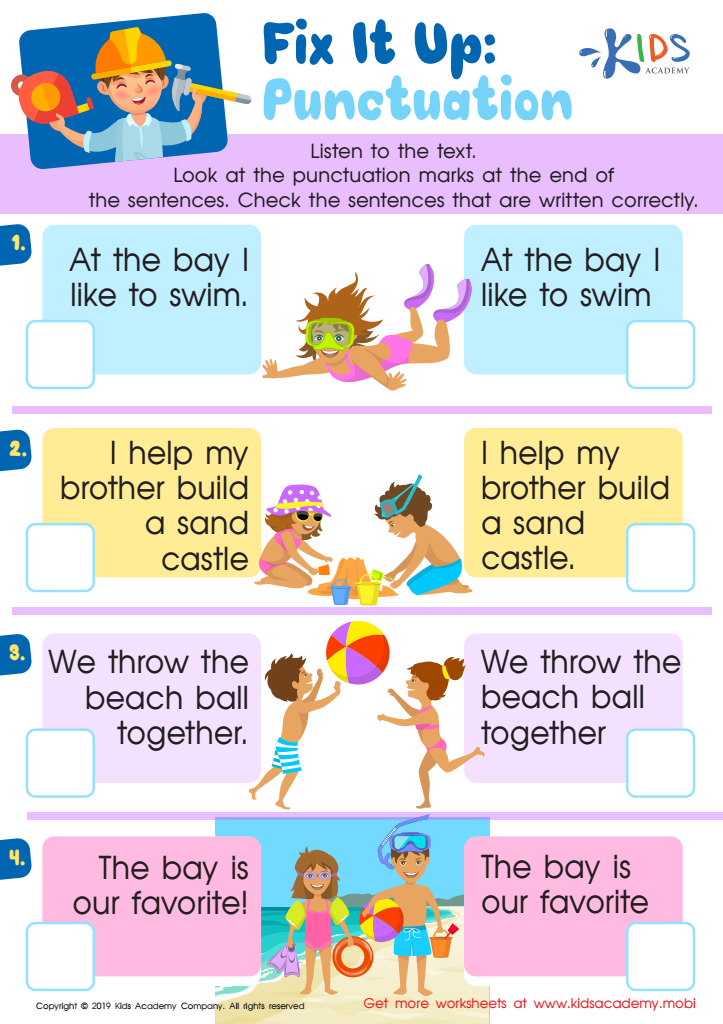
Fix Punctuation Worksheet


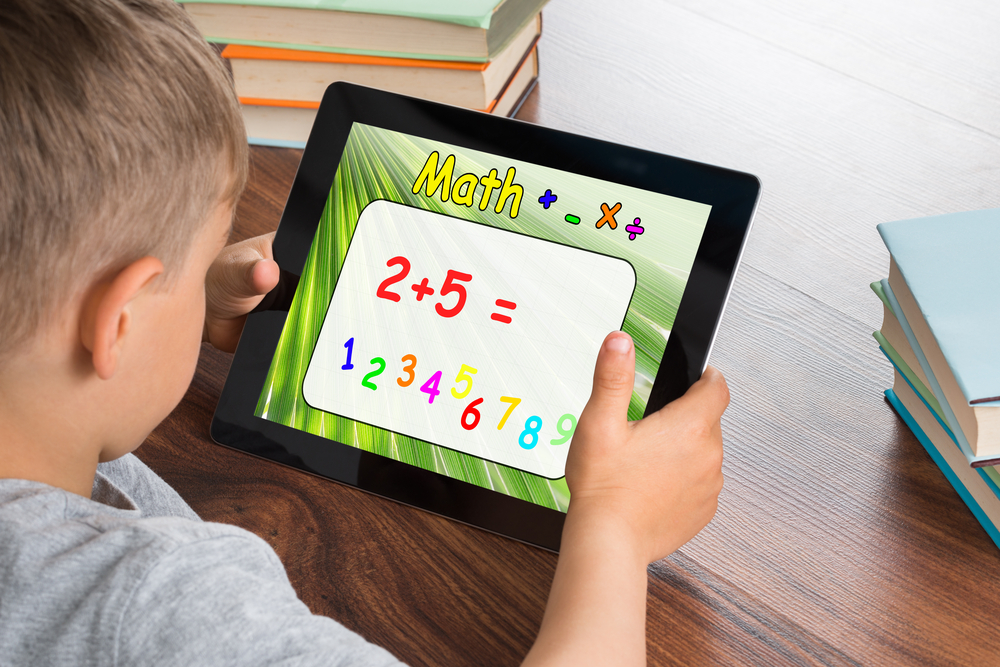





Understanding punctuation is crucial for children ages 3-4 as it lays the foundation for their literacy skills. At this developmental stage, children's language skills are rapidly expanding, and they are beginning to delve into reading and writing. Introducing punctuation helps them recognize the structure and meaning of sentences, enhancing both their comprehension and expressive abilities.
Parents and teachers can foster a love for language by:
-
Promoting Vocabulary Development: Familiarity with periods, commas, and question marks aids vocabulary understanding, helping kids discern different types of sentences and their functions.
-
Enhancing Listening Skills: Punctuation affects the rhythm and tone of spoken language, teaching children to listen carefully and interpret meaning in conversations, stories, and songs.
-
Encouraging Writing Exploration: Exposure to punctuation encourages children to experiment with their writing. This creative freedom builds confidence and enthusiasm for both writing and reading.
-
Supporting Comprehension Skills: Children develop the ability to decode texts better, linking punctuation to emotions and actions, which is critical for understanding stories both read aloud and independently.
By prioritizing punctuation understanding, parents and teachers empower young learners with essential tools for effective communication and providing a strong literacy foundation.








