Animal recognition Adding in the Forest Worksheets for Ages 3-4
15 filtered results
-
From - To
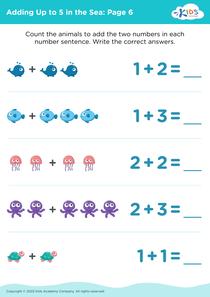
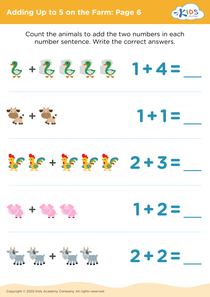
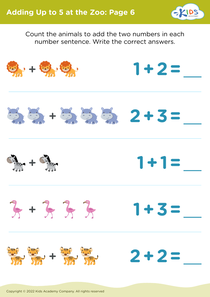
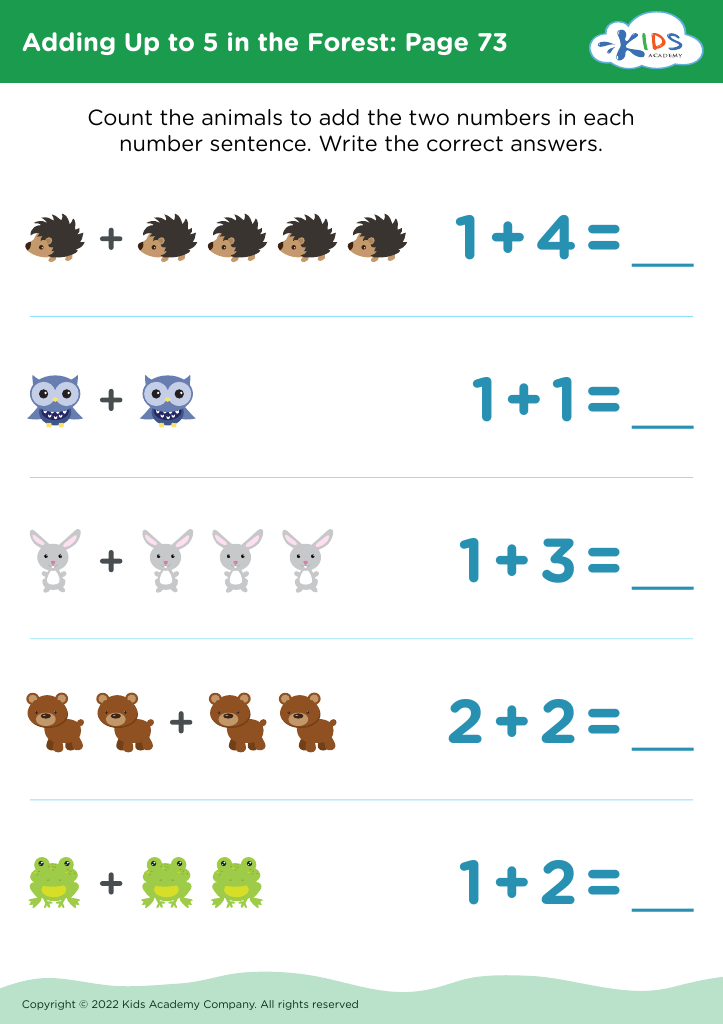
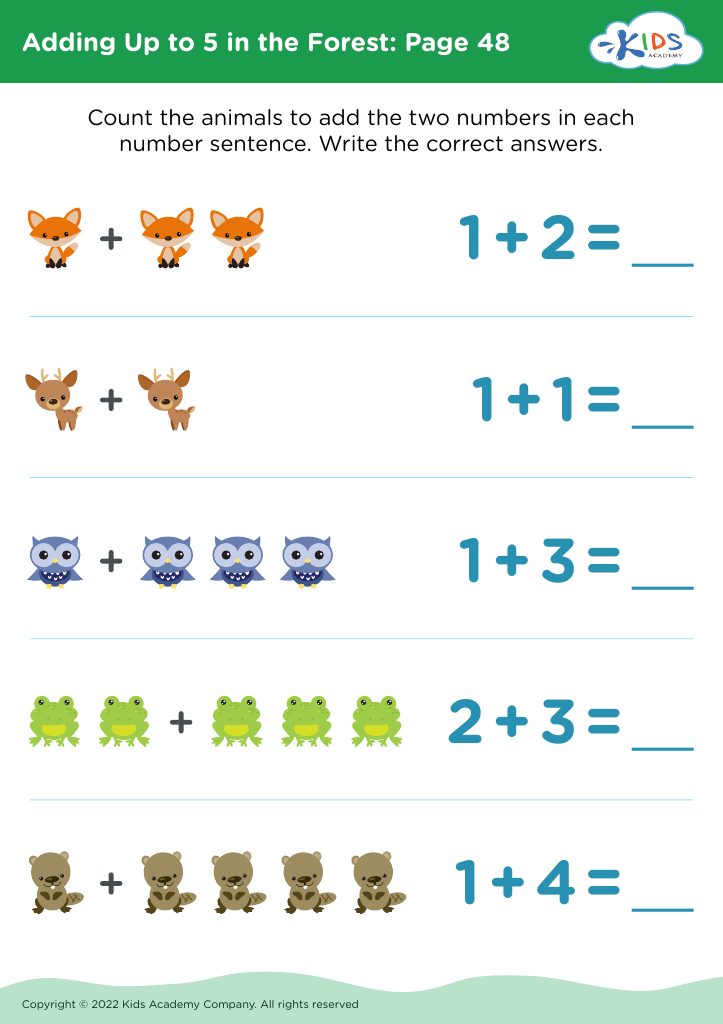
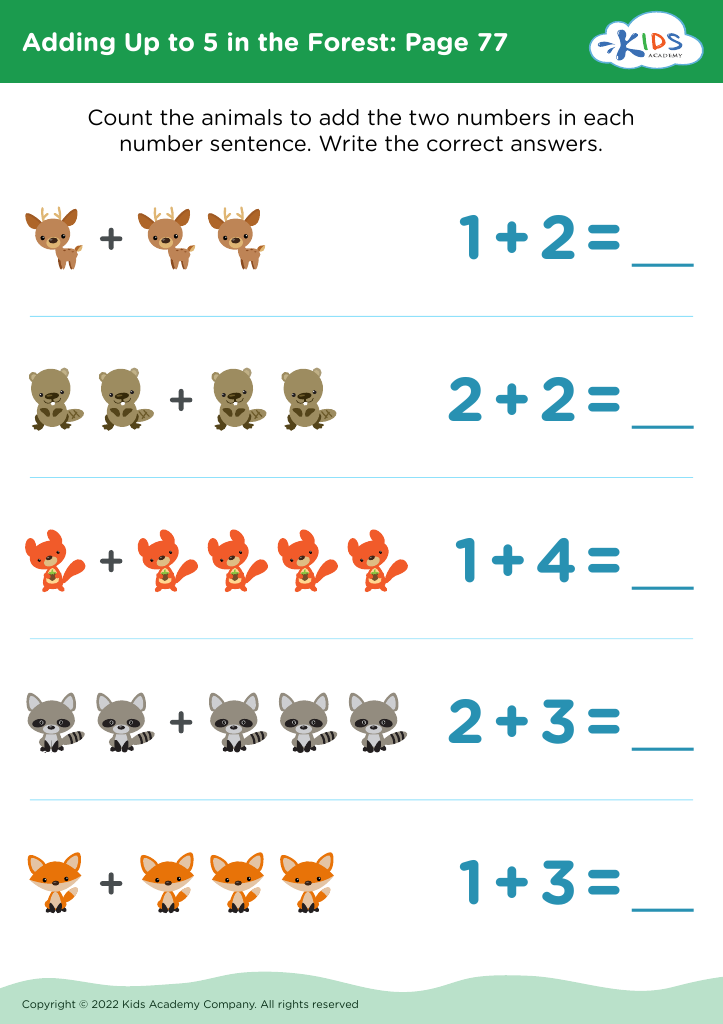
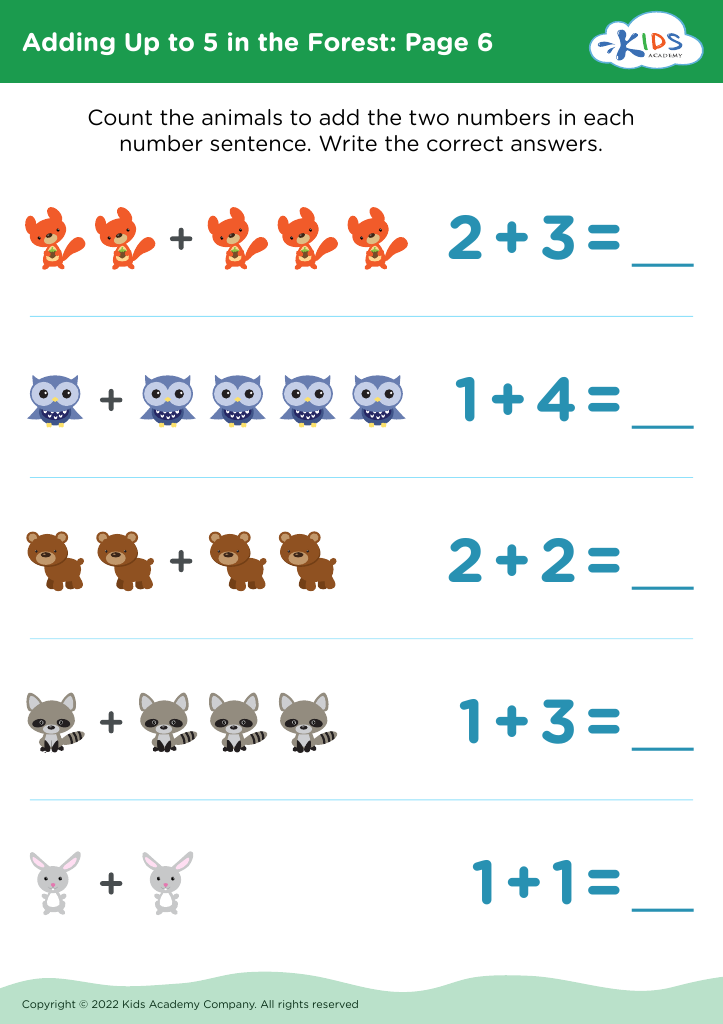
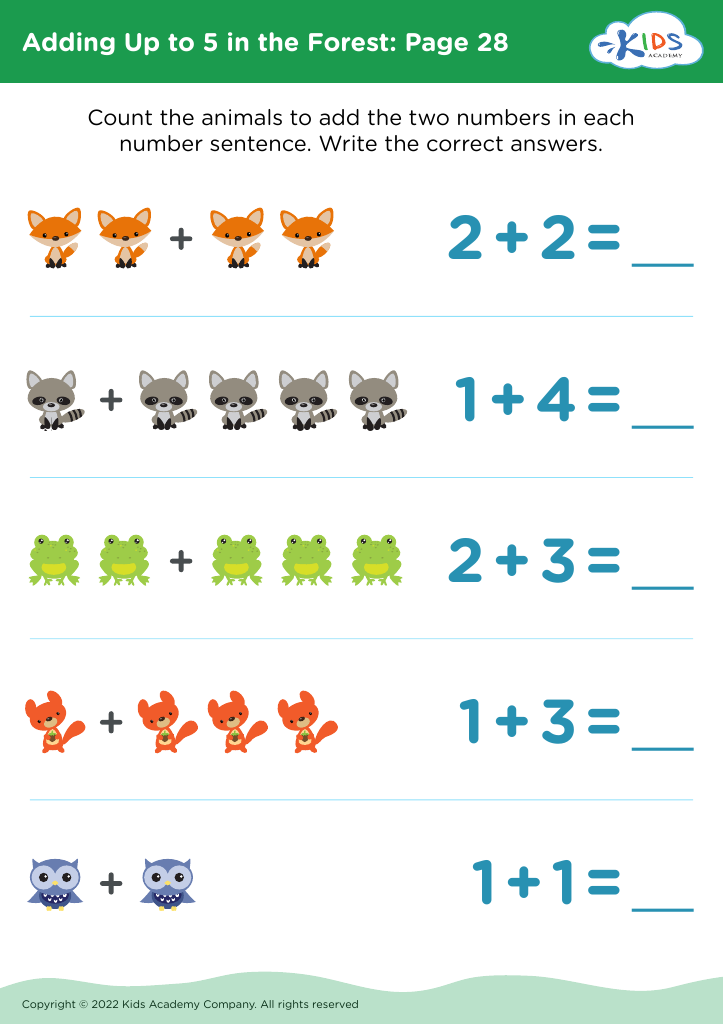
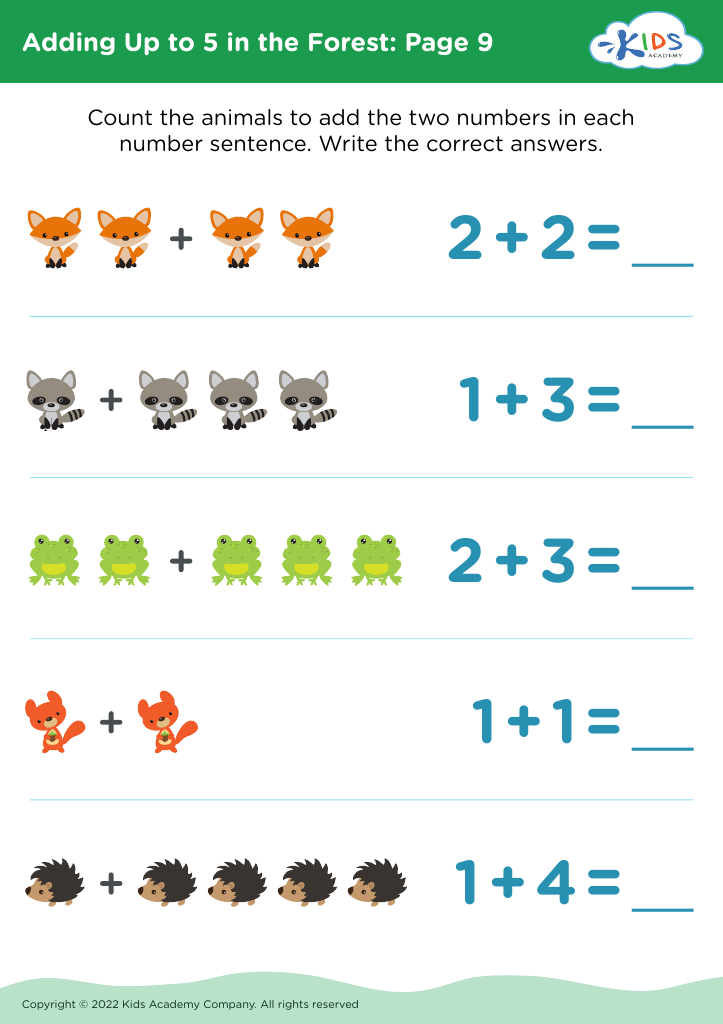
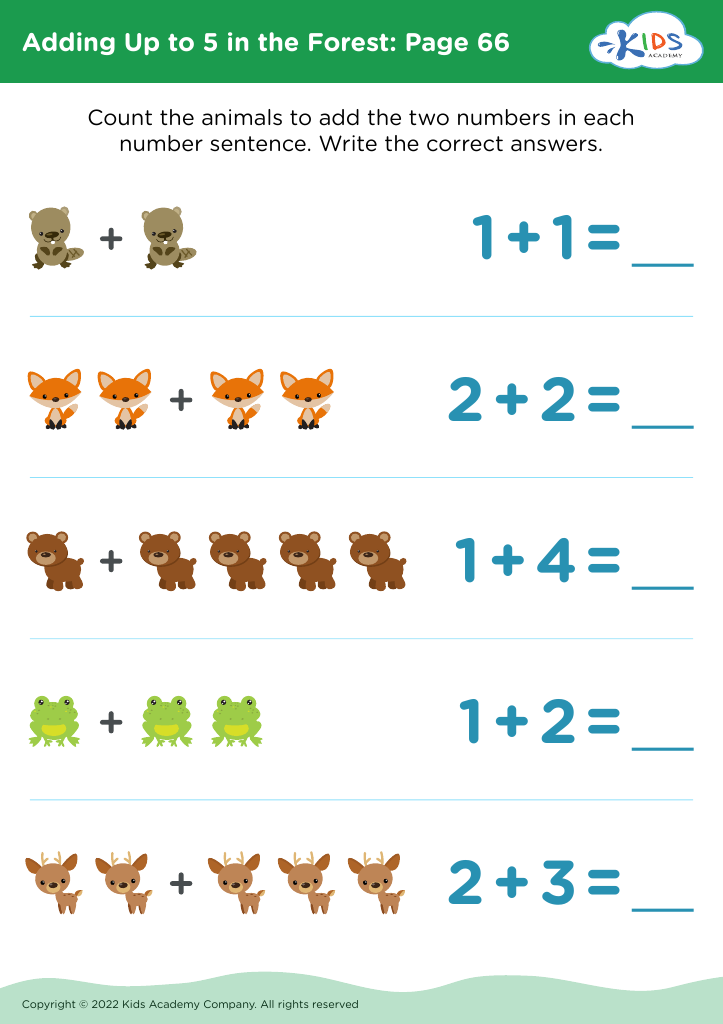
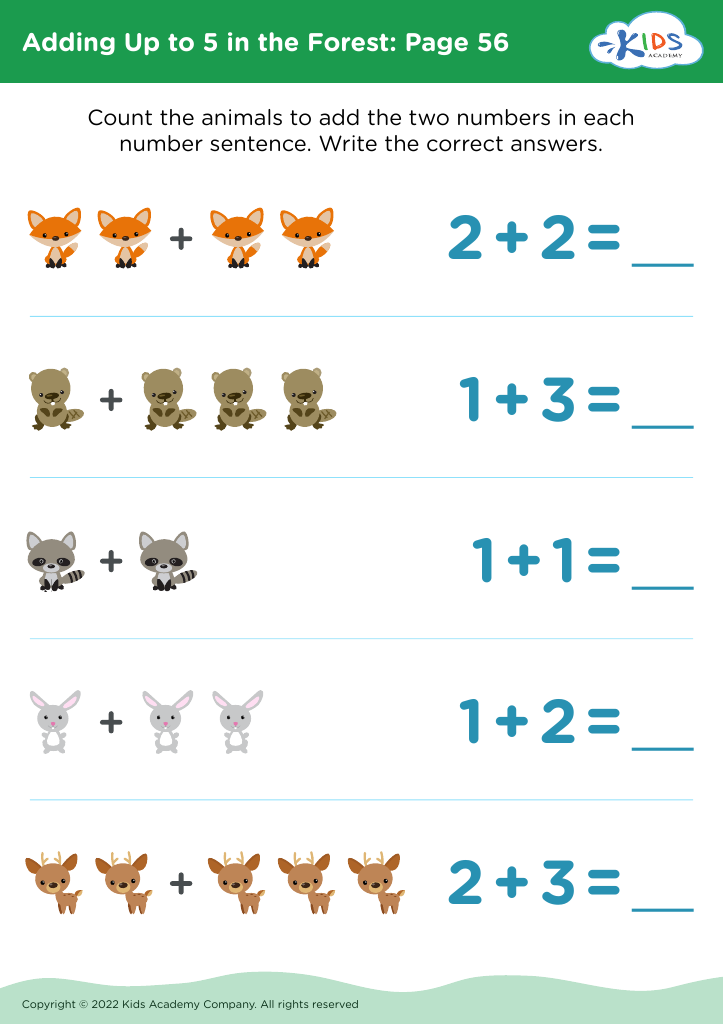
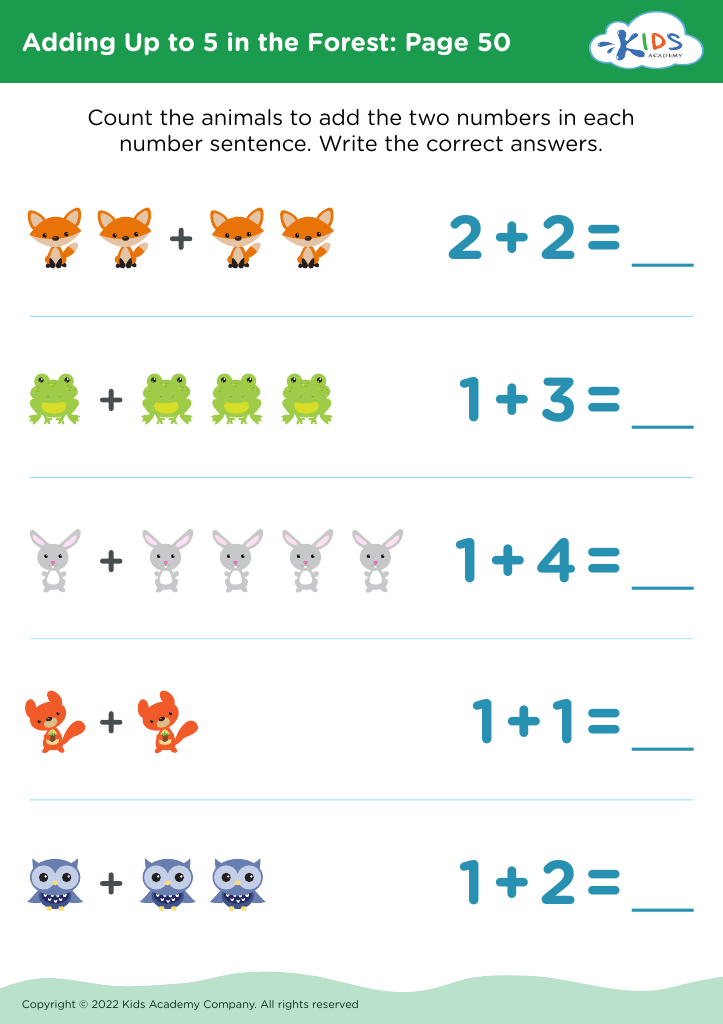
Explore the enchanting world of wildlife with our "Animal Recognition Adding in the Forest" worksheets designed for children ages 3-4. These engaging activities seamlessly blend early math skills with fun animal themes, ensuring an interactive learning experience. As little ones encounter adorable forest creatures, they will enhance their ability to recognize different animals while practicing basic addition. Each worksheet encourages counting and adds playful elements, making learning enjoyable. Perfect for parents and educators, these resources support cognitive development, creativity, and a love for nature. Download now to foster essential skills in your child's early academic journey!
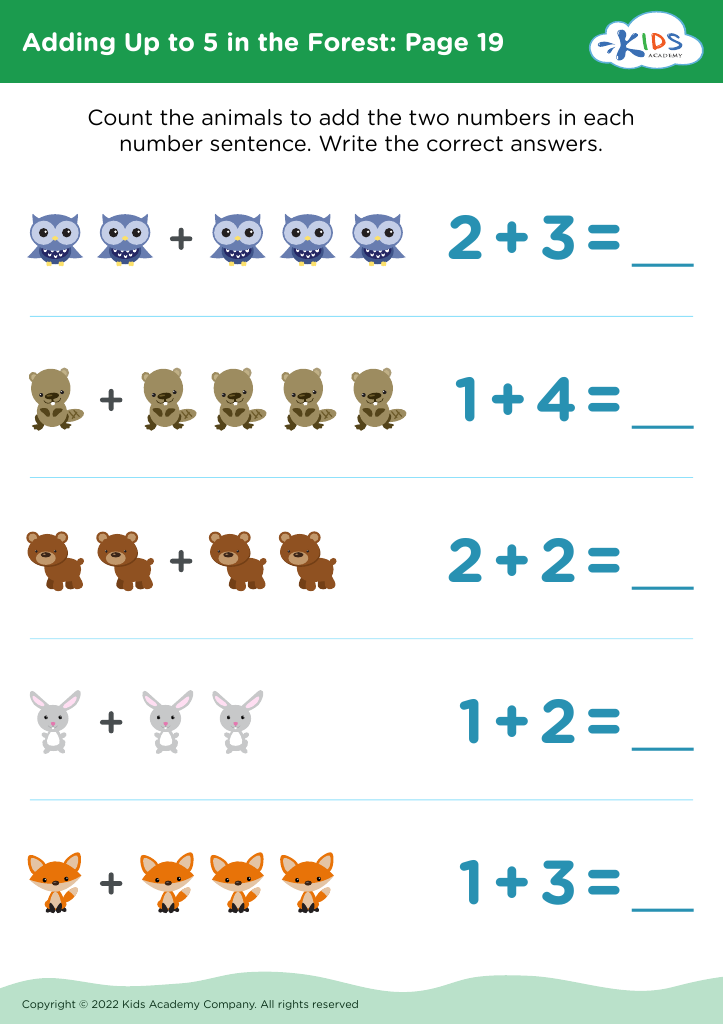
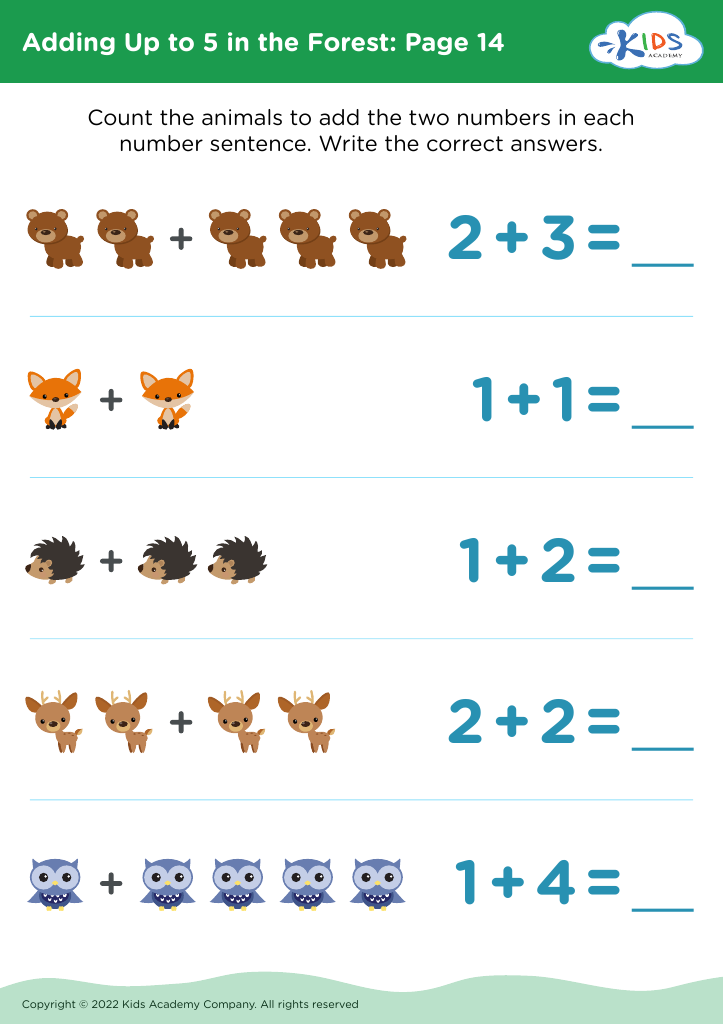
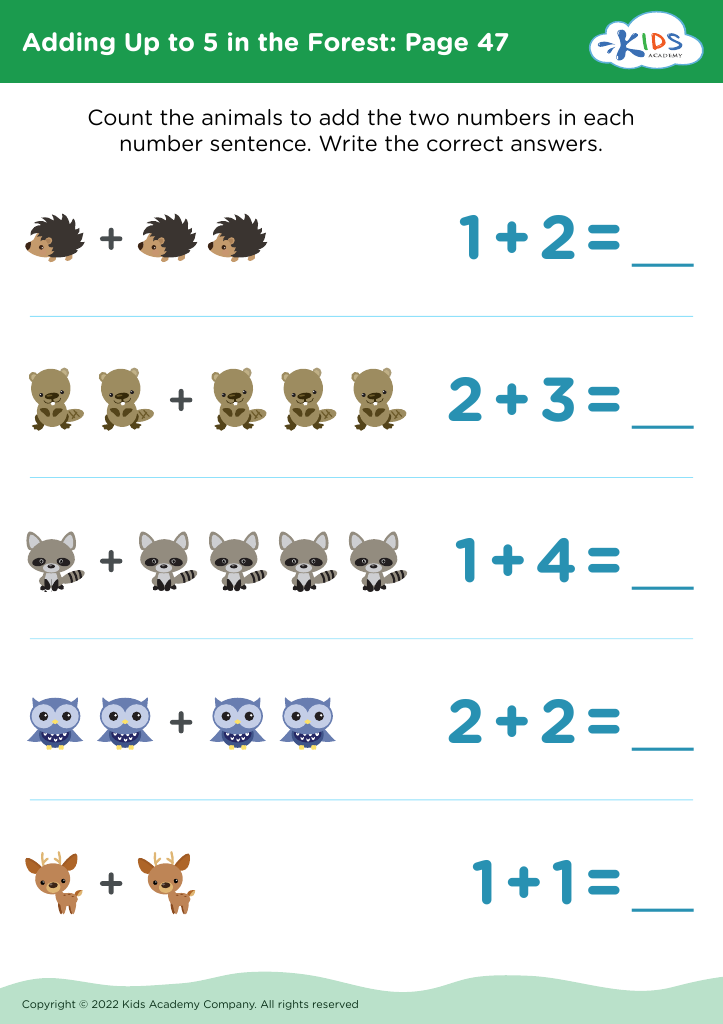
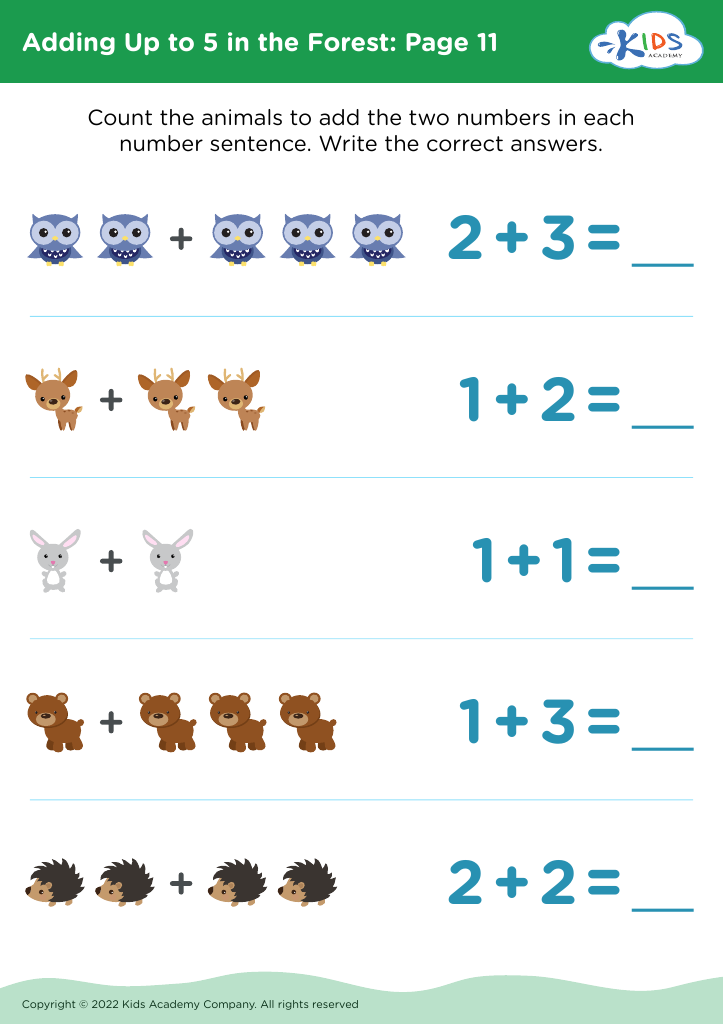
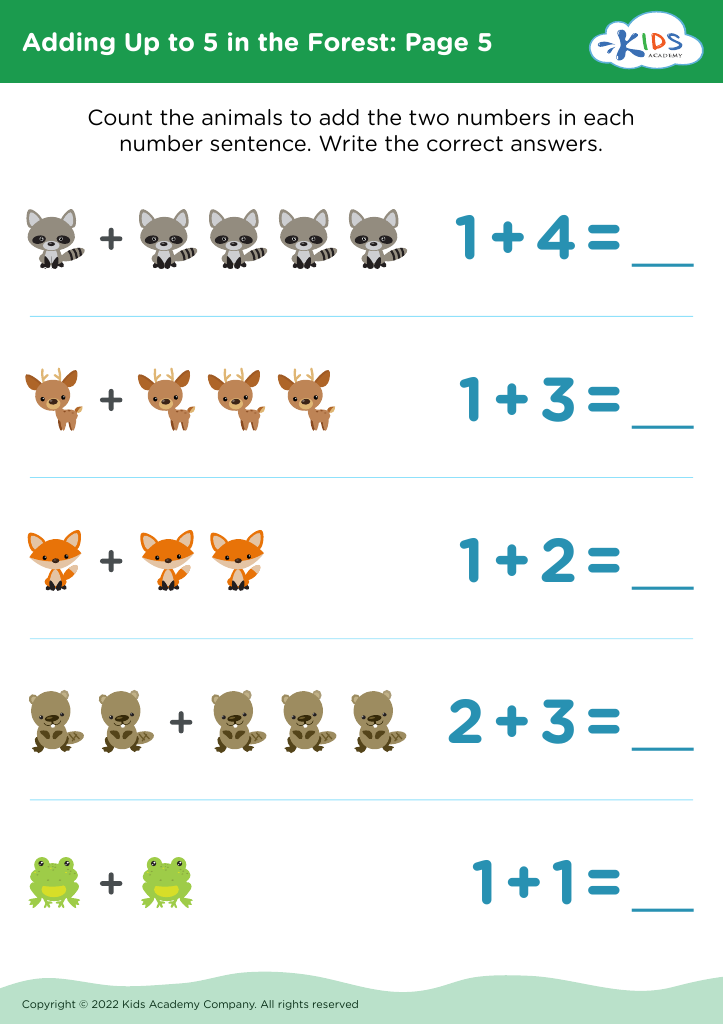
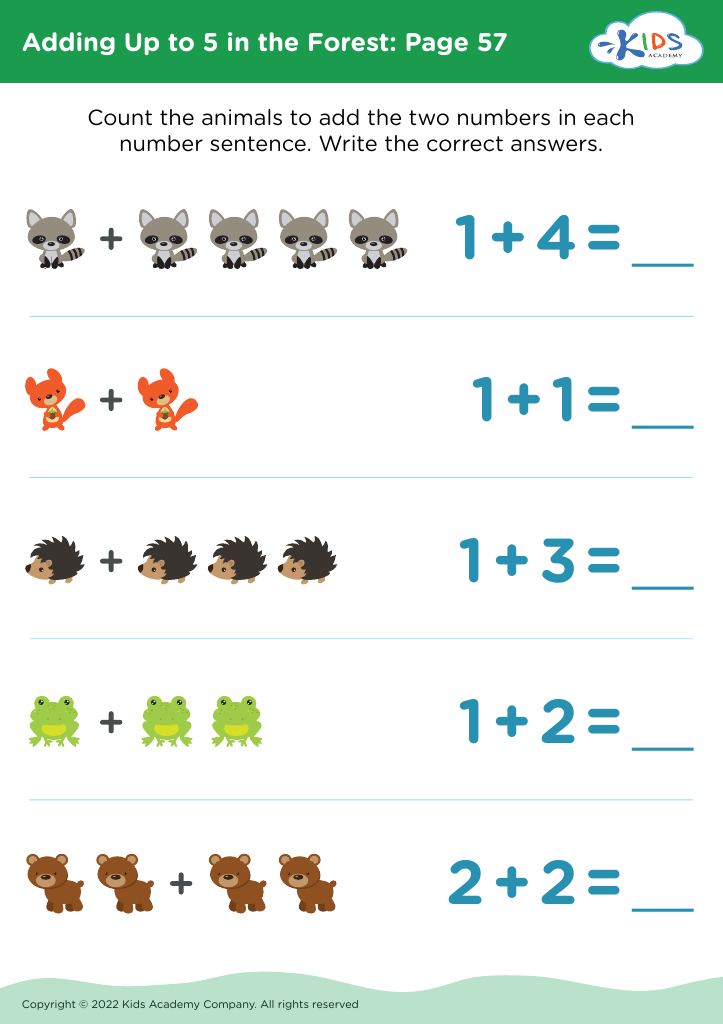



Animal recognition plays a crucial role in early childhood development, especially for children aged 3-4 years. During this stage, children are naturally curious about the world around them. Introducing them to animals found in forest environments enriches their understanding of nature and promotes curiosity. By recognizing different animals, children enhance their vocabulary as they learn new words associated with each species, fostering language development.
Additionally, learning about forest animals cultivates empathy and respect for living creatures. It encourages children to appreciate biodiversity and understand the importance of different species in maintaining ecosystem balance. When parents and teachers engage children in animal recognition through activities such as stories, games, or nature walks, it nurtures observational skills and critical thinking, laying the groundwork for future scientific inquiry.
Moreover, in promoting discussions about animals’ habitats and behaviors, caregivers can address themes of conservation and responsibility, instilling values that will shape environmentally-conscious adults. As children learn to identify and interact with the natural world, they strengthen their mental and emotional well-being, enriching their overall educational experience. Ultimately, fostering a love for animals in early childhood contributes to well-rounded, environmentally aware individuals.