Basic Addition Skills Adding in the Forest Worksheets for Ages 3-4 - Page 3
55 filtered results
-
From - To
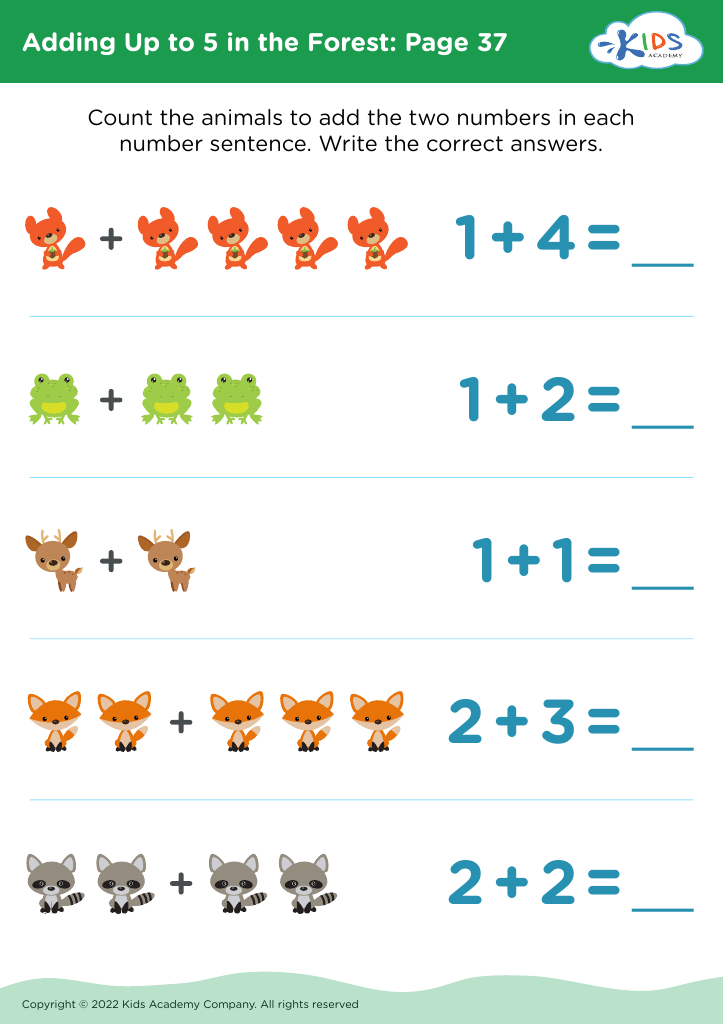
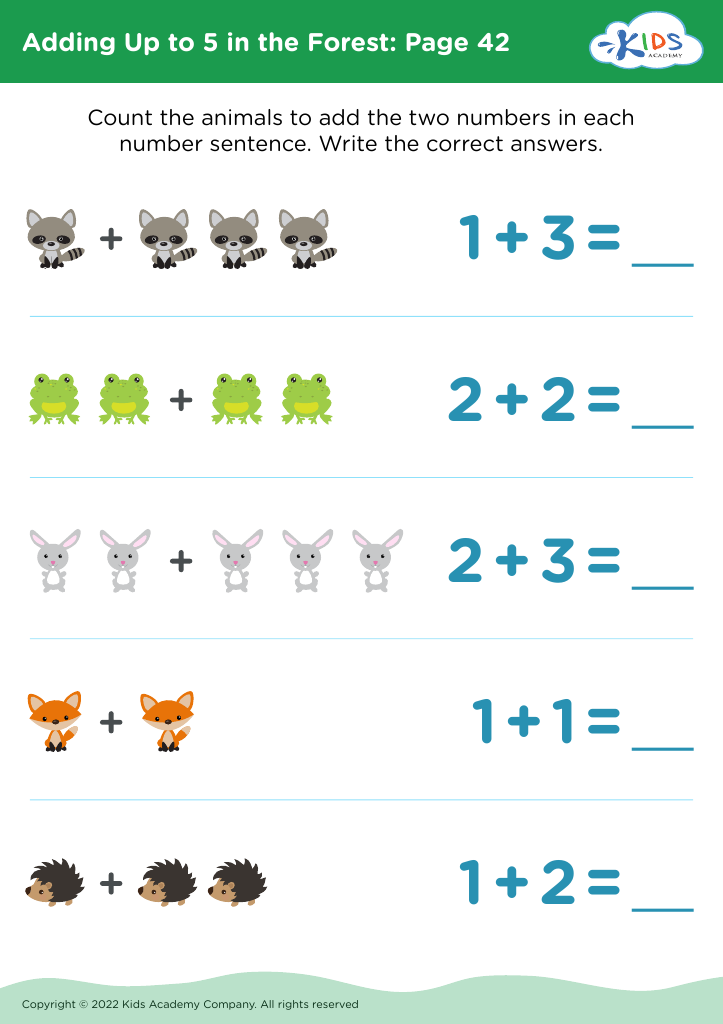
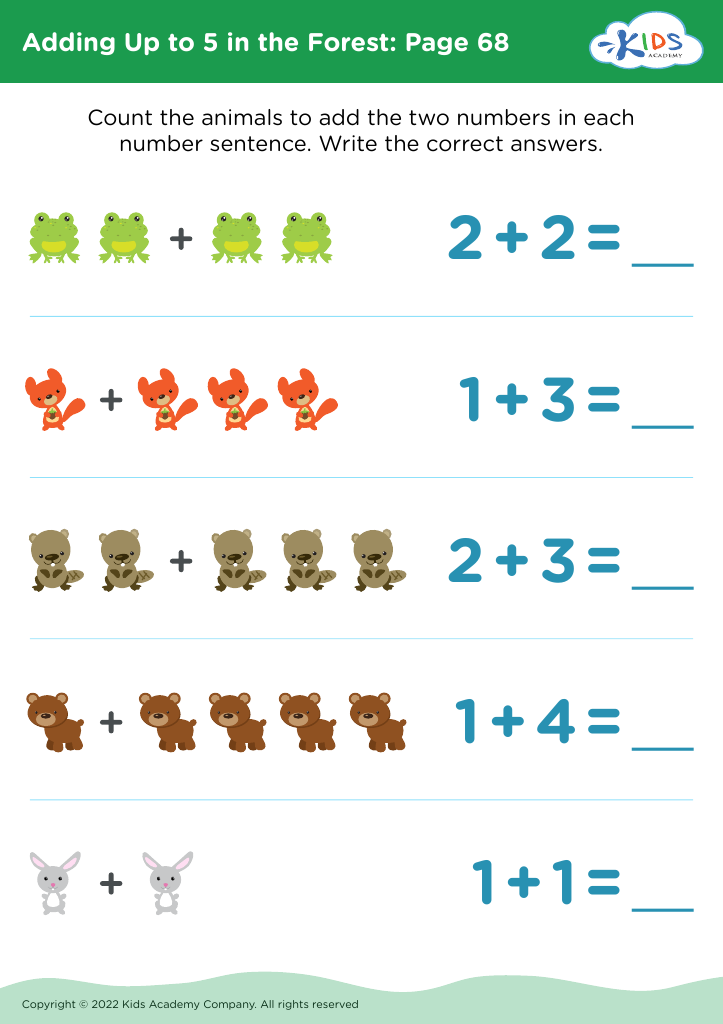
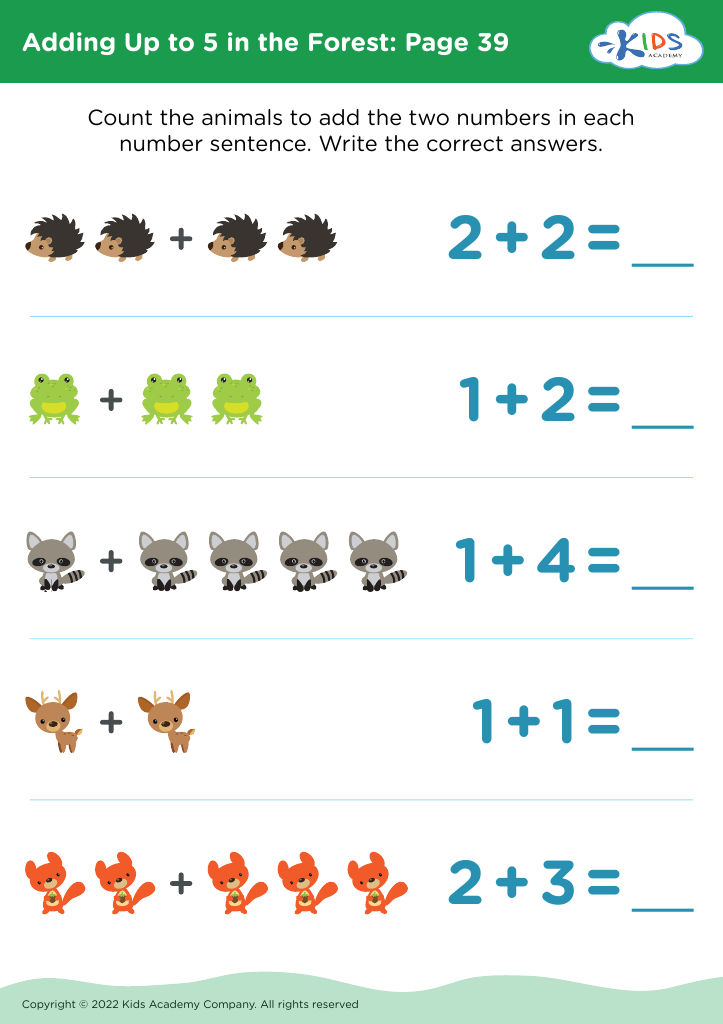
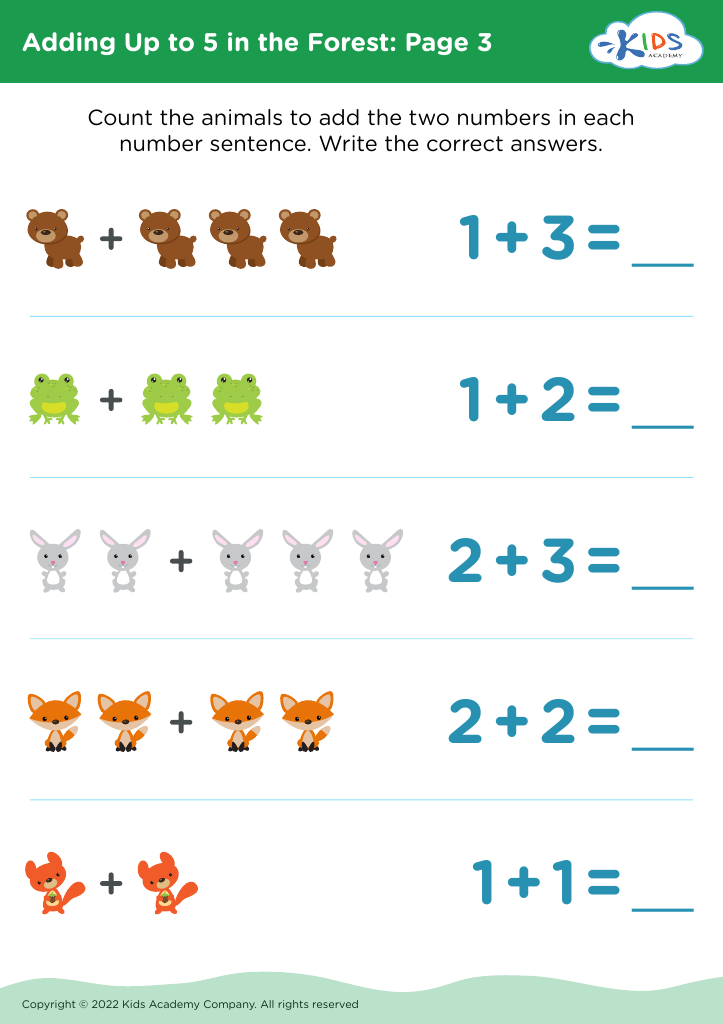
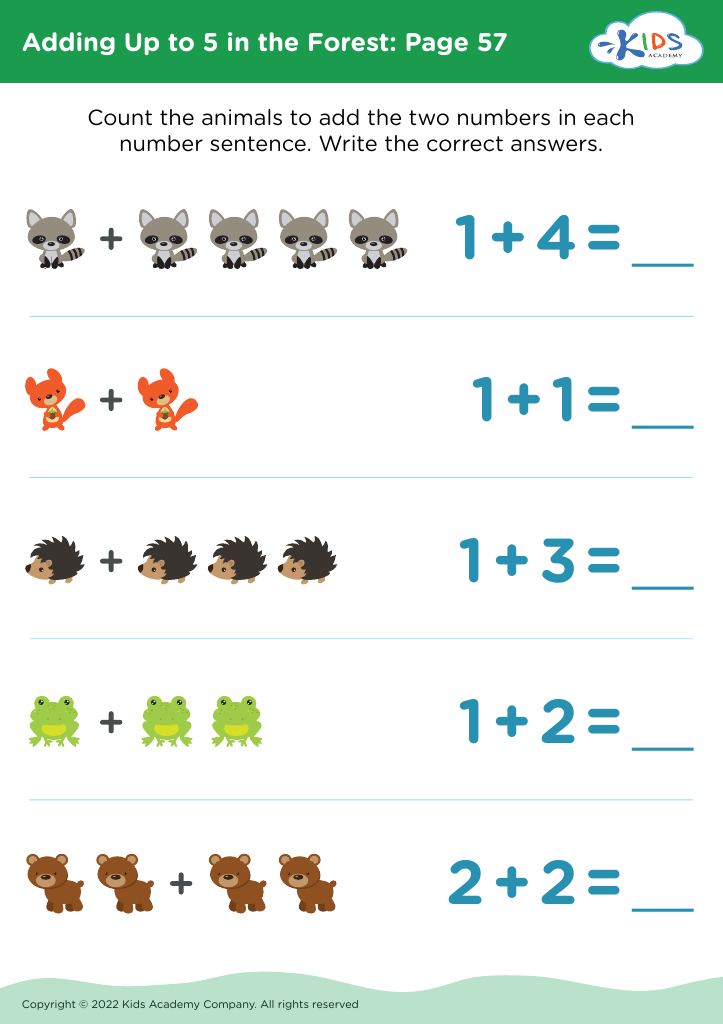
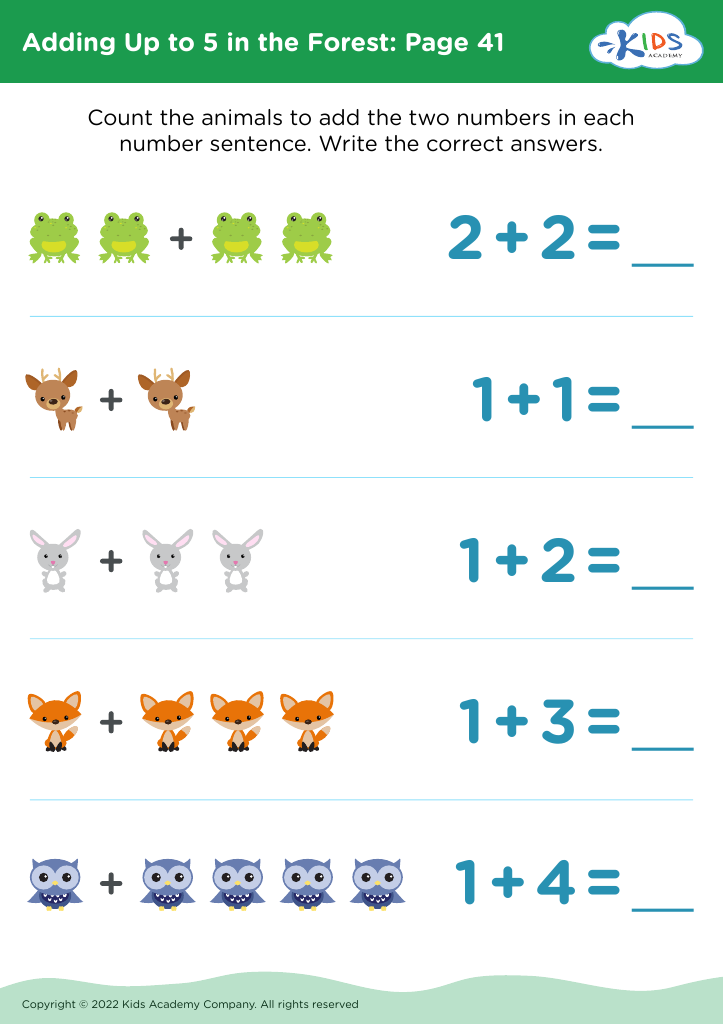




Parents and teachers should care about basic addition skills for young children aged 3-4, as this foundational knowledge sets the stage for future learning and cognitive development. Mastering basic addition not only promotes mathematical understanding but also enhances critical thinking skills, problem-solving abilities, and spatial reasoning. Introducing concepts in an engaging way, such as "Adding in the Forest," allows children to explore math in a playful and interactive context, making learning more enjoyable and relatable.
Moreover, early exposure to math concepts fosters a positive attitude toward learning and education. When children find joy in numbers and problem-solving, they're more likely to engage with math throughout their lives. Integrating these skills helps them develop confidence, which is essential for overcoming challenges in more complex mathematical tasks later on.
Additionally, practicing addition through playful activities, like counting forest animals or leaves, encourages social interaction, vocabulary development, and connection to the environment. It reformulates math as a part of everyday experiences, enabling children to understand its relevance and application.
Ultimately, nurturing basic addition skills lays a strong foundation for academic success while cultivating a lifelong love of learning. Prioritizing these early mathematical abilities helps children flourish as curious, capable learners.