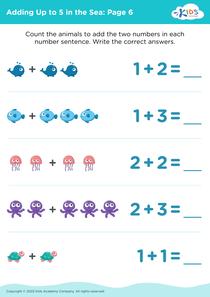
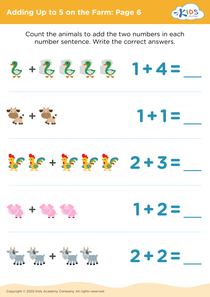
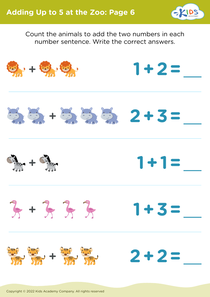
Basic Math Skills Adding in the Forest Worksheets for Ages 3-4
6 filtered results
-
From - To
Discover our engaging "Basic Math Skills Adding in the Forest" worksheets specifically designed for children aged 3-4. These imaginative worksheets allow young learners to explore the world of addition through playful forest-themed activities, featuring adorable woodland animals and vibrant illustrations. As kids navigate through these fun exercises, they develop essential math skills, enhance their counting abilities, and boost their confidence in early arithmetic. Perfect for preschoolers, these worksheets promote interactive learning while keeping math enjoyable and accessible. Download our "Adding in the Forest" worksheets today and support your child’s journey toward mathematical proficiency in a delightful, nature-inspired setting!
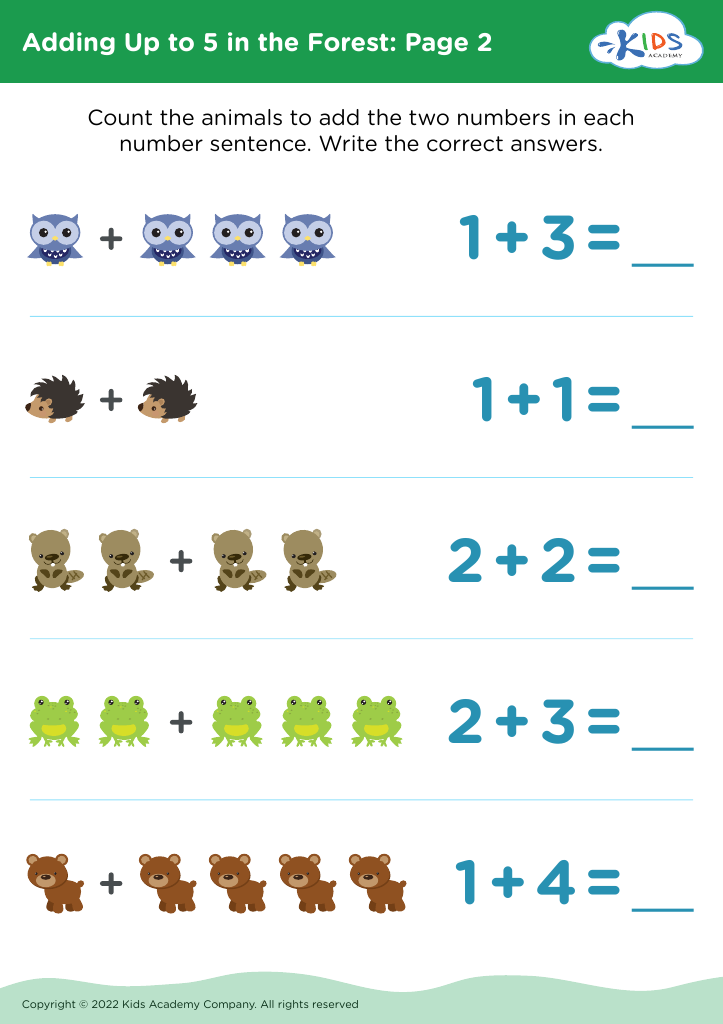
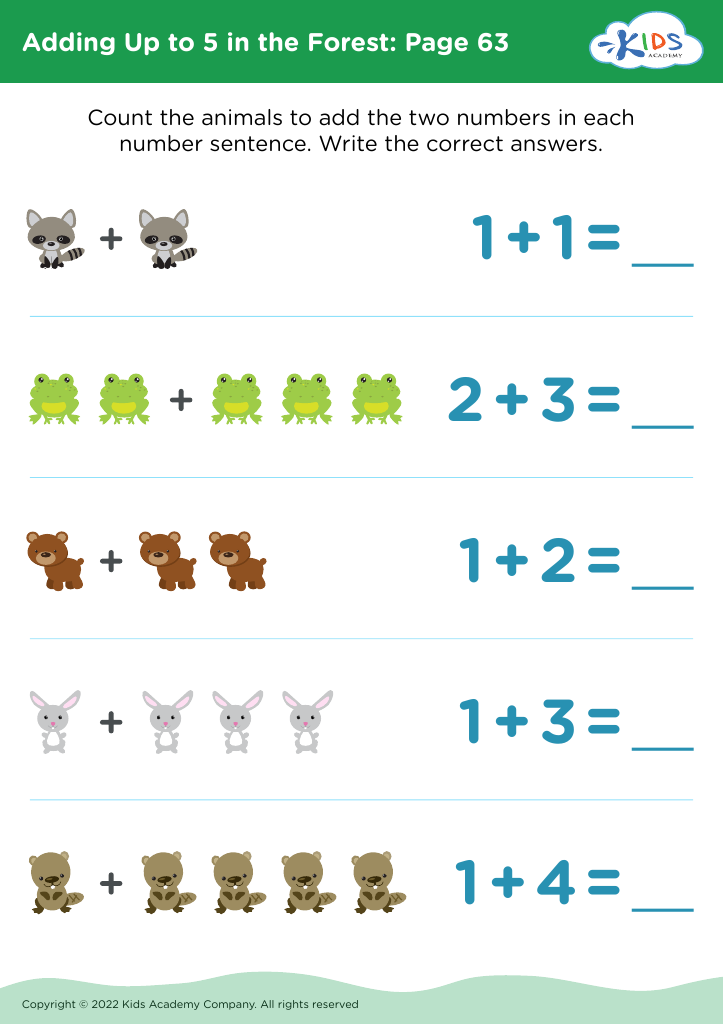
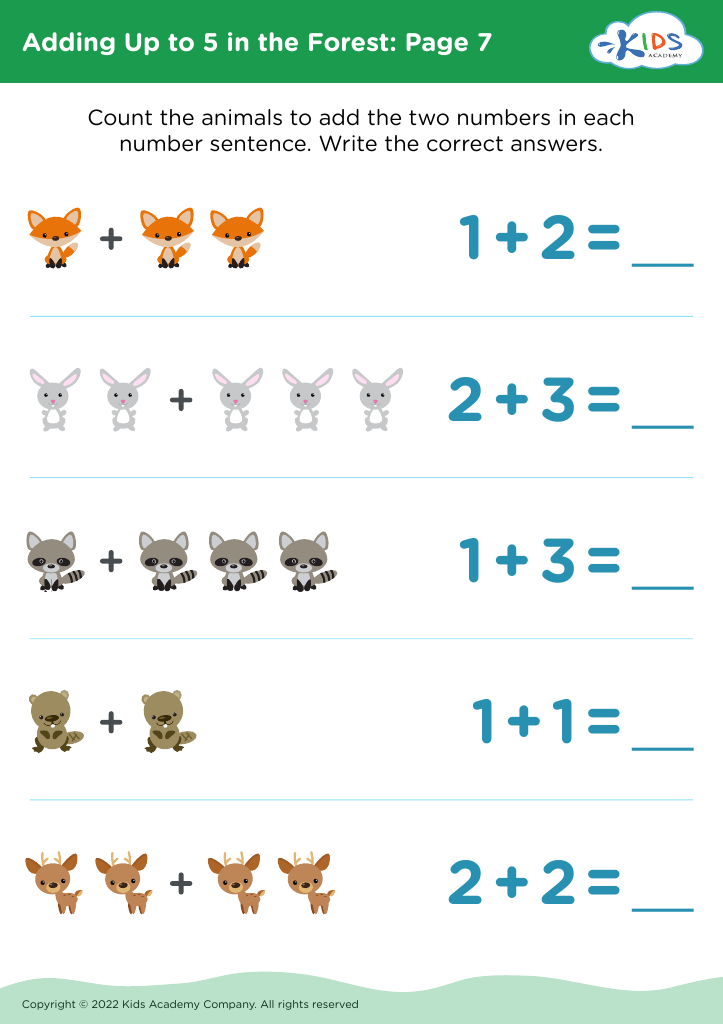
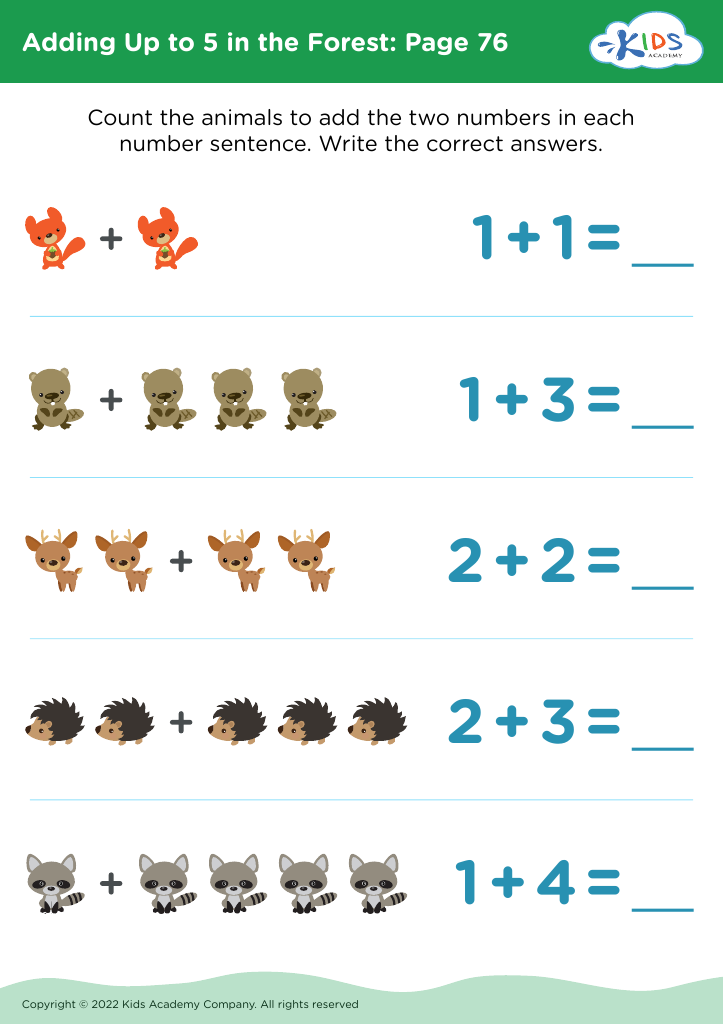
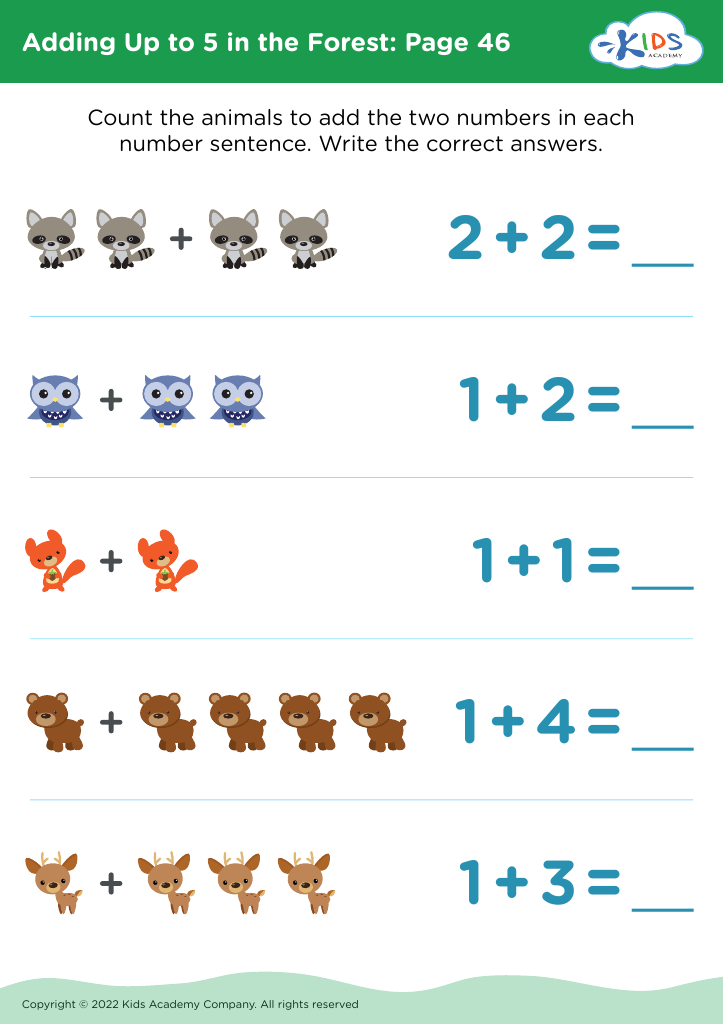
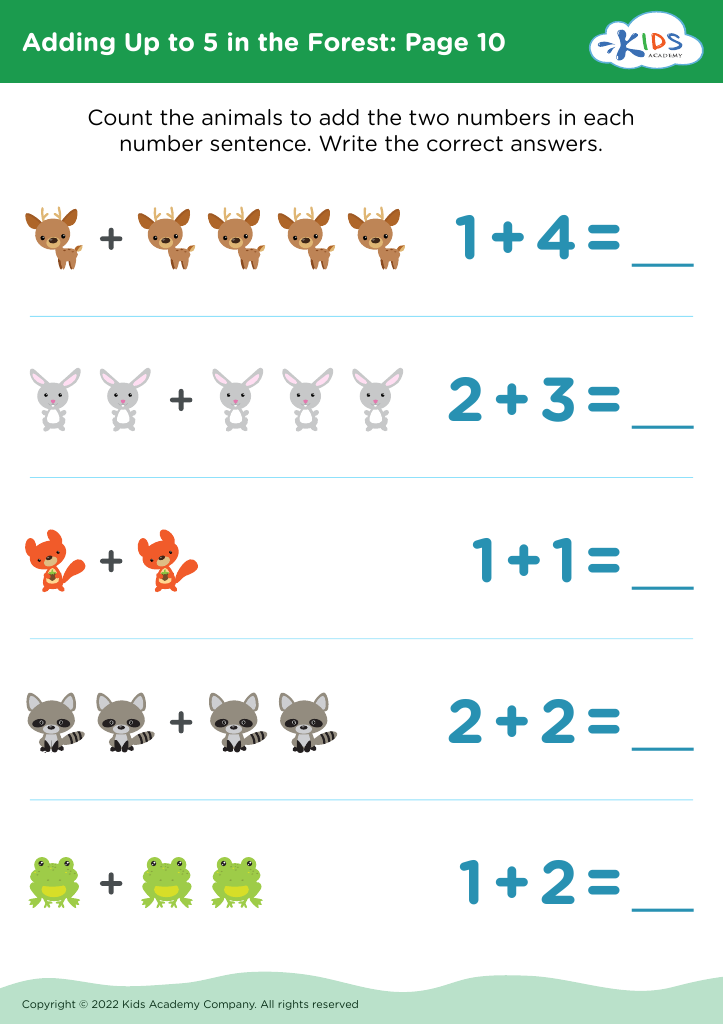



Parents and teachers should prioritize teaching basic math skills, like addition, to children aged 3-4 through engaging methods such as "Adding in the Forest." Early math proficiency lays a foundation for future success in a child's education. Introducing mathematical concepts in a natural and playful environment—like the outdoors—makes learning enjoyable and relatable.
In "Adding in the Forest," children learn to count, recognize numbers, and perform simple addition by using natural elements such as leaves, stones, and flowers. This hands-on approach fosters curiosity, and problem-solving skills while enhancing sensory experiences. It encourages children to explore their surroundings, cultivating a love for nature and learning simultaneously.
Moreover, these activities support critical cognitive skills such as reasoning and understanding patterns, which are crucial at this developmental stage. Engaging with math through play often leads to better retention and a positive attitude toward learning.
Furthermore, involving parents in these activities strengthens family bonds and emphasizes the importance of education in everyday life. Ultimately, cultivating basic math skills in young children sets them on a path toward academic confidence and lifelong learning. It's not just about numbers—it's about nurturing well-rounded, inquisitive individuals.