Fine Motor Skills Adding in the Forest Worksheets for Ages 3-4
5 filtered results
-
From - To
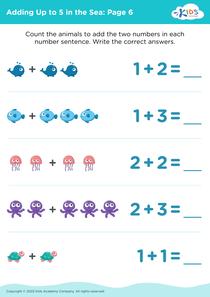
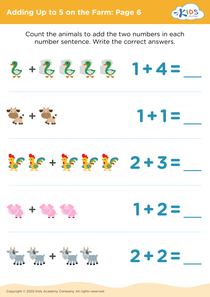
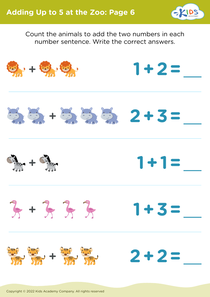
Boost your child's fine motor skills with our engaging "Fine Motor Skills Adding in the Forest Worksheets" designed specifically for ages 3-4. Set in a captivating woodland theme, these worksheets offer young learners a fun and interactive way to practice basic addition. Children will develop their pencil grasp, hand-eye coordination, and counting abilities as they connect and count forest animals and natural elements. Perfect for preschoolers, our free, printable worksheets provide a delightful learning experience combining mathematics and fine motor skill development. Empower your little one's early math journey today with these expertly crafted activities!
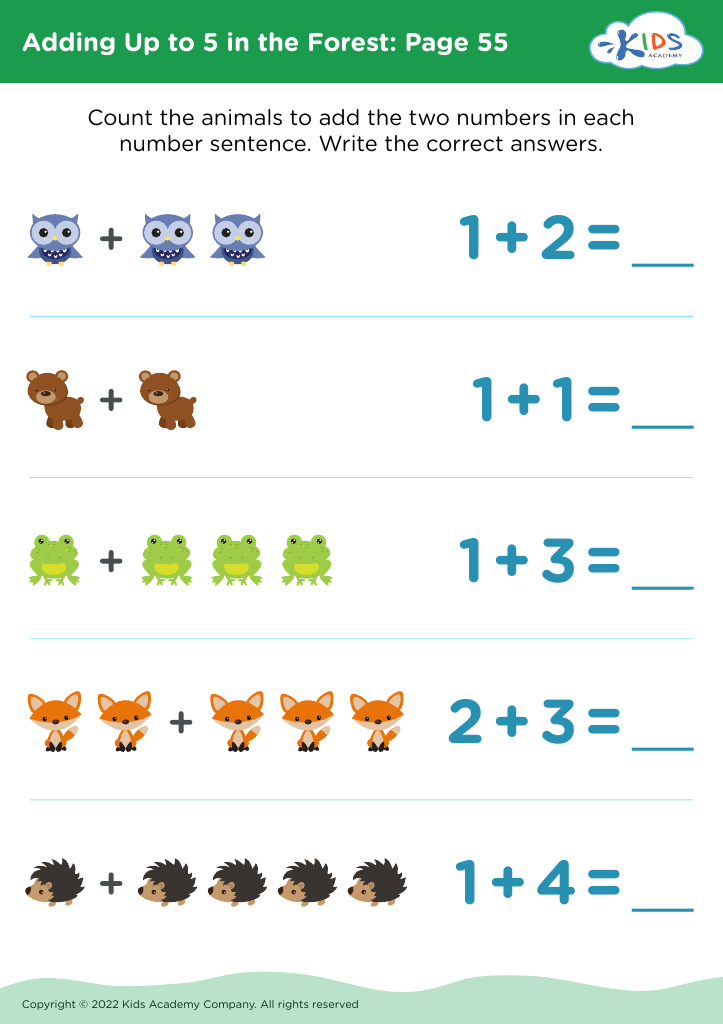
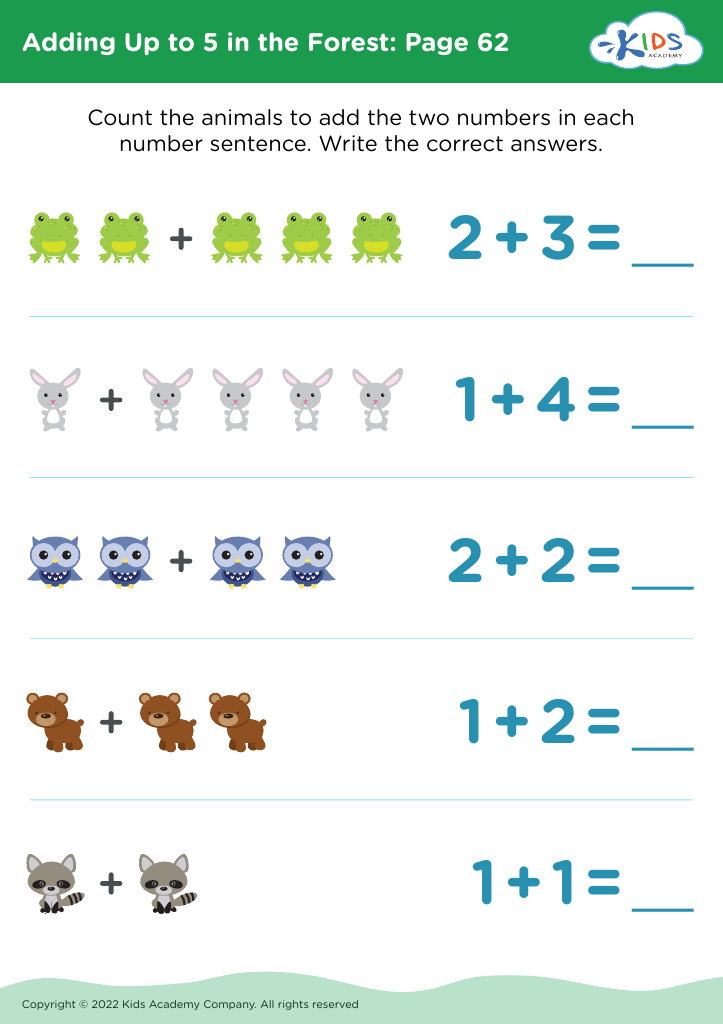
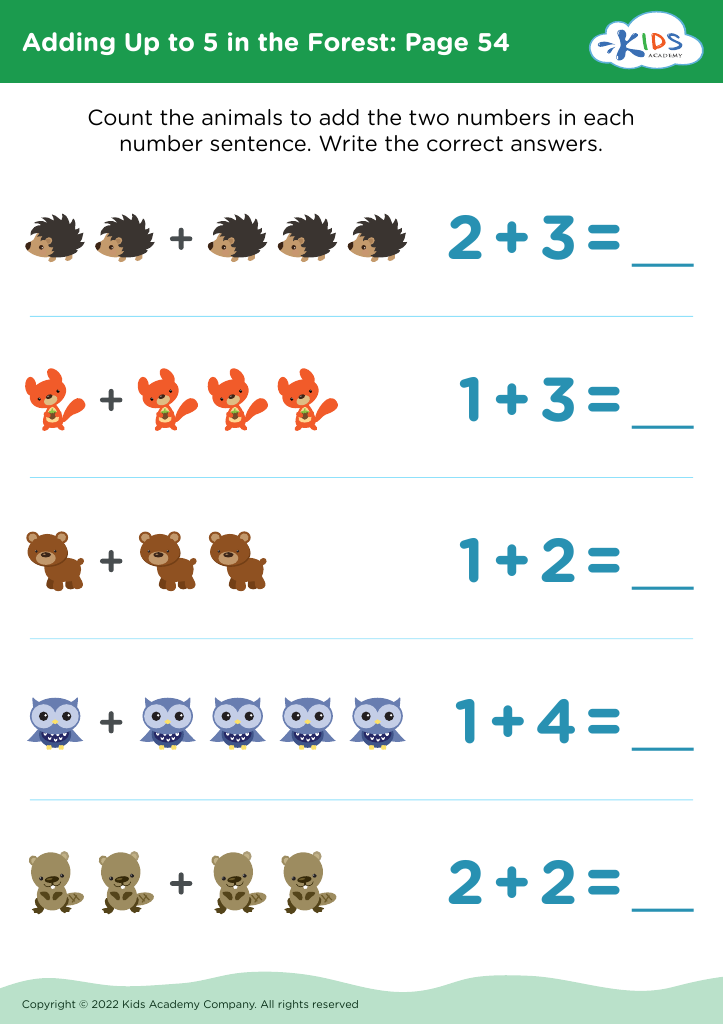
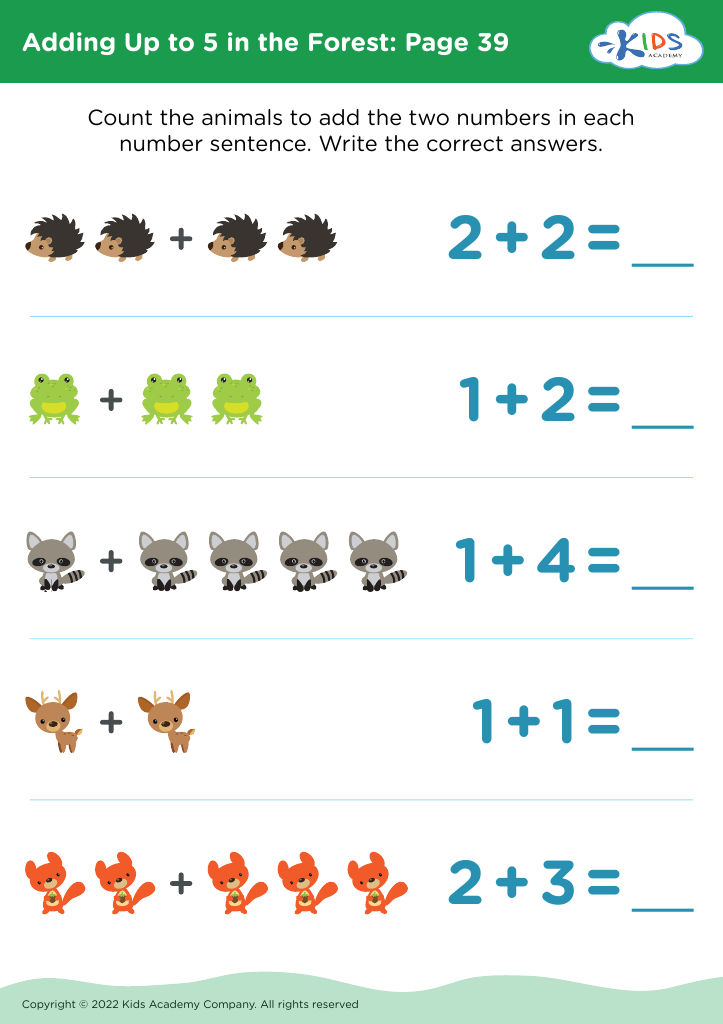
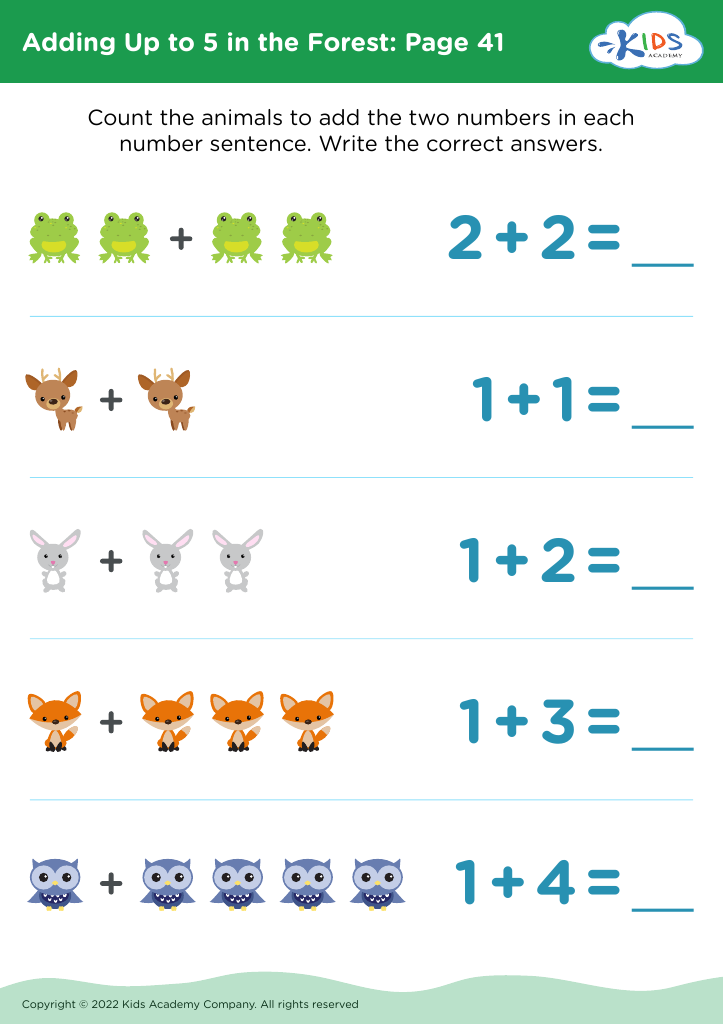



Fine motor skills are crucial for young children as they lay the foundation for essential day-to-day tasks and academic readiness. For ages 3-4, activities like adding items in a forest-themed setting can significantly enhance these skills. In such activities, children use their hands and fingers to manipulate small objects, which strengthens their dexterity and hand-eye coordination. This is essential for later tasks like writing, buttoning, and using utensils with ease.
Incorporating a forest theme captivates children's interest and encourages engagement, making learning fun. When children are asked to collect, sort, or count natural items like leaves, acorns, or small stones, they are not only practicing fine motor skills but also developing cognitive skills such as counting, matching, and problem-solving.
Furthermore, these activities provide physical exercise and promote an appreciation for nature, integrating holistic development. The repetitive actions involved in these activities also boost their concentration and attention span. Teachers and parents should care deeply about such activities because they support developmental milestones and contribute to a child's growing confidence and independence. Fostering fine motor skills through an engaging, themed approach like "Adding in the Forest" serves as a multifaceted strategy for early childhood development.