Fine motor skills (writing) Adding in the Forest Worksheets for Ages 3-4
3 filtered results
-
From - To
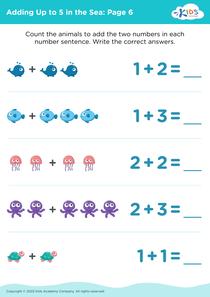
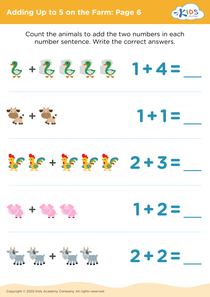
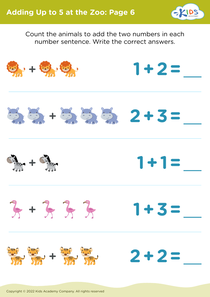
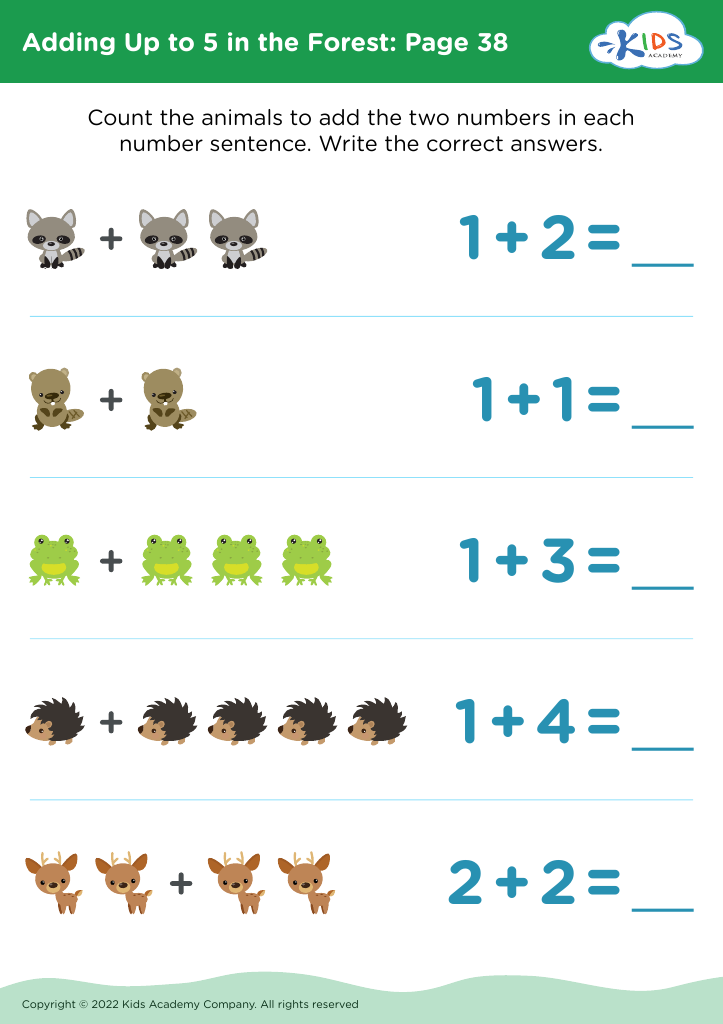
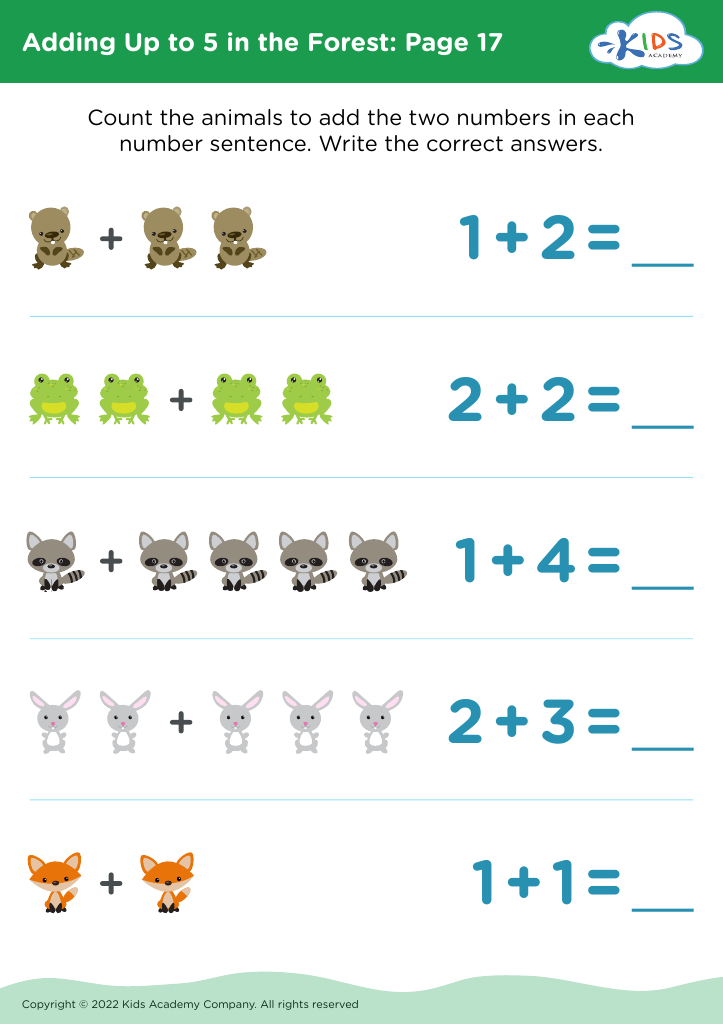
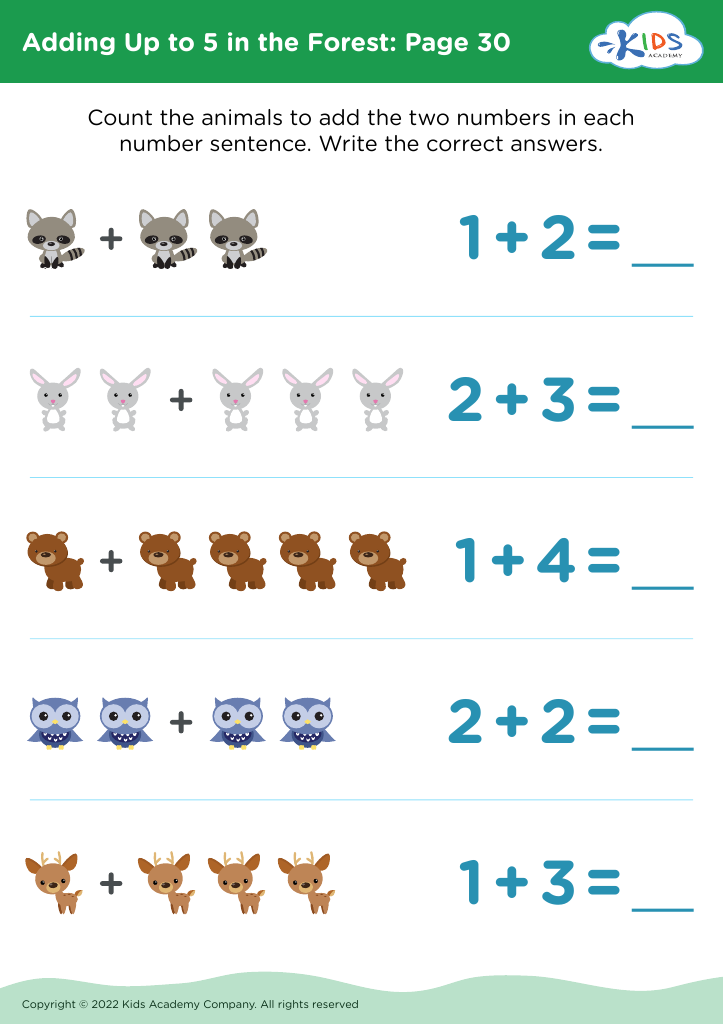
Unlock your child's potential with our "Fine Motor Skills (Writing) Adding in the Forest Worksheets for Ages 3-4". These engaging worksheets feature fun forest-themed activities that help young learners practice essential fine motor skills while introducing basic addition concepts. Designed specifically for toddlers and preschoolers, the exercises aid in hand-eye coordination, pencil grip, and handwriting development. As children trace numbers and solve simple addition problems, they embark on an exciting adventure through the forest, all the while building a strong foundation for future learning success. Ignite your child's curiosity and love for learning with these delightful, educational printables.



Fine motor skills are essential building blocks in a child's early development, particularly evident in activities like writing. For children aged 3-4, these skills involve the coordination of small muscles in the hands and fingers, enabling precise movements such as grasping a pencil and forming letters. Teachers and parents should prioritize fostering fine motor skills for several reasons.
First, strong fine motor skills underpin critical academic abilities. Writing is a foundational skill for literacy and cognitive development. Proficiency in writing enables children to express themselves, enhancing their learning and communication abilities. A journey to the forest can provide an ideal context for such development, as it merges physical activity with cognitive challenges. Natural settings encourage exploratory behaviors, like picking up sticks or threading leaves, which directly enhance hand-eye coordination and dexterity.
Second, fine motor development impacts day-to-day independence. Skills like buttoning clothes, eating with utensils, and playing with toys afford children greater self-reliance and confidence. This autonomy can positively affect a child’s social and emotional growth.
Lastly, early mastery of these skills lays the groundwork for future academic and practical success. Early intervention and encouragement ensure that children possess the fundamental abilities needed to excel across various life domains. By integrating natural, engaging activities like a forest visit focused on writing tasks, parents and teachers can effectively nurture fine motor development in a compelling and hands-on way.