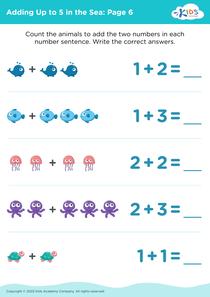
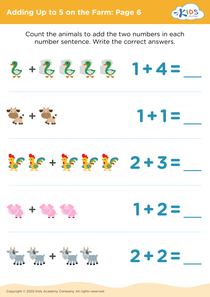
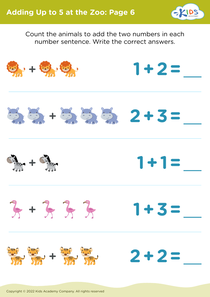
Understanding Quantities Adding in the Forest Worksheets for Ages 3-4
6 filtered results
-
From - To
Discover the fun and educational “Understanding Quantities: Adding in the Forest” worksheets designed for children ages 3-4! These engaging activities help young learners grasp the fundamentals of quantities through exciting forest-themed illustrations. Kids will enjoy practicing basic addition skills as they count cute forest animals and vibrant natural elements. Each worksheet promotes number recognition, counting, and simple addition in a playful and interactive way, making math enjoyable and accessible. Foster a love for learning math early on with these creative and supportive resources that empower your child's foundational skills. Bring the magic of the forest into your home or classroom today!
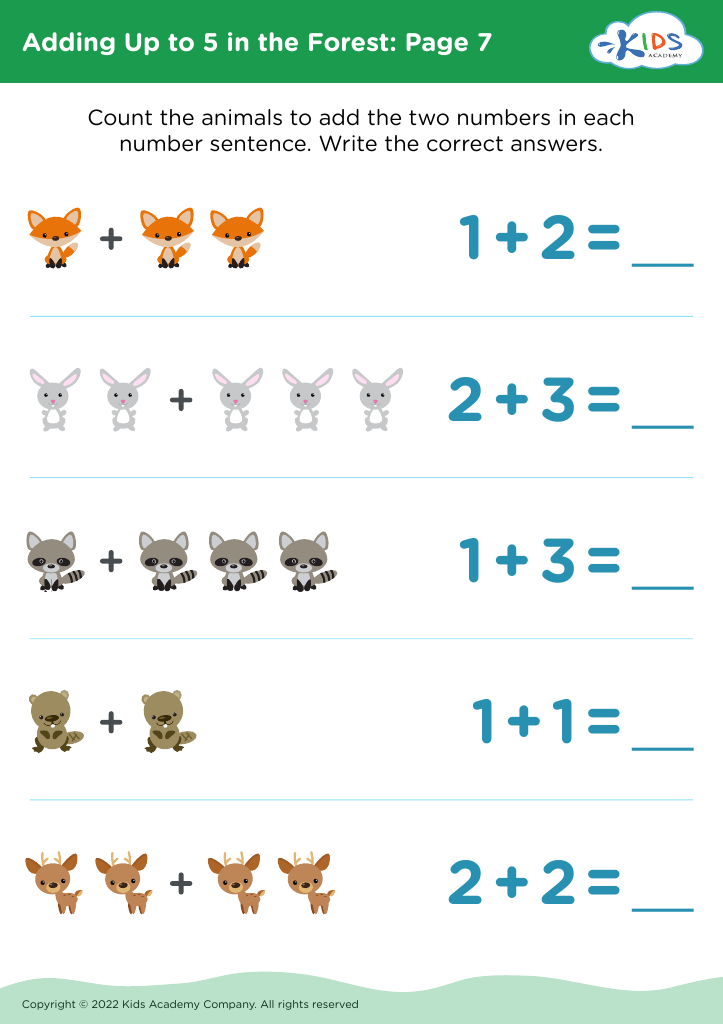
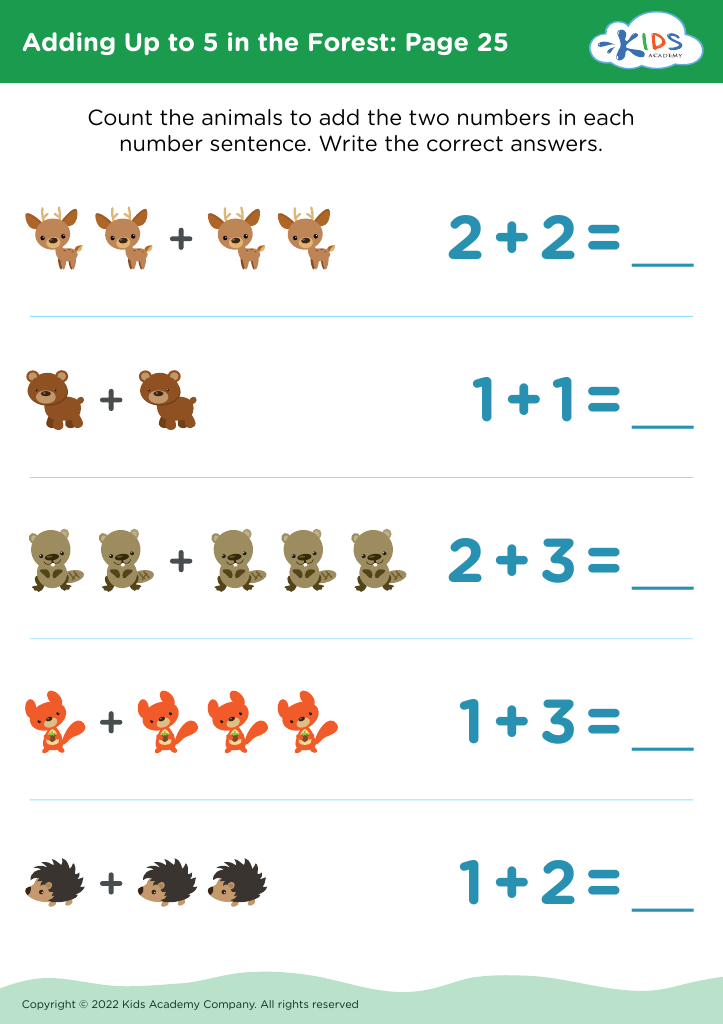
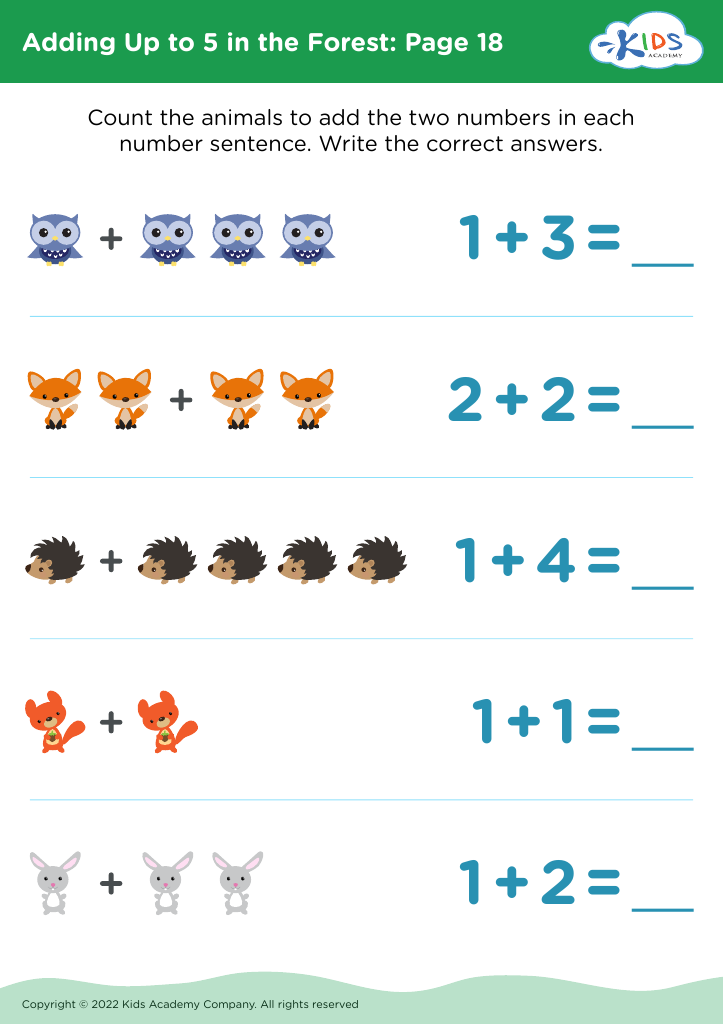
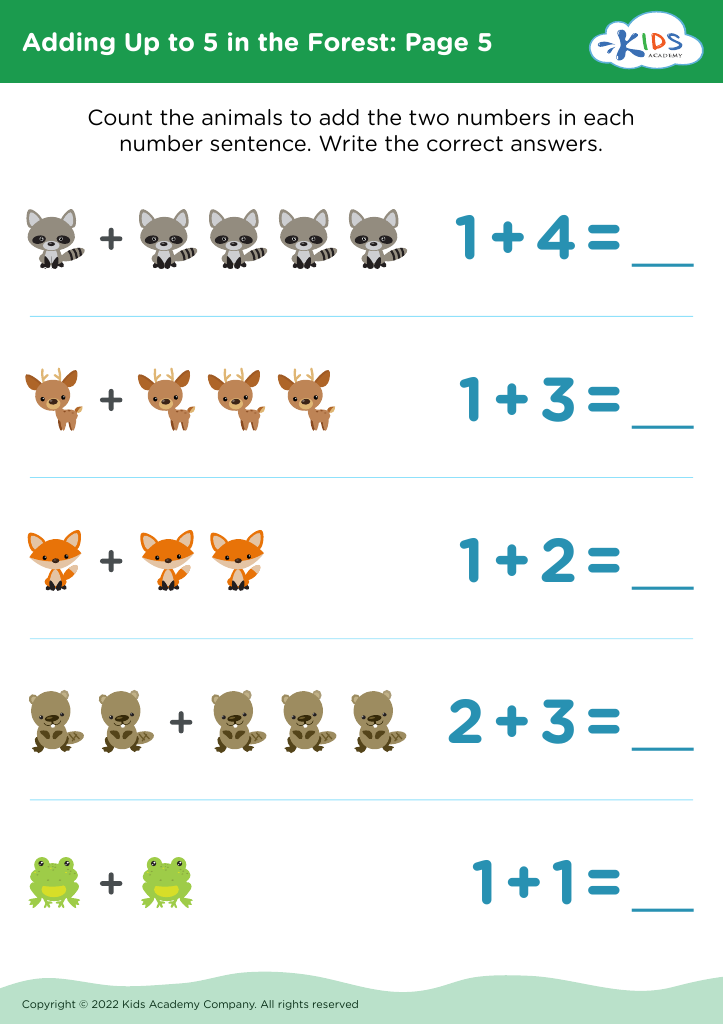
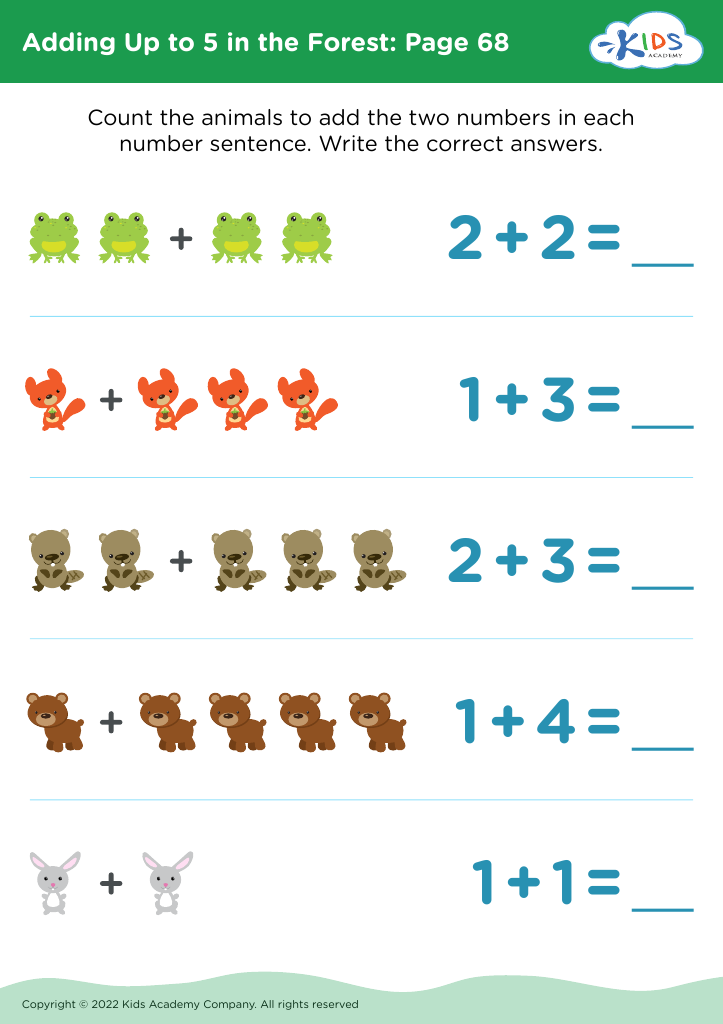
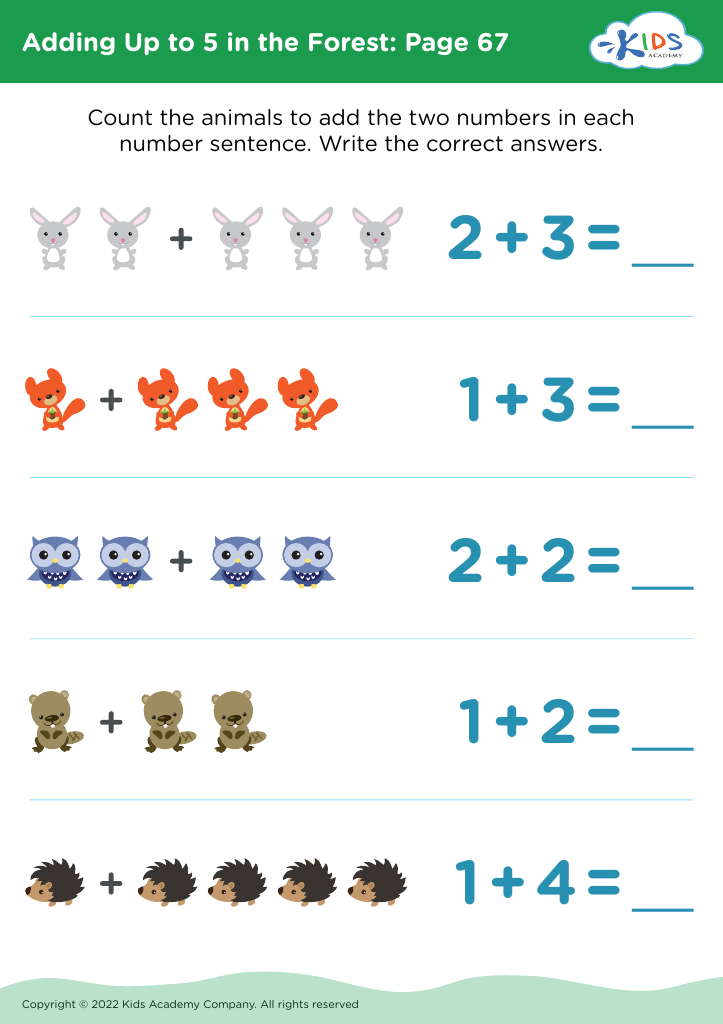



Understanding quantities and mastering addition at an early age is crucial for young children, particularly in a hands-on learning environment like "Adding in the Forest." For parents and teachers, nurturing these skills promotes cognitive development and prepares children for future academic success.
At ages 3-4, children are naturally curious and eager to explore their surroundings. By incorporating outdoor activities that emphasize quantities and addition, such as counting leaves, rocks, or animal tracks in the forest, educators can make learning vibrant and engaging. This approach not only fosters a love for nature but also embeds mathematical concepts in real-world scenarios, enhancing retention and understanding.
Moreover, developing counting and addition skills lays a foundation for more complex mathematical reasoning later on. Engaging with its concrete examples helps little learners realize that numbers represent real things, making math both relatable and fun. As children manipulate and compare various quantities in their environment, they build confidence and critical thinking abilities.
In addition to academic benefits, these activities encourage teamwork and social skills, as kids often work together in explorative play. Thus, caring about programs like "Adding in the Forest" approaches mathematics holistically, enriching emotional and social development alongside cognitive growth.