Visual Learning Adding in the Forest Worksheets for Ages 3-4
12 filtered results
-
From - To
Visual Learning Adding in the Forest Worksheets for Ages 3-4 are designed to make early math enjoyable and engaging for young learners. These colorful worksheets feature charming forest-themed activities that help children develop essential skills like counting and basic addition. Perfectly crafted for ages 3-4, each exercise encourages visual learning by incorporating appealing images of forest animals and scenery to keep kids interested while they learn. Parents and educators will appreciate how these worksheets seamlessly blend fun with education, fostering a love of learning in early childhood. Discover an enriching way to build foundational math skills with our delightful visual learning resources.
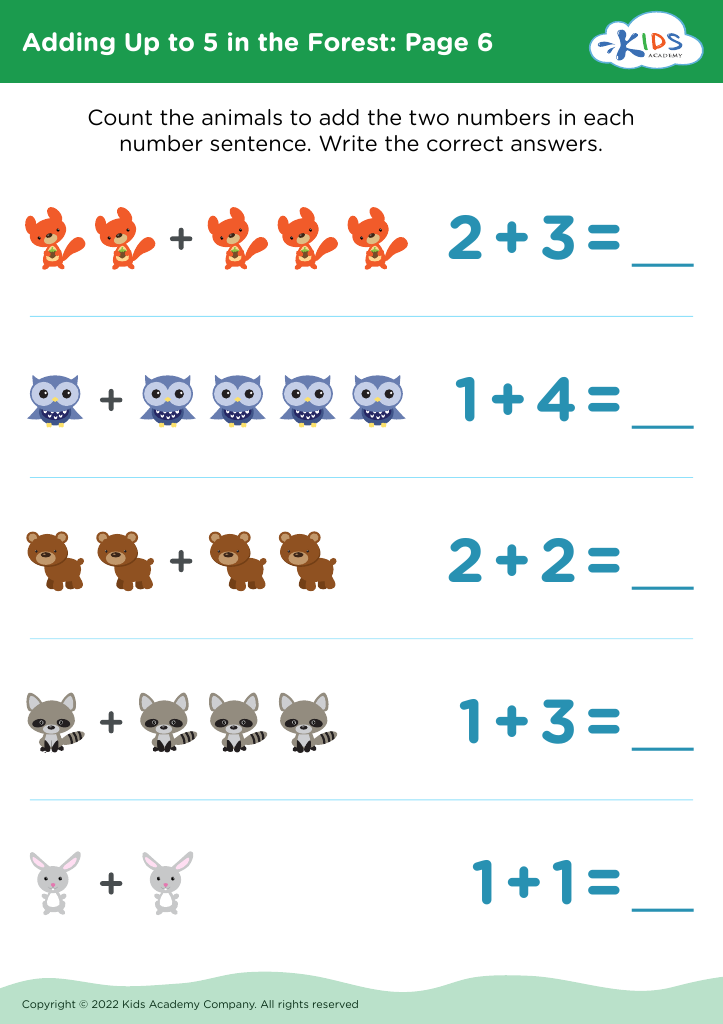
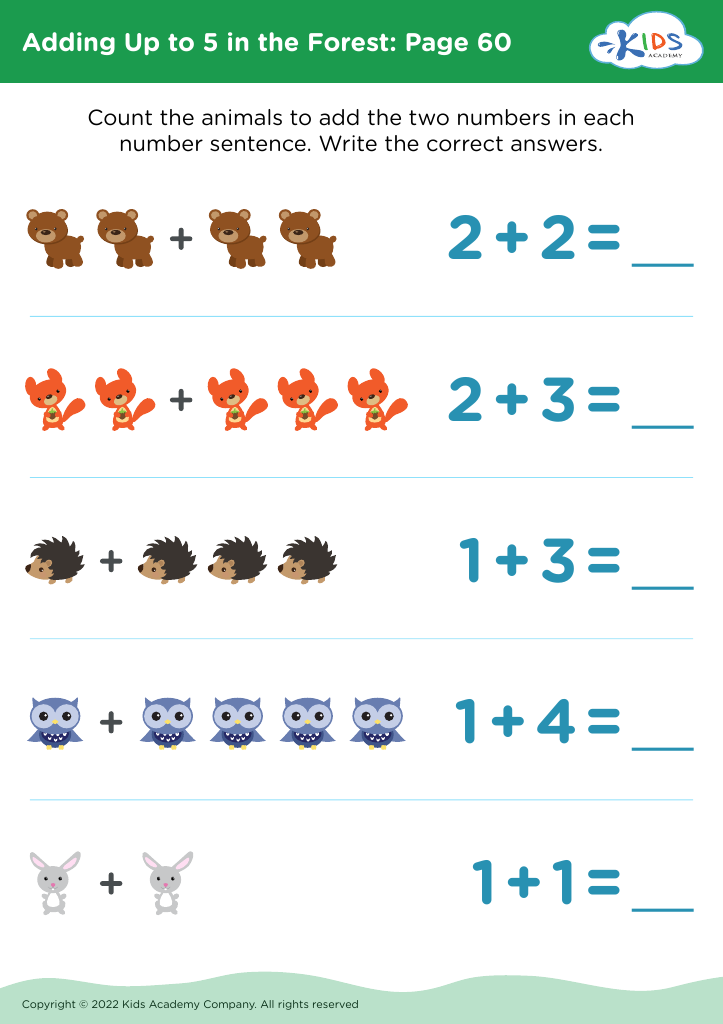
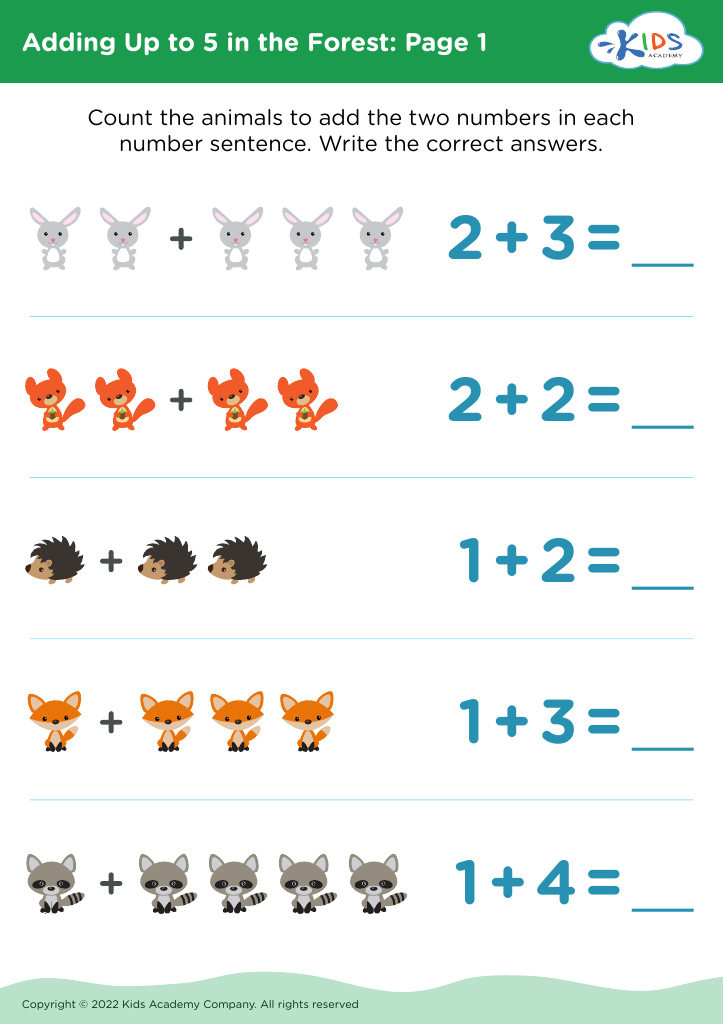
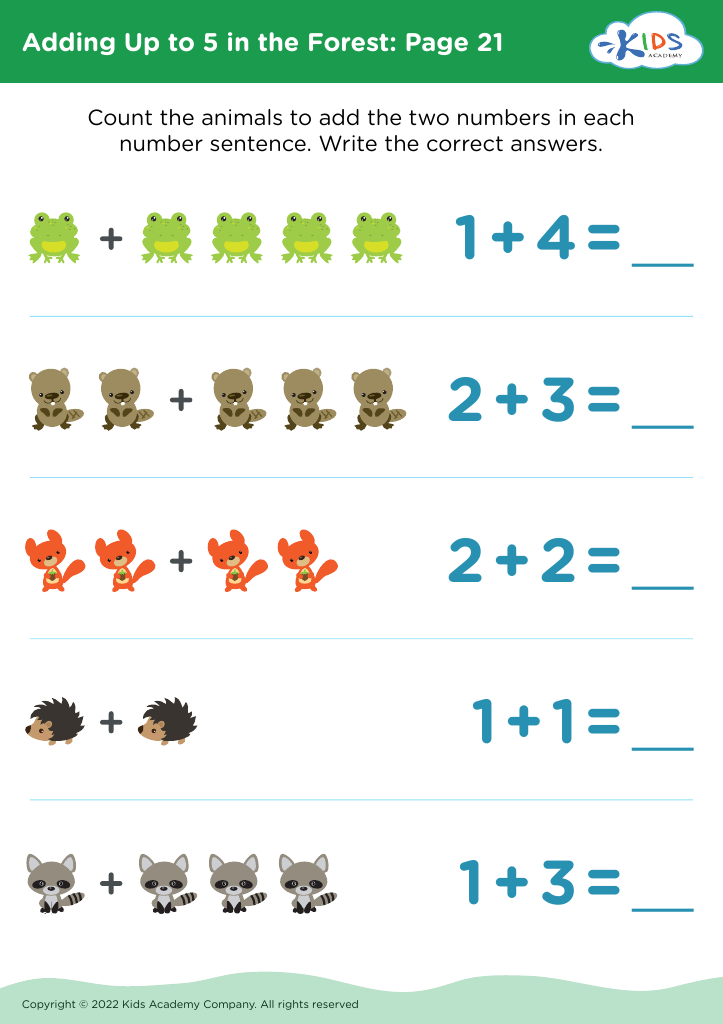
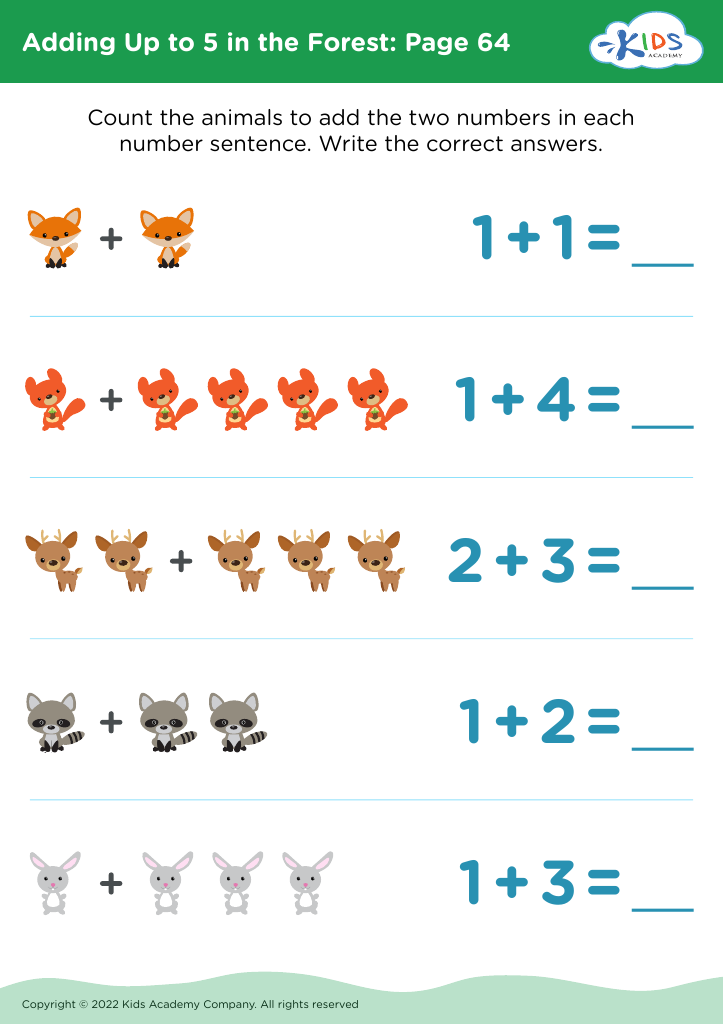
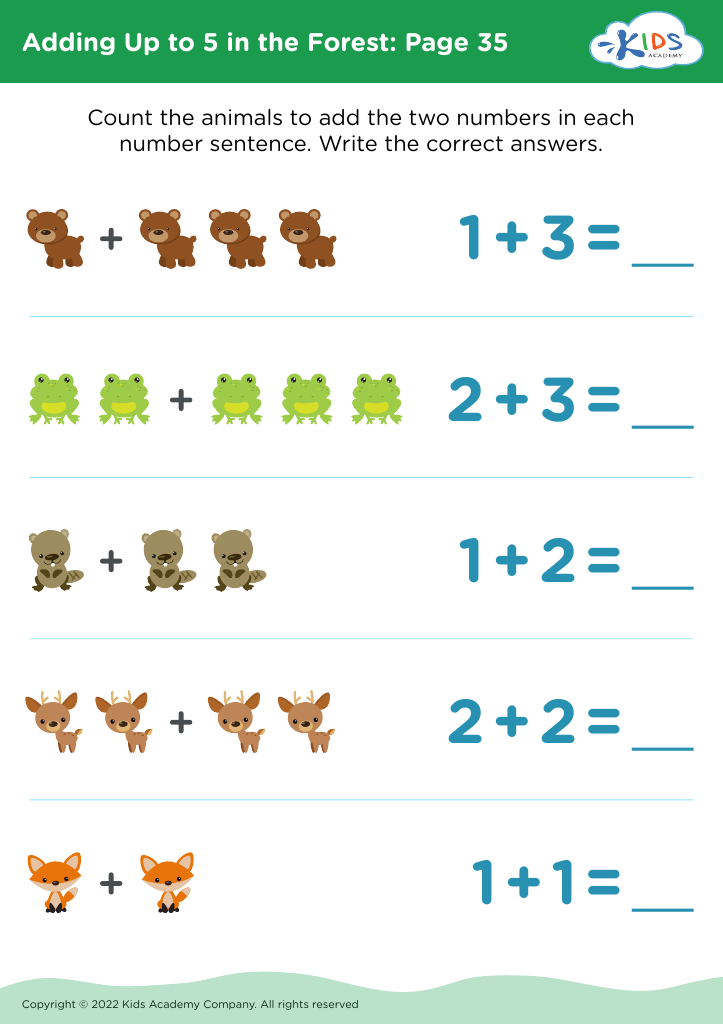
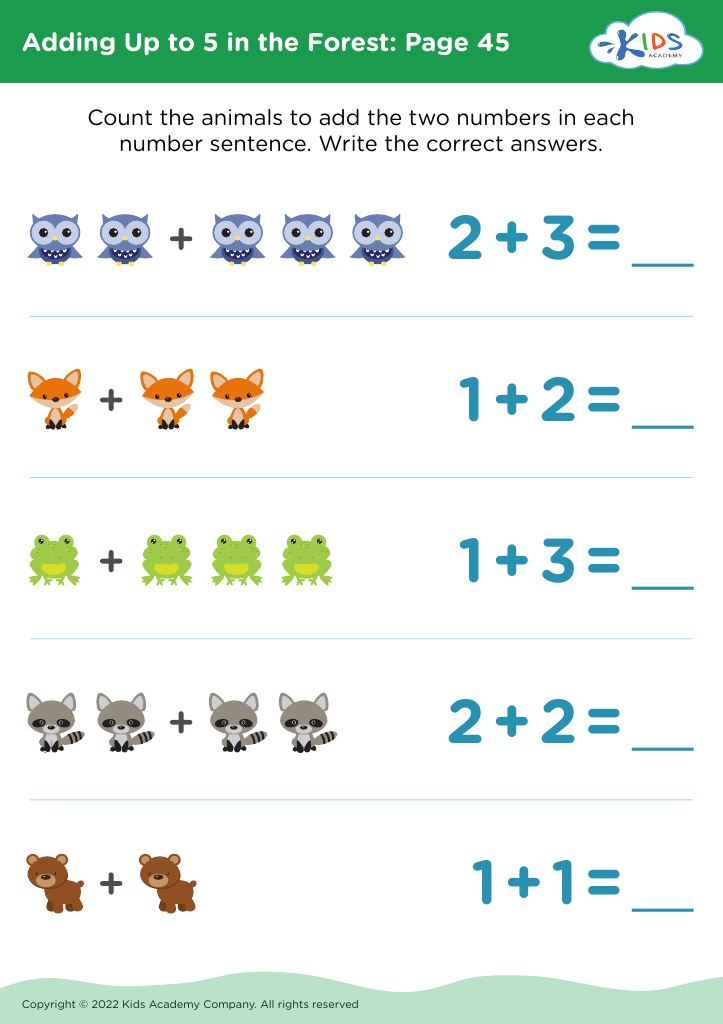
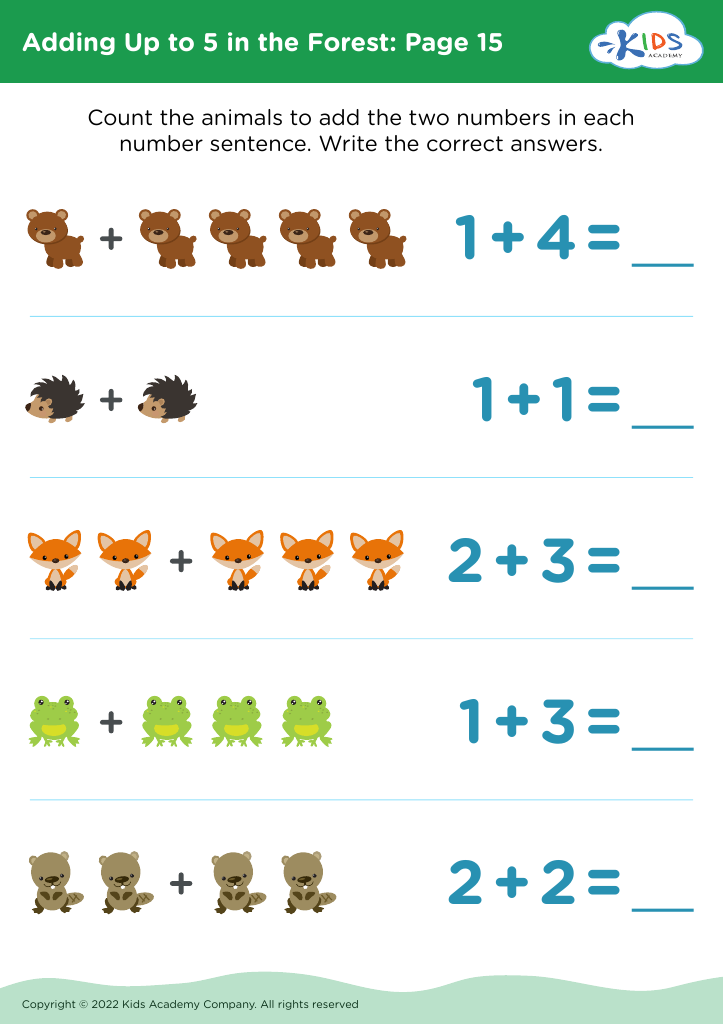
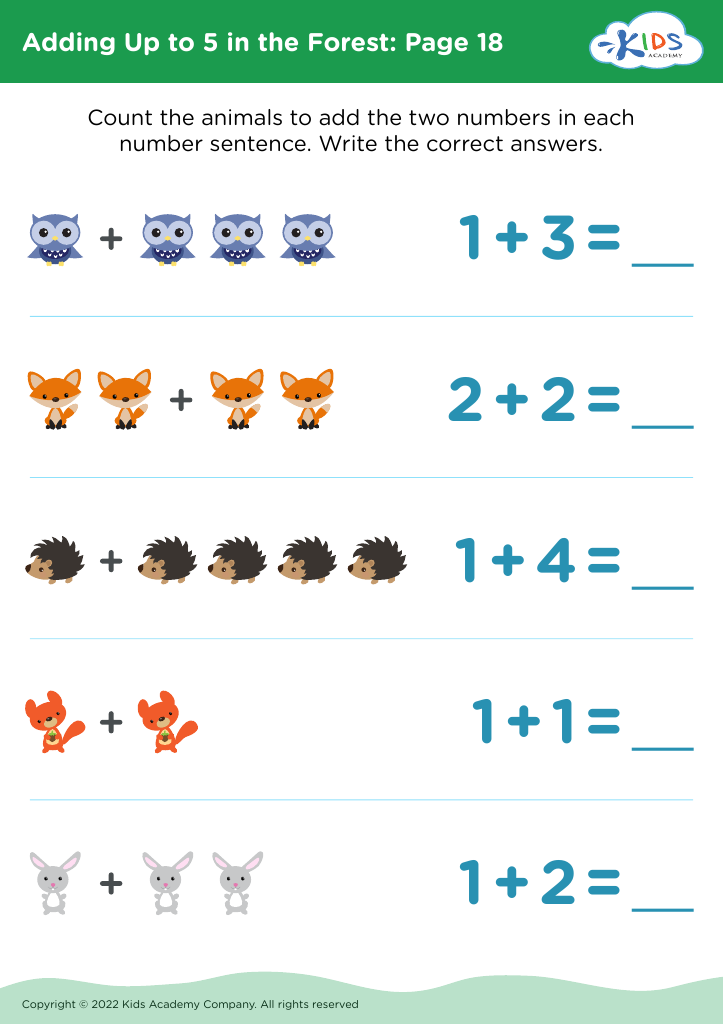
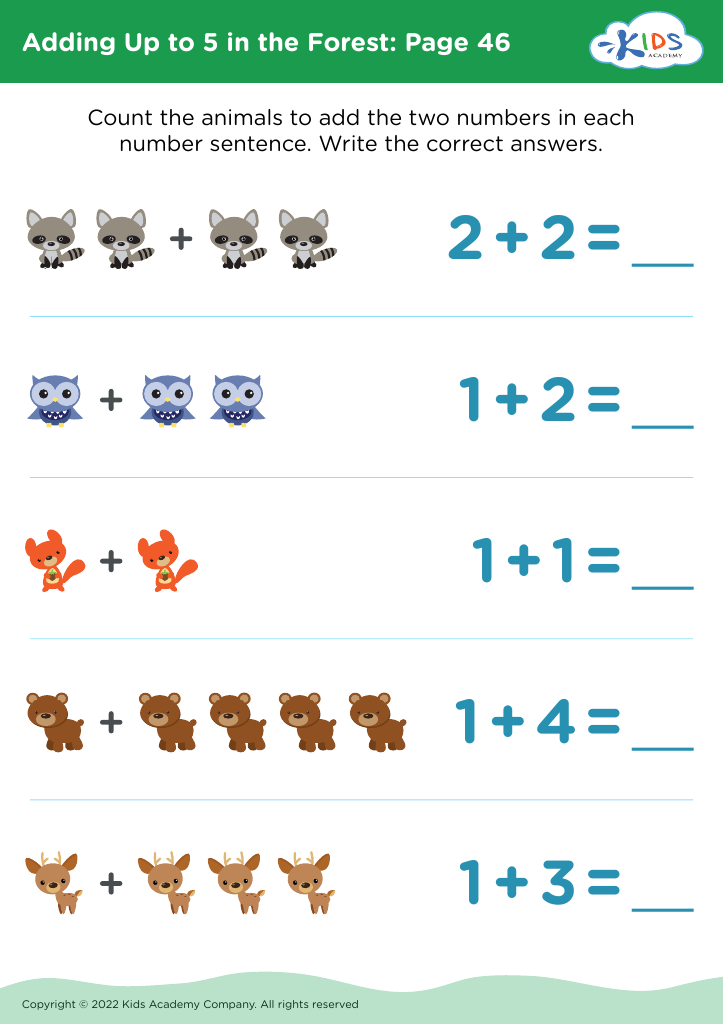
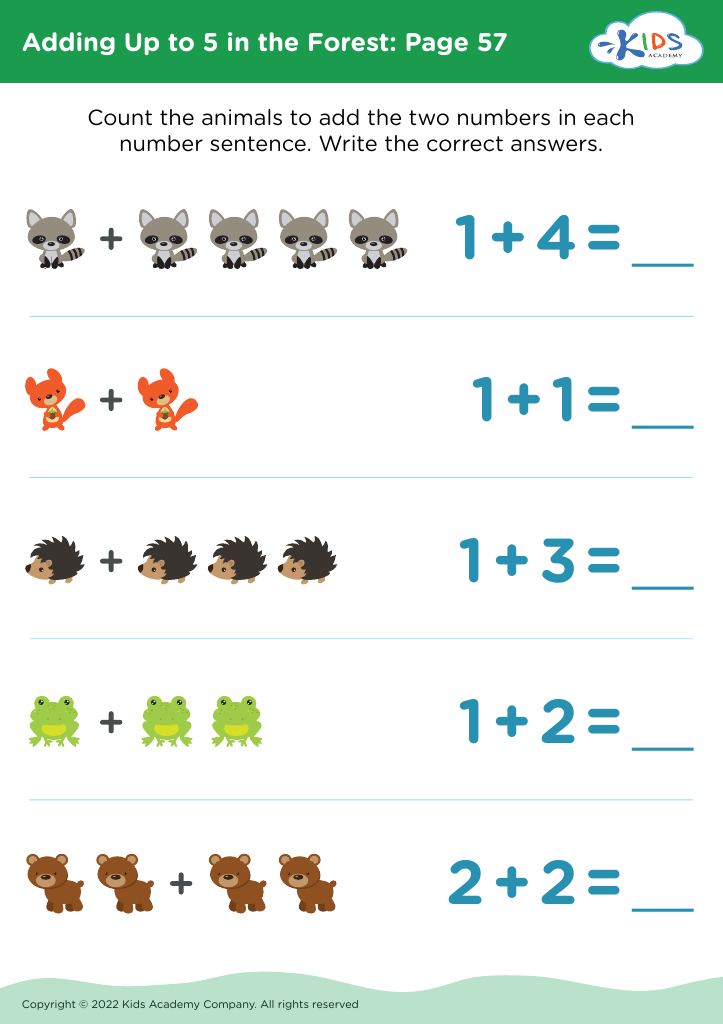
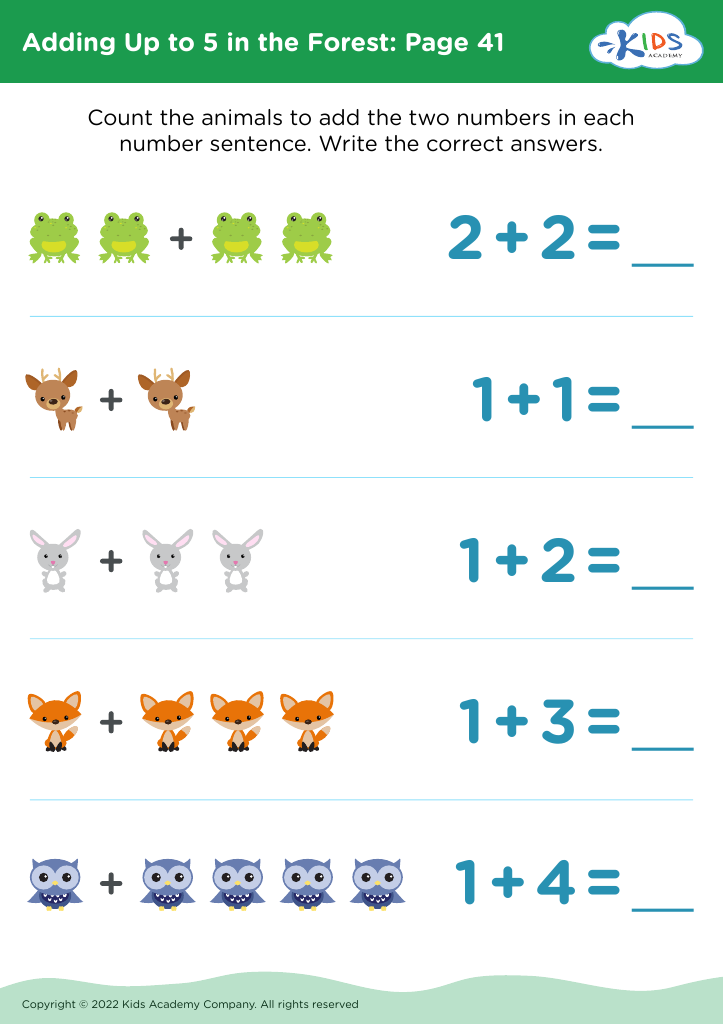



Parents and teachers should prioritize using resources like "Visual Learning Adding in the Forest for Ages 3-4" because it aligns with young children's developmental needs and learning styles. At this age, kids are naturally curious and highly visual learners, which means they learn best through seeing and interacting with the world around them.
Visual learning tools engage children by making abstract concepts like addition more concrete and relatable. "Adding in the Forest" captures children's interest with colorful and familiar illustrations, such as animals and plants, which makes learning feel like an adventure rather than a chore. This interest boosts their motivation, making them eager to participate and learn.
Moreover, integrating visual learning with a familiar and enjoyable context, like a forest, helps with memory retention. Children are more likely to remember what they've learned when it’s connected to enjoyable stories and images. This tactile experience also lays a strong foundation for later mathematical concepts, enhancing both number sense and problem-solving skills.
Finally, early exposure to math through fun and visual methods promotes positive attitudes towards learning and reduces math anxiety. Parents and teachers investing time in such educational methods early on helps build a strong, lasting appreciation and understanding of math, setting children up for future academic success.