Basic Math understanding Adding Up to 5 Worksheets for Ages 3-4
7 filtered results
-
From - To
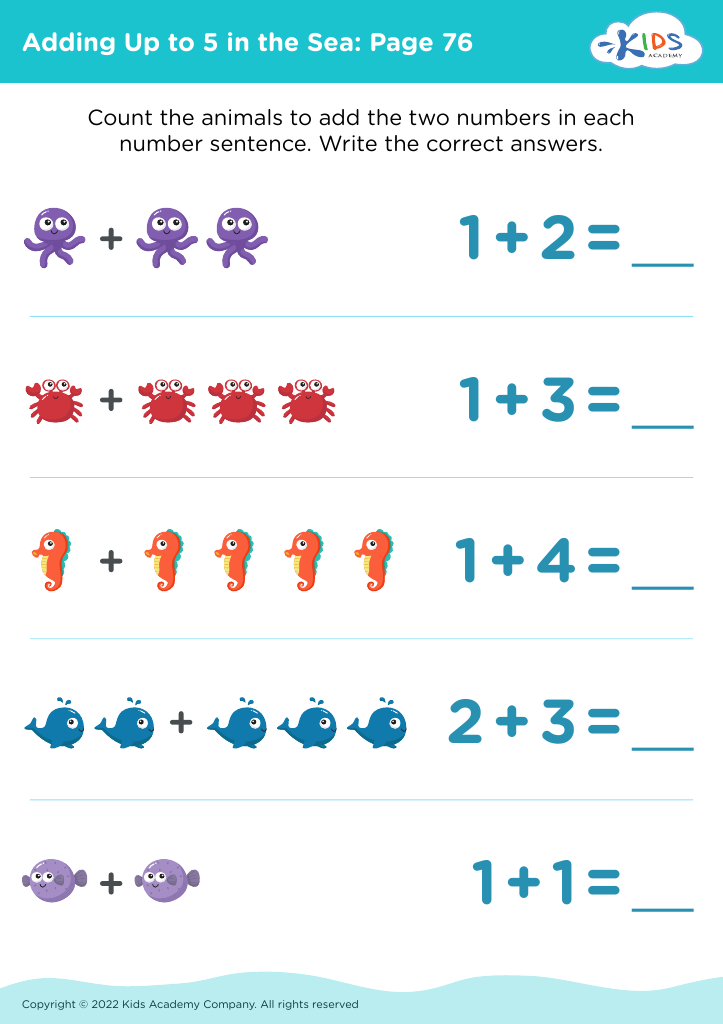
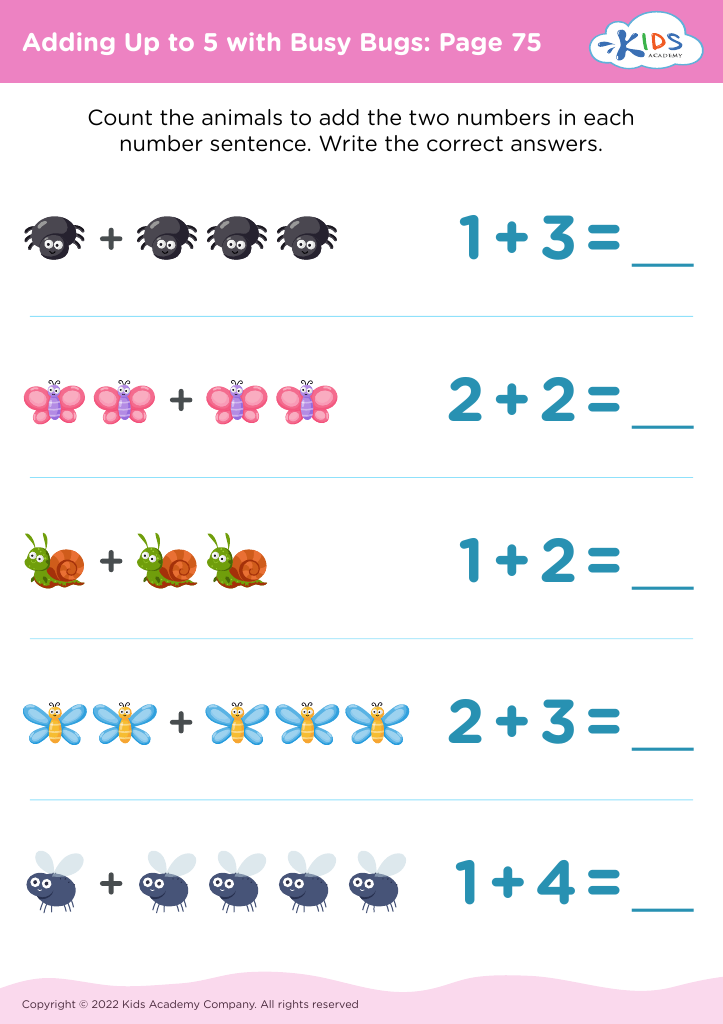
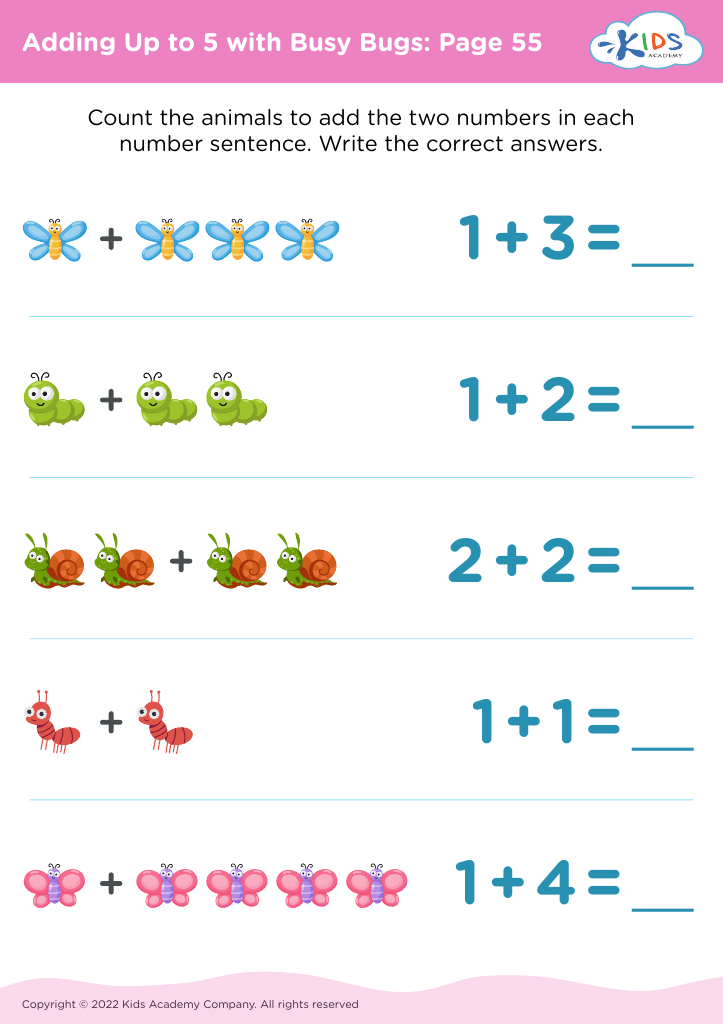
Unlock the world of early math with our "Basic Math Understanding: Adding Up to 5 Worksheets" tailored for ages 3-4! These engaging worksheets effortlessly introduce young learners to the concepts of addition, encouraging cognitive development and number recognition. Each activity is designed to make learning fun and interactive, featuring colorful illustrations and simple tasks that promote foundational math skills. Perfect for home or classroom use, these worksheets will help children build confidence with numbers while fostering their problem-solving abilities. Start their mathematical journey today and watch them flourish as they explore the exciting world of addition!
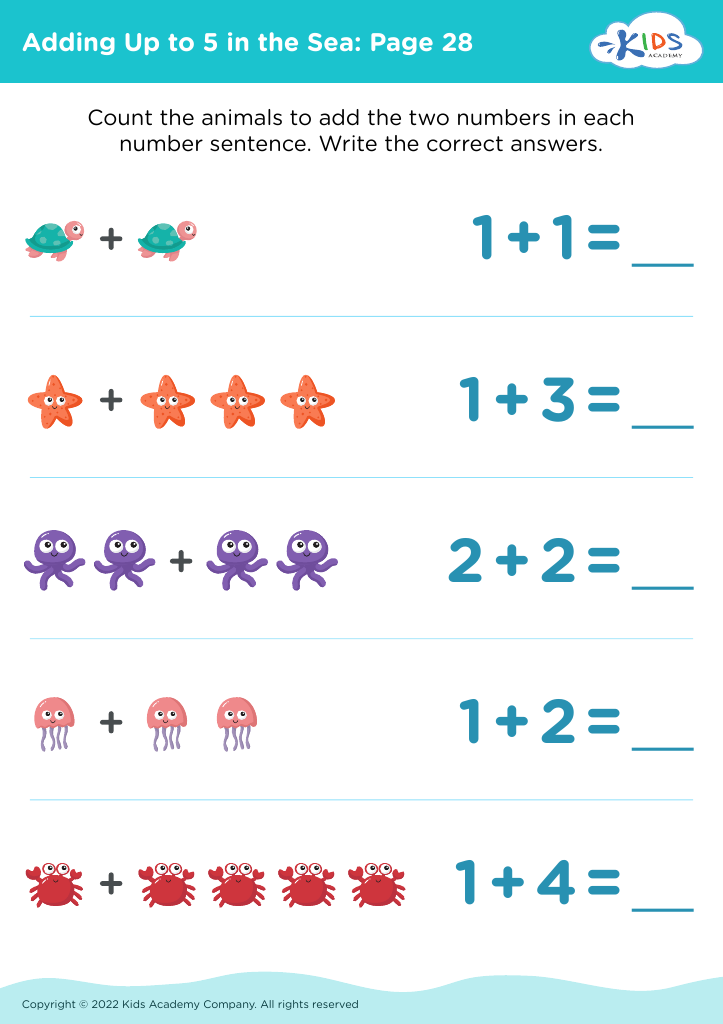
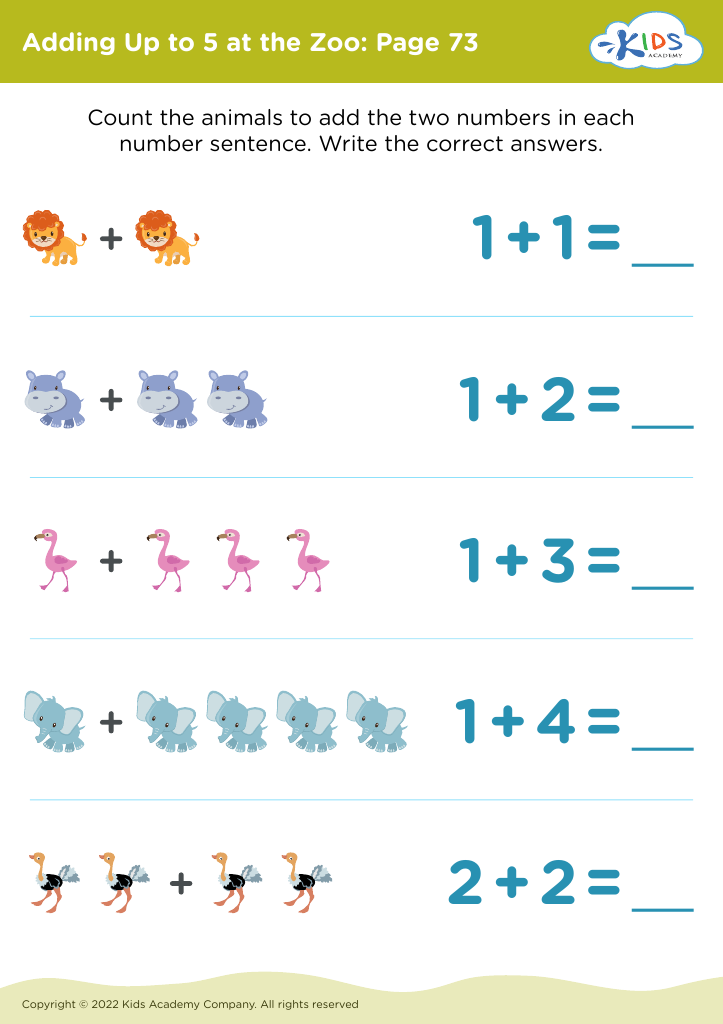
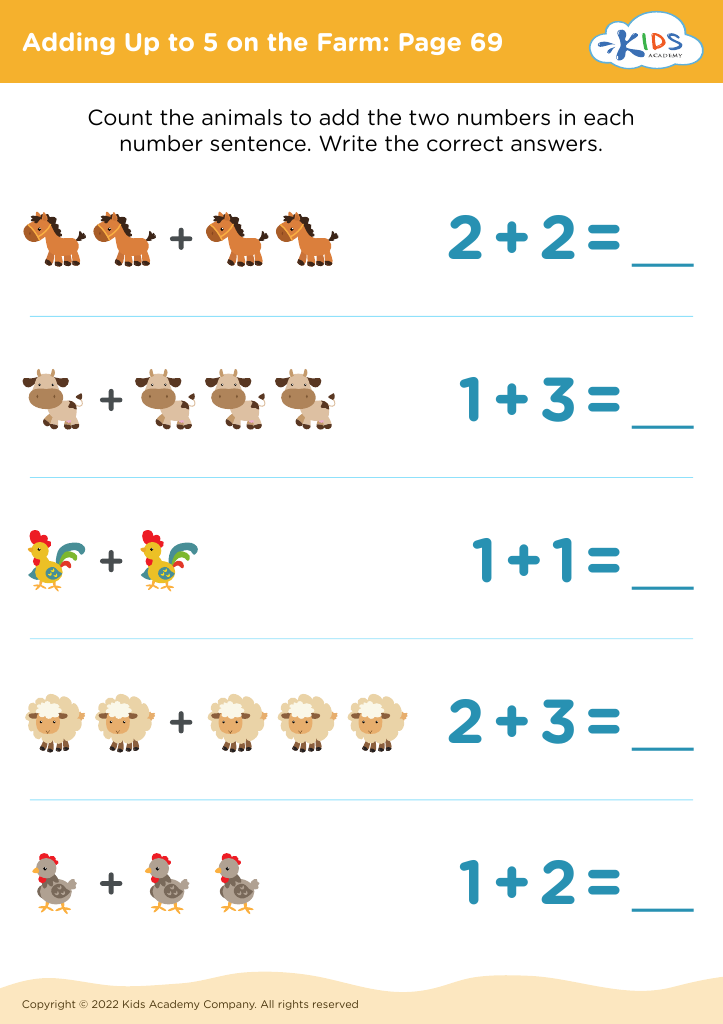
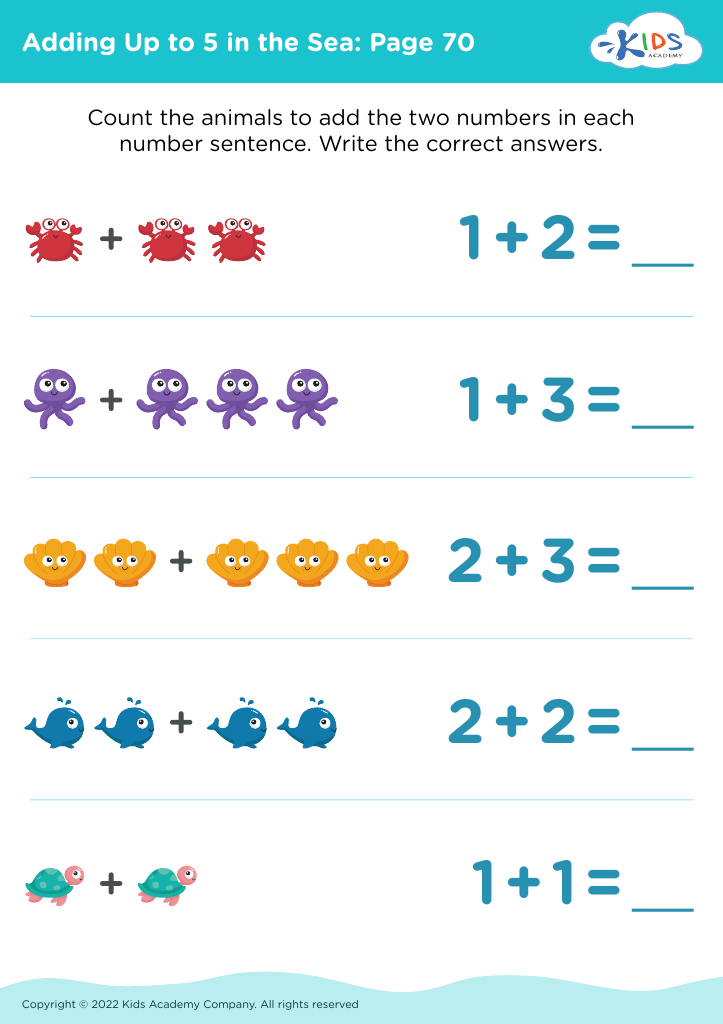





.jpg)


Understanding basic math concepts, such as adding up to 5, is crucial for children aged 3-4 as it lays the foundation for their future learning. At this age, children's brains are highly receptive to new information, and grasping simple addition helps develop critical thinking and problem-solving skills.
Teachers and parents should care because early math skills are directly linked to later academic success. By introducing counting and simple addition early on, children become more comfortable with numbers and mathematical concepts, which reduces anxiety around math as they progress in school. Additionally, mastering these basic skills enhances spatial awareness, reasoning, and cognitive development.
Engaging in fun activities like counting toys or using visual aids can make learning enjoyable and reinforce these concepts in a playful manner. The skills learned while adding up to 5 also cultivate a sense of achievement and boost children's confidence. Moreover, a strong mathematical foundation at this age promotes a positive attitude towards learning, resilience in tackling challenges, and improves overall communication and collaboration when engaging in group activities. Ultimately, fostering basic math understanding prepares young learners for more complex mathematical concepts in the future and supports their overall developmental growth.








