Filters

95 filtered results

Clear all filters
Favorites
With answer key
Interactive

95 filtered results

Difficulty Level

Grade


Check out this FREE Trial Lesson on Adding Up to 5 for age 3-4!

Sorting Objects into 3 Categories

Favorites
With answer key
Interactive
  • 3-4
  • Cognitive Development
  • Adding Up to 5
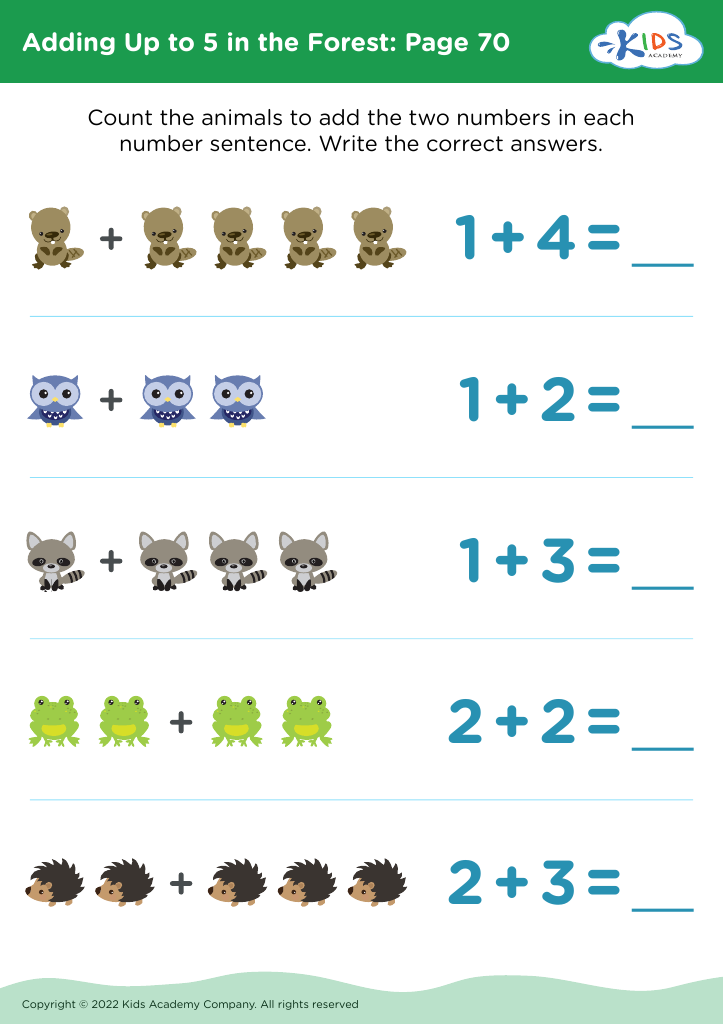
Adding Up to 5 in the Forest: Page 70
Worksheet
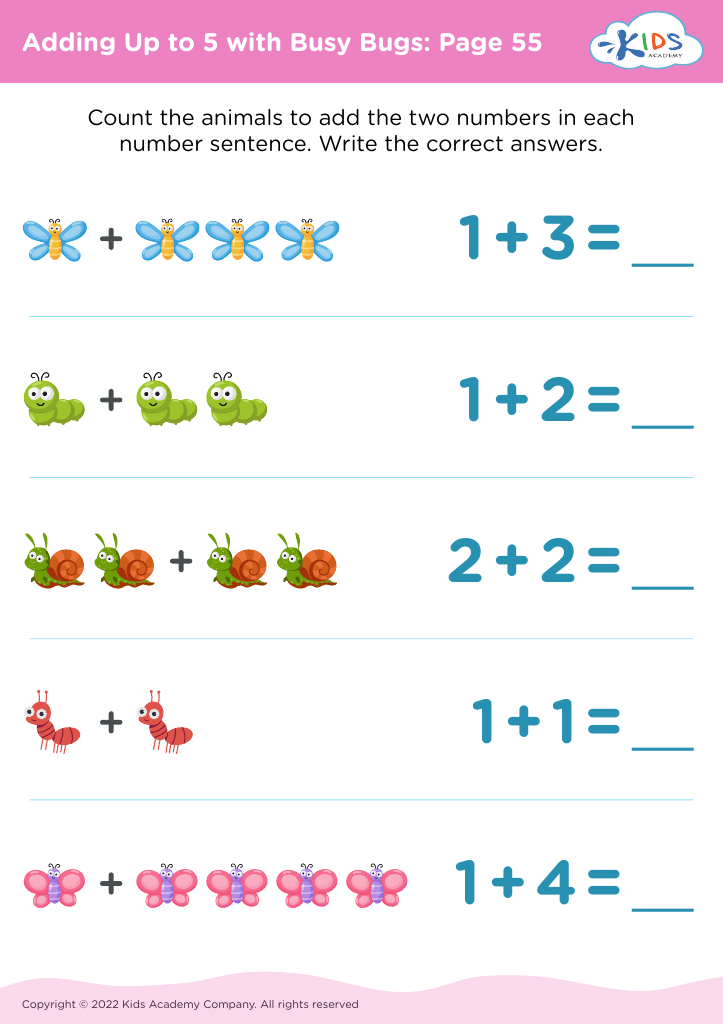
Adding Up to 5 with Busy Bugs: Page 55
Worksheet
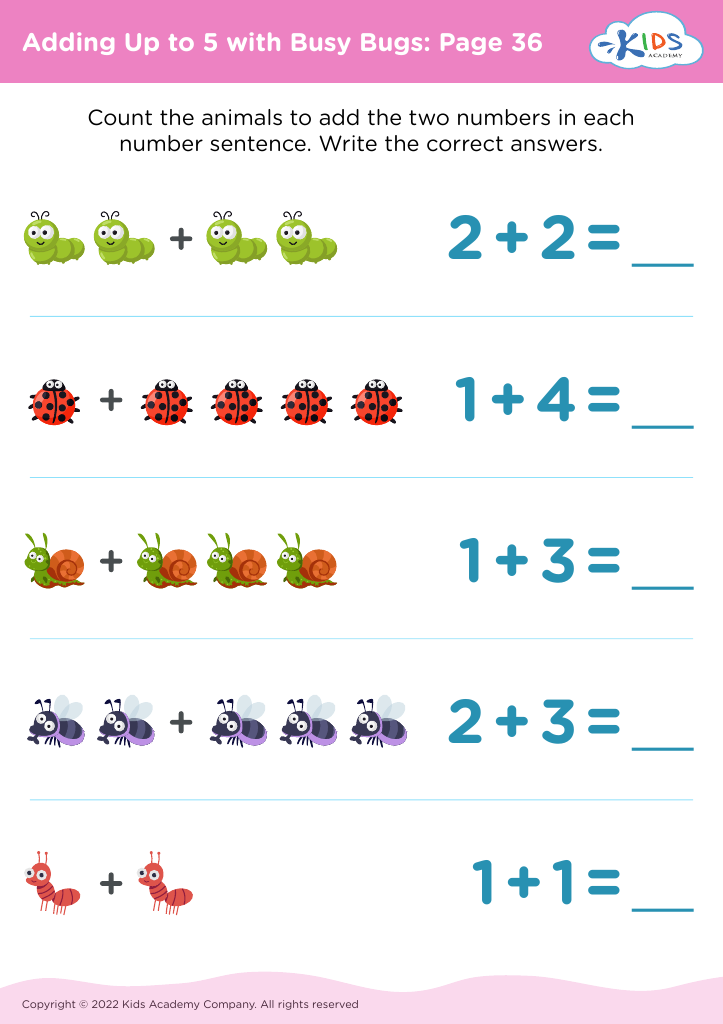
Adding Up to 5 with Busy Bugs: Page 36
Worksheet
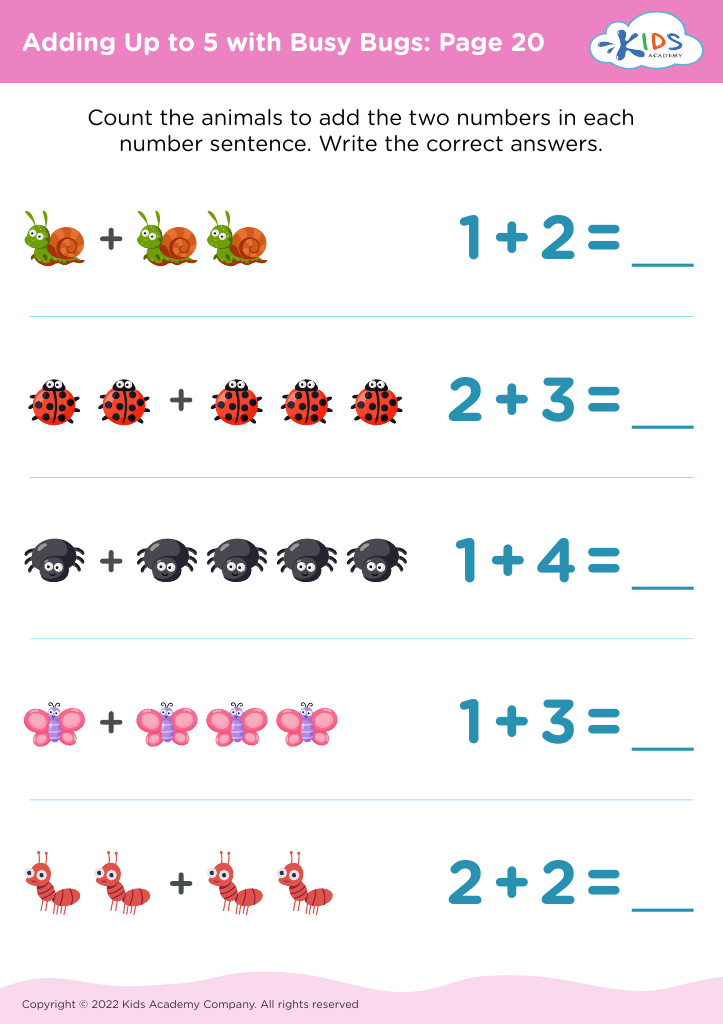
Adding Up to 5 with Busy Bugs: Page 20
Worksheet
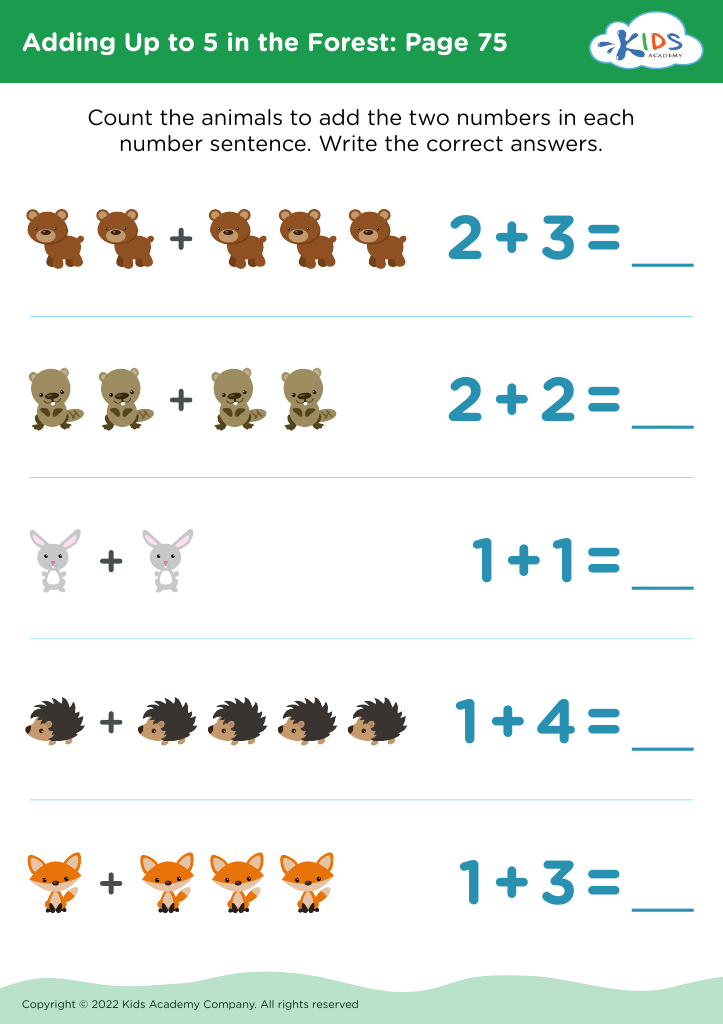
Adding Up to 5 in the Forest: Page 75
Worksheet
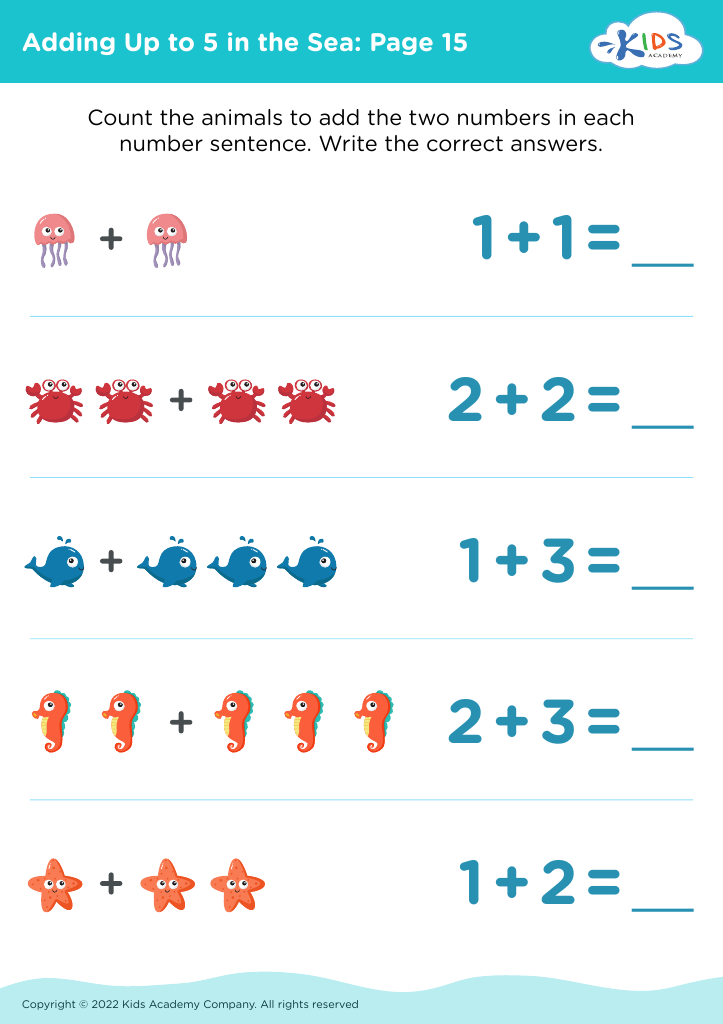
Adding Up to 5 in the Sea: Page 15
Worksheet
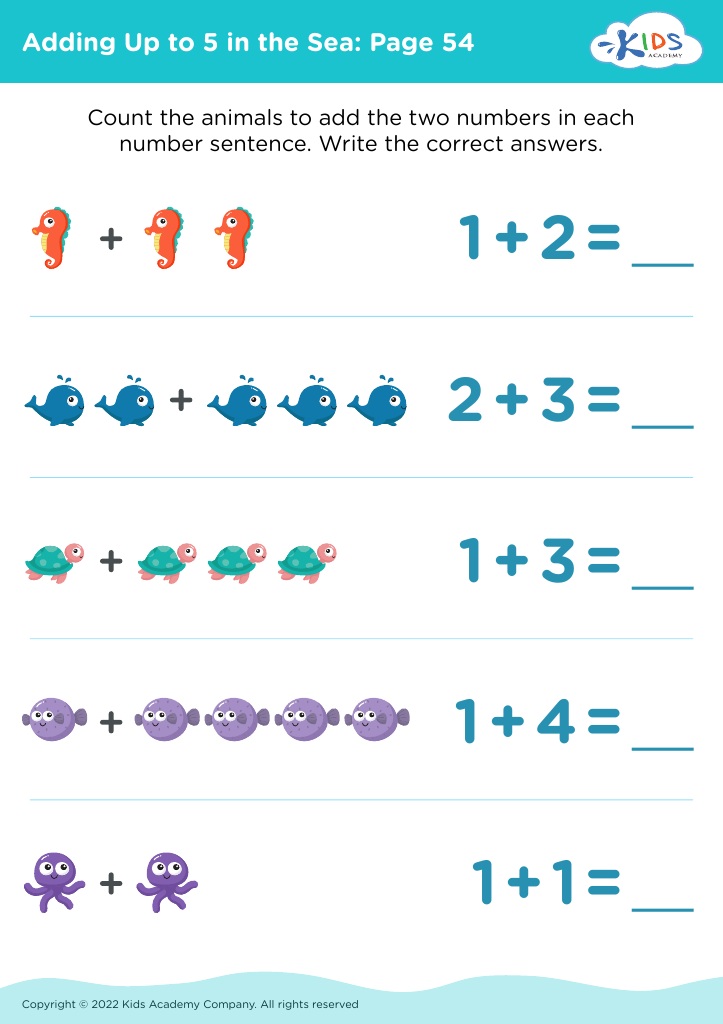
Adding Up to 5 in the Sea: Page 54
Worksheet
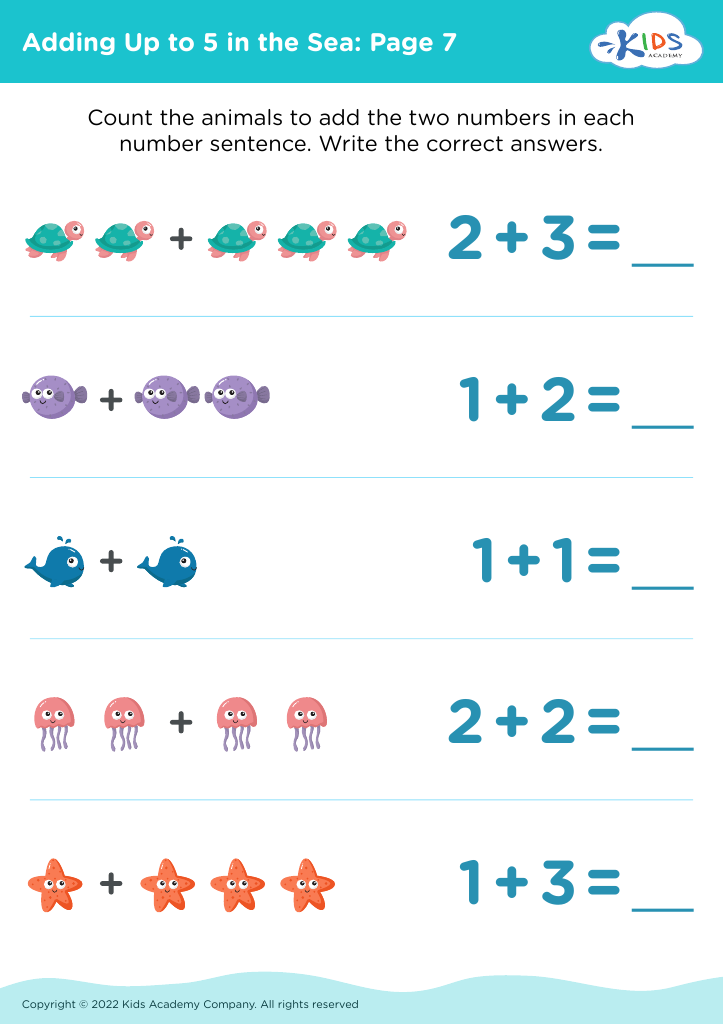
Adding Up to 5 in the Sea: Page 7

Adding Up to 5 in the Sea: Page 7

Adding Up to 5 in the Sea: Page 7
Worksheet
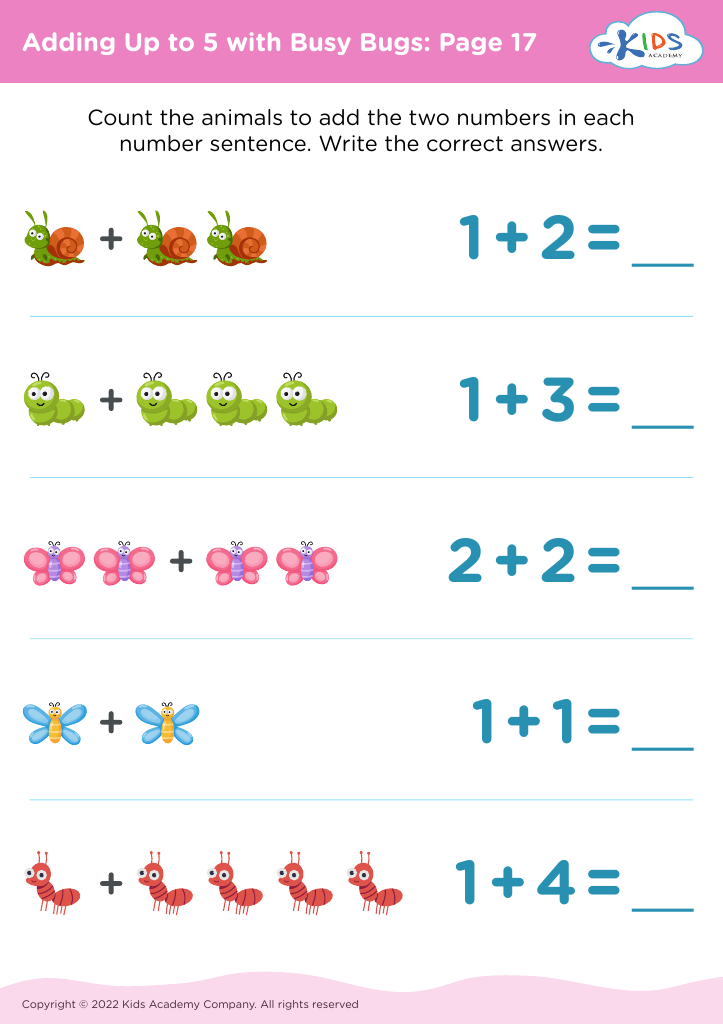
Adding Up to 5 with Busy Bugs: Page 17
Worksheet
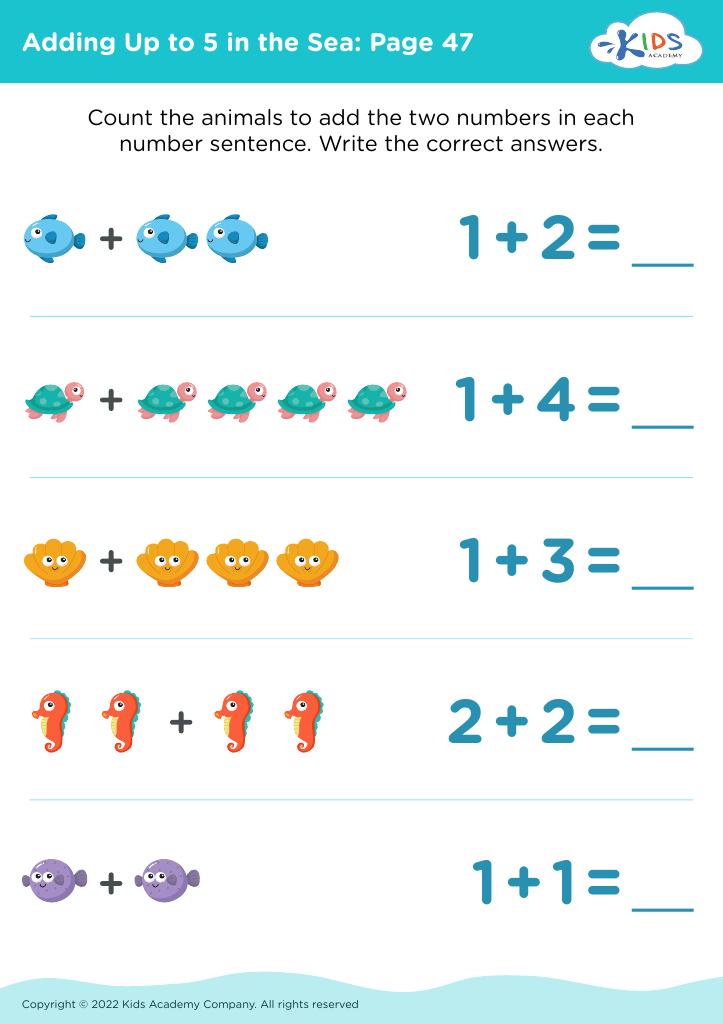
Adding Up to 5 in the Sea: Page 47
Worksheet
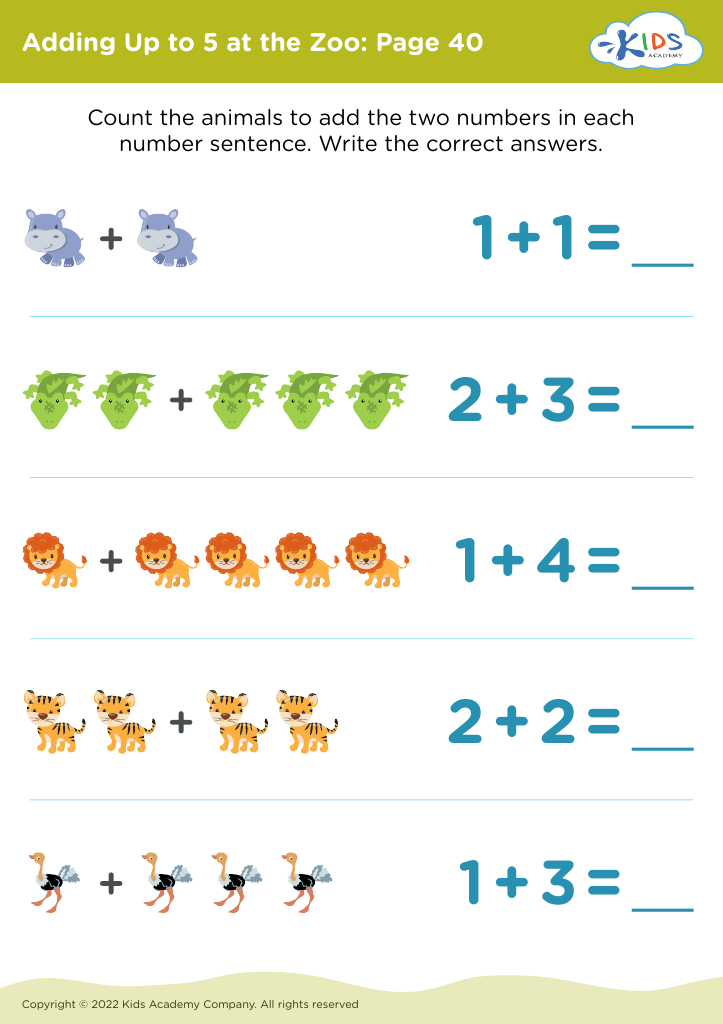
Adding Up to 5 at the Zoo: Page 40
Worksheet
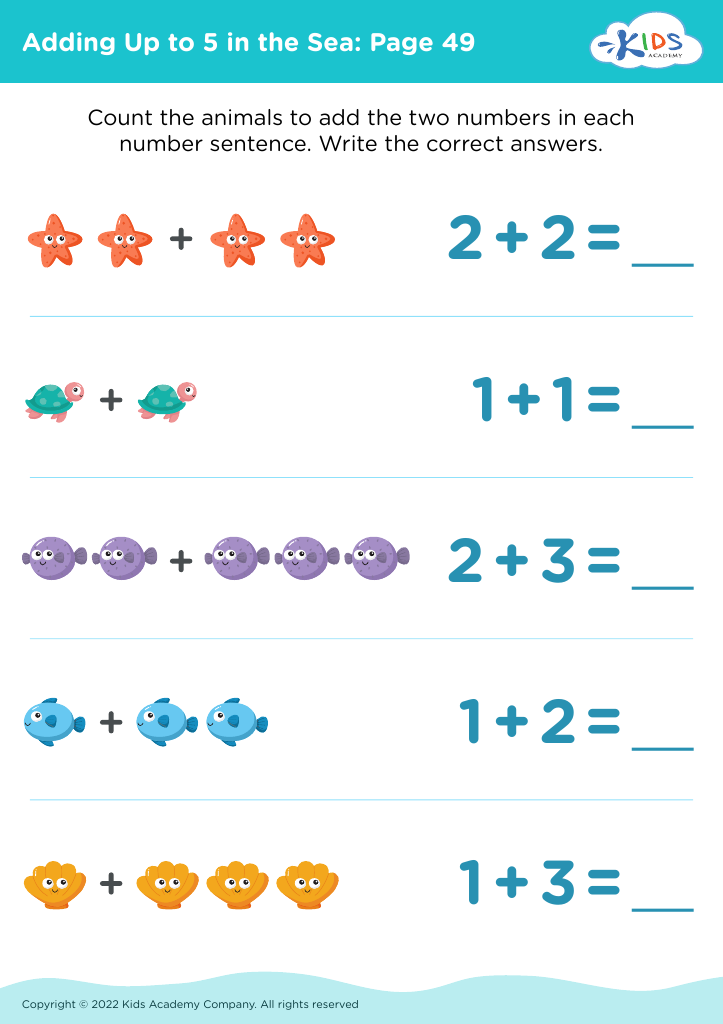
Adding Up to 5 in the Sea: Page 49
Worksheet
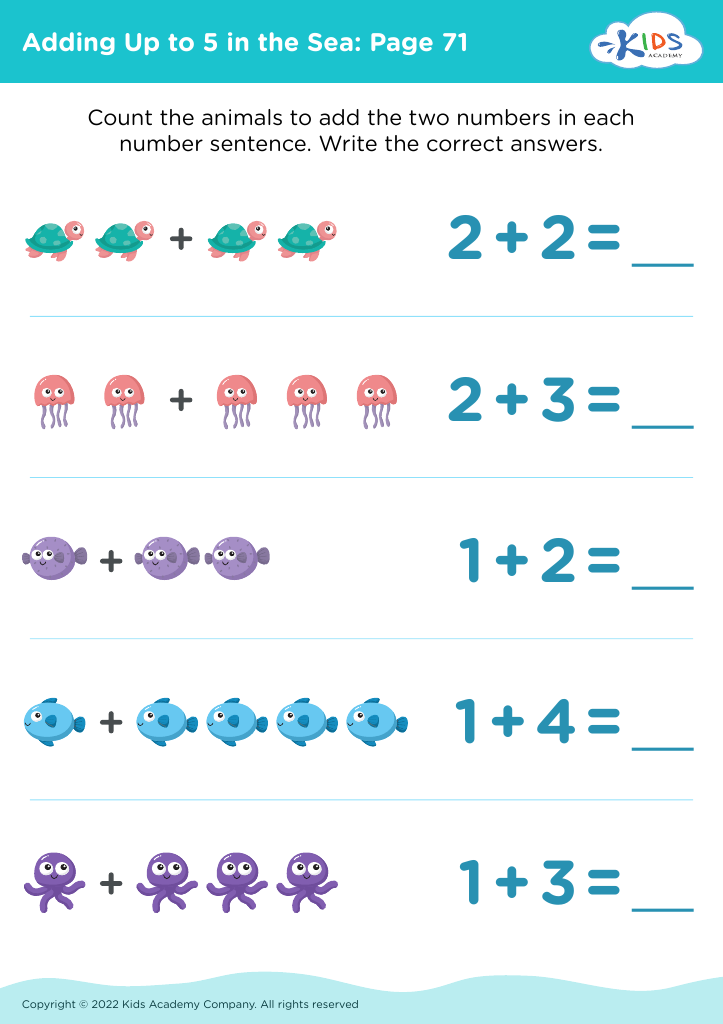
Adding Up to 5 in the Sea: Page 71
Worksheet
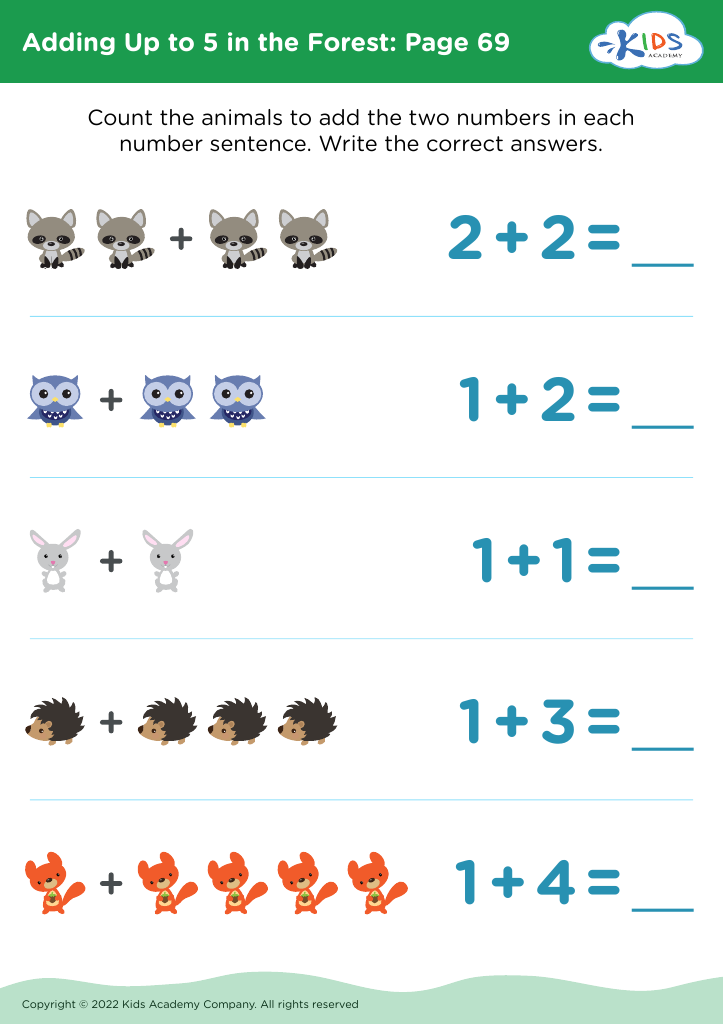
Adding Up to 5 in the Forest: Page 69
Worksheet
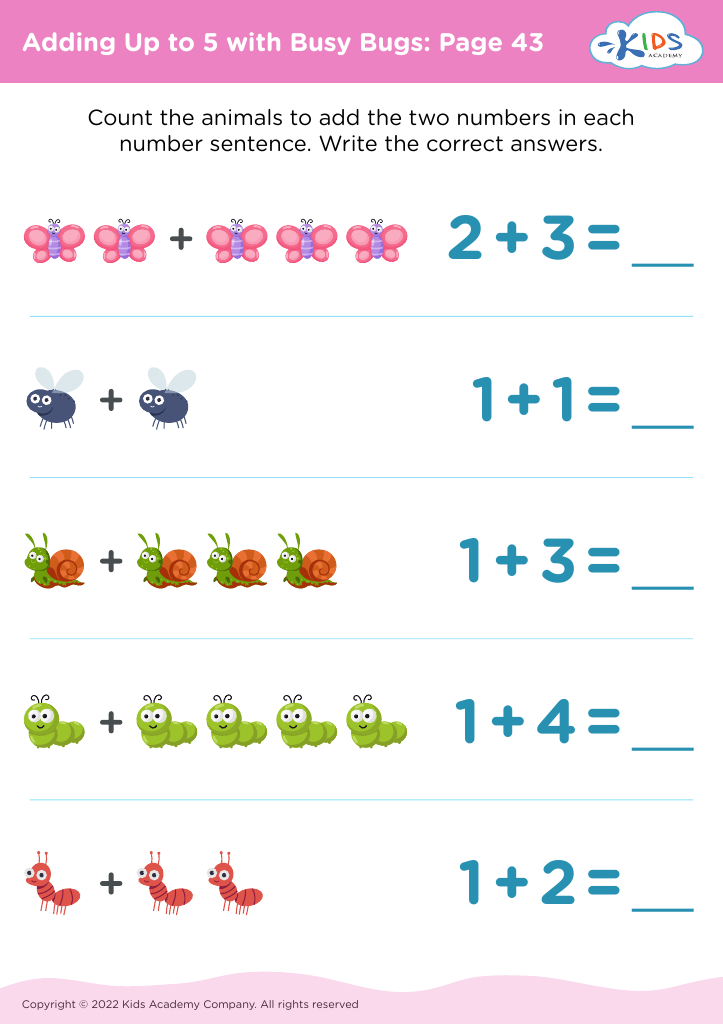
Adding Up to 5 with Busy Bugs: Page 43
Worksheet
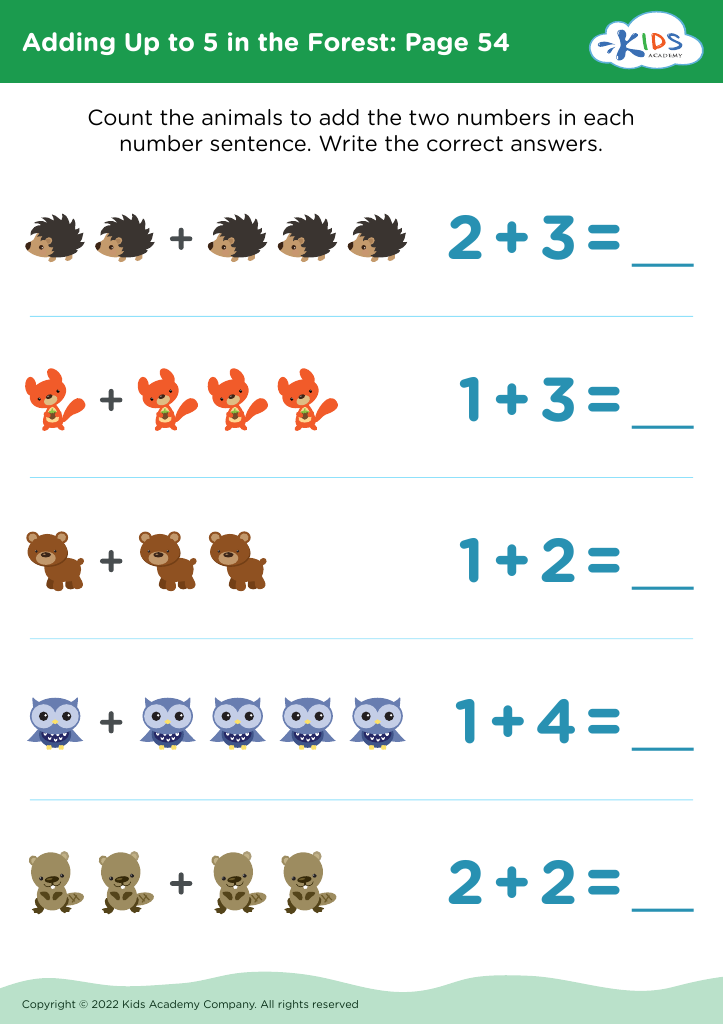
Adding Up to 5 in the Forest: Page 54
Worksheet
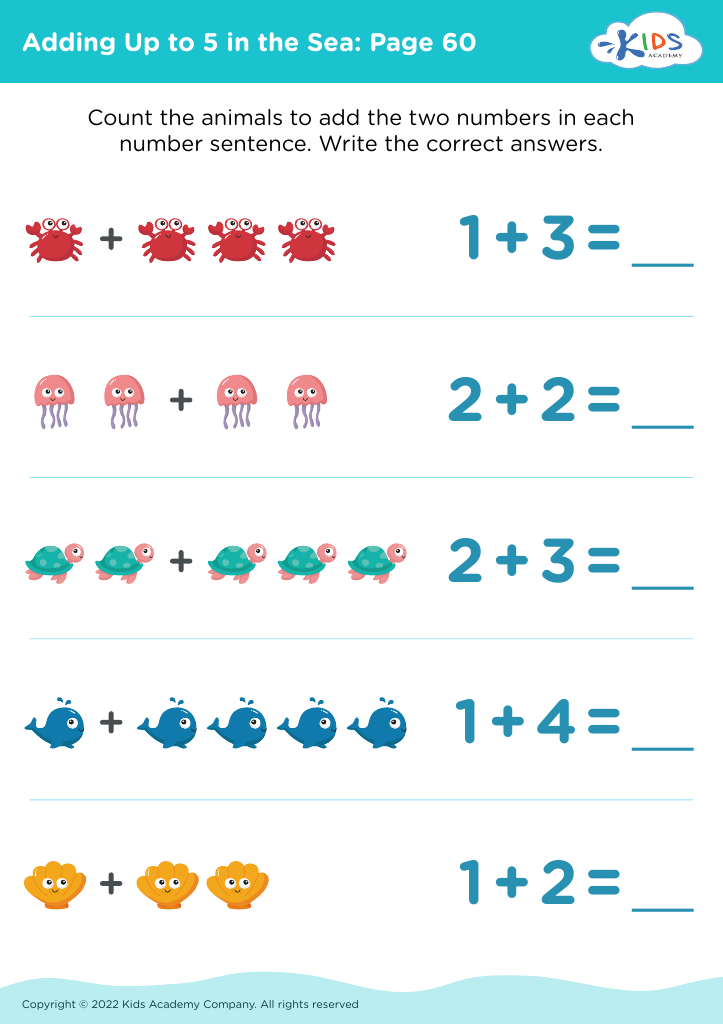
Adding Up to 5 in the Sea: Page 60
Worksheet
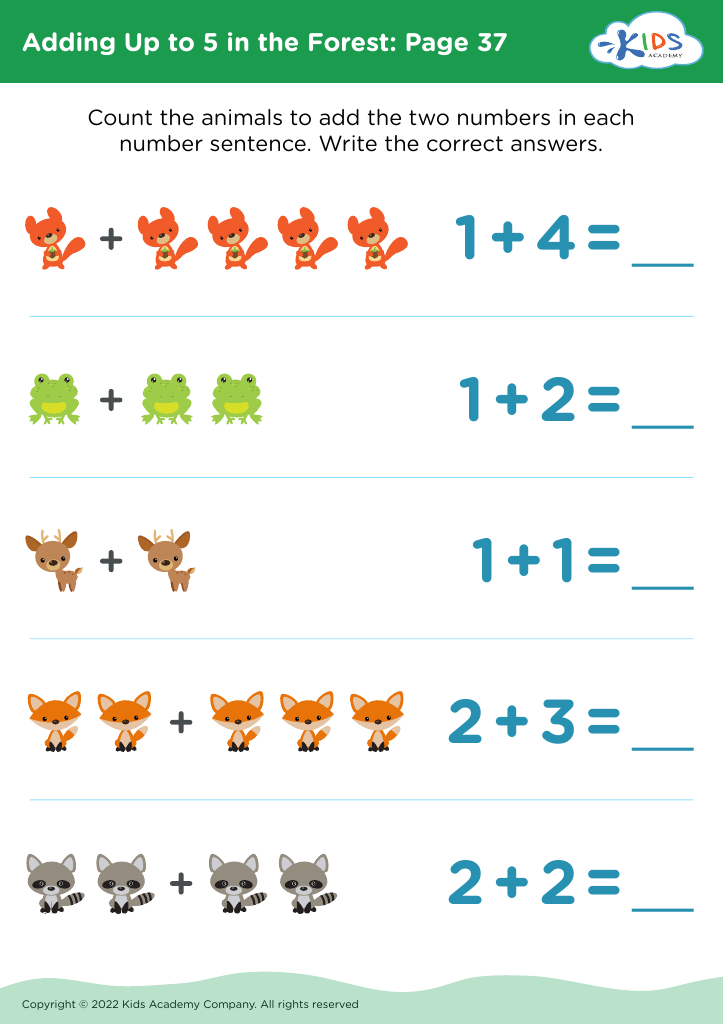
Adding Up to 5 in the Forest: Page 37
Worksheet
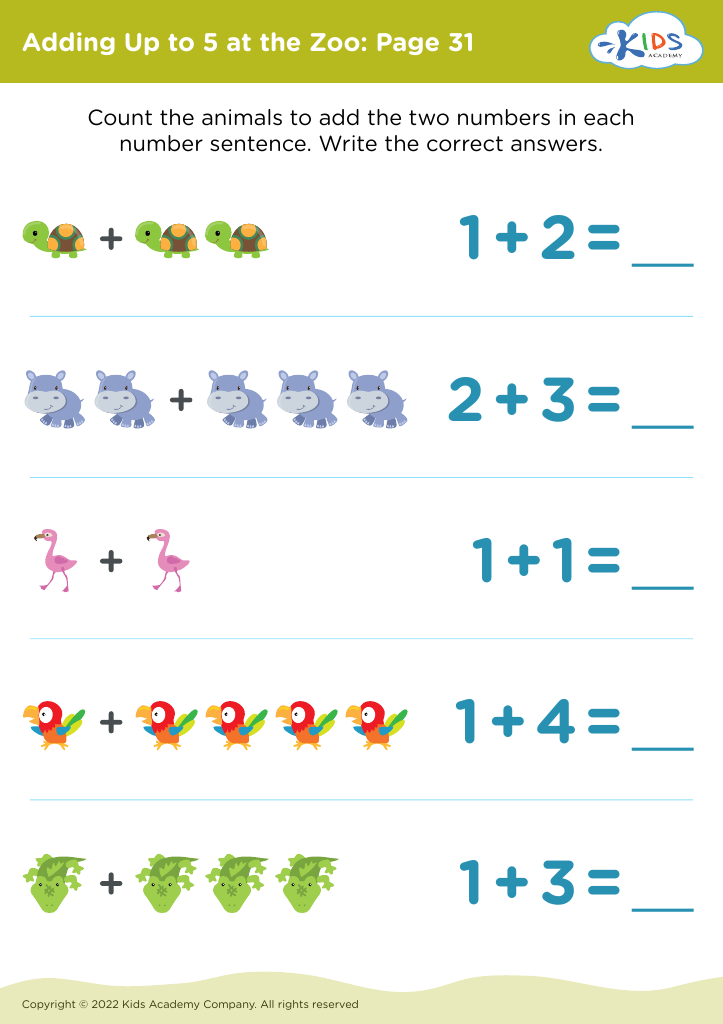
Adding Up to 5 at the Zoo: Page 31
Worksheet
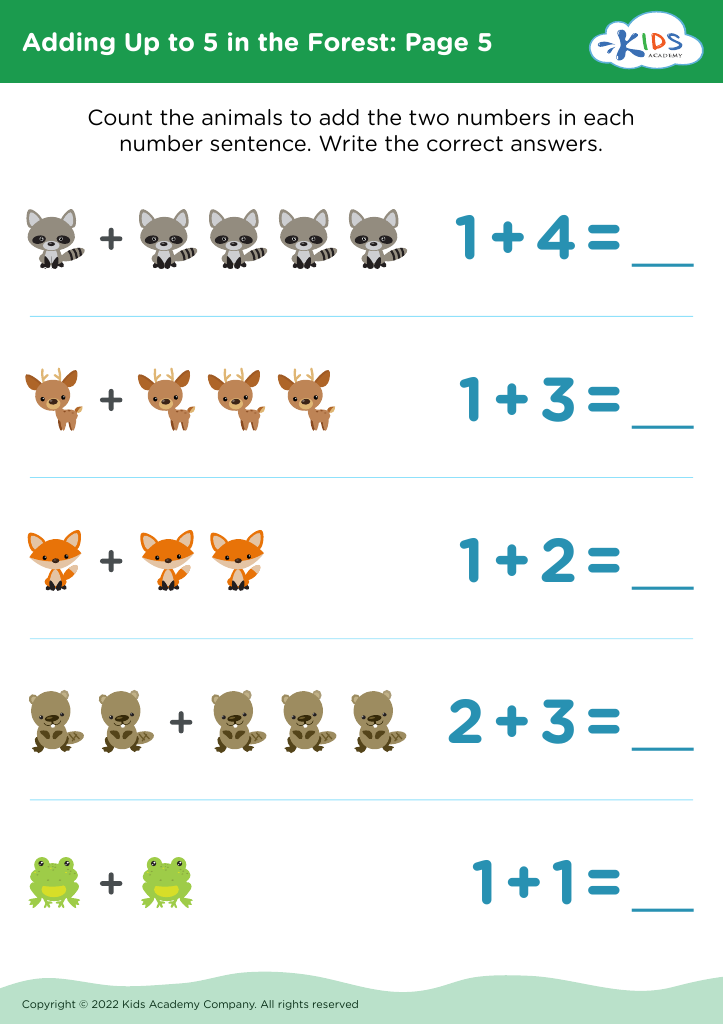
Adding Up to 5 in the Forest: Page 5
Worksheet
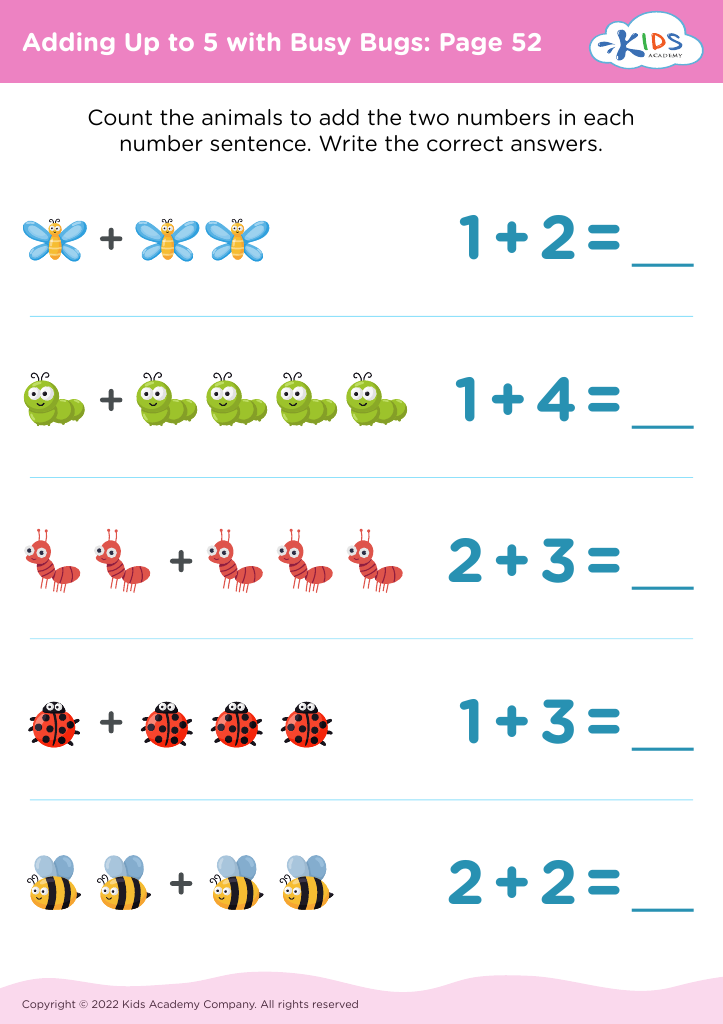
Adding Up to 5 with Busy Bugs: Page 52
Worksheet
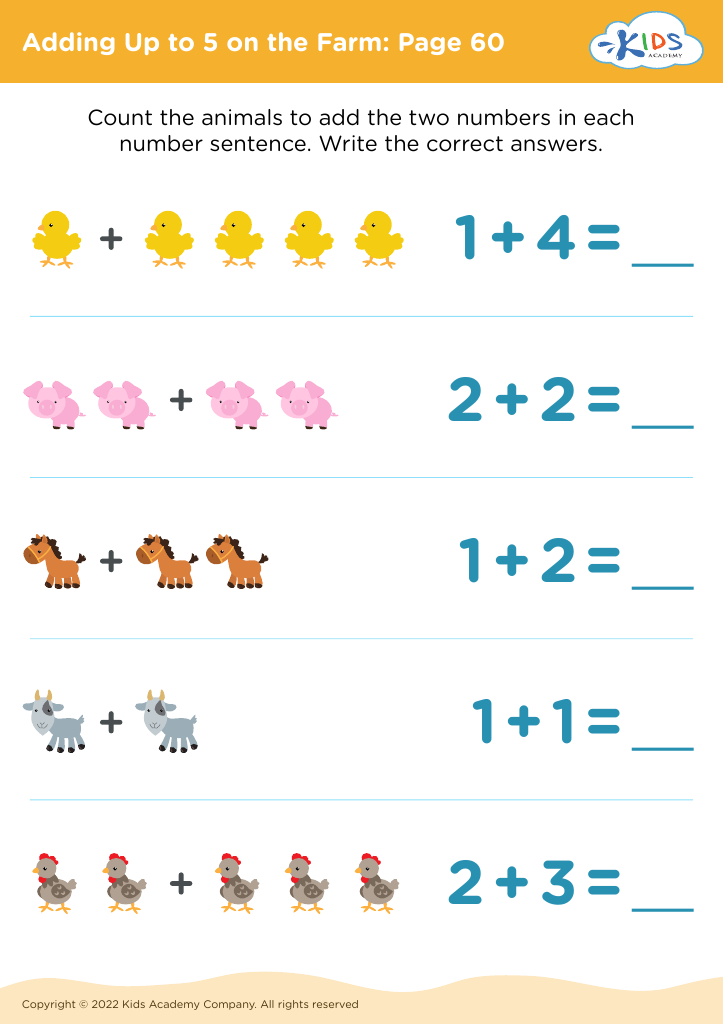
Adding Up to 5 on the Farm: Page 60
Worksheet
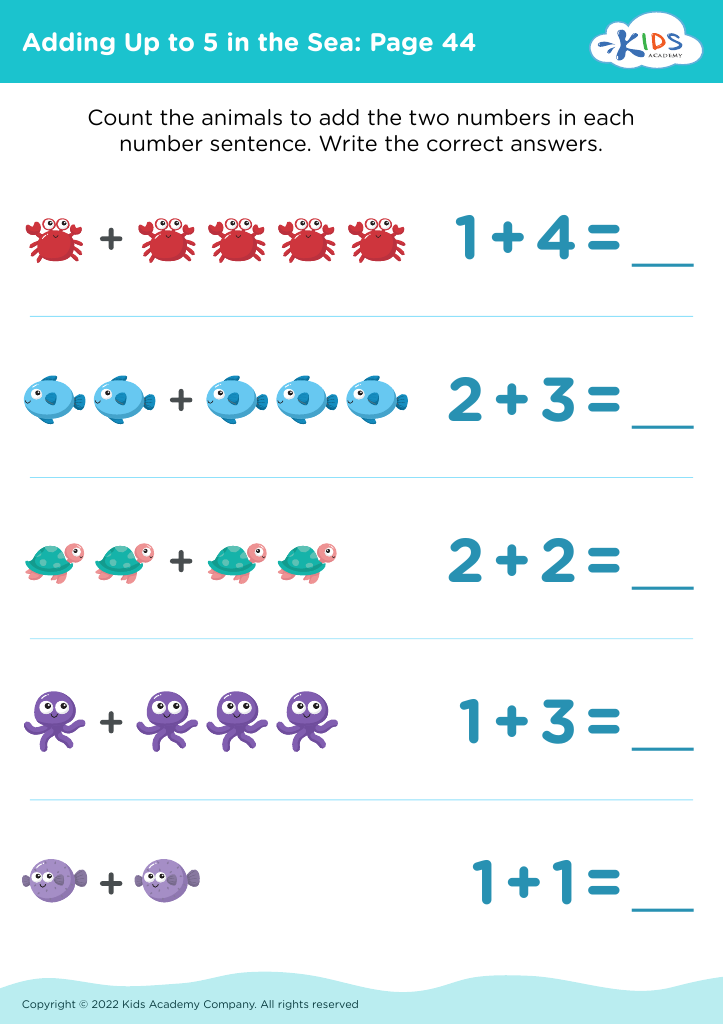
Adding Up to 5 in the Sea: Page 44
Worksheet


... 3 4

Parents and teachers should care about cognitive development adding up to five for ages 3-4 because it forms the bedrock of early mathematical understanding. These formative years are crucial for developing foundational skills that will support children’s future learning and success in school. Encouraging young children to engage in activities that require counting, recognizing numbers, and understanding quantities helps them develop essential cognitive processes such as number sense, memory, and problem-solving skills.

When children grasp the concept of adding up to five, they begin to understand basic mathematical operations and the relationship between numbers. This understanding is not just about rote memorization; it enhances their ability to think logically and approach problems methodically. Additionally, a strong foundation in early math correlates with better academic performance in later years, not only in mathematics but across various subjects.

Moreover, cognitive development in mathematics at this early age boosts confidence and enthusiasm for learning. When children achieve milestones in their cognitive development, such as adding up to five, they build self-esteem and are more likely to view learning as a positive and rewarding experience. Ensuring strong early cognitive development in mathematics supports a child’s overall educational journey and encourages lifelong learning and curiosity.