Enhancing concentration Adding Up to 5 Worksheets for Ages 3-4
8 filtered results
-
From - To
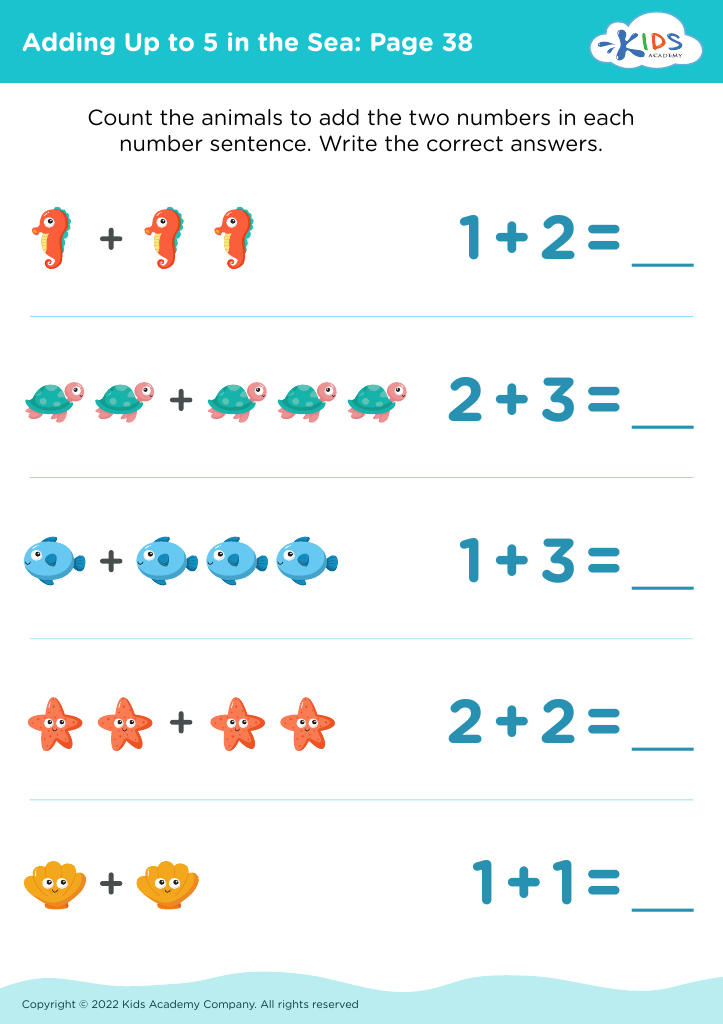
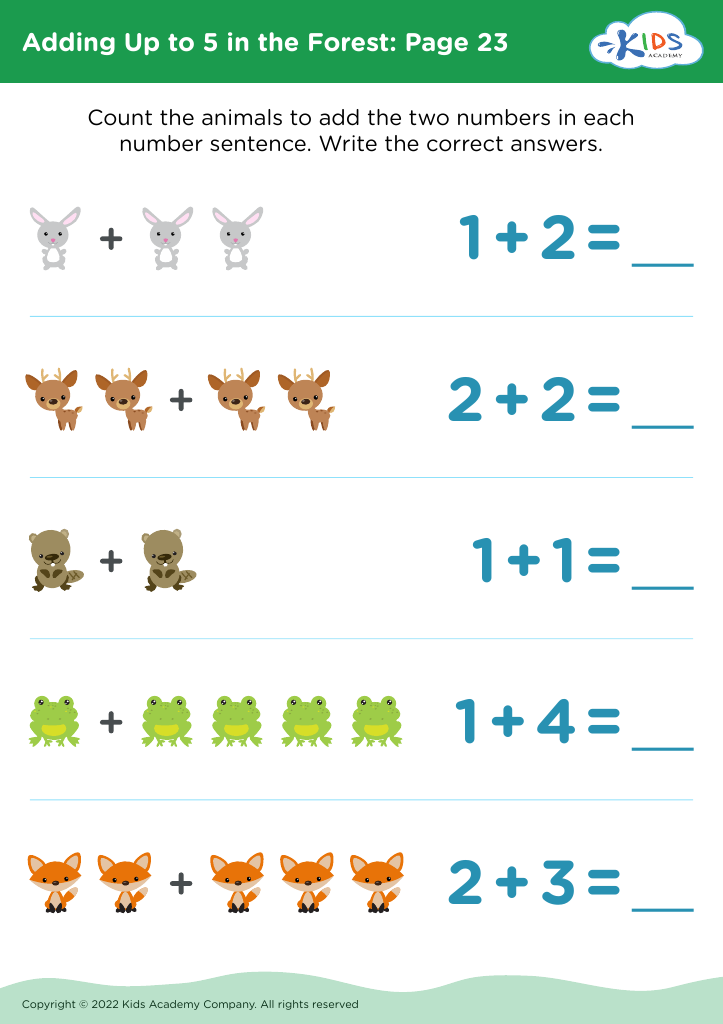
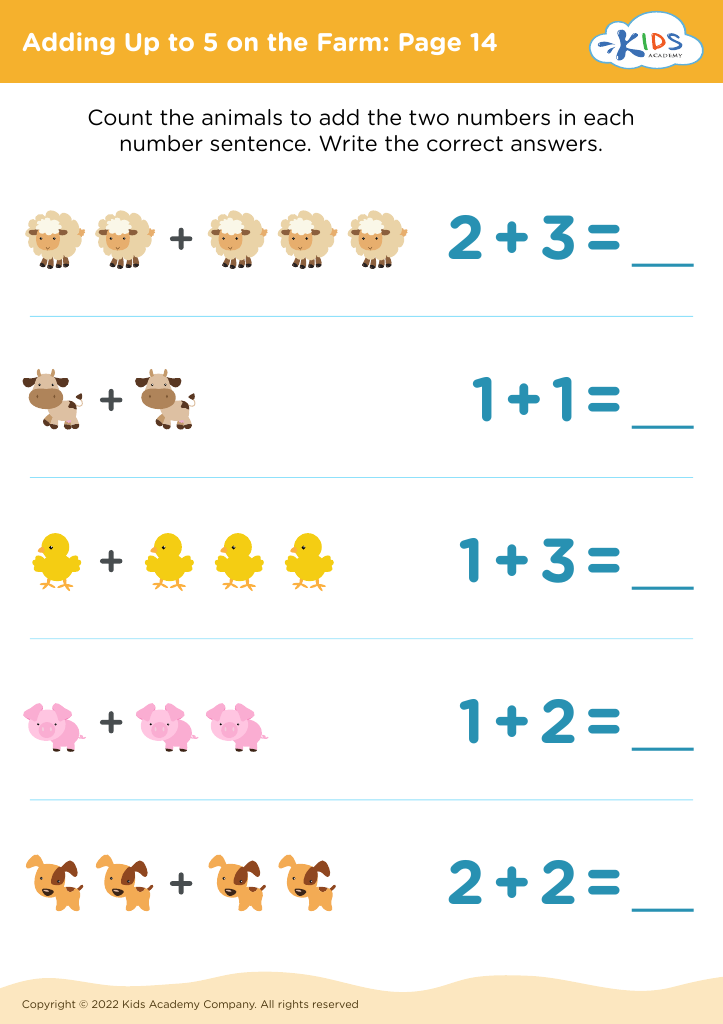
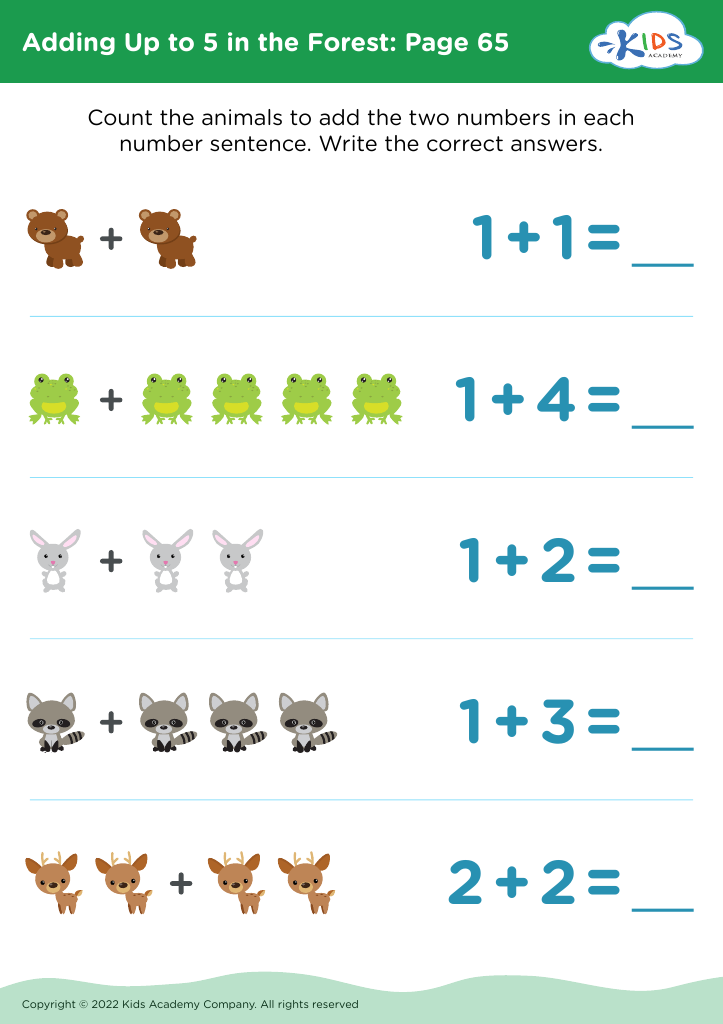
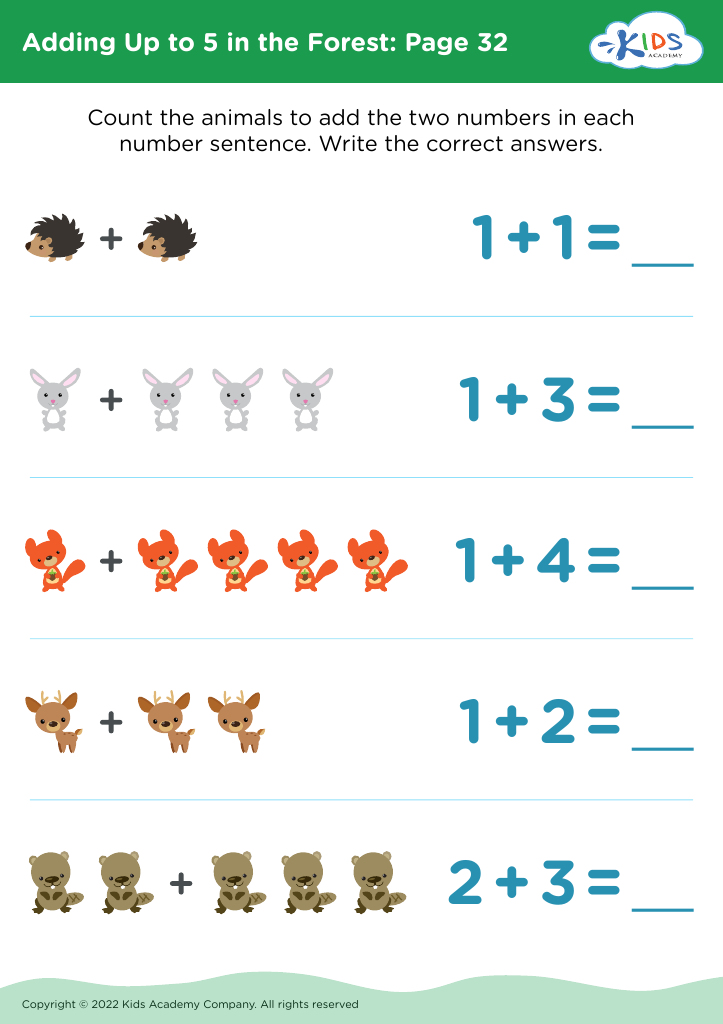
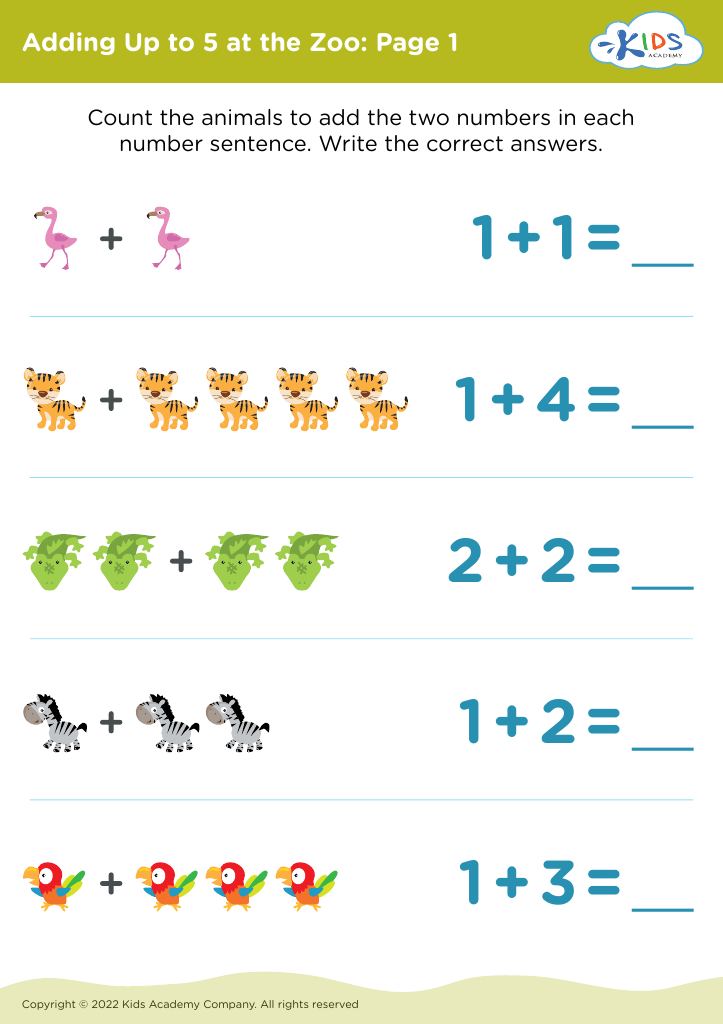
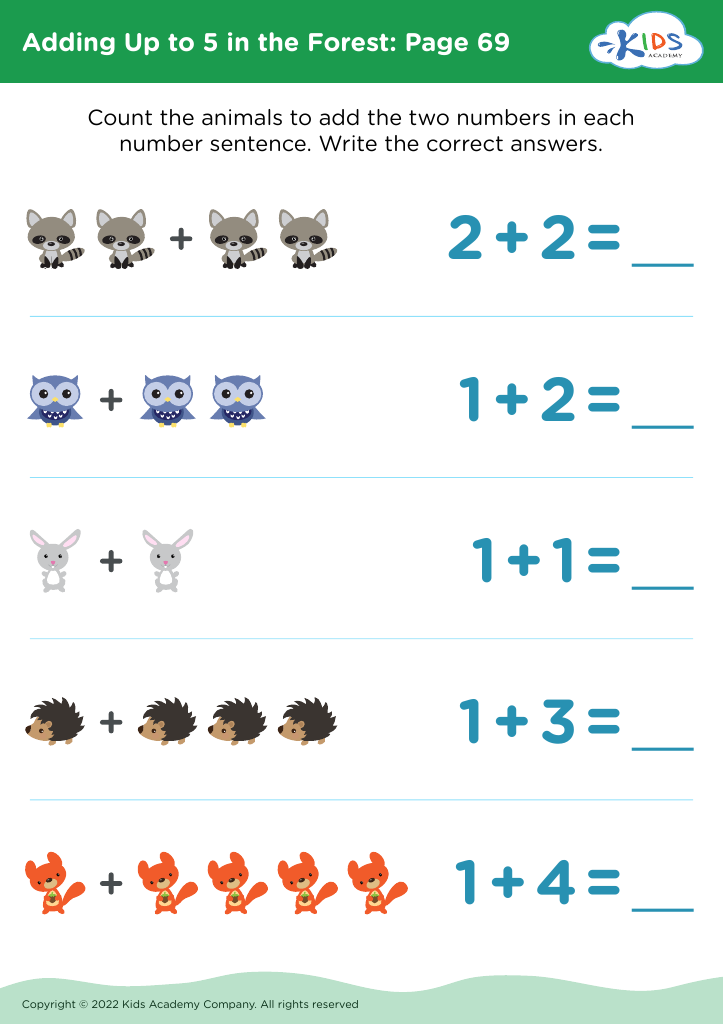
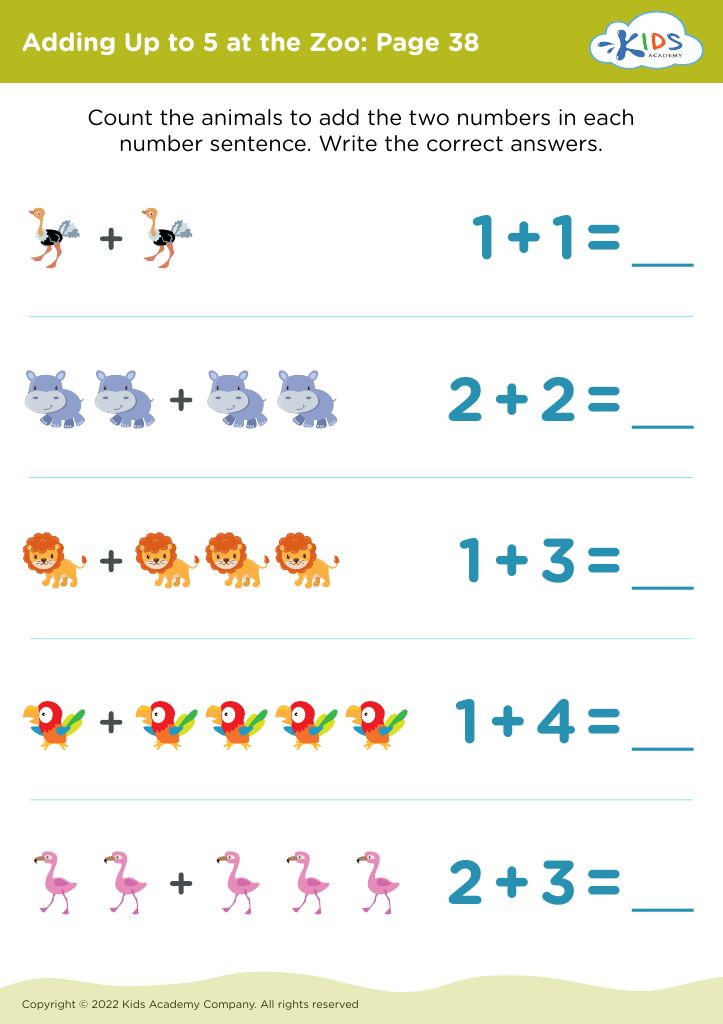
Boost your little learner's attention span with our "Enhancing Concentration Adding Up to 5 Worksheets for Ages 3-4." Specially designed for young minds, these printable worksheets combine fun math activities with engaging exercises to improve focus and concentration. Unlock the potential of early math skills by guiding kids through simple addition problems, enhancing not only their numerical abilities but also their cognitive concentration. Perfect for home or classroom use, these worksheets provide a solid foundation in mathematics while making learning enjoyable. Foster your child's development in a supportive, effective way with our expertly crafted resources tailored for ages 3-4.




.jpg)



Parents and teachers should care about enhancing concentration skills and basic arithmetic, such as adding up to 5, for children aged 3-4 because these foundational abilities are crucial for early cognitive development. At this tender age, children’s brains are incredibly receptive to new information, and fostering concentration can significantly boost their capacity to learn and retain knowledge. Improving a child’s attention span is pivotal not just for academic success but for everyday tasks and interactions. Concentration helps children complete activities, follow directions, and engage in longer periods of play, establishing a basis for future learning.
Introducing basic arithmetic, like adding up to 5, taps into a child’s natural curiosity and supports the cognitive development necessary for more complex mathematical concepts. Early success with simple math builds confidence and an early affinity for numbers, laying the groundwork for future achievement in STEM (Science, Technology, Engineering, and Mathematics) areas. Furthermore, activities aimed at improving concentration and learning numbers can also strengthen fine motor skills, enhance memory, and foster critical thinking.
Incorporating these skills through playful, engaging activities ensures that learning remains enjoyable and age-appropriate, making it more likely that children will develop a positive attitude toward education. By prioritizing these areas, parents and teachers can ensure children have a confident start in their educational journey.








