Fine motor skills (writing) Adding Up to 5 Worksheets for Ages 3-4 - Page 2
32 filtered results
-
From - To
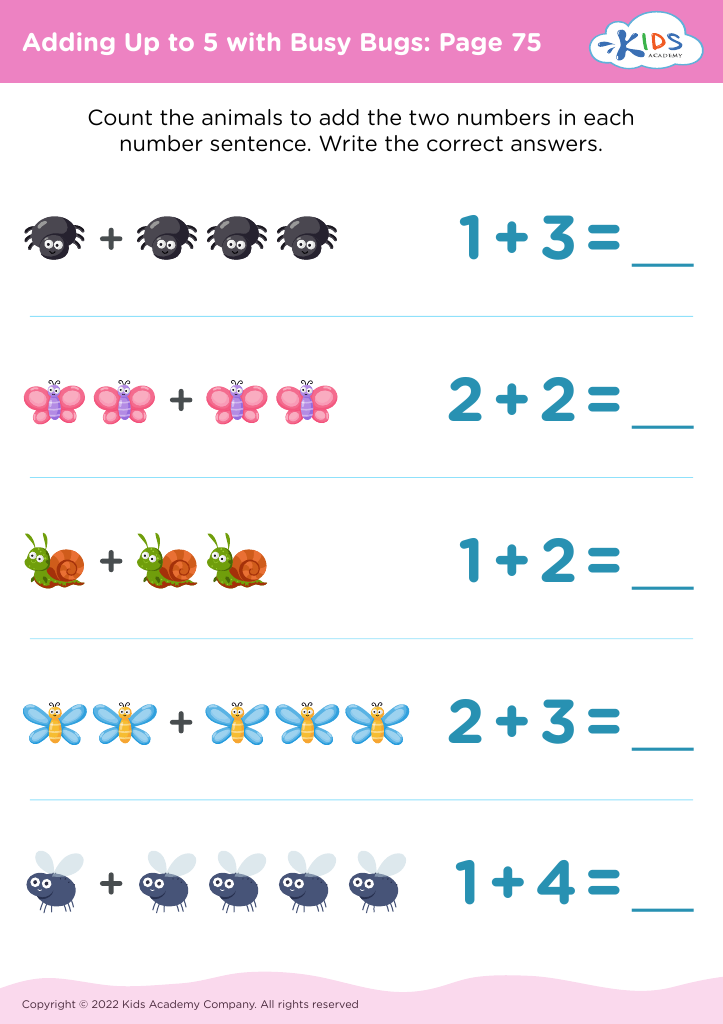
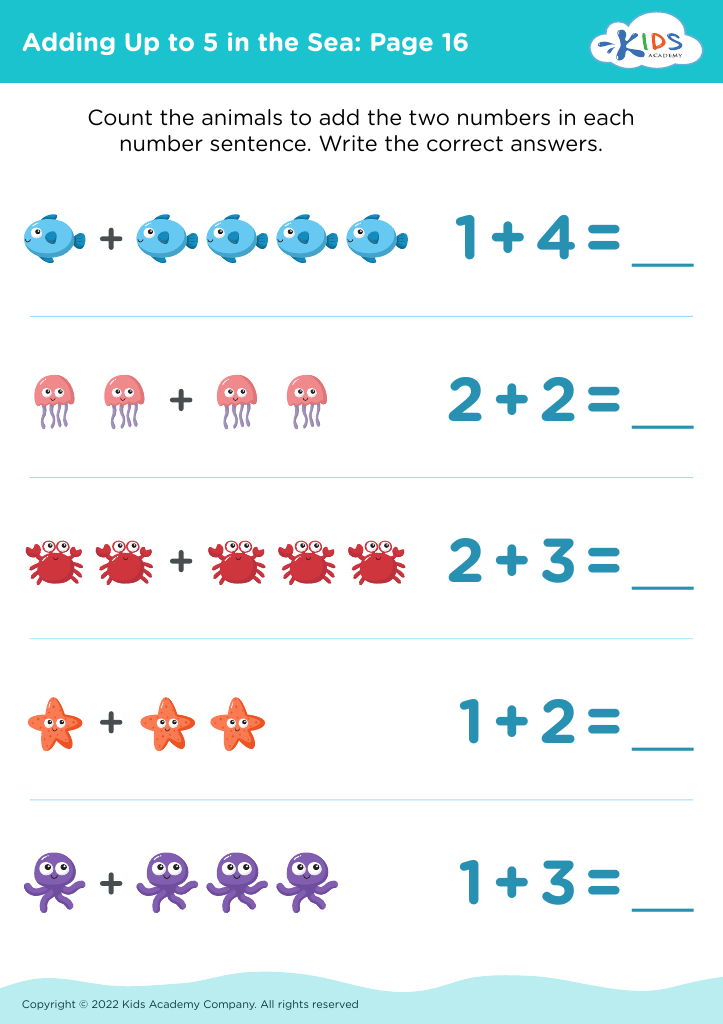
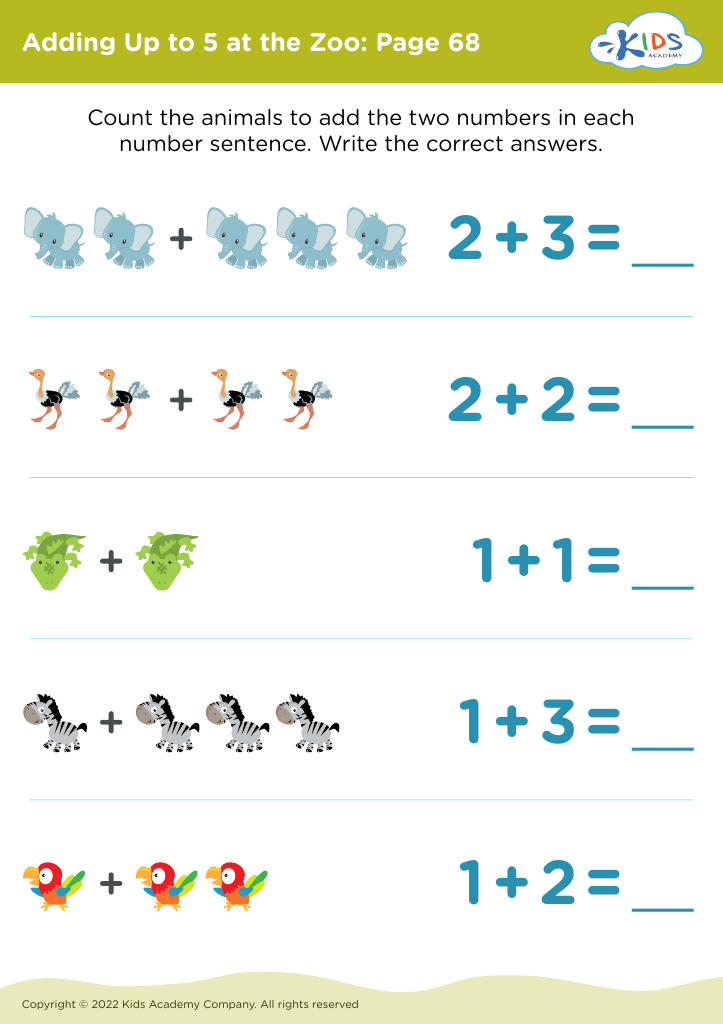
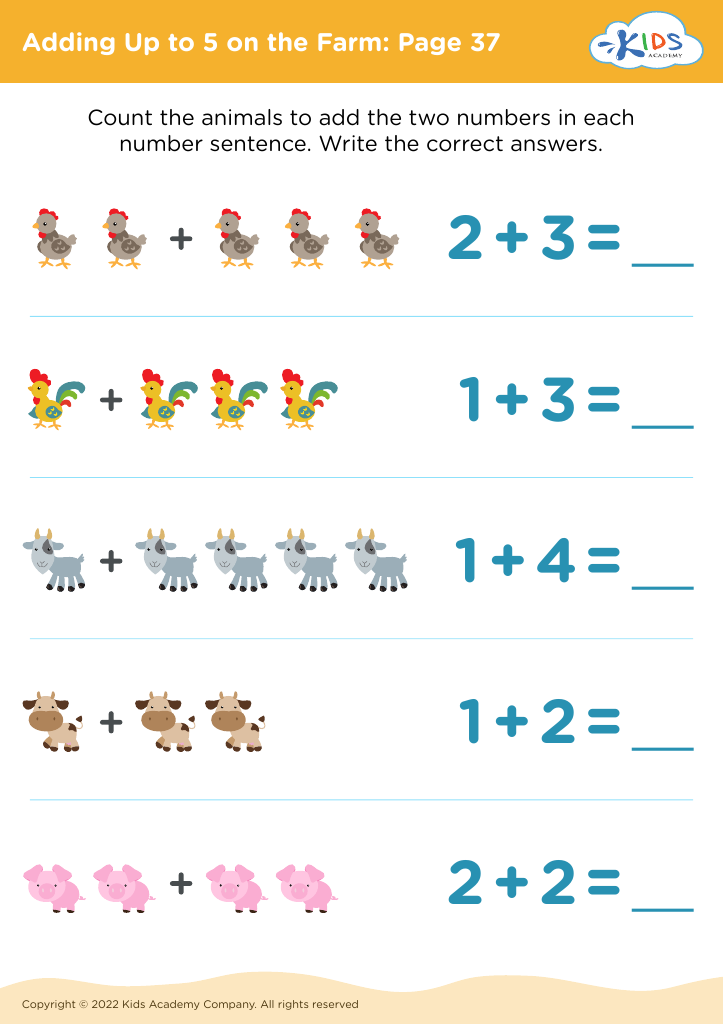
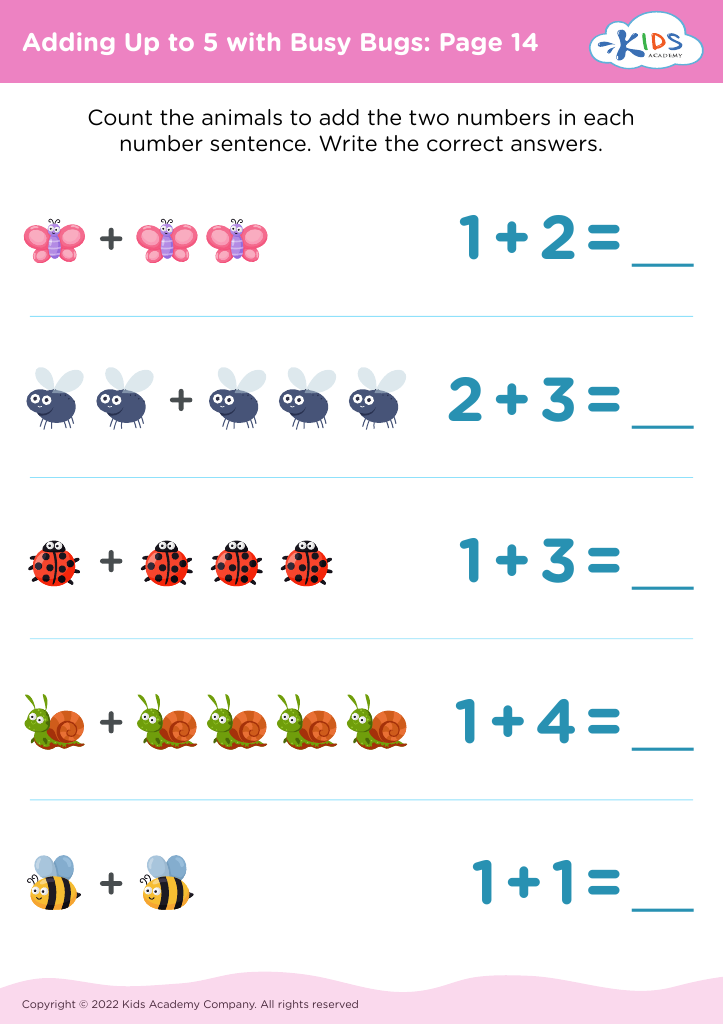
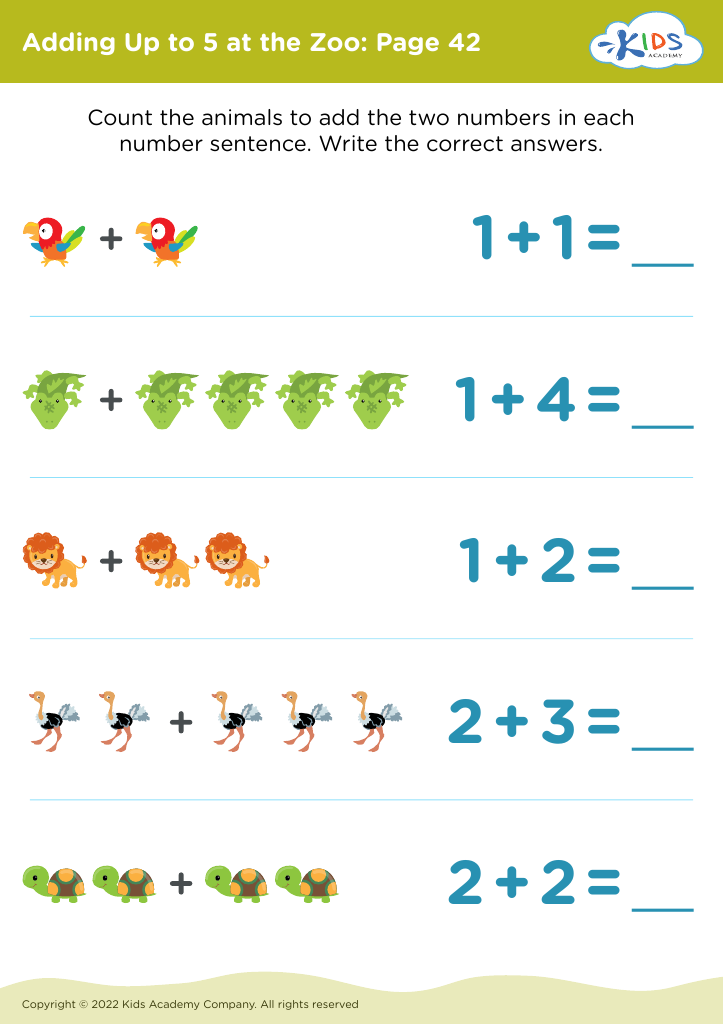
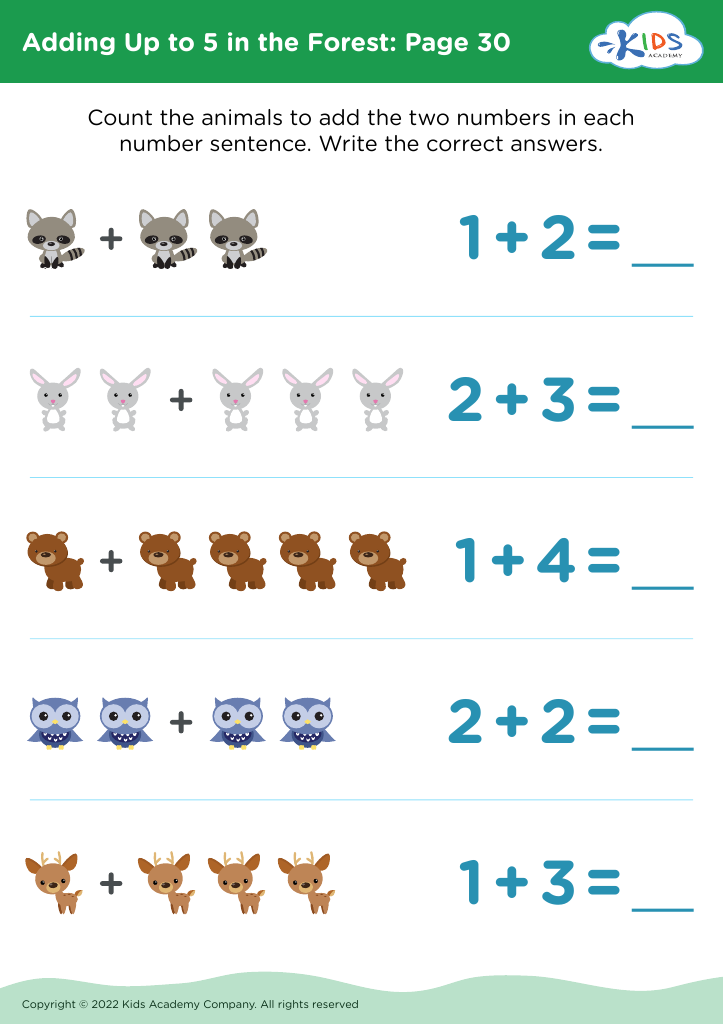
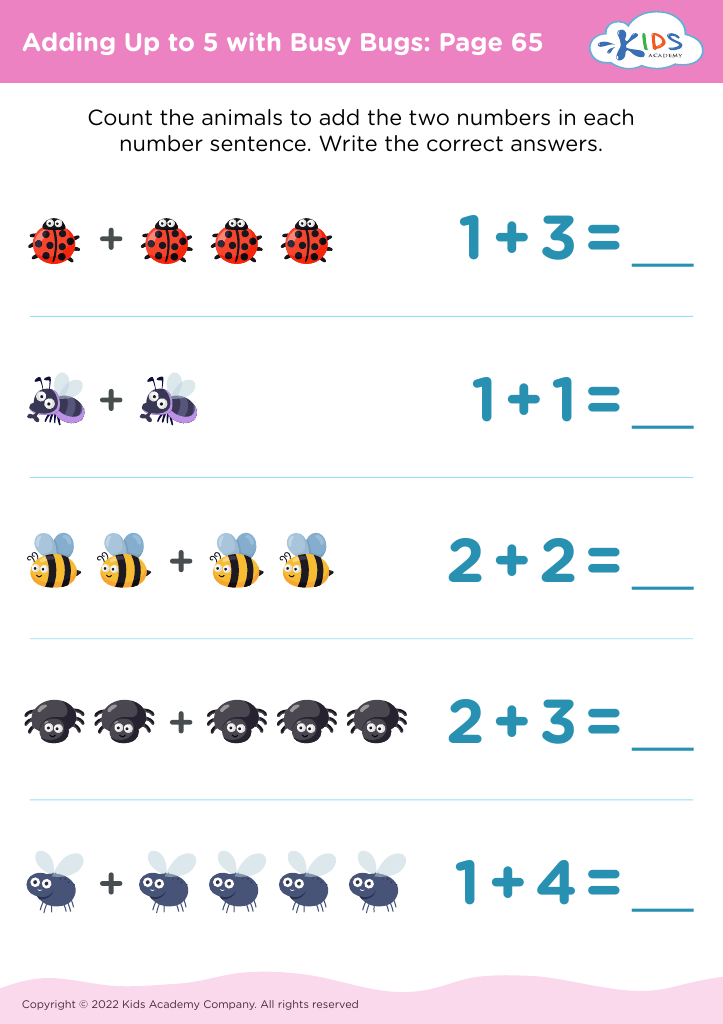








Fine motor skills, especially those involved in writing and adding up to 5, are fundamental for children aged 3-4, as they lay the groundwork for future academic and daily life success. Parents and teachers should care about these skills because they enable children to engage effectively in everyday tasks such as buttoning clothes, eating with utensils, and, eventually, writing clearly. Development of fine motor skills helps in strengthening the small muscles of the hands and fingers, enhancing hand-eye coordination, and promoting better manual dexterity.
Focusing on early skills like writing and basic math assists in cognitive development and problem-solving abilities. Writing, for instance, requires children to practice precision and control, directly improving their ability to communicate ideas and thoughts. Additionally, teaching children to add up to 5 supports numerical cognition, which is crucial for their overall arithmetic comprehension.
Moreover, mastering these skills fosters self-confidence. As children succeed in tasks like holding a pencil correctly or solving simple addition problems, they feel more confident and independent. This boosts their willingness to engage in complex challenges as they grow. Early intervention in fine motor skills ensures that children not only meet developmental milestones but also enter school better prepared, thereby setting a solid foundation for lifelong learning.








