
Following instructions Adding Up to 5 Worksheets for Ages 3-4
3 filtered results
Difficulty Level
Grade
Age
-
From - To
Subject
Activity
Standards
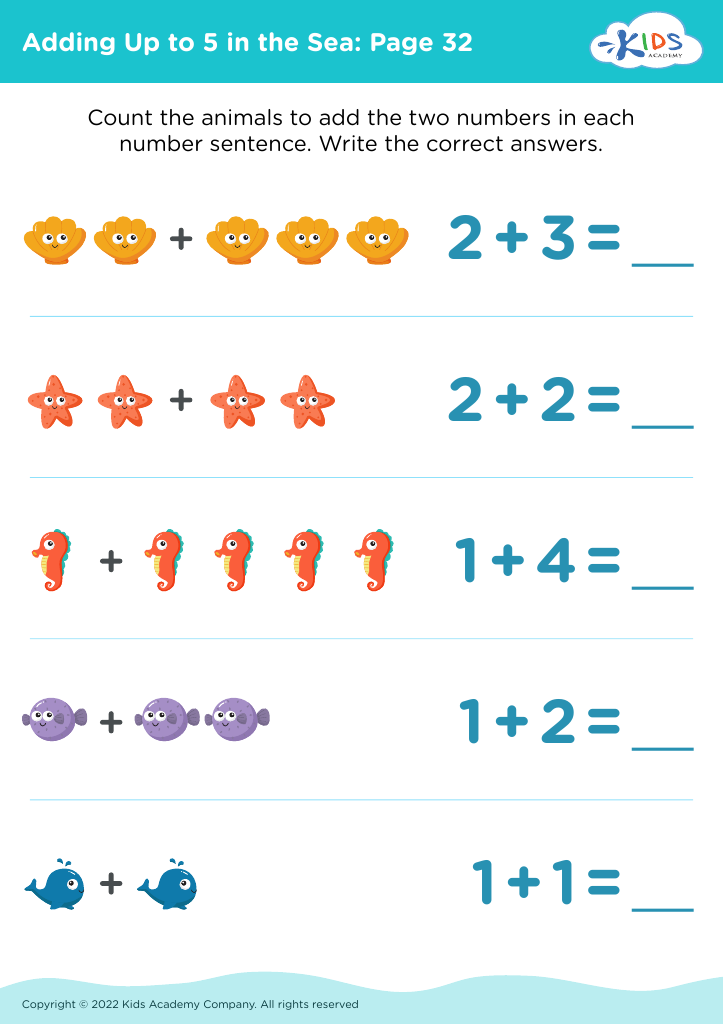
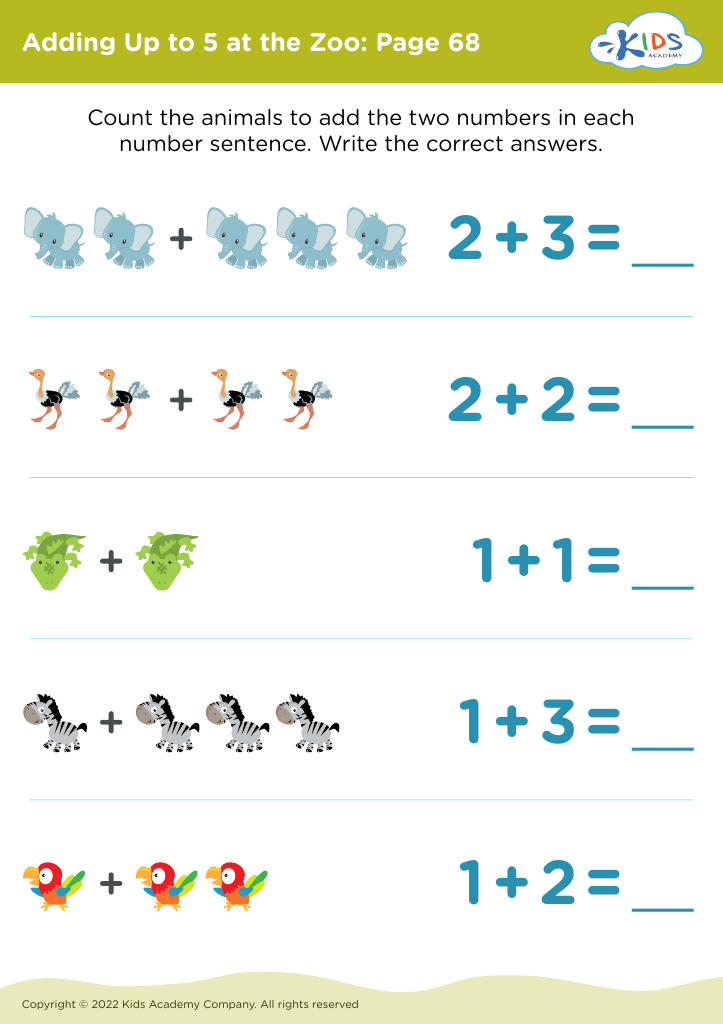
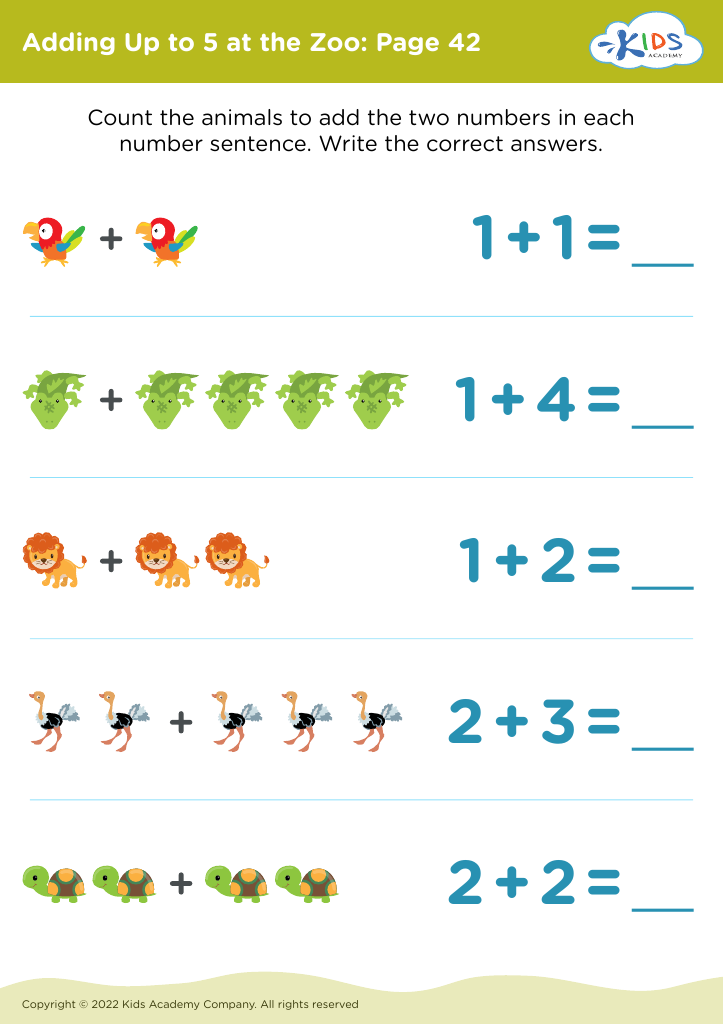
Enhance your child's early math skills with our "Following Instructions Adding Up to 5 Worksheets," designed for ages 3-4. These engaging worksheets help young learners practice simple addition problems while also developing their ability to follow instructions. Each activity incorporates colorful visuals and interactive exercises that capture children's attention and makes learning enjoyable. As they explore the concept of addition up to 5, children will not only improve their math skills but also boost their listening and comprehension abilities. Download these worksheets today and watch your little ones thrive as they learn through play and creativity! Perfect for home or classroom learning.
Favorites
With answer key
Interactive
Join Kids Academy for Free
Who is primarily going to use this learning content?








Parents and teachers should prioritize teaching children the skill of following instructions and adding up to 5 for several vital reasons. Firstly, these foundational skills support cognitive development and help young learners build a basic understanding of numbers and quantity. Learning to add small numbers fosters early math literacy, enabling children to make sense of their world through mathematical concepts.
Secondly, following instructions enhances a child’s listening skills, focus, and ability to complete tasks. These essential skills lay the groundwork for more complex learning as children progress into higher grades. It cultivates discipline and patience, helping them thrive in structured environments typical of both home and school settings.
Moreover, mastering these skills instills confidence and encourages children to engage more actively in learning opportunities. When a child can successfully follow instructions and solve simple addition problems, it promotes a sense of achievement that reinforces a positive attitude toward learning.
Finally, engaging in these activities provides a nurturing bond between parents and children or between teachers and students. Through interactive learning experiences, children develop social skills, improve communication, and become more cooperative in groups, ultimately fostering a well-rounded development essential for their future educational journeys.








