Improve concentration Adding Up to 5 Worksheets for Ages 3-4
7 filtered results
-
From - To
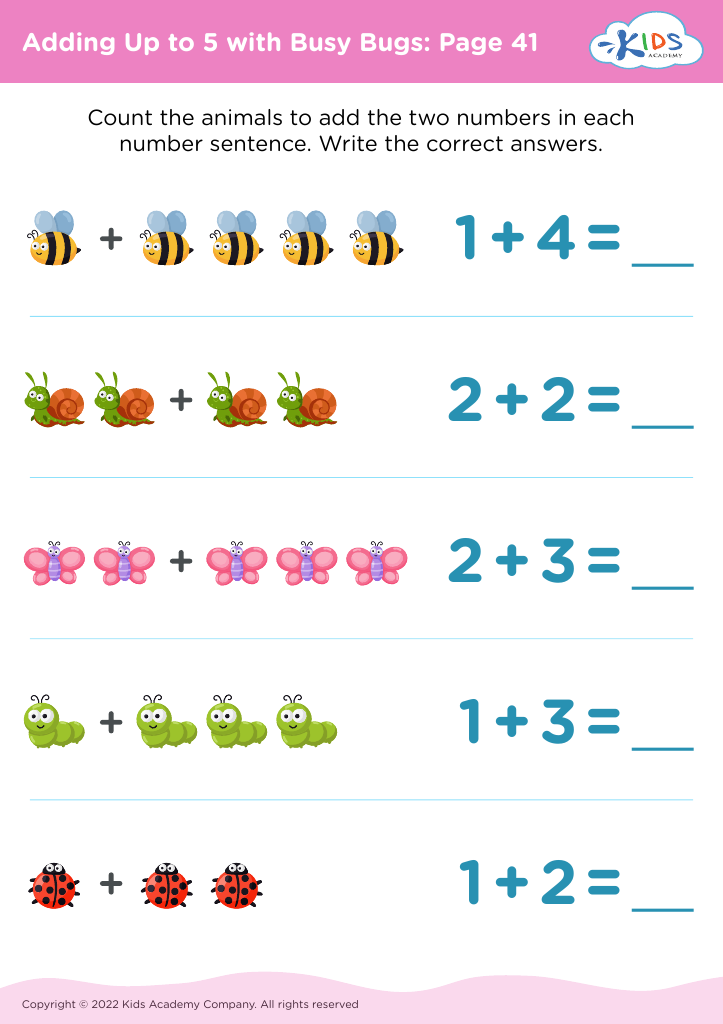
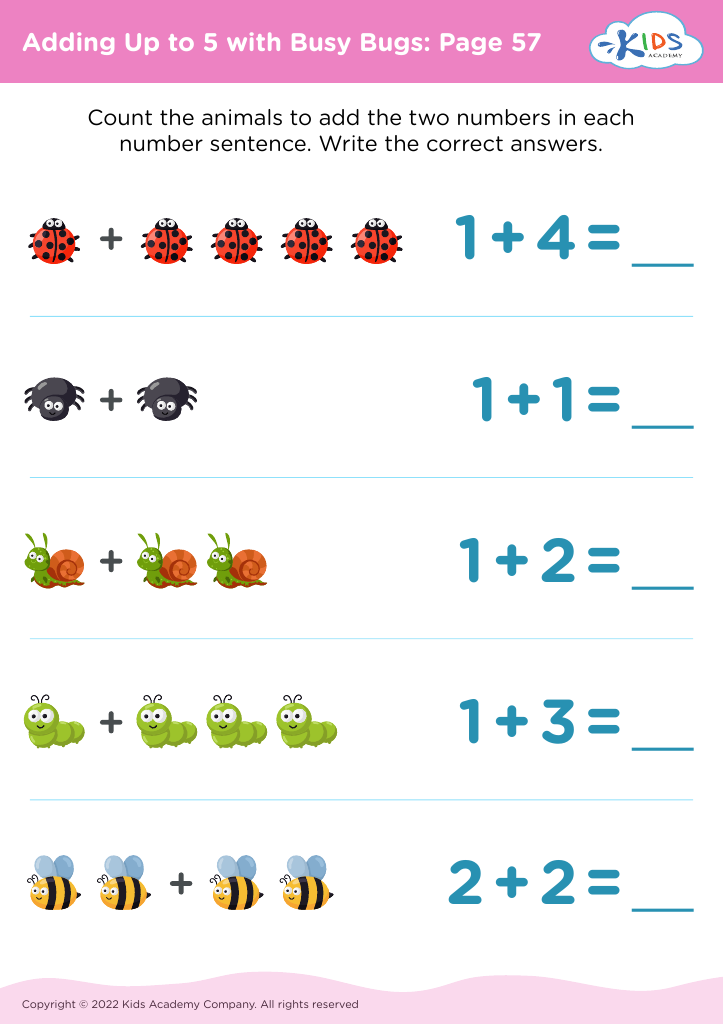
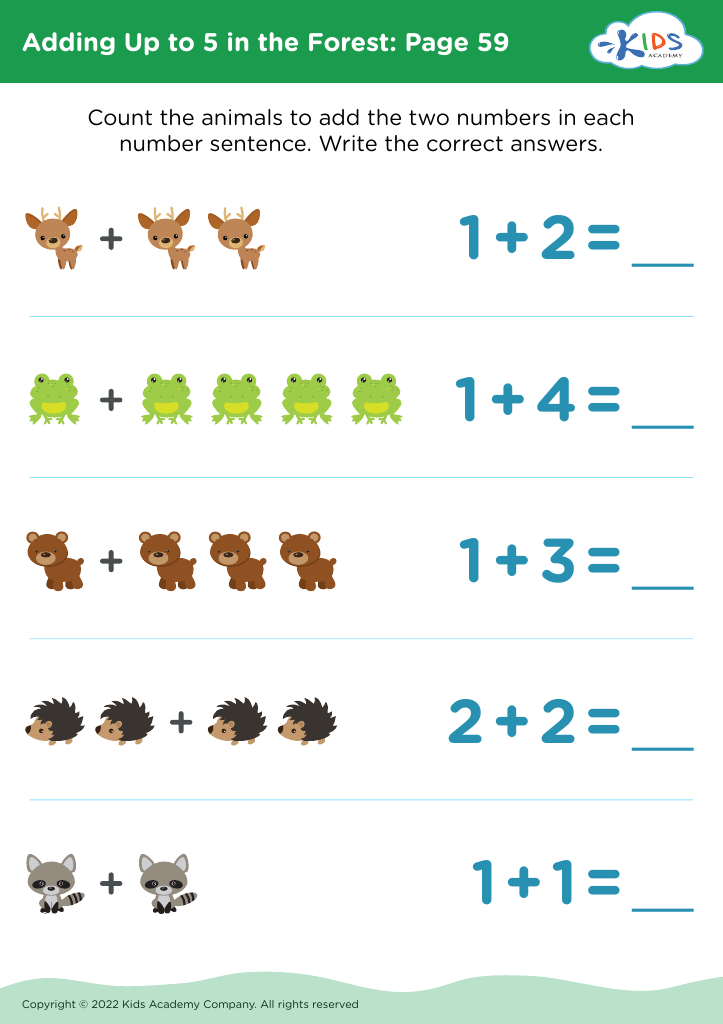
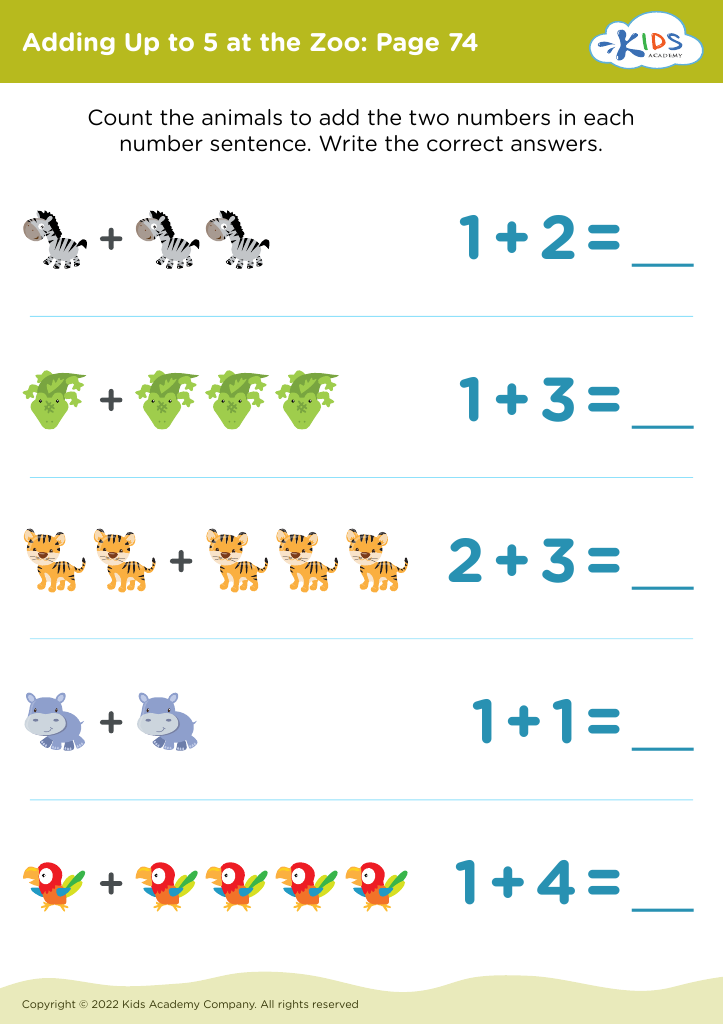
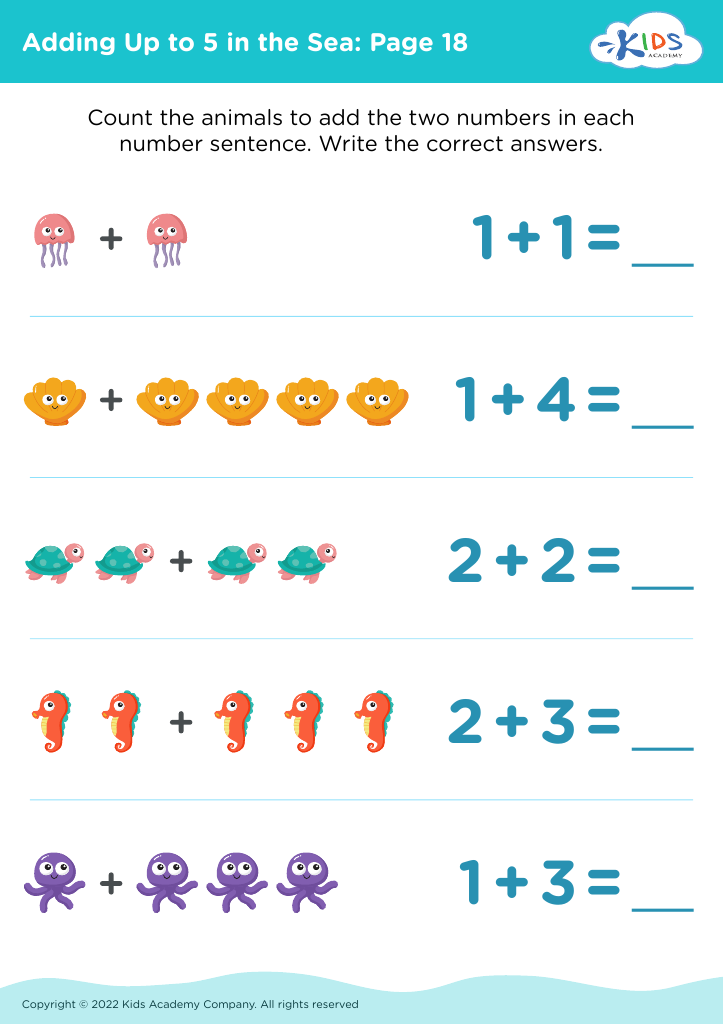
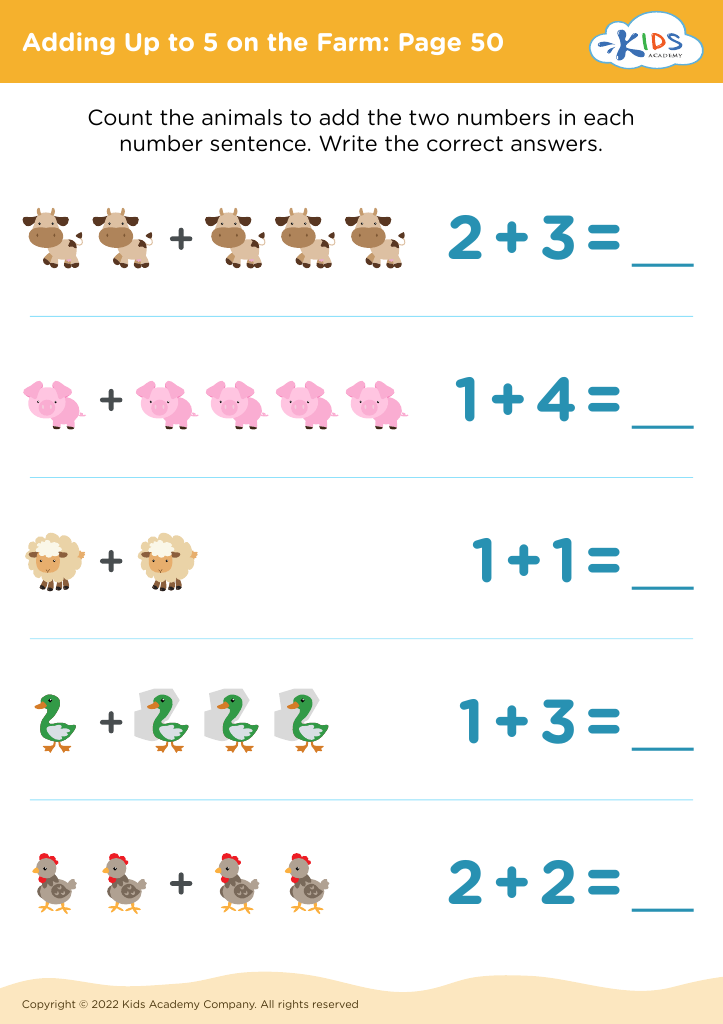
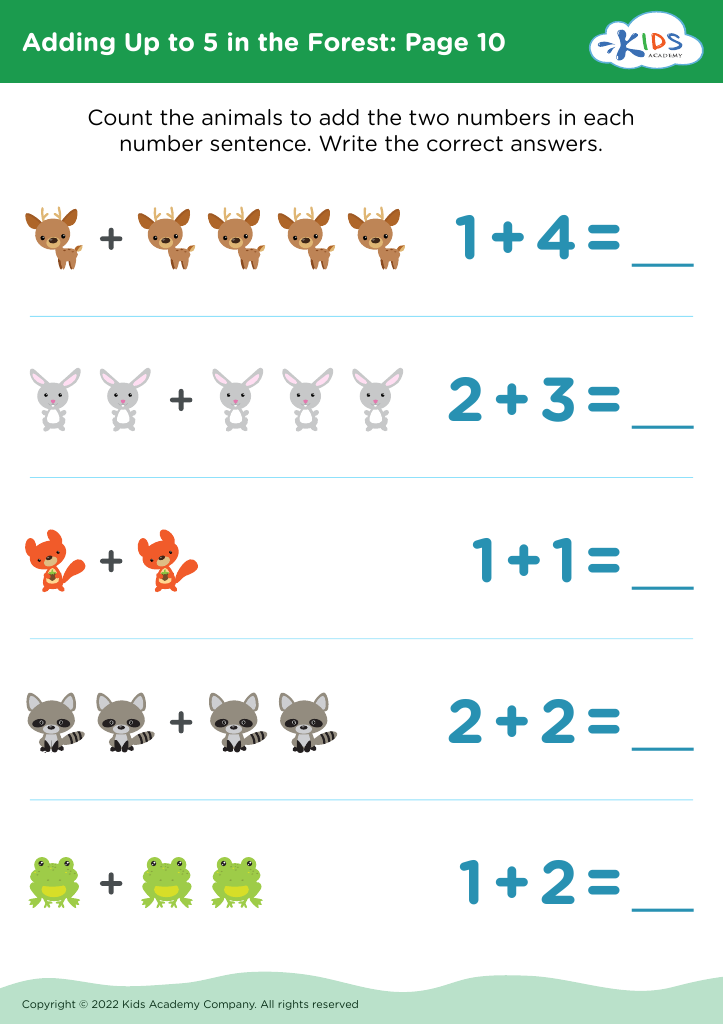
Enhance your child's focus and concentration with our "Adding Up to 5 Worksheets" designed for ages 3-4. These engaging, colorful worksheets help young learners practice basic addition skills while improving their attention span. Perfectly tailored for preschoolers, each worksheet includes fun and interactive activities that make learning enjoyable. As children work through adding numbers up to 5, they not only grasp early math concepts but also build crucial concentration skills. With captivating imagery and clear instructions, our worksheets transform learning into an exciting adventure, setting the foundation for future academic success. Boost your child’s concentration with our expertly crafted resources!







.jpg)
Improving concentration by working on adding up to 5 for ages 3-4 is critical for several development reasons, both cognitively and behaviorally. At this stage, children's brains are like sponges, rapidly absorbing information and forming neural connections. Introducing basic math skills, particularly addition, harnesses their natural curiosity and lays a foundational framework for more complex arithmetic later in life.
Parents and teachers should care about this early intervention because it doesn’t just teach math; it bolsters overall concentration, patience, and the ability to follow multi-step instructions. These skills are essential for success across various domains, including reading, problem-solving, and social interactions. Early competence in adding up to 5 will make children more confident and less anxious about future math challenges, instilling a positive attitude toward learning.
Moreover, engaging with simple math games or exercises enhances fine motor skills, memory, and even language as children articulate their thoughts and reasoning. When parents and teachers invest time in activities that improve concentration and basic addition, they set children on a path to academic and social success, creating a robust, well-rounded learning experience. Supporting such development in a fun and interactive manner can make learning a joyful and lifelong habit.








