Sea creatures identification Adding Up to 5 Worksheets for Ages 3-4
3 filtered results
-
From - To
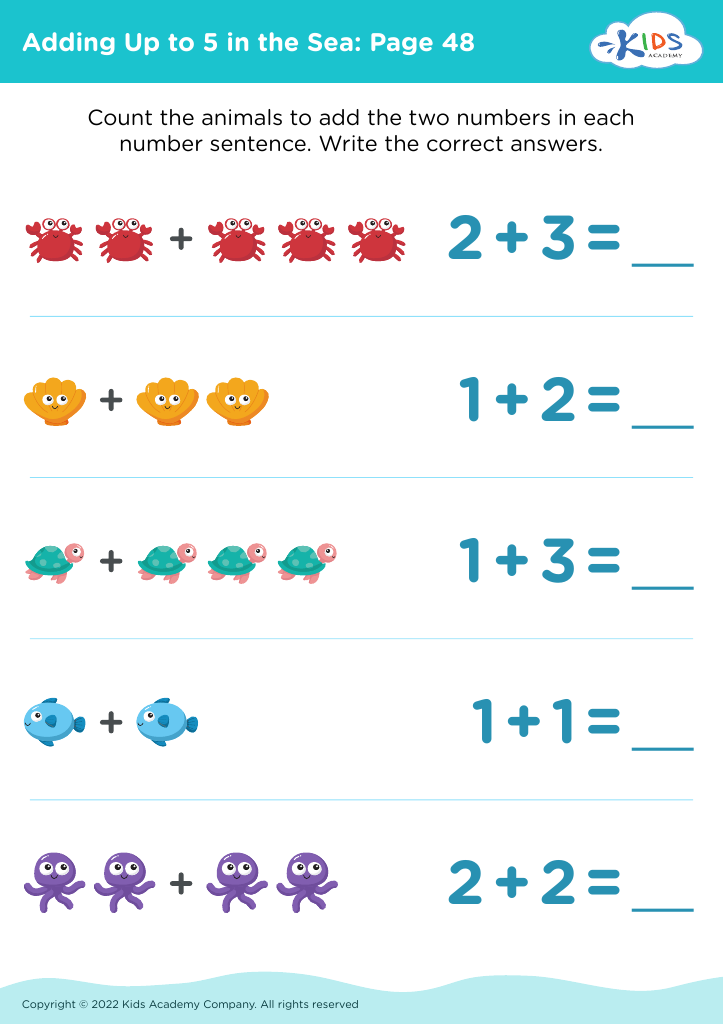
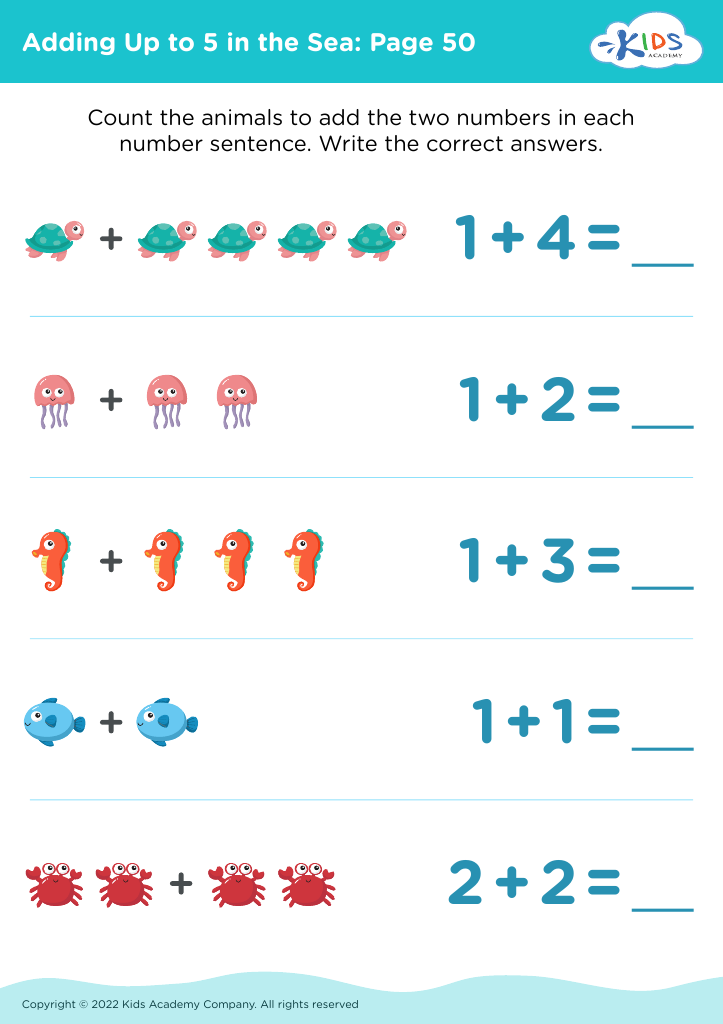
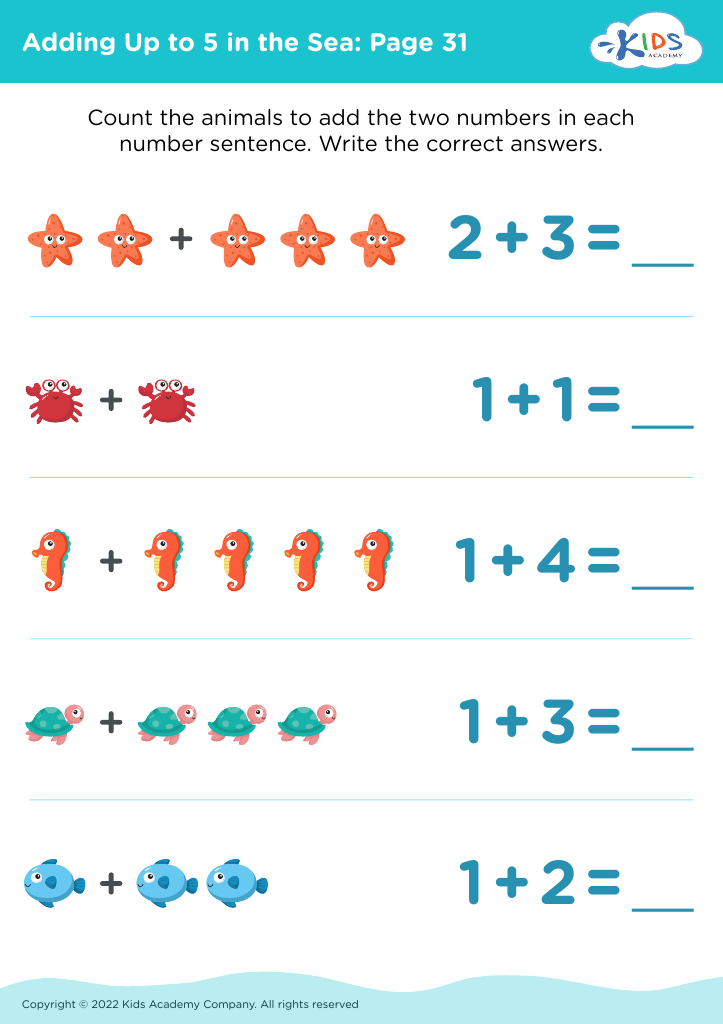
Discover the captivating world of sea creatures with our "Sea Creatures Identification: Adding Up to 5" worksheets, specially designed for children aged 3-4. These engaging worksheets are a perfect blend of learning and fun, allowing young learners to identify colorful marine animals while practicing addition skills. Each worksheet features visually appealing illustrations and interactive activities, making it easier for toddlers to comprehend math concepts through real-world connections. Boost their confidence in math and enhance their knowledge of ocean life with these printable resources. Dive into a sea of learning and let your child explore the wonders of marine education today!






%20(1).jpg)

Understanding and identifying sea creatures can have a significant impact on young children's education and development. First, it sparks curiosity about the natural world, promoting a sense of wonder about the oceans and the life within them. For children ages 3-4, engaging with sea creatures fosters observational skills and cognitive development as they learn to differentiate between various species like fish, starfish, and jellyfish.
Additionally, sea creature identification offers a unique opportunity for hands-on learning. Parents and teachers can incorporate fun games, songs, and crafts related to the ocean, making learning interactive and enjoyable. This playful approach stimulates creativity and critical thinking.
Also, understanding marine life can instill a sense of responsibility towards the environment. Teaching kids about how pollution affects sea creatures encourages empathy for all living organisms and the importance of conservation from an early age.
Finally, these activities support early literacy and numeracy skills, such as counting sea creatures in a storybook or relating them to numbers through creative play. This combination of fun and education solidifies the importance of empirical learning in the foundational years, laying the groundwork for future academic success and environmental awareness.








