Basic math practice Addition & Subtraction Worksheets for Ages 3-4
3 filtered results
-
From - To
Welcome to our Basic Math Practice Addition & Subtraction Worksheets designed especially for children aged 3-4! These engaging, printable worksheets are perfect for introducing foundational math skills. Young learners will enjoy colorful activities that teach counting, addition, and subtraction in a fun and interactive way. Our worksheets are crafted to enhance early numeracy skills, boost confidence, and support learning through play. Each activity is thoughtfully designed to cater to your child's developmental stage, ensuring they grasp essential math concepts while having fun. Explore our collection today and make math an enjoyable experience for your little ones!
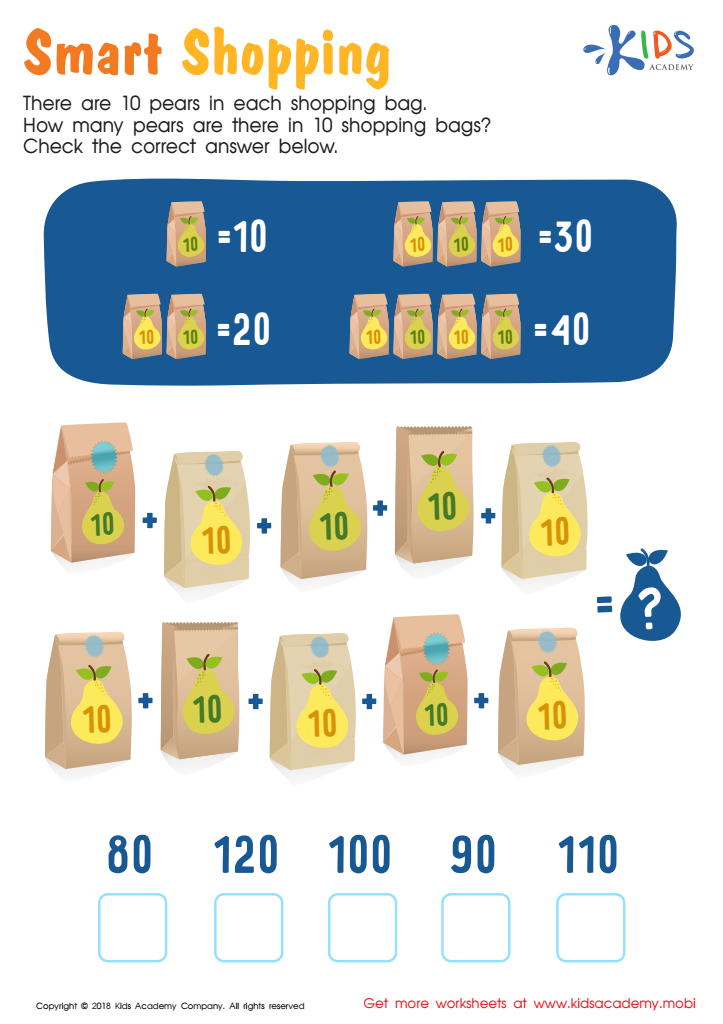
Smart Shopping: Trade Tens for a Hundred Worksheet
 Assign to My Students
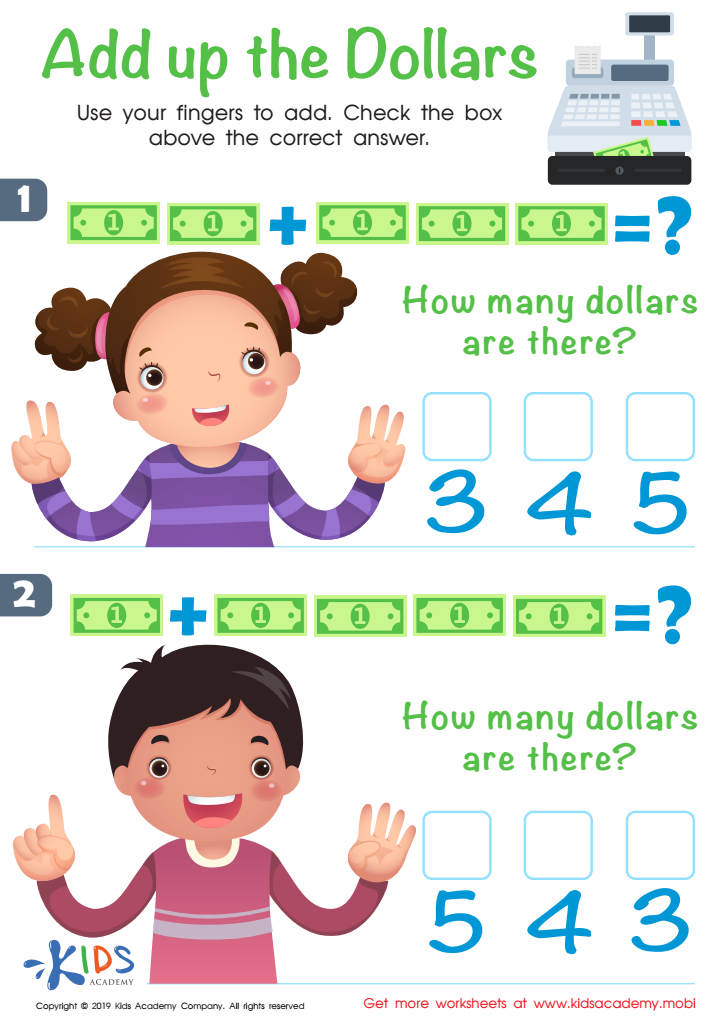
Add up the Dollars Worksheet








Parents and teachers should prioritize basic math practices like addition and subtraction for children aged 3-4 as these foundational skills are crucial for early cognitive development. Mastering these concepts introduces children to the world of numbers, enhances their problem-solving abilities, and prepares them for more complex mathematical operations later on.
At this age, children learn best through play and exploration. Simple activities can make math engaging: counting toys, adding snacks, or subtracting blocks can help kids grasp these fundamental ideas. Additionally, basic math skills are linked to language development. As children describe their counting and objects being added or taken away, they enhance their verbal skills and comprehension.
Fostering early math skills also promotes a positive attitude towards learning. When parents and teachers create a supportive environment that encourages curiosity and exploration in math, children are more likely to develop a love for the subject and confidence in their abilities.
Moreover, research indicates that early math skills correlate strongly with future academic success. By integrating addition and subtraction into everyday activities, caregivers can create a solid foundation, ensuring children are better prepared for the structured learning environments they will encounter in school. Consistent practice at this age sets the stage for lifelong learning.








