Nature appreciation Addition & Subtraction Worksheets for Ages 3-4
5 filtered results
-
From - To
Discover our engaging "Nature Appreciation Addition & Subtraction Worksheets" designed for children aged 3-4! These fun and interactive worksheets combine essential math skills with a love for nature, helping young learners grasp basic addition and subtraction concepts. Each colorful activity encourages children to explore the beauty of the natural world while reinforcing their understanding of numbers. With playful illustrations and relatable contexts, kids will enjoy counting animals, plants, and more! Perfect for home or classroom use, these worksheets foster critical thinking and promote environmental awareness, making math both educational and enjoyable. Get started on nurturing your child's love for learning today!
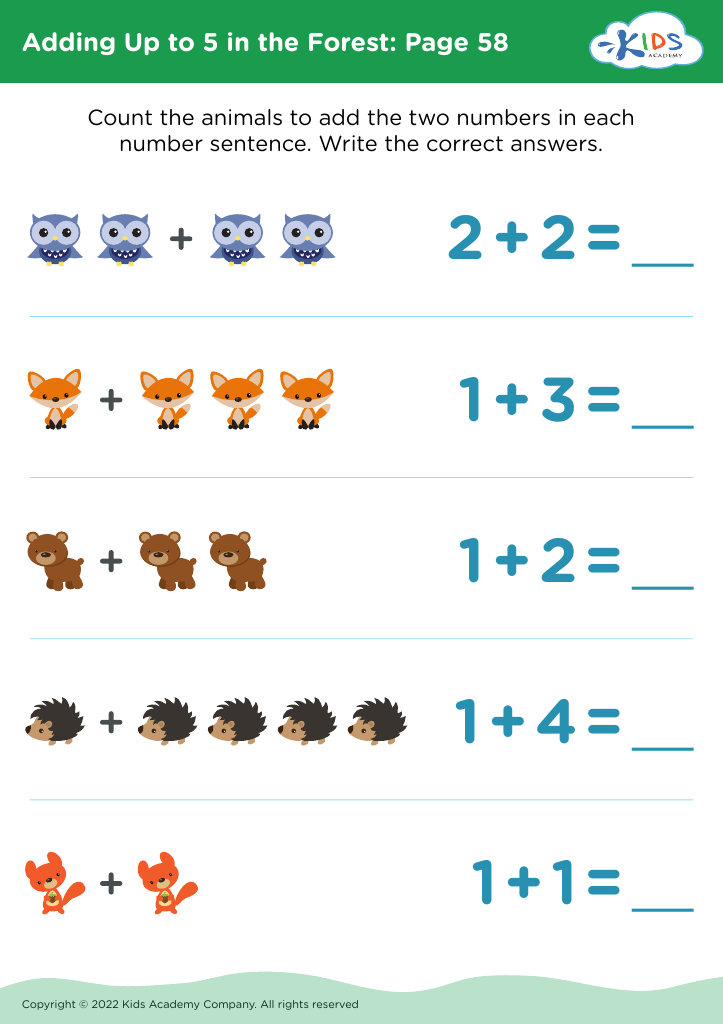
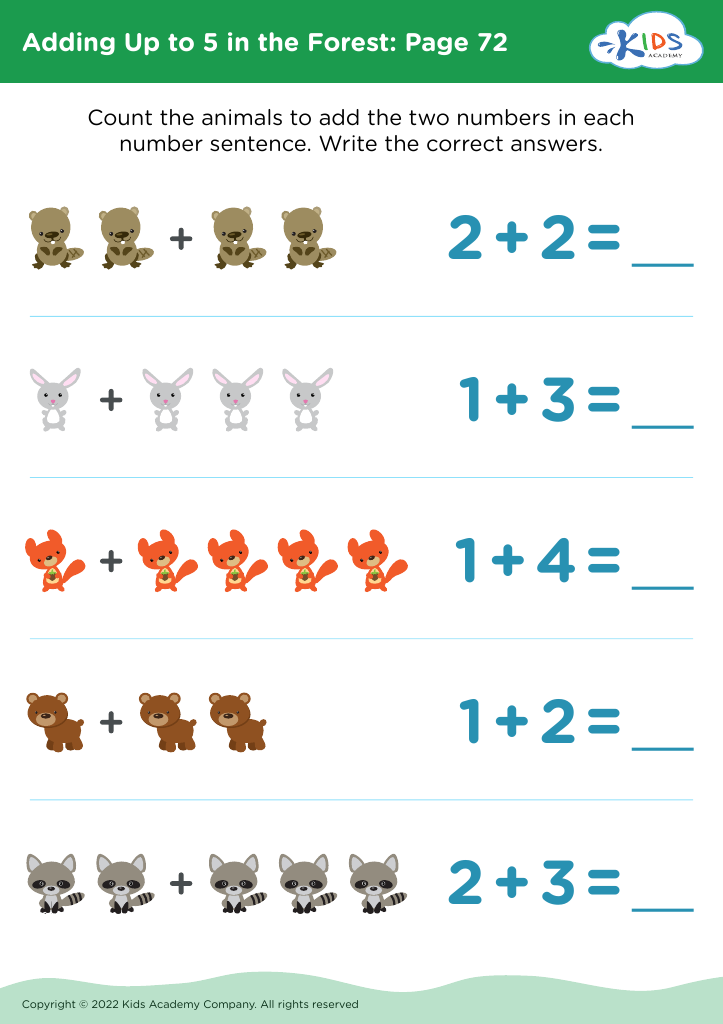
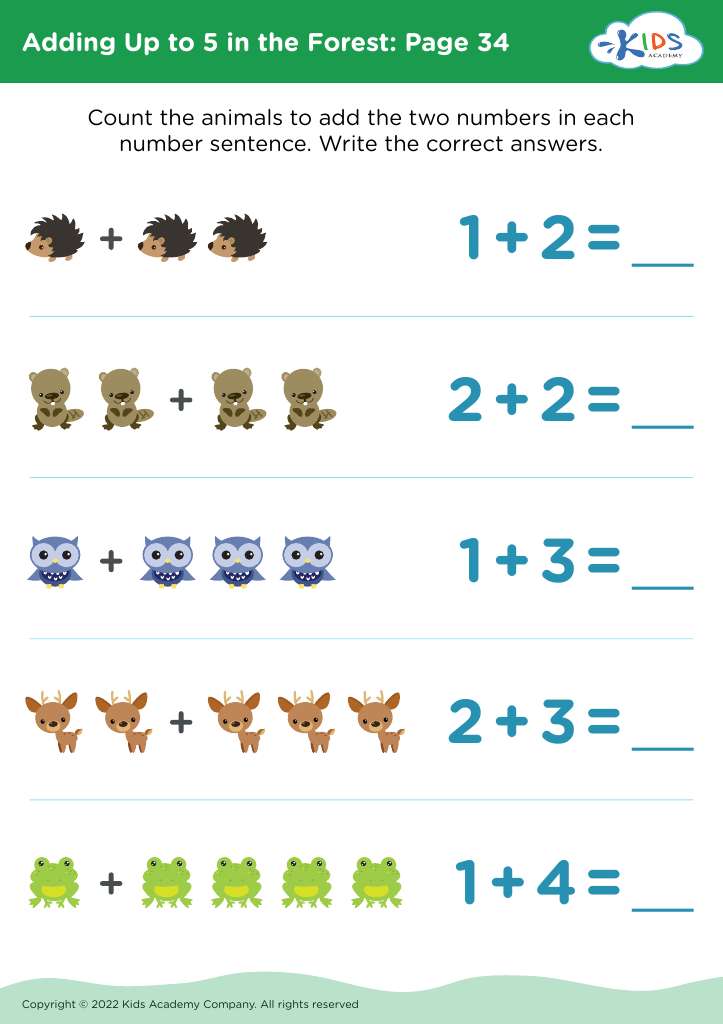
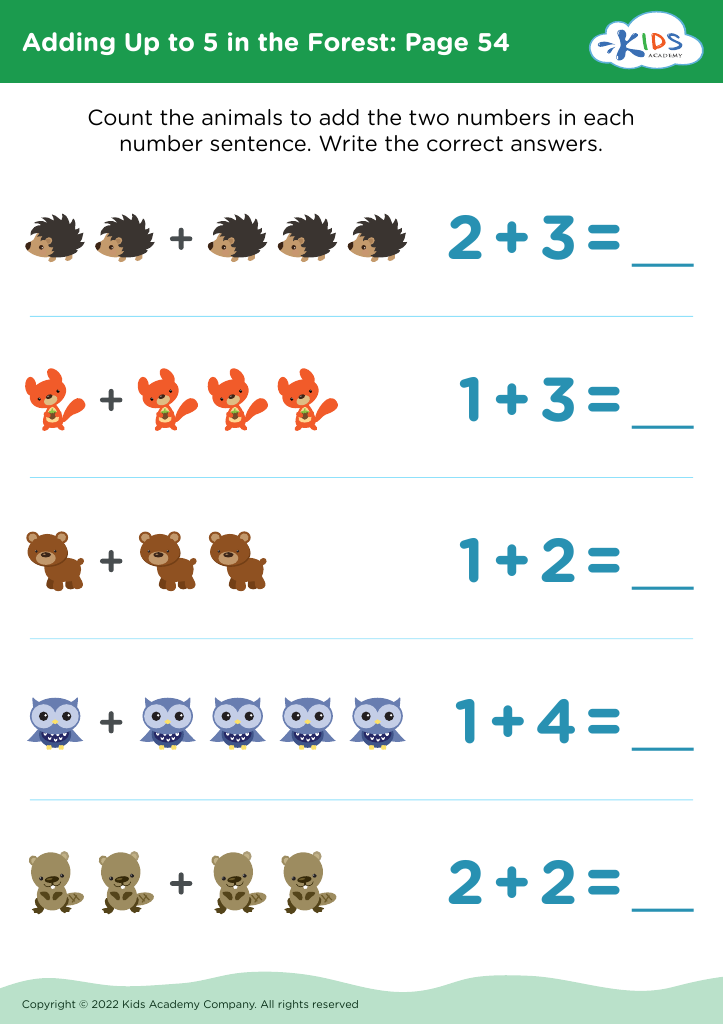
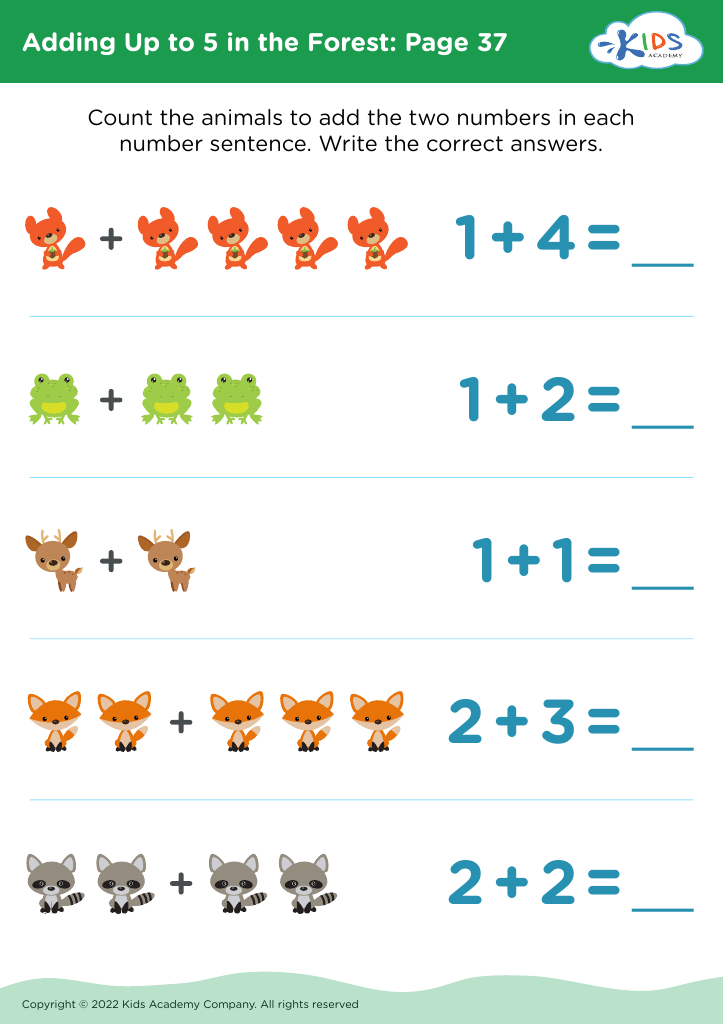








Nature appreciation and early math skills, such as addition and subtraction, are vital for children aged 3-4 years. At this developmental stage, children are naturally curious and eager to explore the world around them. Incorporating nature into learning lets educators and parents harness that curiosity, making foundational math concepts more engaging and meaningful.
When parents and teachers introduce addition and subtraction through nature-related activities — like counting leaves, estimating the number of rocks, or comparing animals in a sanctuary — children can visualize mathematical concepts in a tangible way. This hands-on experience reinforces their understanding and encourages a lifelong love of both nature and mathematics.
Moreover, nature appreciation promotes critical thinking and problem-solving skills. As children observe changes in the environment, they learn to ask questions and seek answers, which directly supports their cognitive development. Additionally, these activities foster social and emotional growth as children collaborate, share their findings, and develop empathy for living things.
In essence, combining nature appreciation with addition and subtraction is not just about teaching mathematics — it's about nurturing well-rounded, inquisitive, and compassionate individuals who value the environment and possess essential lifelong learning skills. Parents and educators alike play a vital role in this transformative process.








