Understanding number relationships Addition & Subtraction Worksheets for Ages 3-4
4 filtered results
-
From - To
Explore our "Understanding Number Relationships" worksheets designed specifically for children ages 3-4! These interactive resources focus on the foundational concepts of addition and subtraction, helping young learners develop essential math skills through fun and engaging activities. With colorful illustrations and age-appropriate challenges, children will foster a solid understanding of numbers and their connections while improving their problem-solving abilities. Each worksheet promotes critical thinking and encourages kids to explore simple number relationships in a playful, hands-on way. Perfect for parents and educators seeking to introduce early math concepts, our worksheets make learning enjoyable and effective for little mathematicians!
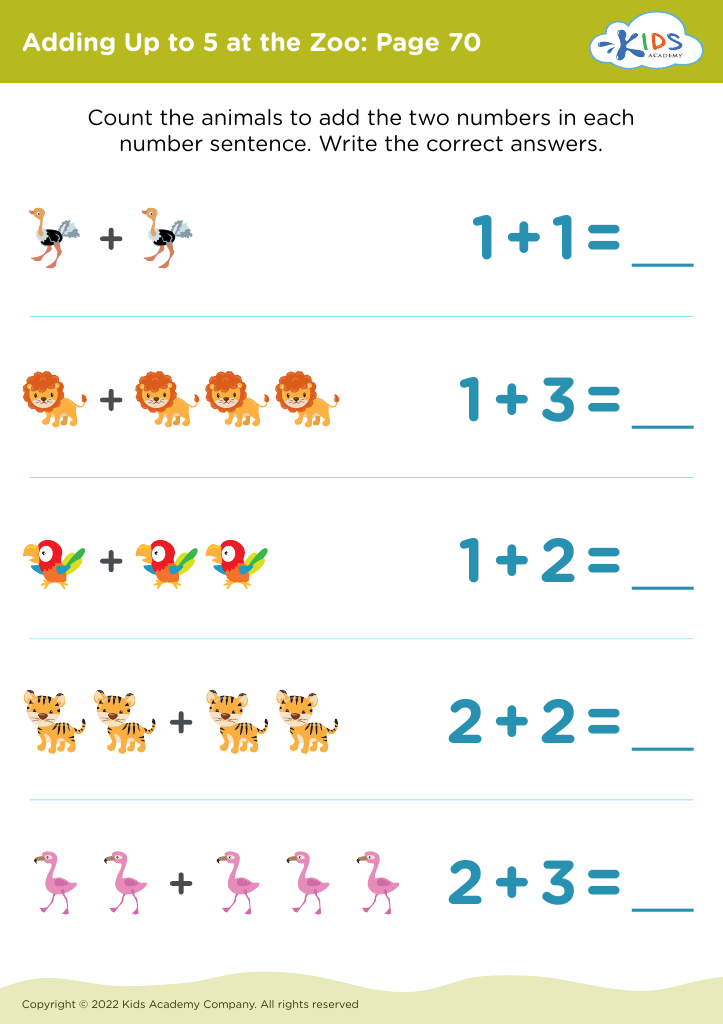
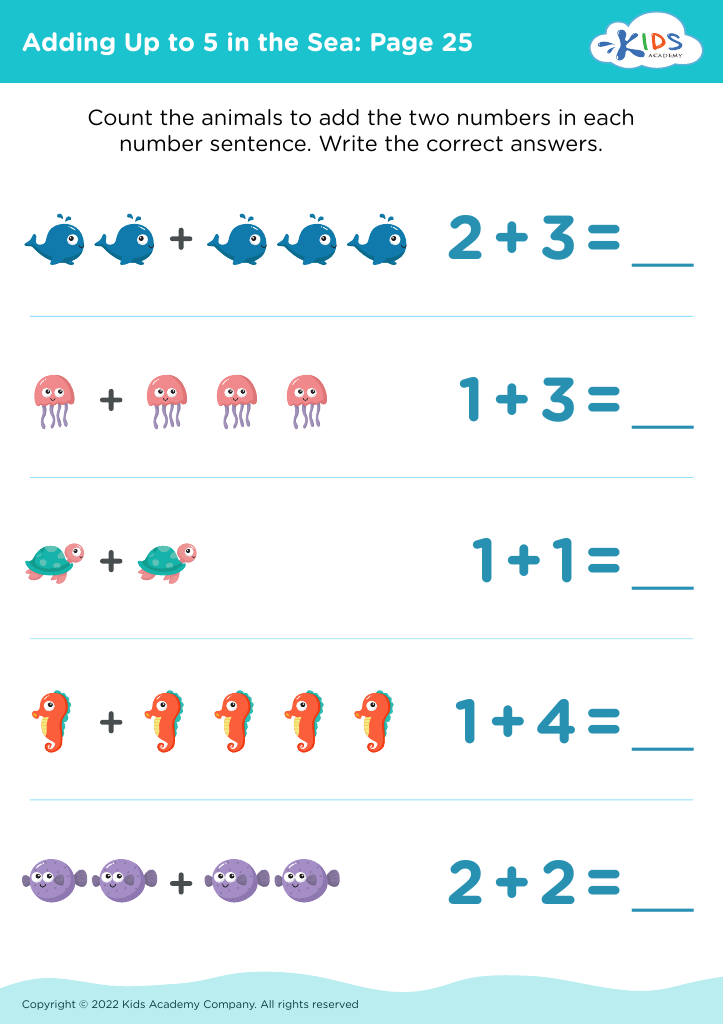
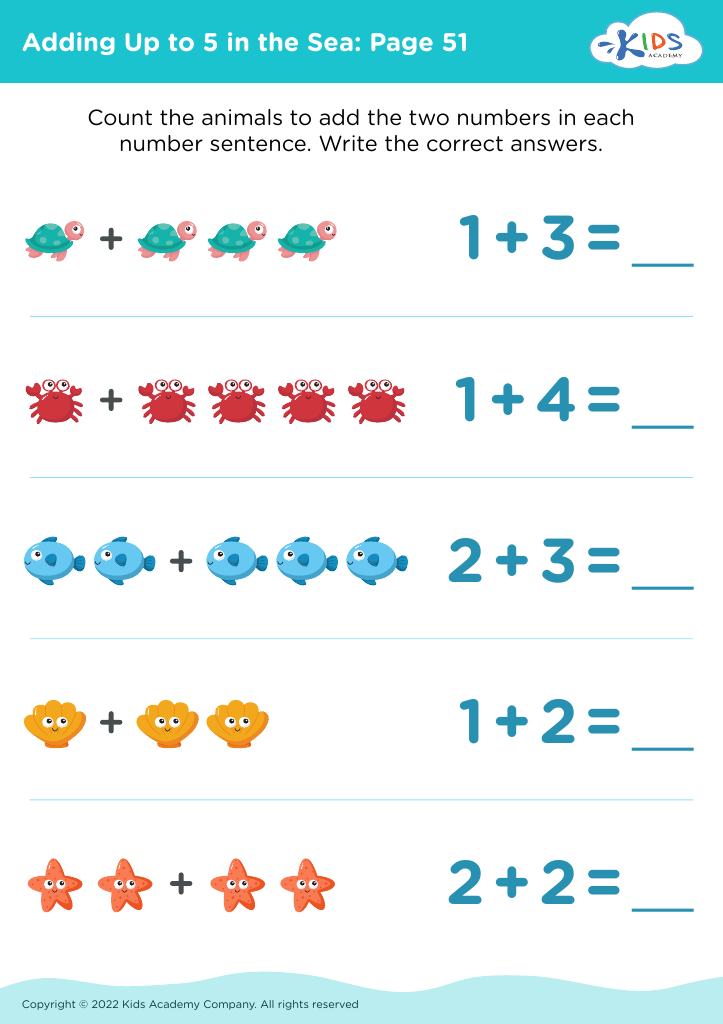
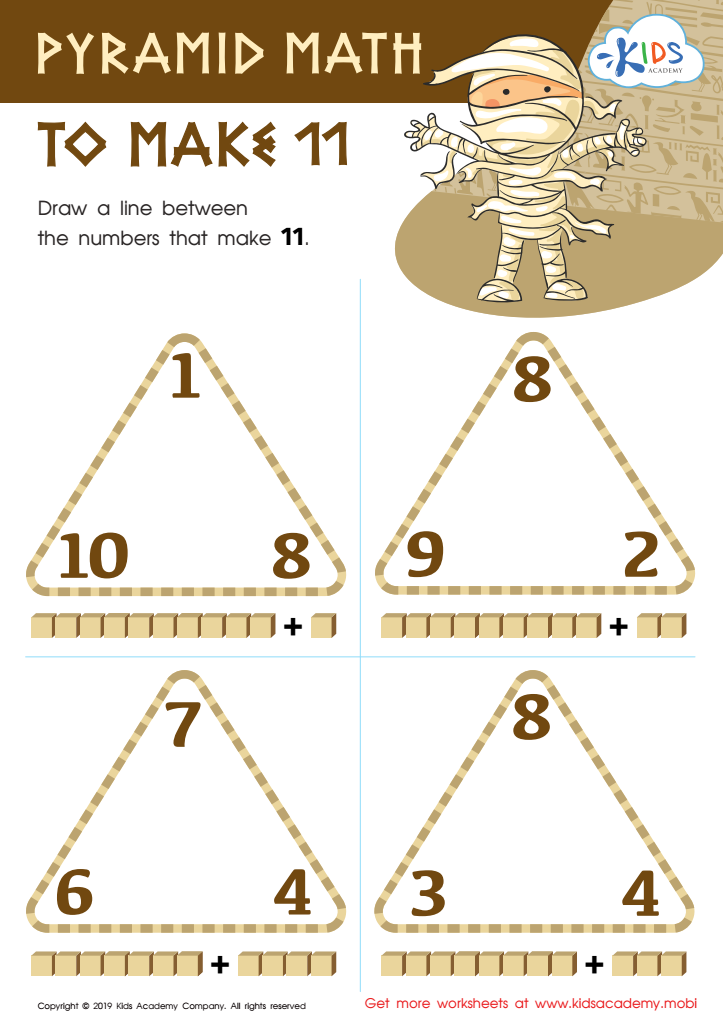
Pyramid Math to Make 11 Worksheet
 Assign to My Students








Understanding number relationships, particularly addition and subtraction, is foundational for young children's mathematical development, especially for ages 3-4. At this stage, children explore the world through play, and introducing these concepts helps them make sense of their experiences. Early understanding of addition and subtraction supports cognitive skills and problem-solving abilities, allowing them to recognize patterns and relationships in numbers.
Parents and teachers should care because this understanding sets the groundwork for future math learning and overall critical thinking. Engaging children in simple activities where they add or take away objects—for instance, counting blocks or sharing snacks—makes math tangible and relevant. It fosters a sense of achievement and boosts their confidence as they succeed in solving problems.
Furthermore, this foundational learning goes beyond math. Developing number relationships enhances a child's ability to communicate, negotiate, and reason in various situations. By fostering a positive attitude toward math at an early age, adults can help cultivate lifelong learners who are equipped to tackle more complex mathematical challenges as they grow. Ultimately, supporting young children in grasping addition and subtraction opens doors to future educational success and everyday life skills.








