Fine motor development Addition Worksheets for Ages 3-4
3 filtered results
-
From - To
Discover our engaging Fine Motor Development Addition Worksheets designed specifically for children aged 3-4! These carefully crafted worksheets not only introduce the basics of addition but also enhance fine motor skills essential for early learning. Your child will enjoy colorful illustrations and interactive activities that promote hand-eye coordination and dexterity. From counting objects to drawing lines, these worksheets make mastering math concepts fun and entertaining. Ideal for preschoolers and kindergarteners, our resources support foundational learning in a playful way. Equip your child with the skills they need to thrive in math while fostering their creativity and motor abilities. Start the adventure today!
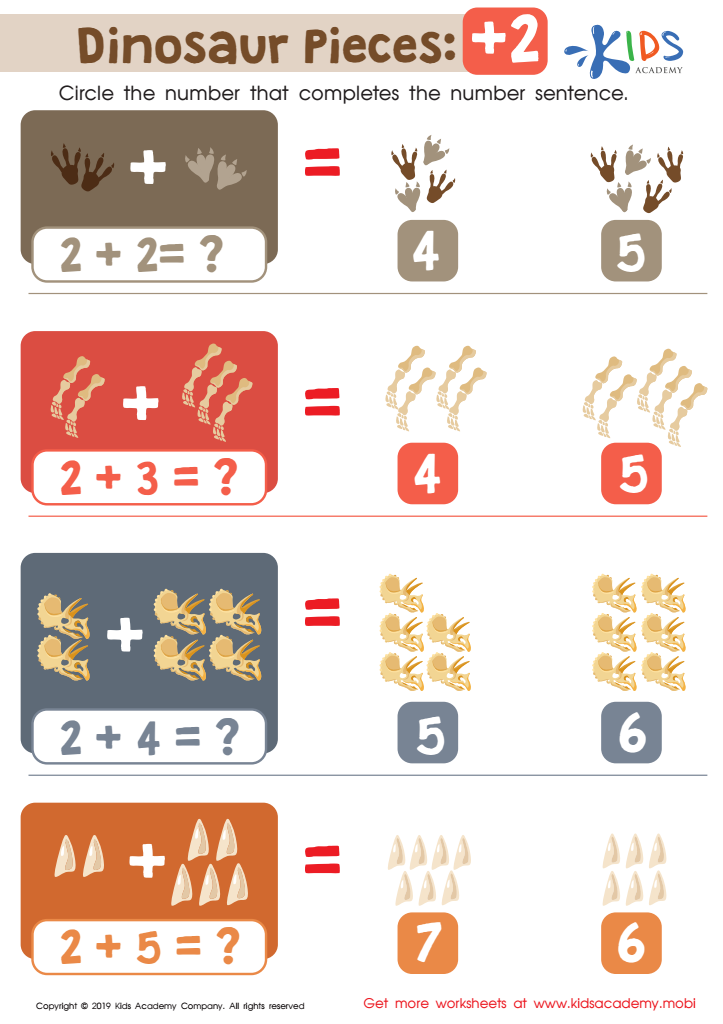
Dinosaur Pieces: +2 Worksheet
 Assign to My Students








Fine motor development is crucial for children aged 3-4 because it provides the foundation for essential skills needed throughout their lives. At this age, children are increasingly using their hands for daily tasks, such as drawing, cutting with scissors, and dressing themselves. Fine motor skills involve the coordination of small muscles in the hands and fingers and are fundamental for tasks like writing, buttoning shirts, or tying shoes.
Parents and teachers should care about fine motor development because it significantly impacts a child’s independence and confidence. Proficient hand coordination enhances cognitive development, as children learn to manipulate objects and explore their environment effectively. Engaging activities, like playing with building blocks, arts and crafts, or threading beads, can be incorporated to promote these skills in a fun and enjoyable way.
Furthermore, a strong foundation in fine motor skills contributes to later academic success. Children with well-developed fine motor abilities are more likely to excel in writing and other school tasks, making them feel more competent and motivated. By fostering fine motor development during these formative years, parents and teachers help children build the necessary skills for future learning, self-care, and confidence in their abilities, which are essential for their overall development.








