Understanding number value Addition Worksheets for Ages 3-4
3 filtered results
-
From - To
Introducing "Understanding Number Value Addition Worksheets for Ages 3-4" – the perfect resource to launch your young learner into the world of numbers! Our expertly designed worksheets help children grasp the fundamental concepts of addition and number value in a fun and engaging way. These activities are specifically tailored for preschoolers, making math an exciting and enjoyable experience. With colorful visuals and age-appropriate challenges, Kids Academy ensures your child builds a strong numerical foundation. Get started today and watch your little one's confidence grow as they master the basics of addition! Explore our collection and turn practice into playtime.
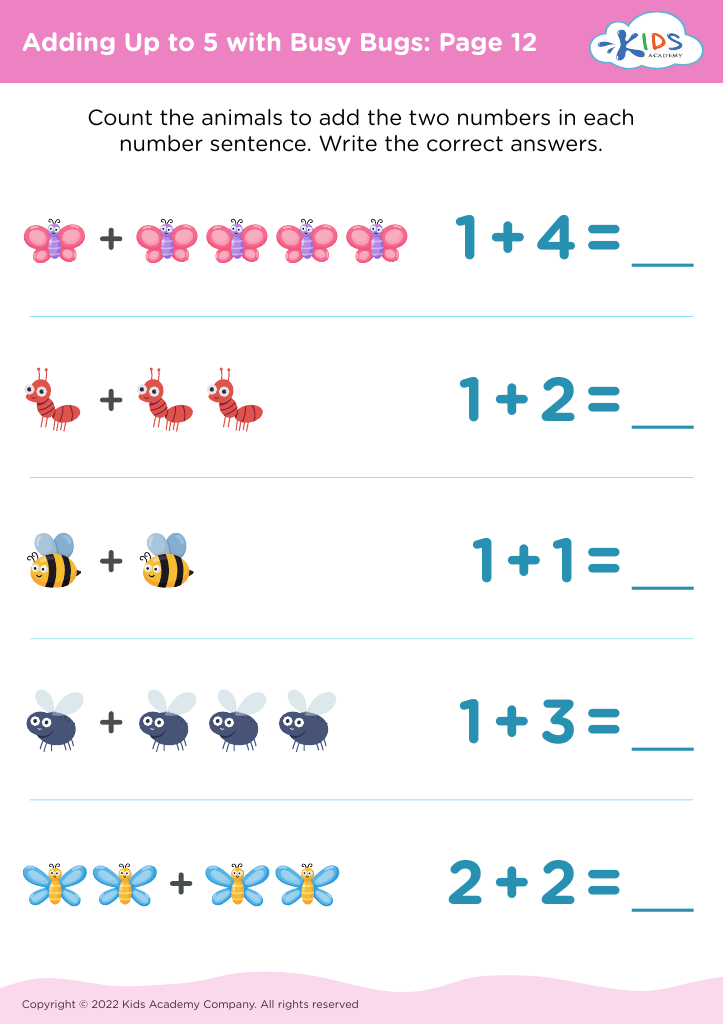
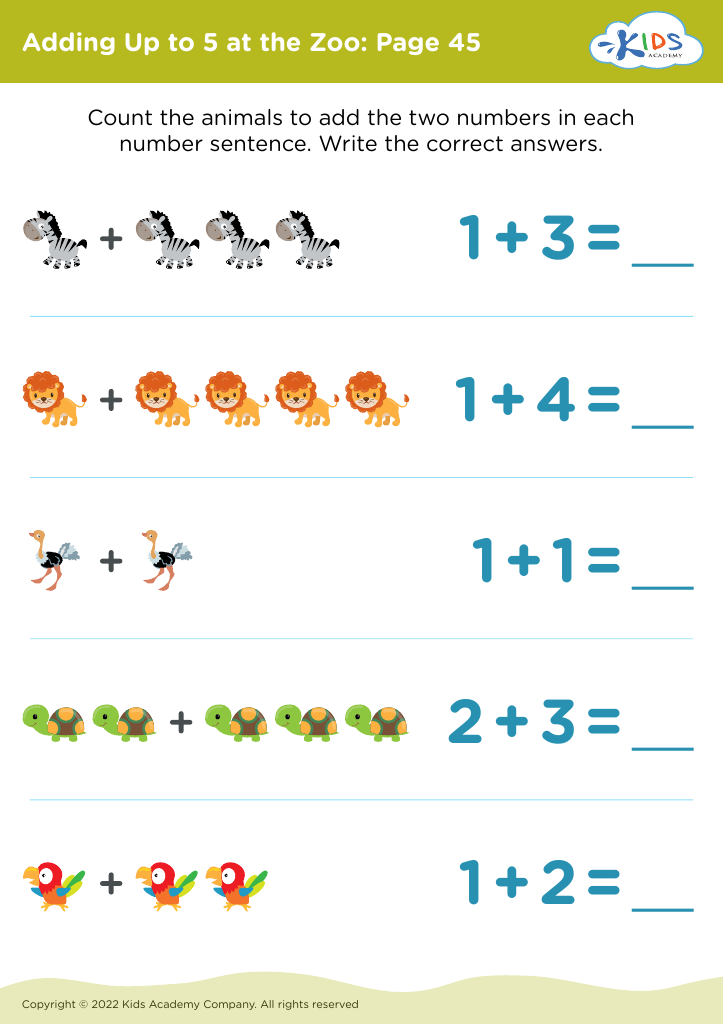
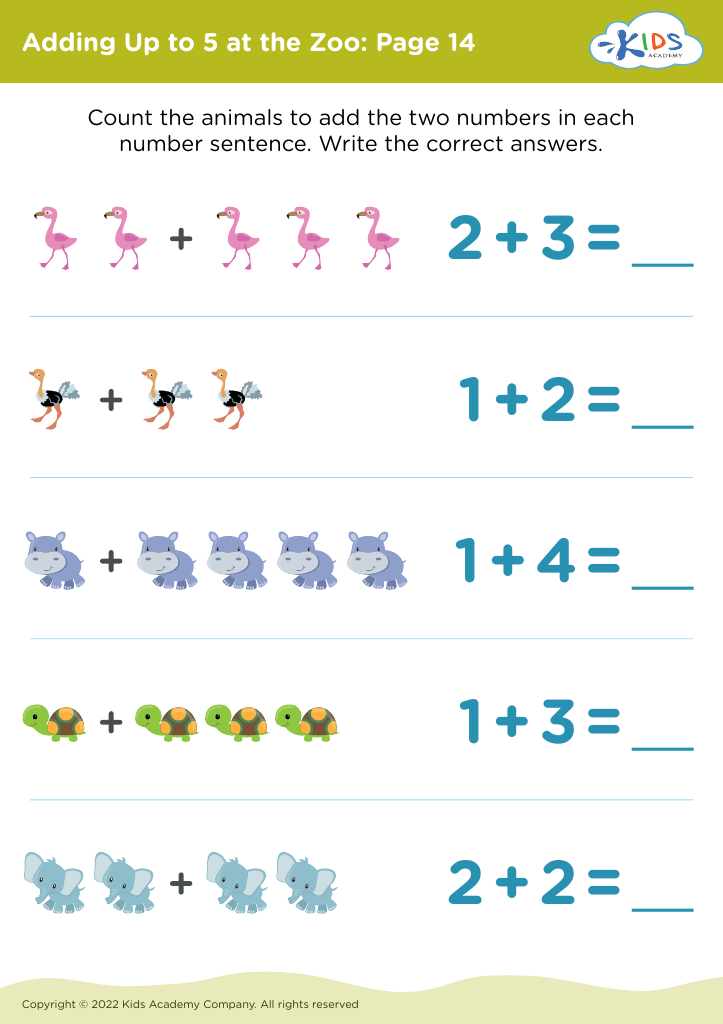








Understanding number value and basic addition for ages 3-4 is crucial because it lays the foundation for later mathematical learning and cognitive development. At this age, children are in a critical period of brain development and are naturally curious and eager to learn. By introducing them to number value and addition, parents and teachers tap into this developmental readiness, fostering early numeracy skills.
Learning number value helps children grasp the concept that numbers represent quantities and that these quantities can be combined or taken apart. This understanding is essential for more advanced mathematical concepts, such as subtraction, multiplication, and division. Moreover, early math skills are strong predictors of academic success in later years. Studies show that children who start school with a solid understanding of basic math concepts tend to perform better in both math and reading as they progress through their education.
Additionally, mastering basic number skills at an early age boosts children's confidence and enthusiasm for learning. It provides them with a sense of achievement, which encourages a positive attitude towards mathematics and other subjects. Engaging with children using hands-on, playful techniques—such as counting objects, simple addition games, or interactive storybooks—can make learning these concepts enjoyable and effective. Hence, parents and teachers play a pivotal role in nurturing a child's early math experiences to build a strong, positive mathematical foundation.








