Understanding numerical values Addition Worksheets for Ages 3-4
4 filtered results
-
From - To
Discover our engaging "Understanding Numerical Values Addition Worksheets" designed specifically for children ages 3-4. These worksheets promote early math skills by introducing fundamental concepts of numerical values through fun and interactive activities. Children will learn to recognize numbers, develop counting skills, and understand the basics of addition in a playful environment. Each worksheet encourages hands-on learning, helping young learners gain confidence in their math abilities. Ideal for home or classroom use, our resources support cognitive development and foster a positive attitude towards math. Begin your child’s educational journey with these valuable tools that make learning math enjoyable and effective!
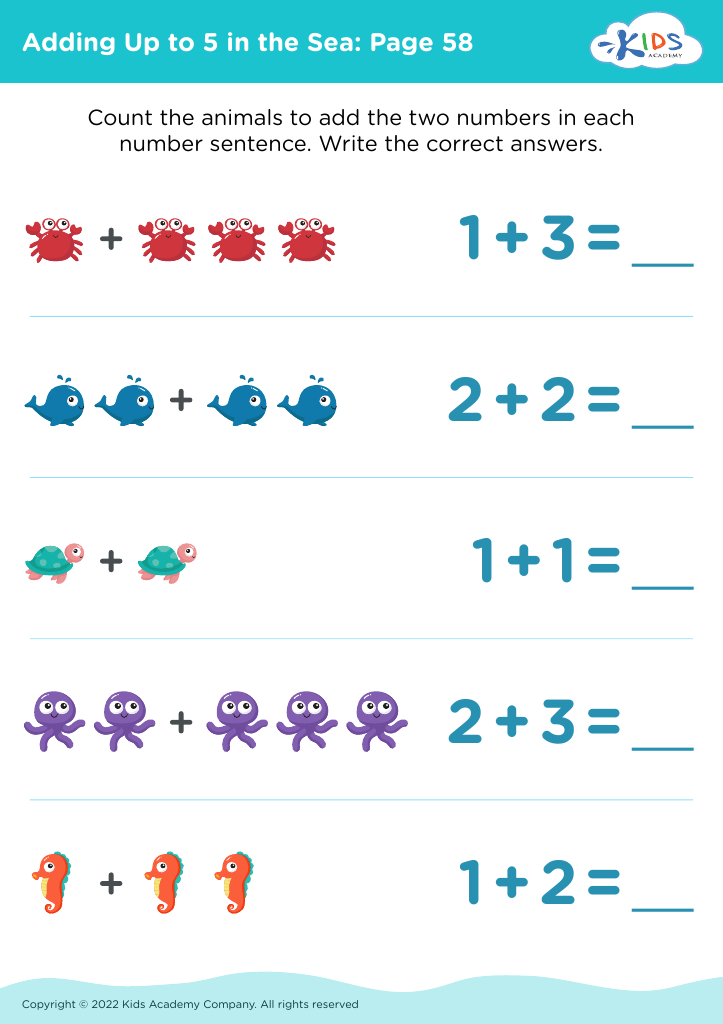
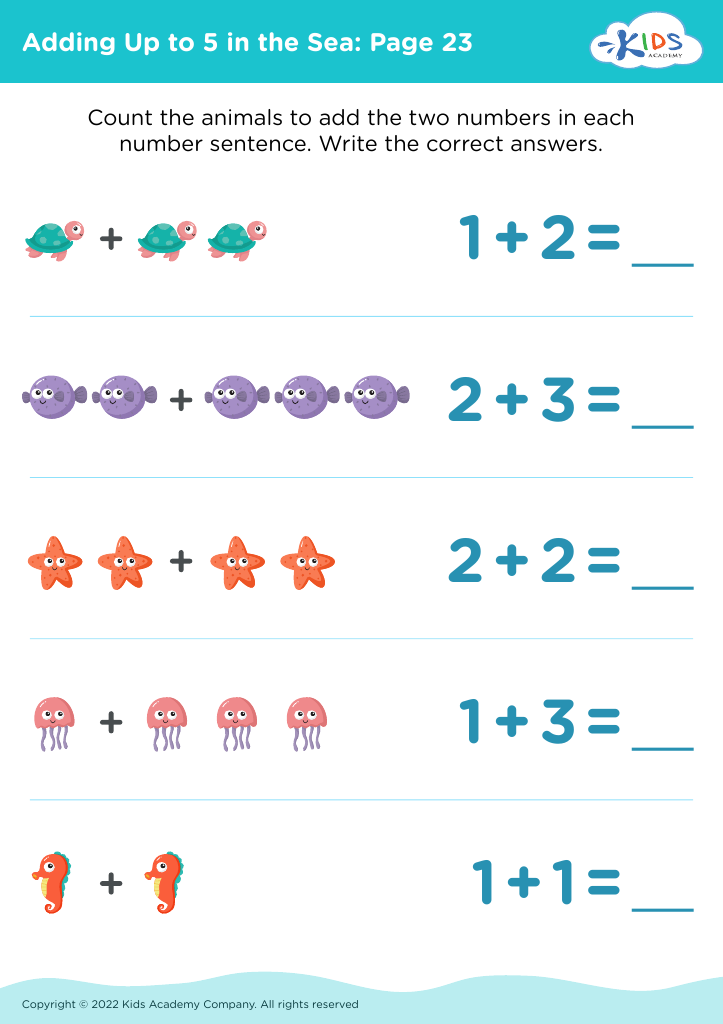
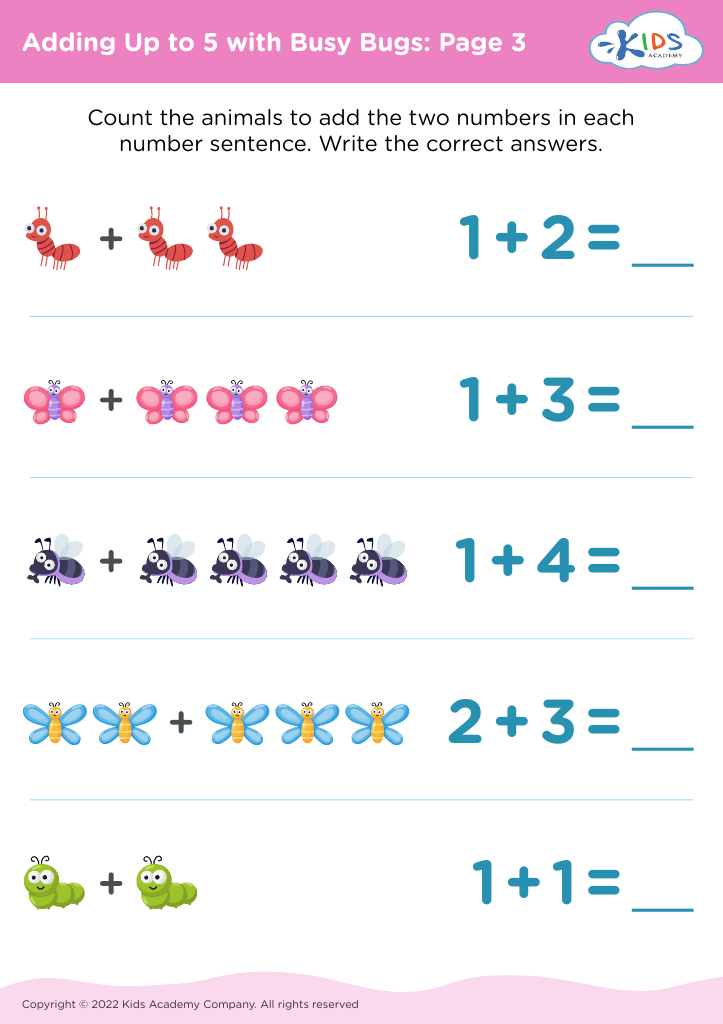
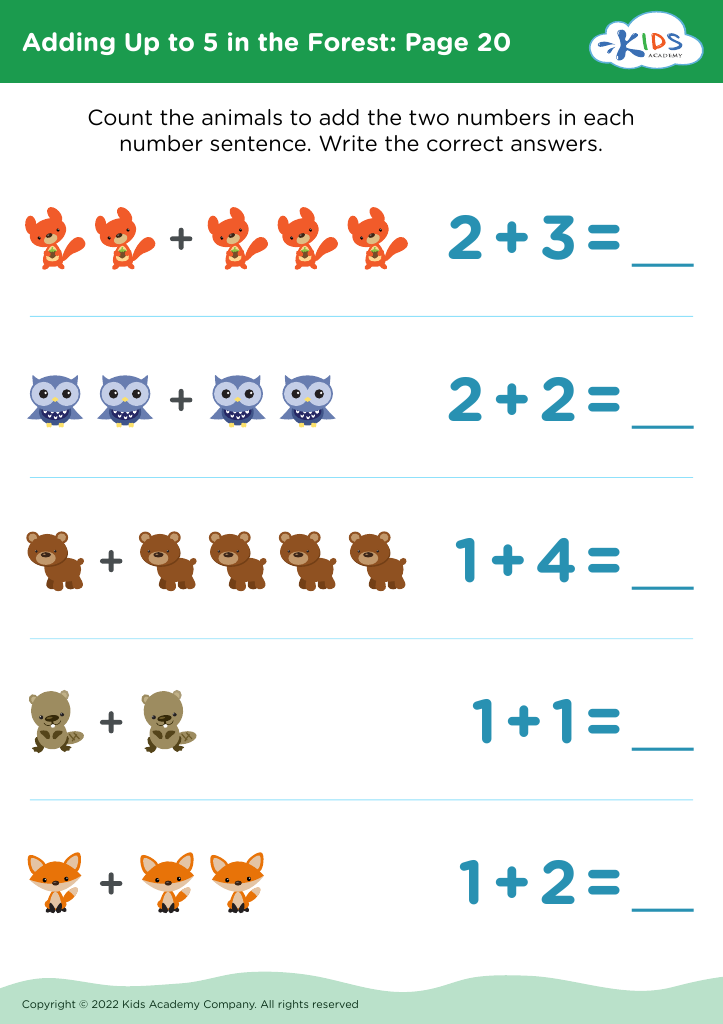








Understanding numerical values and addition at ages 3-4 is crucial for young children's cognitive development and early mathematical skills. During this formative period, children are naturally curious and eager to explore their environment, making it an ideal time for introducing basic mathematical concepts. By fostering a strong understanding of numbers and addition, parents and teachers can help lay a solid foundation for future learning.
Engaging children in addition activities promotes critical thinking and problem-solving skills. Simple games, finger counting, and visual aids can make learning fun while providing opportunities for children to practice. Basic math literacy enhances language development as children learn to express concepts using mathematical vocabulary.
Moreover, early introduction to numerical values fosters confidence and competence in math, positioning children for success as they encounter more complex mathematical concepts in later years. Additionally, understanding numbers and addition helps sharpen important life skills such as budgeting and time management as they grow. Parents and teachers who actively participate in their child’s mathematical journey underscore the importance of education and show that learning can be enjoyable, nurturing a lifelong love for knowledge and inquiry. Ensuring that children understand basic math principles prepares them for academic achievements and everyday challenges throughout their lives.








