Visual learning enhancement Addition Worksheets for Ages 3-4
4 filtered results
-
From - To
Discover our "Visual Learning Enhancement Addition Worksheets" designed for children ages 3-4! These engaging, colorful resources help young learners grasp the fundamentals of addition through visual aids and interactive activities. Each worksheet features fun illustrations and playful scenarios that encourage kids to develop their math skills while boosting their visual recognition and problem-solving abilities. With these worksheets, preschoolers will enjoy hands-on learning and build a strong foundation in early mathematics. Ideal for parents and educators, our visual learning enhancement tools ensure that learning addition is not only educational but also enjoyable. Start your child's mathematical journey today!
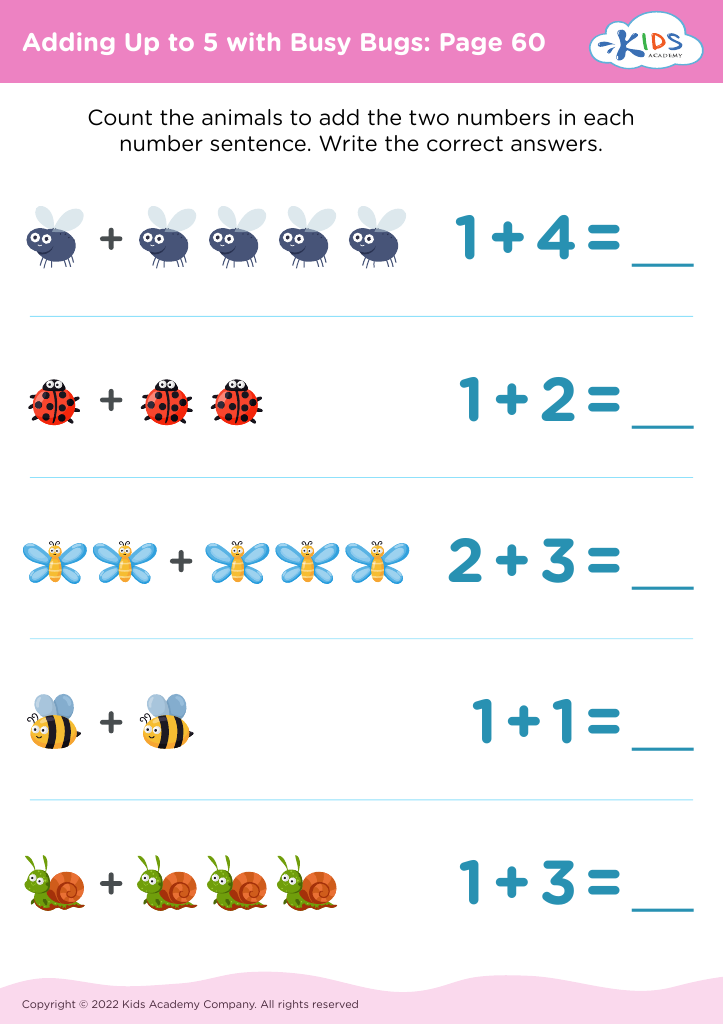
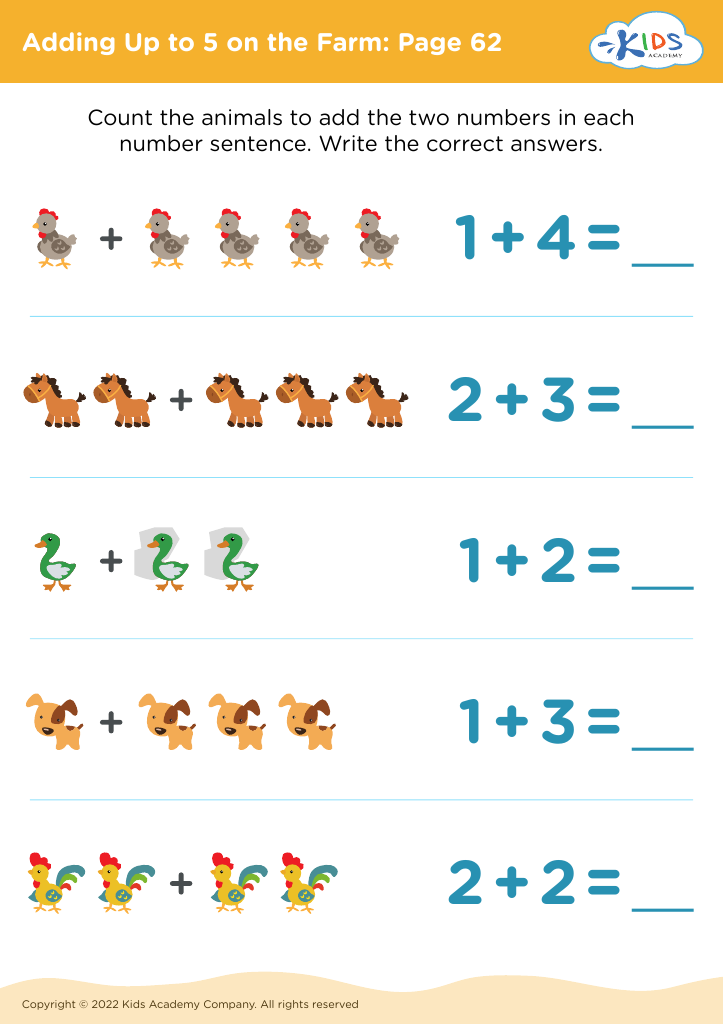
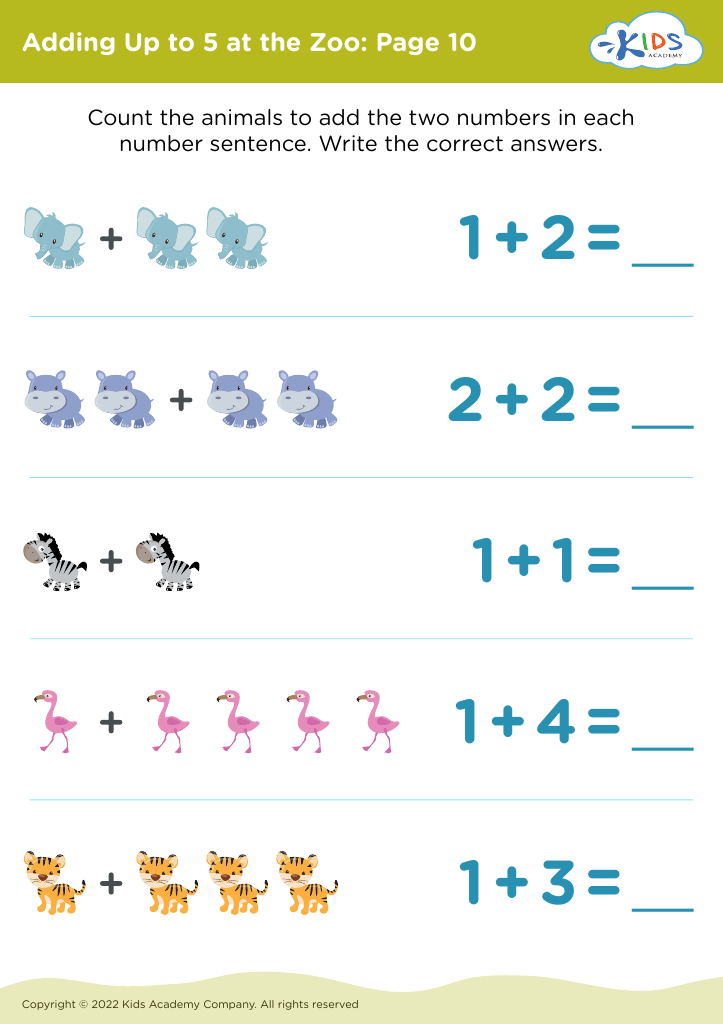
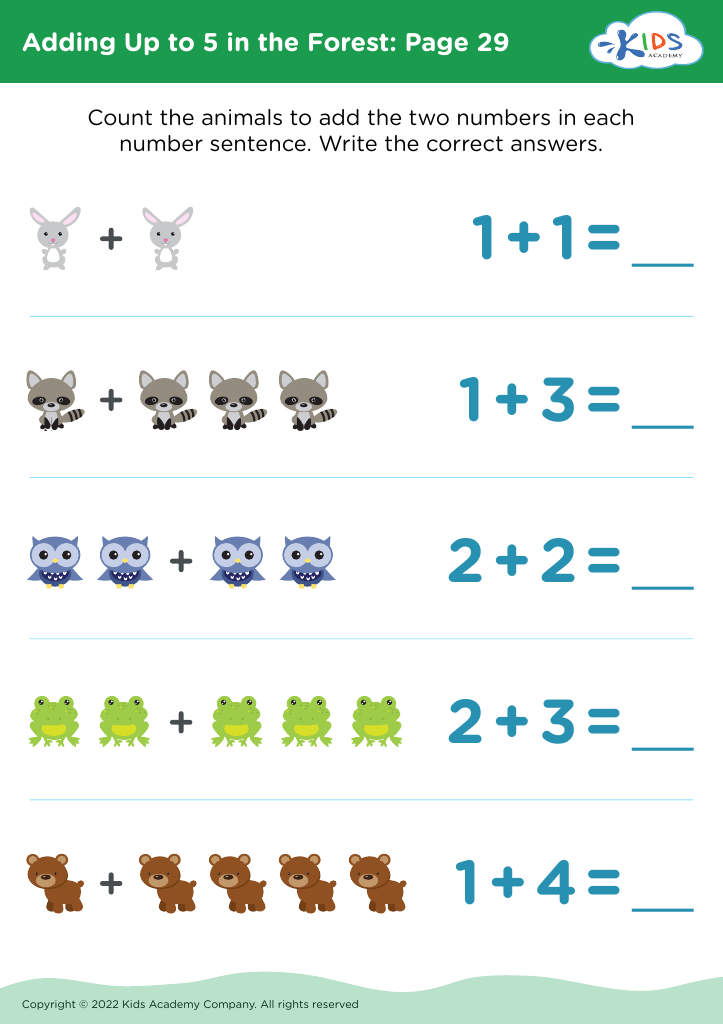








Parents and teachers should prioritize visual learning enhancement in children ages 3-4 because it plays a crucial role in their cognitive development and early literacy skills. At this age, children are naturally curious, often learning best through visual stimuli such as pictures, colors, and interactive activities. Using visual aids not only captures their attention but also helps them make connections between concepts, facilitating better understanding of basic mathematical concepts like addition.
Visual learning encourages engagement and participation, making learning a fun, enjoyable experience. By using tools like colorful charts, physical objects (like blocks or counters), and engaging games, educators can create a rich learning environment that fosters exploration and creativity. Moreover, this approach accommodates various learning styles, ensuring that each child can thrive.
As children develop their visual processing skills, they’re also enhancing their memory and recall abilities, laying a strong foundation for future learning. Furthermore, they learn crucial social skills, such as cooperation and problem-solving, as they participate in group activities focused on visual learning. Thus, investing in visual learning enhancement during these formative years is vital for encouraging a lifelong love of learning and building the essential skills needed for academic success.








