
Addition up to 5 Math Worksheets for Ages 3-4
4 filtered results
Difficulty Level
Grade
Age
-
From - To
Subject
Activity
Standards
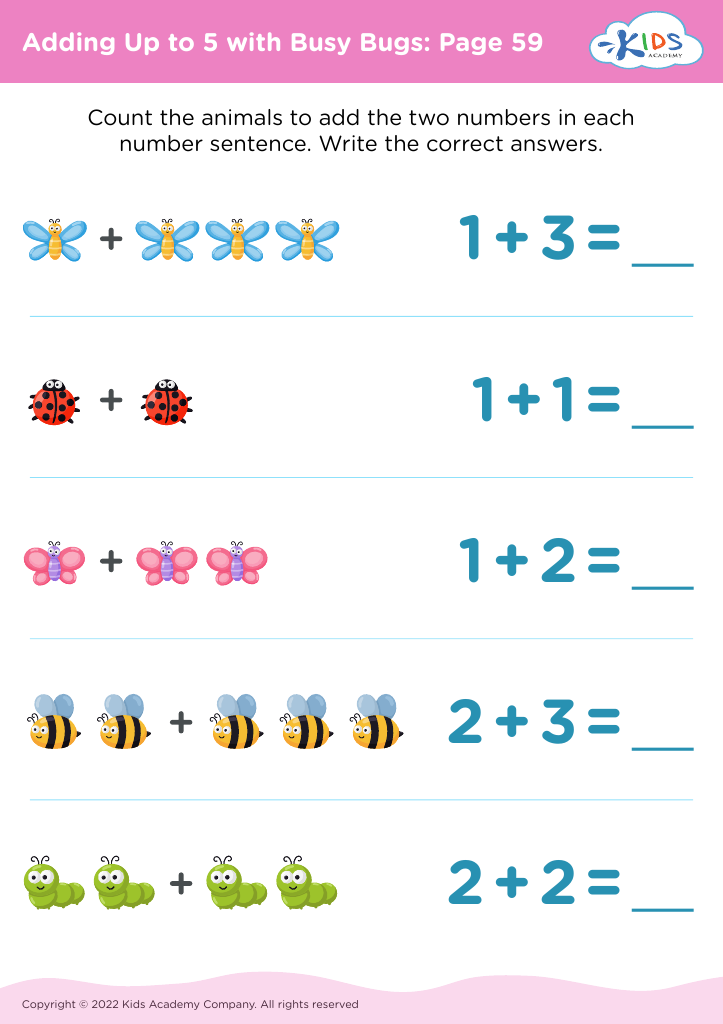
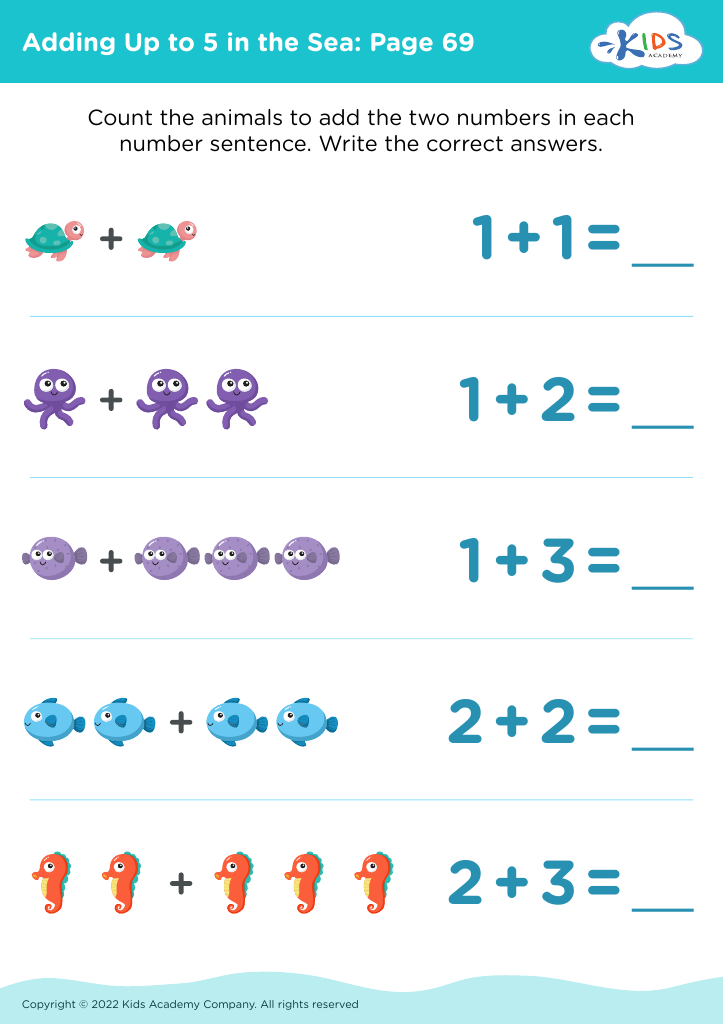
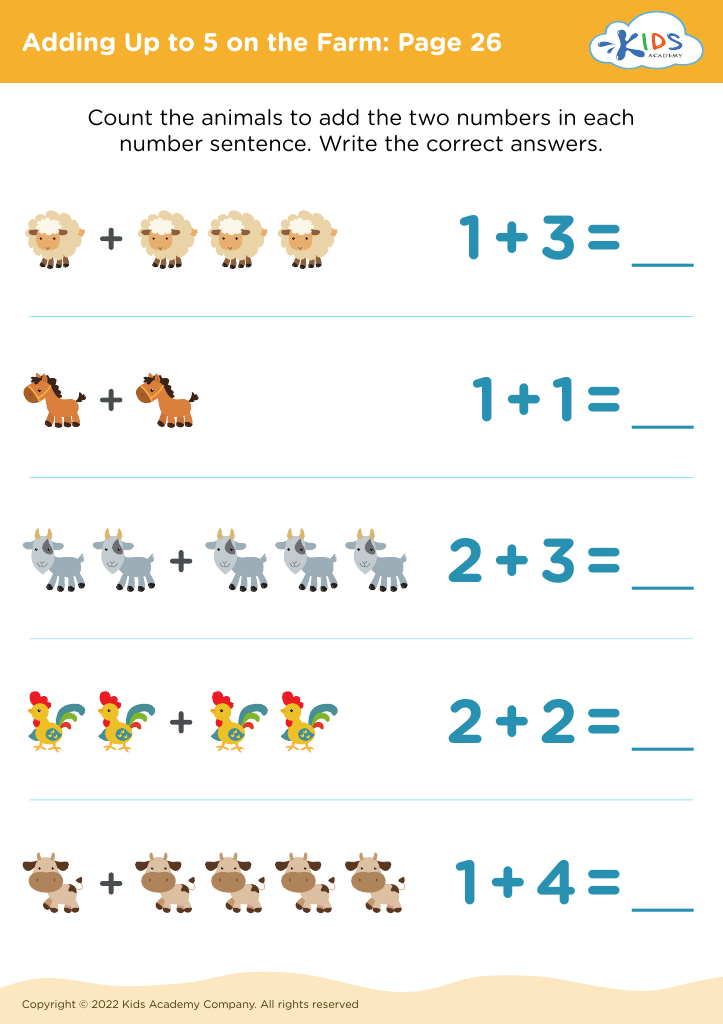
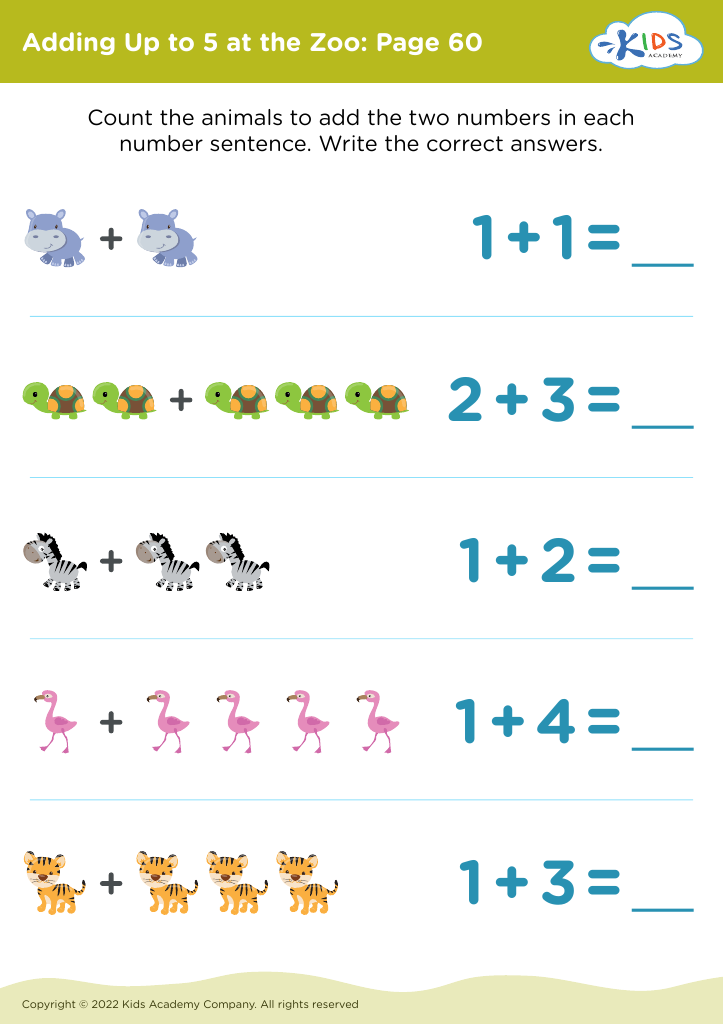
Introducing our comprehensive "Addition up to 5 Math Worksheets" designed especially for children ages 3-4. These engaging worksheets help young learners build a strong foundation in basic addition. Our activities utilize colorful visuals and fun exercises to make learning enjoyable and effective. Kids will develop essential math skills while gradually understanding the concept of addition with numbers up to 5. Our worksheets are perfect for preschoolers and kindergarteners to practice at home or in the classroom. Support your child’s early math journey with simple yet impactful exercises crafted by experts in childhood education. Download our free printable worksheets today!
Favorites
With answer key
Interactive
Join Kids Academy for Free
Who is primarily going to use this learning content?






.jpg)

Parents and teachers should care about teaching addition up to 5 to ages 3-4 because it lays the groundwork for essential mathematical skills children will need throughout their education and daily life. At this age, children's brains are highly receptive and able to grasp foundational concepts through engaging and interactive activities. Introducing addition up to 5 helps to develop their number sense, which is the ability to understand, relate, and connect numbers.
Early math skills, including basic addition, encourage logical thinking and problem-solving abilities. Teaching these concepts through fun and relatable experiences such as counting apples or stacking blocks makes learning more concrete and enjoyable, fostering a positive attitude toward math. Additionally, early math proficiency is linked to better academic performance not only in mathematics but in other subjects as well.
These early lessons bolster cognitive development by enhancing memory skills, attention span, and the ability to replicate patterns and sequences. This builds a solid foundation for more complex mathematical concepts and techniques in later years. Various studies highlight that children who begin arithmetic learning early tend to perform better academically, fostering lifelong skills that pave the way for future academic and professional success. Therefore, introducing addition up to 5 at a young age supports holistic development and prepares children for more advanced concepts seamlessly.








