
Comparing Fractions Math Worksheets for Ages 3-4
5 filtered results
Difficulty Level
Grade
Age
-
From - To
Subject
Activity
Standards
Welcome to our Comparing Fractions Math Worksheets for Ages 3-4! Designed specifically for young learners, these engaging worksheets help build foundational math skills by introducing the concept of fractions in an approachable and fun way. Children will practice comparing simple fractions through colorful visuals and interactive activities, making learning enjoyable. Our worksheets encourage the development of critical thinking and problem-solving skills as kids identify which fraction is larger or smaller. Ideal for preschool and kindergarten settings, these resources support early math education, promoting a strong understanding of fundamental concepts. Get your little learners started on their math journey today!
Favorites
With answer key
Interactive
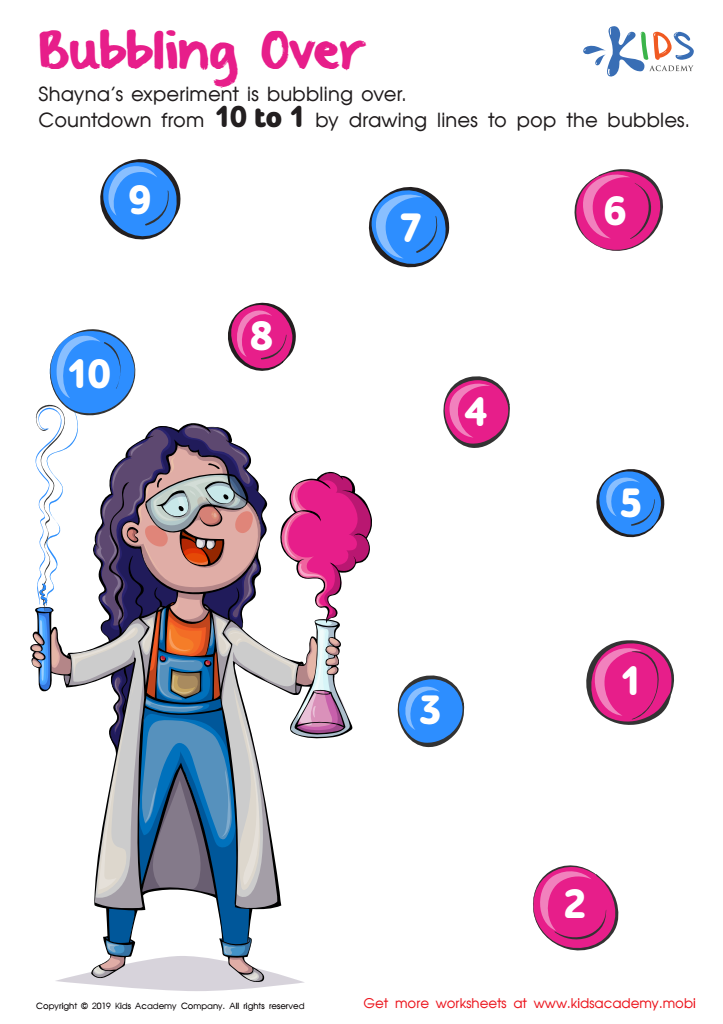
Bubbling Over Worksheet
Students love science experiments at the lab! They get to practice their counting skills while creating a masterpiece or an unexpected catastrophe! Ask them to count down from 10 to 1 by drawing lines to 'pop' the bubbles coming out of Shayna's experiment in the worksheet.
 Assign to My Students
Bubbling Over Worksheet
Worksheet
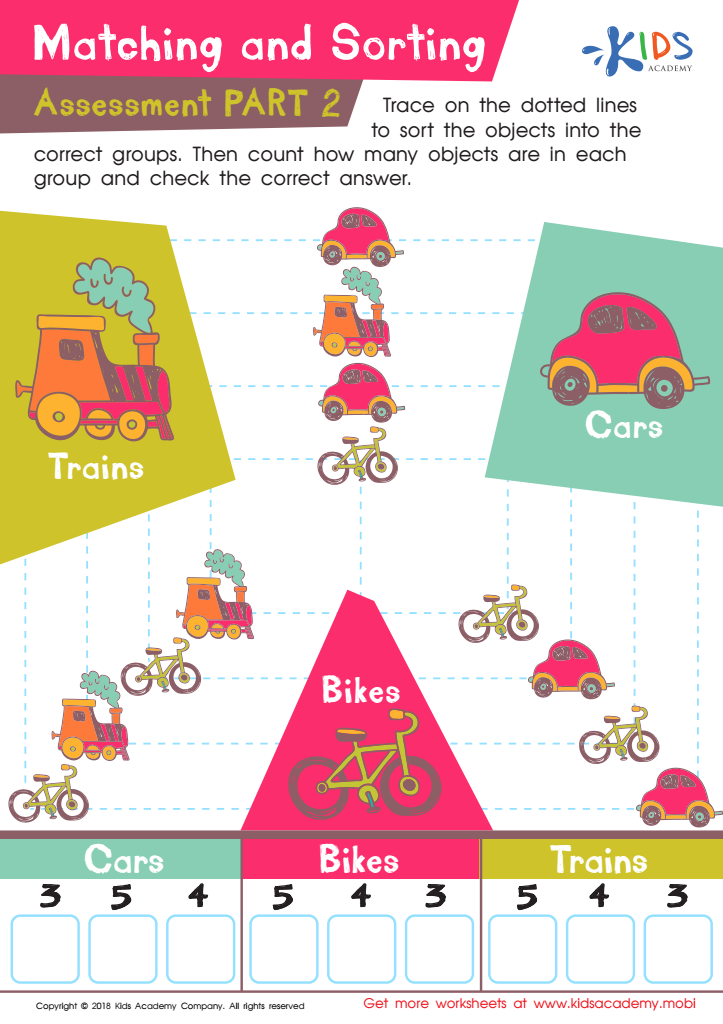
Matching and Sorting for Kindergarten: Assessment 2 Worksheet
This assessment tests matching, sorting and fine motor skills. It challenges kids to identify properties and attributes of pictures, trace guidelines and count the types of vehicles. It's a great way to practice basic number sense and hone in on important foundational skills.
Matching and Sorting for Kindergarten: Assessment 2 Worksheet
Worksheet
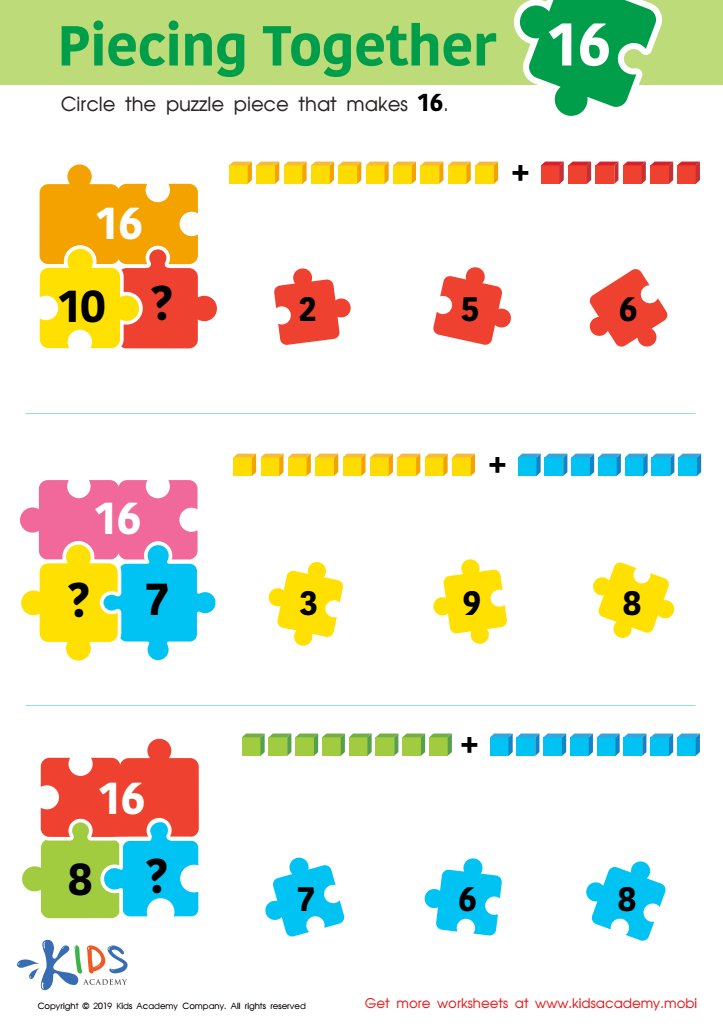
Piecing Together 16 Worksheet
Combine learning with fun using this colorful worksheet! Ask your preschoolers what they see in the picture, then help them solve the mathematical equations on the puzzle pieces. One equation is missing on each; have them circle the piece that will make the bottom puzzle piece numbers equal 16. Use puzzles and bright colors to teach - it's one of the best ways your kids can learn!
Piecing Together 16 Worksheet
Worksheet
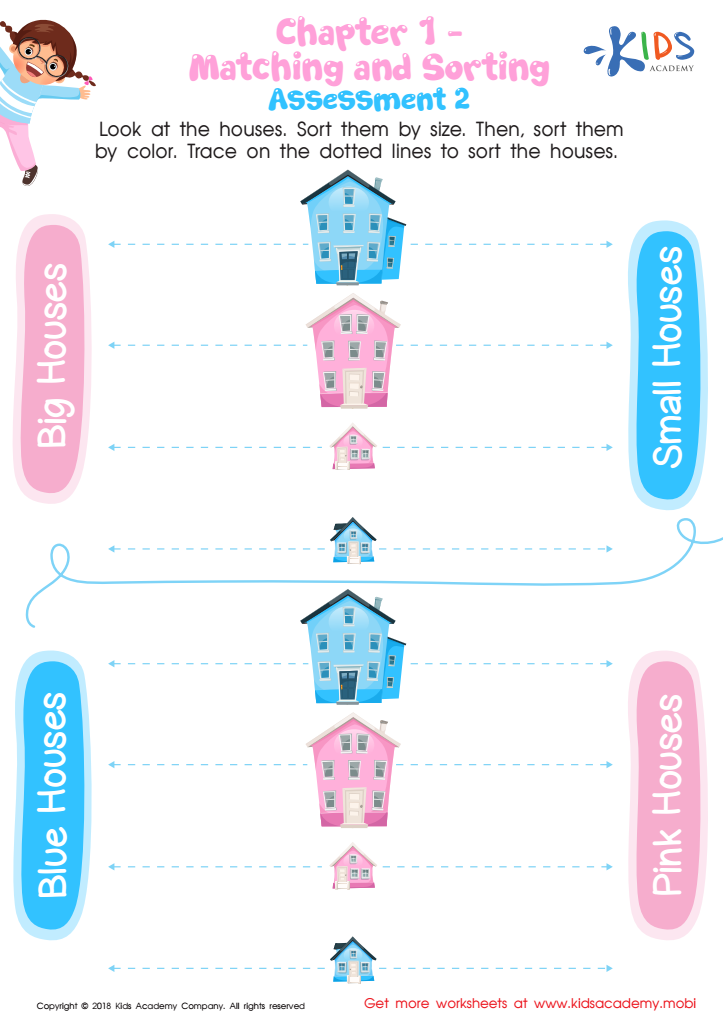
Matching and Sorting for Preschool: Assessment 2 Worksheet
Encourage your kids to take a look at the colorful pictures. Ask them to name the objects. Next, point out any differences between the houses and let them sort them according to color and size. Finally, help them trace the houses on the dotted lines.
Matching and Sorting for Preschool: Assessment 2 Worksheet
Worksheet
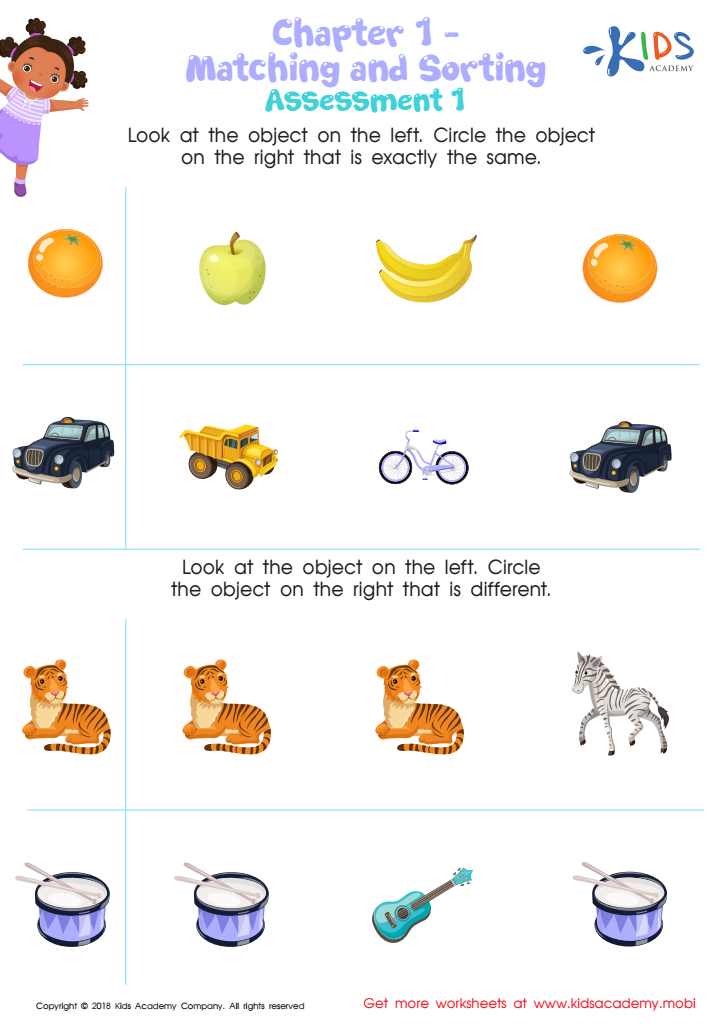
Matching and Sorting for Preschool: Assessment 1 Worksheet
Test your child's matching skills with this worksheet! Ask them to name each of the objects pictured, then circle the ones that are the same. Repeat for the second task. It's a great way to assess their skills and have fun at the same time!
Matching and Sorting for Preschool: Assessment 1 Worksheet
Worksheet
Join Kids Academy for Free
Who is primarily going to use this learning content?






Parents and teachers should care about introducing comparing fractions to children aged 3-4 because it lays the foundation for essential mathematical skills later in life. At this age, children are naturally curious and eager to learn about the world around them. By engaging them in activities that involve comparing fractions, they develop critical thinking and reasoning skills. Understanding concepts such as "more," "less," and "equal" through visual aids like pie charts or fraction toys enhances their ability to quantify and make sense of their environment.
Additionally, early exposure to comparing fractions can foster a positive attitude toward math, reducing anxiety as they progress to more complex concepts. It encourages language development, as children learn to articulate their observations and reasoning. Social skills are also nurtured during collaborative activities, allowing them to express their thoughts and listen to different perspectives.
Moreover, as math becomes increasingly integrated into everyday life, having a solid grasp of basic comparative ideas prepares children for future challenges. In summary, comparing fractions for young learners is vital not only for developing foundational math skills but also for promoting holistic cognitive and social development. Engaging children in these concepts early cultivates a lifelong love for learning.








