
Comparing sizes Math Worksheets for Ages 3-4
6 filtered results
Difficulty Level
Grade
Age
-
From - To
Subject
Activity
Standards
Introduce your little learners to the basics of measurement with our Comparing Sizes Math Worksheets, tailor-made for ages 3-4! These engaging, fun-filled activities help young children build crucial early math skills by exploring concepts of big and small. Each worksheet features colorful illustrations and simple exercises designed to develop your child's ability to compare, contrast, and categorize objects by size. Perfect for preschoolers, these printable worksheets make learning interactive and enjoyable. As children match and sort various items, they’ll boost their observation skills and gain a solid foundation for future math success. Start comparing sizes today with Kids Academy!
Favorites
With answer key
Interactive
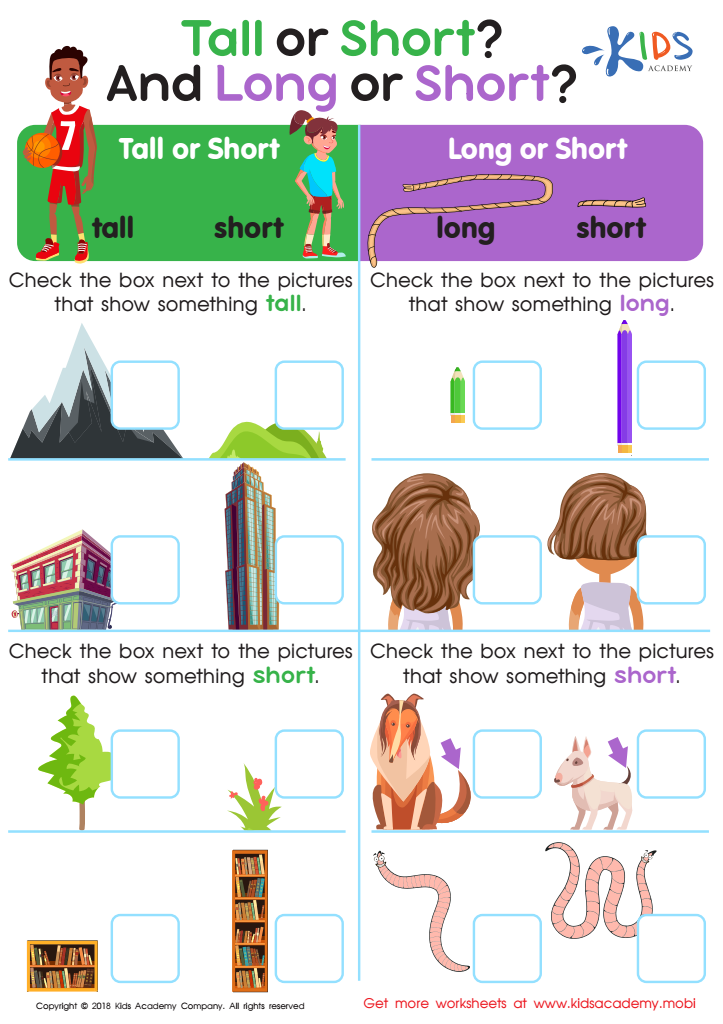
Tall or Short and Long or Short? Worksheet
This worksheet is fun and helpful for kids to understand the difference between height and length. With pictures of familiar objects, they can compare and choose the box with the right answer. This helps them gain skills and a better foundation for future measuring.
 Assign to My Students
Tall or Short and Long or Short? Worksheet
Worksheet
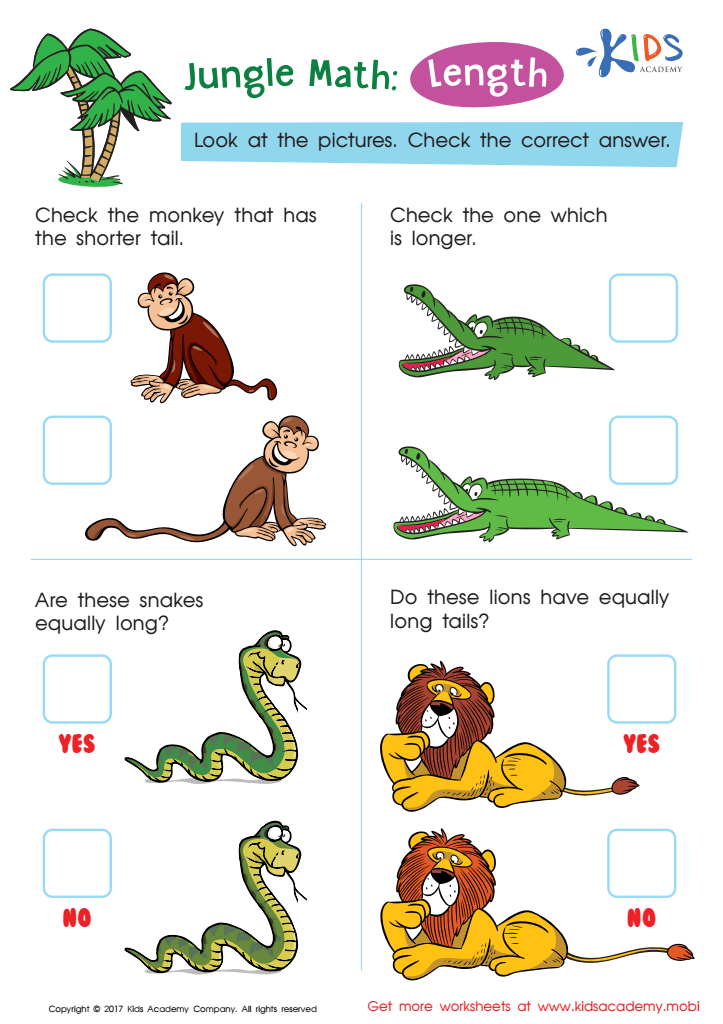
Which One Is Longer - Length Worksheet
Let's go to the jungle - kids get excited to practice math with animal-filled worksheets! This one is sure to have your pupil mastering length in no time.
Which One Is Longer - Length Worksheet
Worksheet
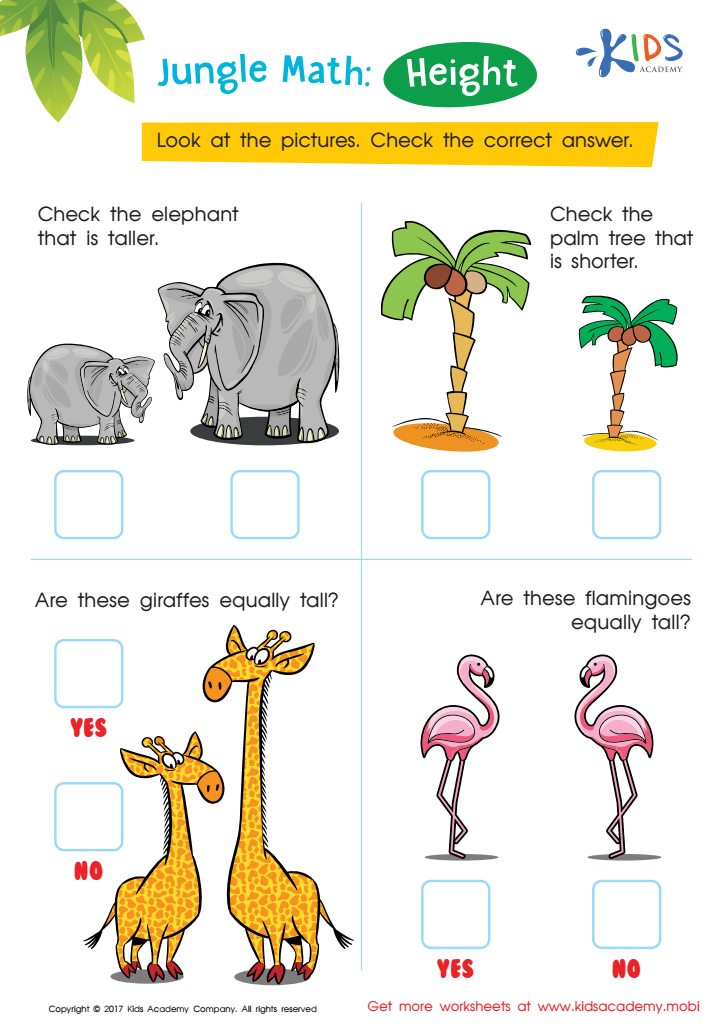
Which Is Taller Worksheet
Help your kindergartner learn about height with this fun worksheet! They'll love comparing zoo animals and deciding which are taller, shorter, or equal. It's a great way to practice math and have fun!
Which Is Taller Worksheet
Worksheet
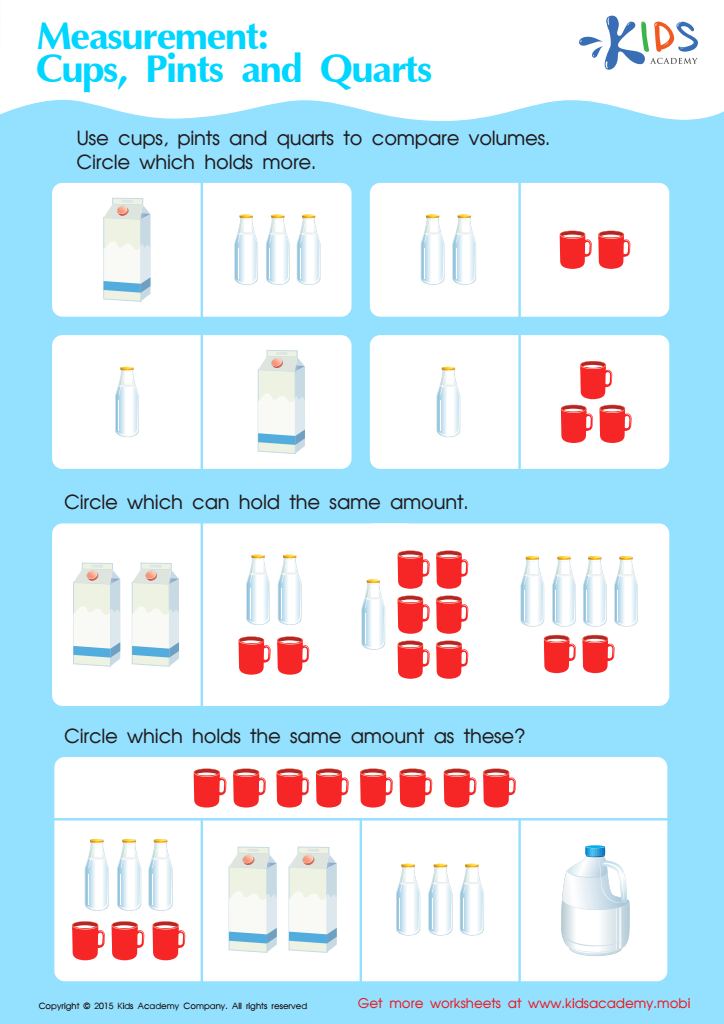
Measurement: Compare Volumes Worksheet
Compare volumes with Kids Academy and have fun! (80 words)
Practice measuring with Kids Academy and have fun! Compare volumes in pictures and circle which holds more. Keep learning with free math worksheets available on our website. Enjoy the process and have fun!
Measurement: Compare Volumes Worksheet
Worksheet
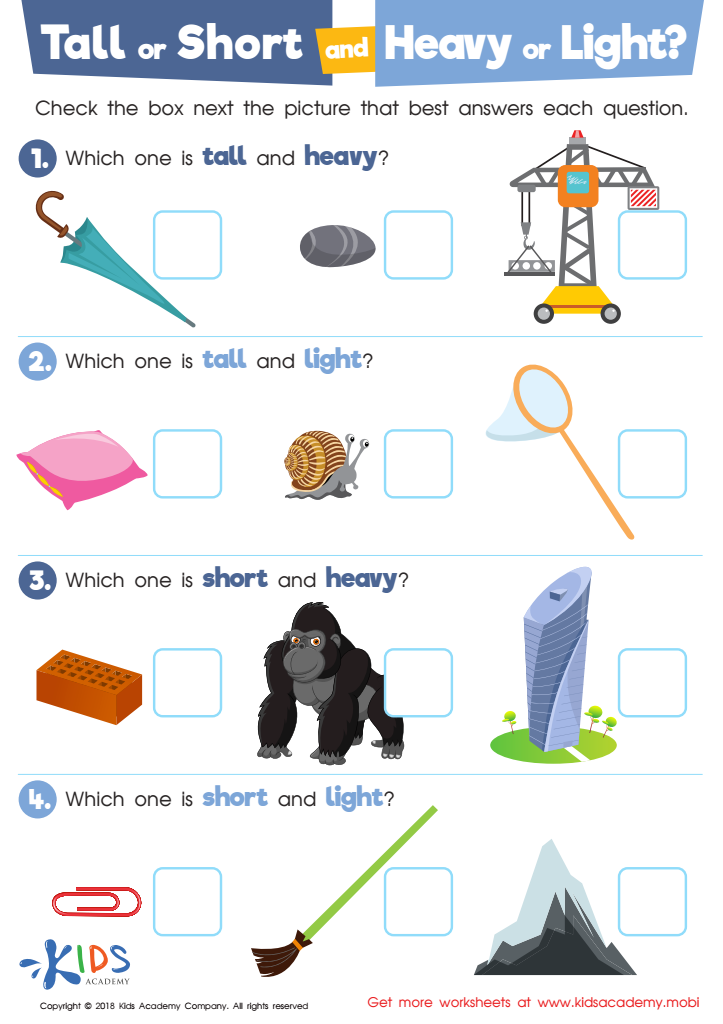
Tall or Short and Heavy or Light? Worksheet
Young children can find basic measurement concepts tricky. This PDF introduces them to the appropriate vocabulary for describing heavy, light, tall and short items, by using familiar pictures. It helps them accurately select which items fit each category.
Tall or Short and Heavy or Light? Worksheet
Worksheet
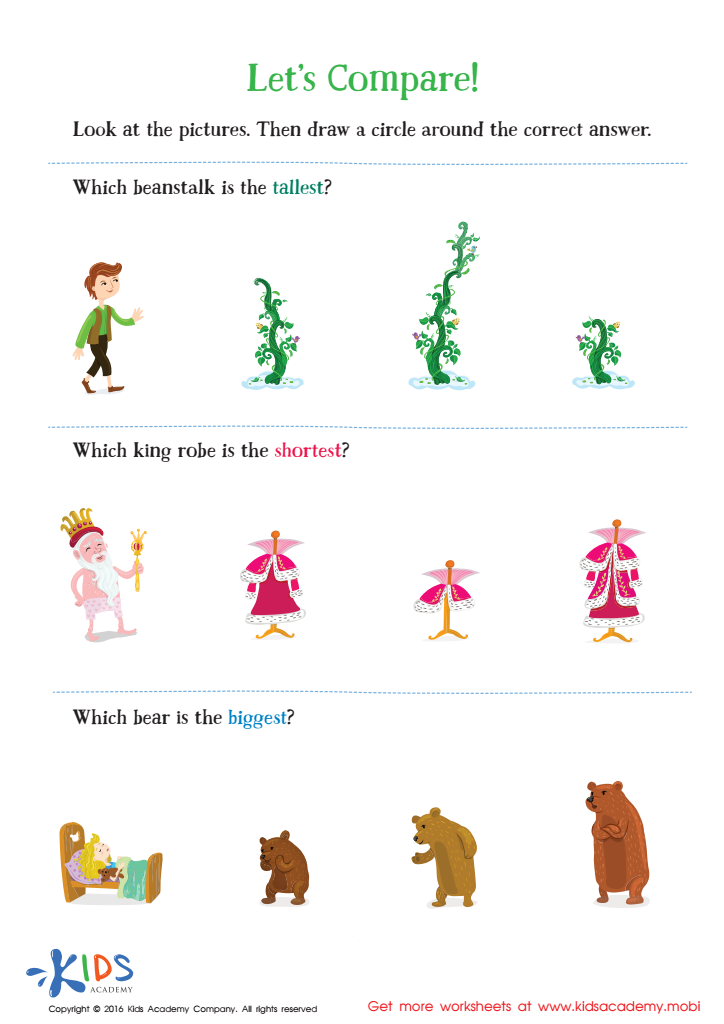
Fairy Tale Worksheet: Let's Compare
Preschoolers need to recognize different sizes of objects. This worksheet combines fun fairy tales with size practice, helping them read, problem solve, and sort through pictures. Your child will love the images and be eager to complete it. Enhance their learning by talking about the tales to build comprehension.
Fairy Tale Worksheet: Let's Compare
Worksheet
Join Kids Academy for Free
Who is primarily going to use this learning content?




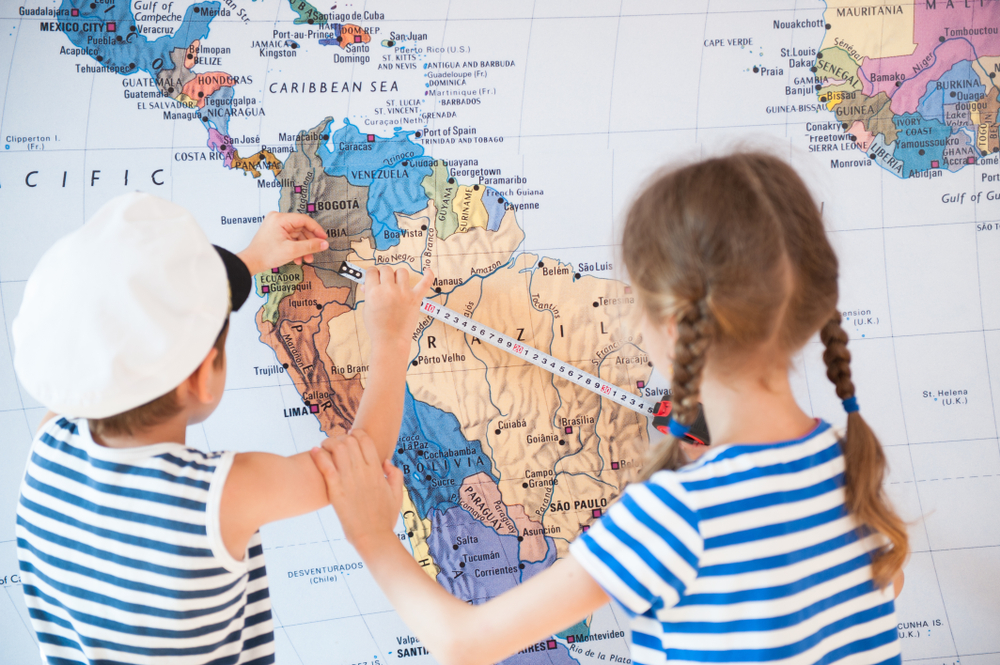


Comparing sizes is a fundamental math concept that is crucial for young learners, including those aged 3-4. At this developmental stage, children are naturally curious and constantly exploring their environments. Introducing them to comparisons of size helps develop their observational skills and cognitive abilities. When children compare objects as bigger, smaller, taller, or short, they are engaging in critical thinking and problem-solving skills. These activities lay the groundwork for more advanced math concepts such as measurement, numbers, and spatial understanding.
For parents and teachers, facilitating size comparisons can be an easy, everyday activity. It can happen naturally during playtime, like stacking blocks, or at mealtime by comparing sizes of food items. These interactions not only enhance math skills but also promote language development as kids learn and use descriptive vocabulary. Additionally, mastering this concept helps build a child's self-confidence, as they understand and make sense of the world around them.
Importance given to these early math skills sets a positive tone for a child’s educational journey, making future learning experiences in formal settings less intimidating. Overall, focusing on comparing sizes ensures a well-rounded cognitive and language development essential for a child's early academic success and lifelong learning.








