Mathematical thinking Math Worksheets for Ages 3-4
4 filtered results
-
From - To
Introducing our "Mathematical Thinking Math Worksheets for Ages 3-4"! Designed to make early childhood math fun and engaging, these worksheets help children develop essential skills, including number recognition, counting, shape identification, and pattern creation. With vibrant images and interactive activities, our worksheets cater to young minds, boosting their confidence and fostering a love for math from an early age. Perfect for both classroom and home use, these resources lay a solid foundation for future mathematical learning. Encourage your little ones to explore and enjoy math with our thoughtfully crafted worksheets. Empower your child's learning journey today with Kids Academy!
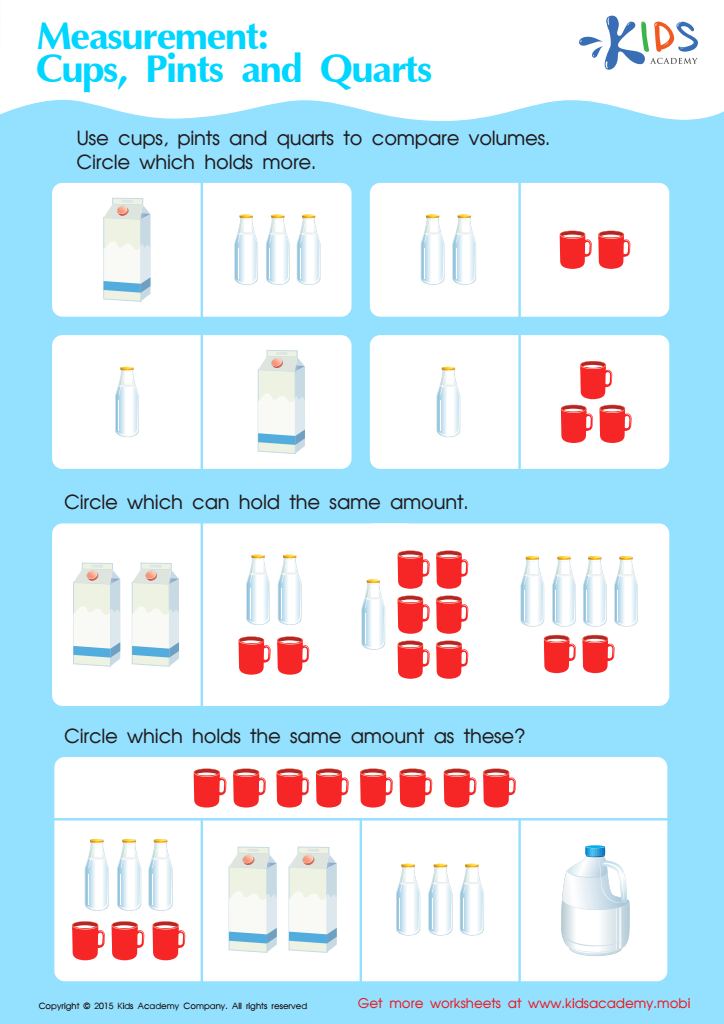
Measurement: Compare Volumes Worksheet
 Assign to My Students
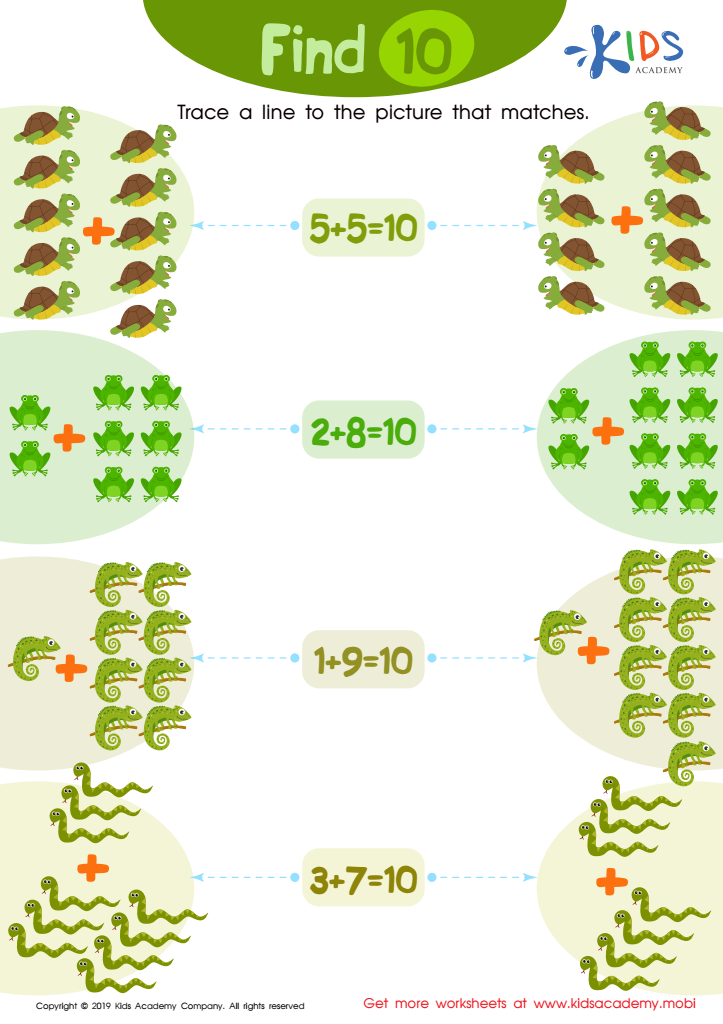
Find 10 Worksheet
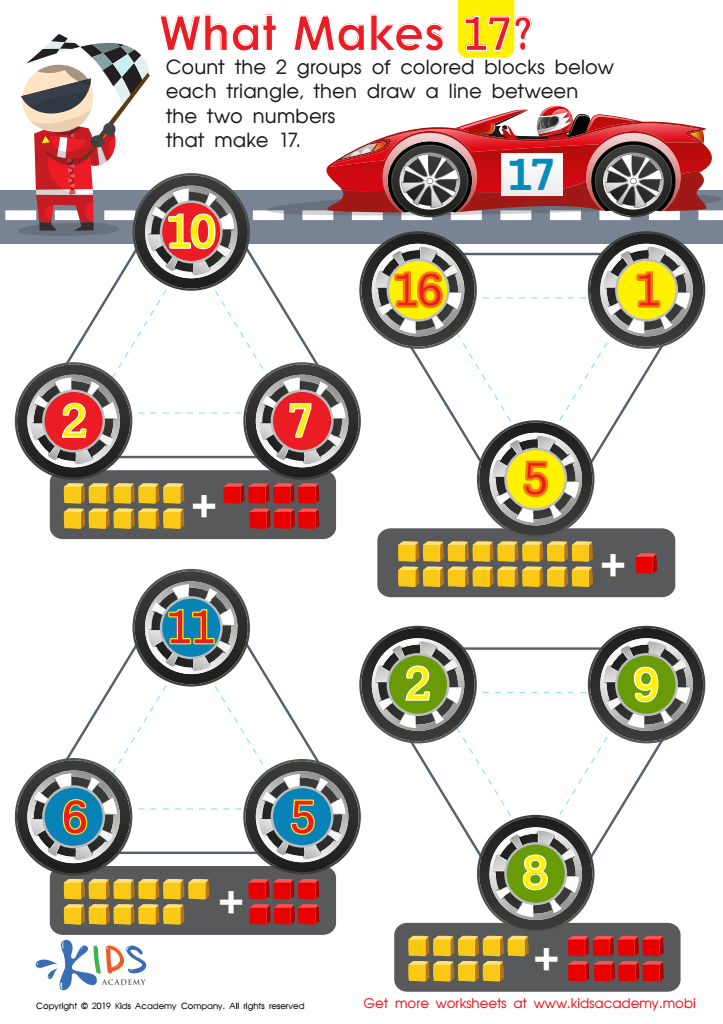
What Makes 17 Worksheet
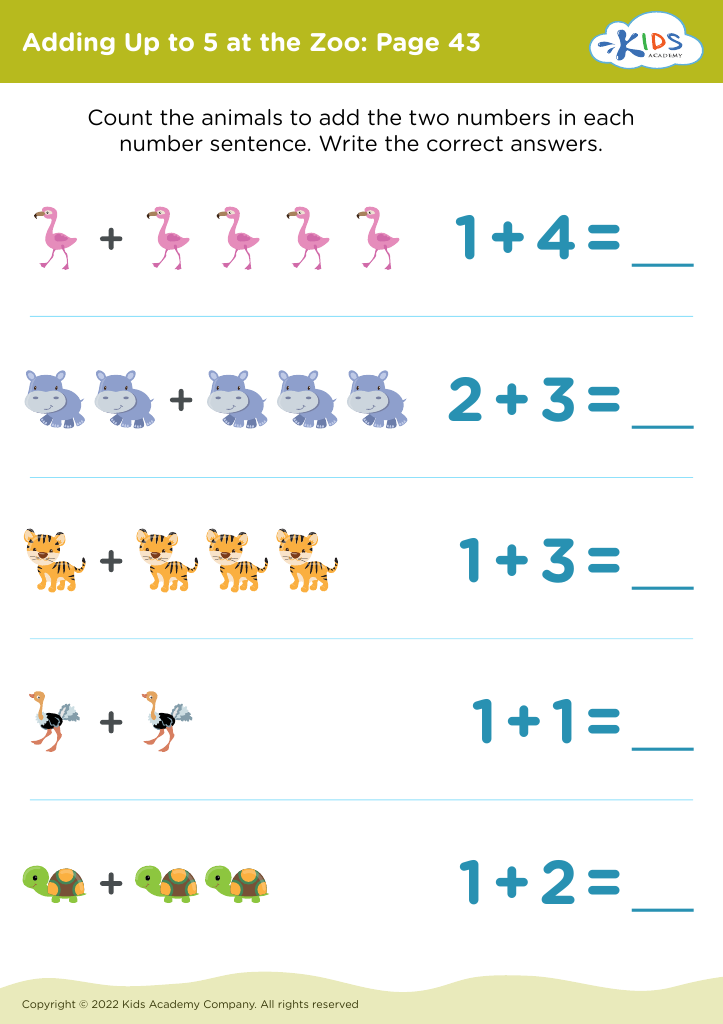






Mathematical thinking in children aged 3-4 plays a crucial role in their early development and future academic success. At this tender age, children are natural explorers with an innate curiosity about the world around them. By fostering mathematical thinking early on, parents and teachers can lay a strong educational foundation that benefits a child's cognitive development, problem-solving abilities, and logical reasoning skills.
Children who engage in age-appropriate mathematical activities develop a better understanding of concepts such as numbers, patterns, shapes, and measurements. Simple activities like counting objects, identifying shapes, or arranging items in a particular order can stimulate children's brains and enhance their ability to think critically and make logical connections.
Besides, early exposure to mathematics can instill confidence and reduce anxiety around the subject, making children more likely to enjoy and excel in math as they progress through school. It also promotes a growth mindset, where children learn to view challenges as opportunities to learn and grow.
Moreover, mathematical thinking isn't limited to just 'math time.' It's embedded in daily activities from cooking recipes, which involve measuring ingredients, to playing with building blocks, which involves understanding shapes and spatial relationships. By integrating math into everyday life, parents and teachers can make learning both fun and meaningful, ultimately preparing children for more complex concepts ahead.








