
Object identification Math Worksheets for Ages 3-4
3 filtered results
Difficulty Level
Grade
Age
-
From - To
Subject
Activity
Standards
Introduce young learners to the exciting world of math with our "Object Identification Math Worksheets for Ages 3-4." Tailored for preschoolers, these engaging worksheets enhance object recognition, counting, and sorting skills through fun, age-appropriate activities. Our thoughtfully designed worksheets ensure that kids stay entertained while learning essential math concepts. Bright illustrations and easy-to-follow instructions make it simple for little ones to identify and differentiate objects. Perfect for early childhood education at home or in the classroom, these worksheets build a strong math foundation and set the stage for future learning success. Explore our collection today and boost your child's math skills!
Favorites
With answer key
Interactive
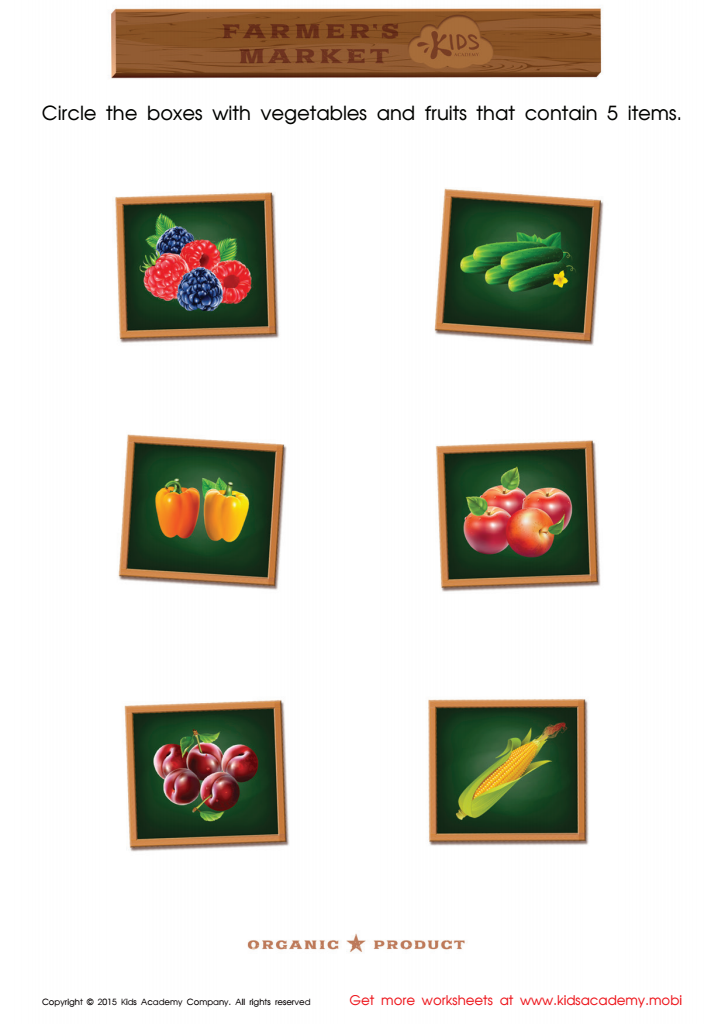
Count and Match Vegetables 1 – 7 Math Worksheet
Print this bright math worksheet from Kids Academy and give your child a fun way to enhance their counting skills. Based on Singapore Math, the colourful pictures make it easy for children to comprehend math. Get additional free worksheets here!
 Assign to My Students
Count and Match Vegetables 1 – 7 Math Worksheet
Worksheet
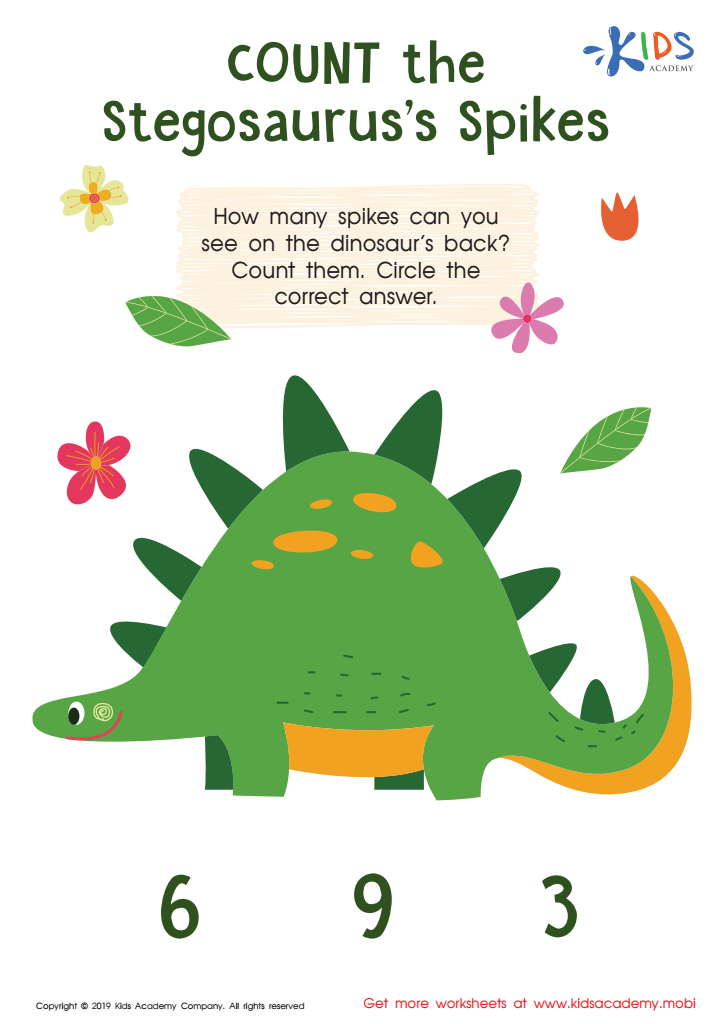
Count the Stegosaurus's Spikes Worksheet
Dinosaurs walked the earth long before humans, meaning no contact was made before they became extinct. Scientists have used research and diggings to find out about these animals, even giving them names. In this worksheet, help your students count the spikes on the stegosaurus and circle the correct answer.
Count the Stegosaurus's Spikes Worksheet
Worksheet
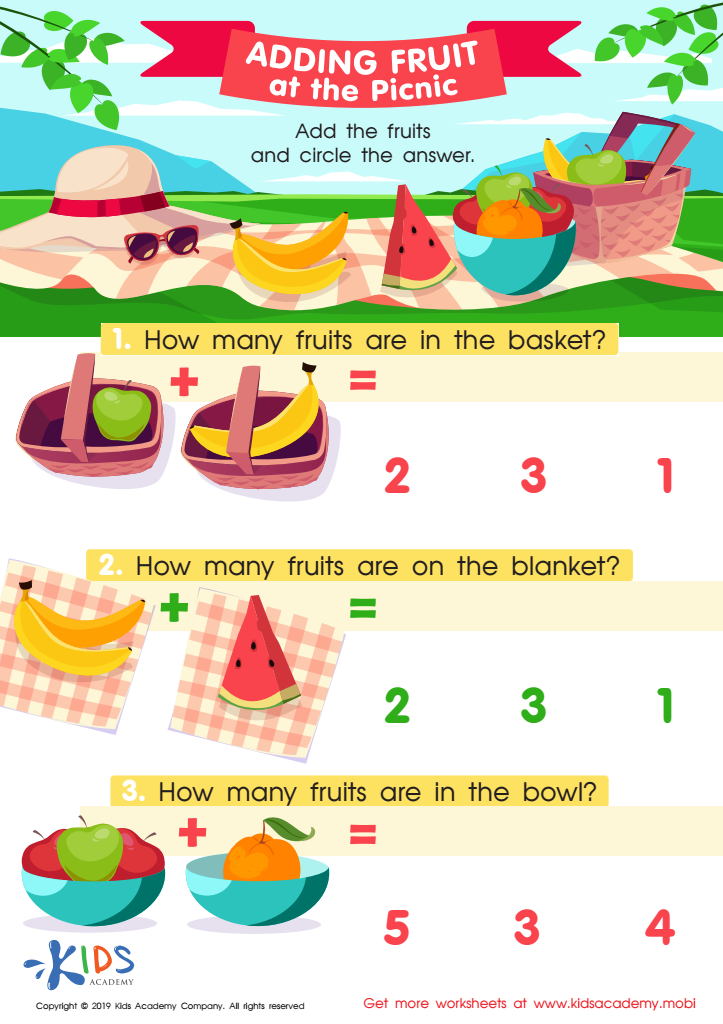
Adding Fruit at the Picnic Worksheet
Picnics are a great way for the family to enjoy a fun day in the sun! Get your kids involved by having them help load the picnic basket and do this worksheet to practice their math skills while they get ready. Identify the fruits in the picture, add them up, and circle the correct answer.
Adding Fruit at the Picnic Worksheet
Worksheet
Join Kids Academy for Free
Who is primarily going to use this learning content?






.jpg)

Parents and teachers should care about object identification math for children aged 3-4 because it forms the foundation for more advanced cognitive and mathematical skills. At this developmental stage, children are naturally curious and eager to explore their surroundings. By engaging in object identification activities, they begin to categorize and differentiate objects based on shape, color, size, and quantity.
This process of object identification is crucial because it helps children develop critical observation and analytical skills. When they learn to group similar objects together, they are essentially practicing early classification skills, which are fundamental for understanding more complex math concepts later on, such as sorting, counting, and pattern recognition.
Moreover, object identification fosters language development. As children talk about what they observe, their vocabulary expands, and they can articulate their thoughts and questions more effectively, facilitating better communication skills. Activities that involve describing and naming objects also enhance memory and attention to detail, which are essential for academic success across various subjects.
Incorporating object identification math into early childhood education not only supports cognitive and language development but also encourages a positive attitude towards learning. It makes abstract mathematical concepts accessible and engaging through hands-on and playful experiences, setting a solid groundwork for future educational achievements.








