Understanding sequencing Math Worksheets for Ages 3-4
4 filtered results
-
From - To
Introduce your little learner to the foundational concept of sequencing with our specially designed math worksheets for ages 3-4. These engaging activities help young minds grasp the order of events using vibrant, kid-friendly illustrations and simple exercises. By practicing sequencing, children develop critical thinking and problem-solving skills, setting the stage for future math success. Our printable worksheets offer a fun and educational way to enhance your child's ability to recognize patterns, organize information, and understand the logical order of steps. Perfect for home or classroom use, these resources make learning math an enjoyable adventure.
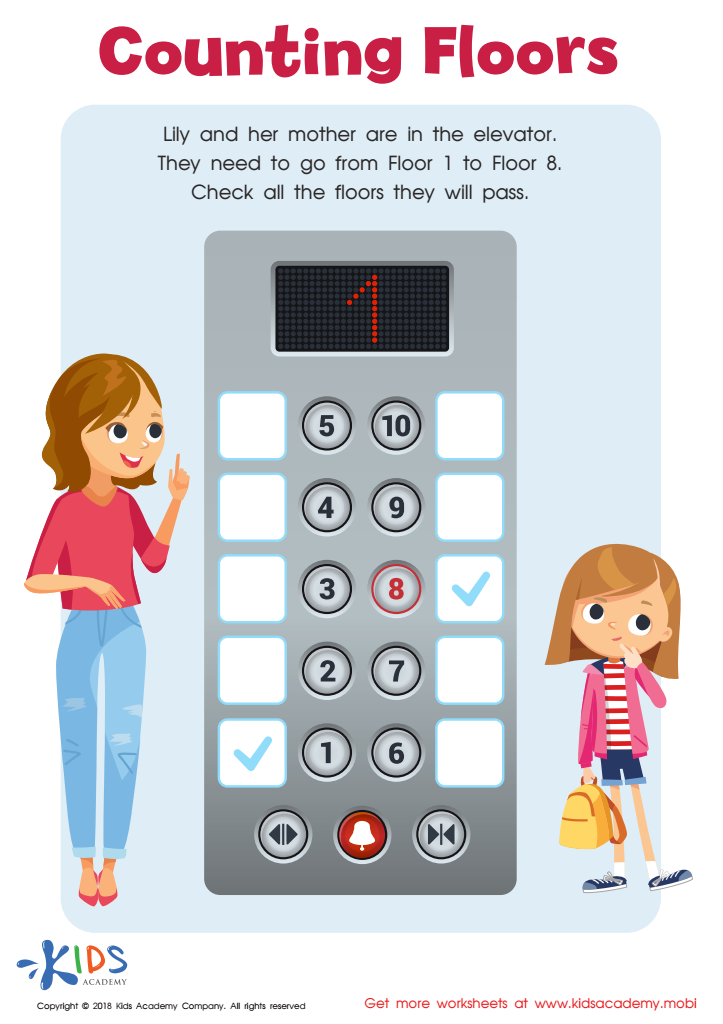
Counting Floors Worksheet
 Assign to My Students
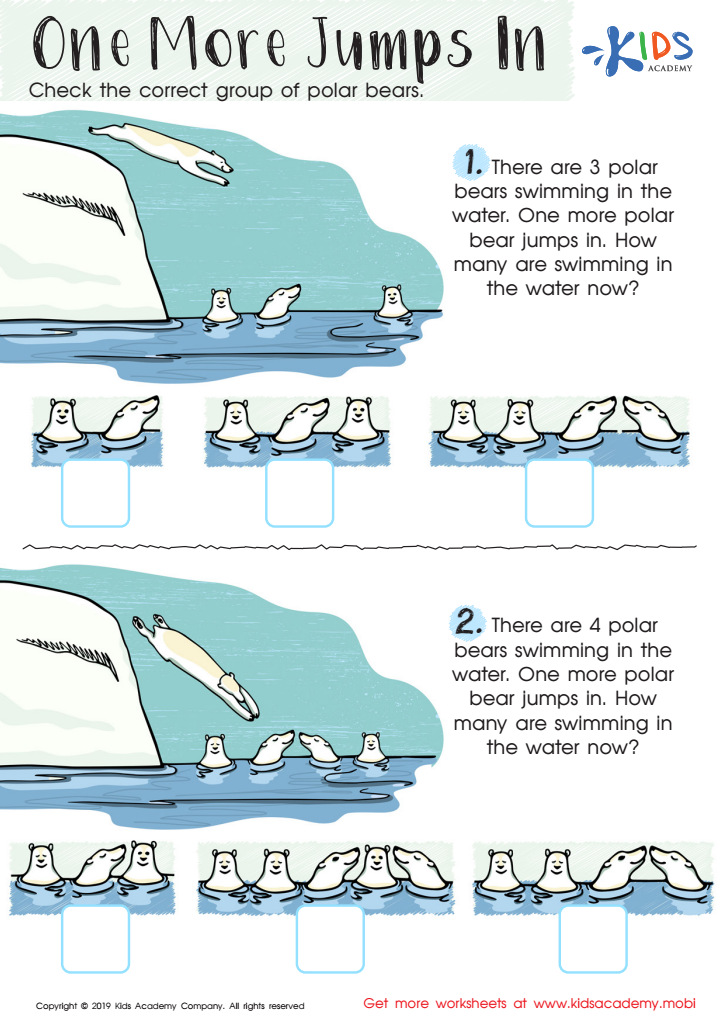
One More Jumps In Worksheet
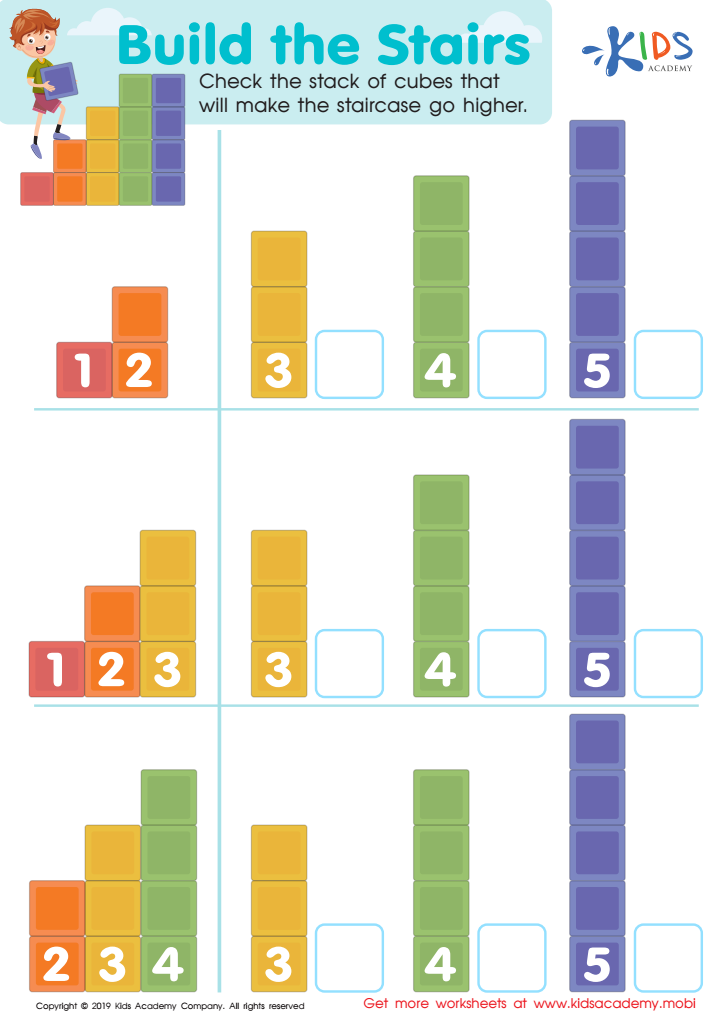
Build the Stairs Worksheet
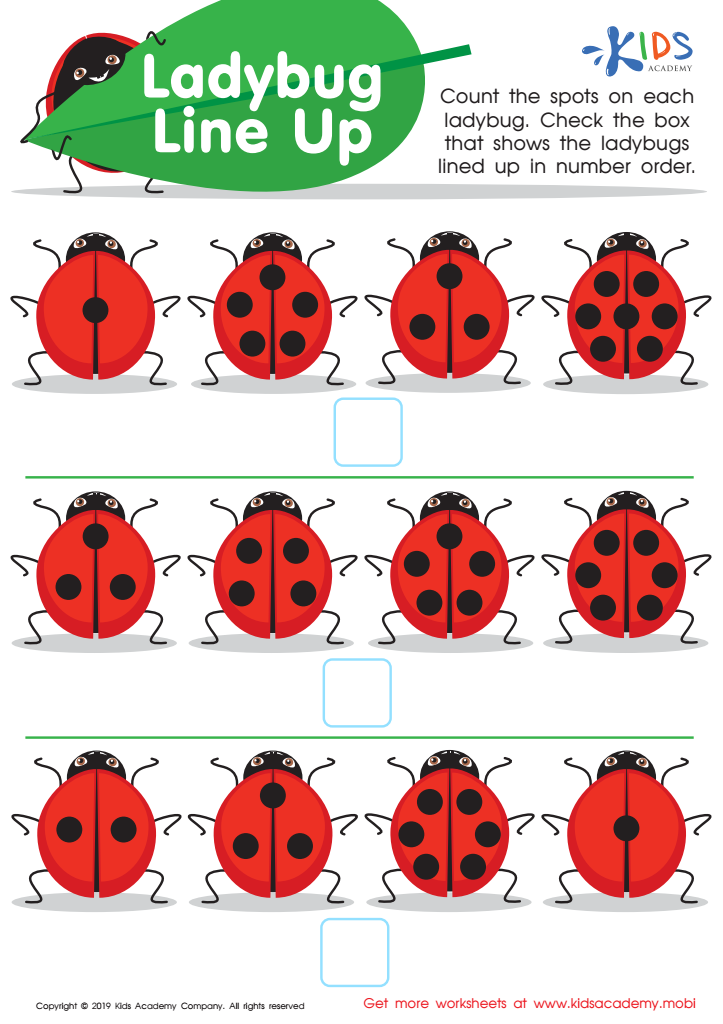
Ladybug Line Up Worksheet








Understanding sequencing in math for children ages 3-4 is vital because it builds foundational skills that are crucial for their academic development. At this age, young learners begin to understand the concept of order, which is essential not just in mathematics but also in daily life and future learning.
Sequencing helps children comprehend patterns and logical progression, fostering an ability to recognize and predict order in numbers, events, and routines. For example, understanding the sequence of counting digits (1, 2, 3...) or simple daily activities (first we brush our teeth, then we eat breakfast) enhances both mathematical and cognitive development.
Moreover, grasping sequencing supports language development. Narrating sequences helps children understand storylines and improves their ability to follow and recount events. This enhances both their listening and communication skills.
Early exposure to sequencing also aids problem-solving abilities. When children learn to organize things in a specific order, they develop critical thinking skills necessary for tackling complex problems later in life.
Parents and teachers who emphasize sequencing ensure that children develop a solid intellectual and practical framework. This foundation not only facilitates success in math but also broadens children's ability to pattern and organize information, setting the stage for confident and competent learners in all subjects.








