
Real-life application Word Problems Worksheets for Ages 3-4
3 filtered results
Difficulty Level
Grade
Age
-
From - To
Subject
Activity
Standards
Discover our engaging Real-life Application Word Problems Worksheets tailored for ages 3-4! These thoughtfully designed activities help young learners grasp basic math concepts by connecting them with everyday situations. Your preschooler will enjoy solving problems related to sharing treats, counting toys, and more, fostering both critical thinking and practical life skills. Each worksheet features colorful illustrations to capture their imagination and keep learning fun. Ideal for building a strong foundation in math, these resources support early cognitive development and prepare kids for future academic success. Make math meaningful and enjoyable with our real-life inspired worksheets today!
Favorites
With answer key
Interactive
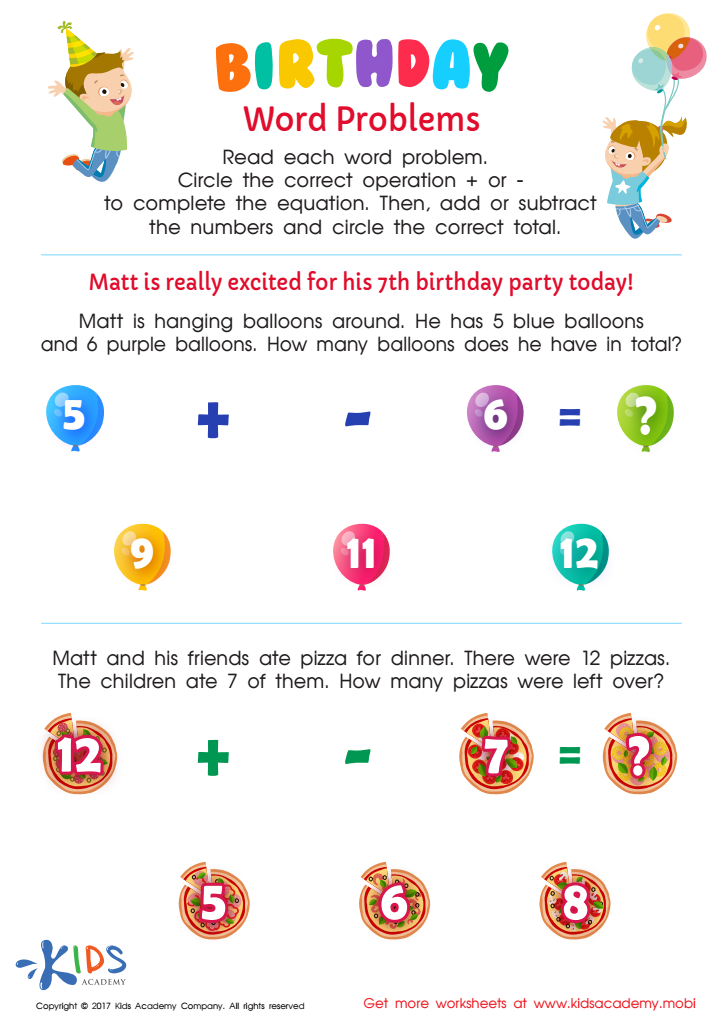
Birthday Word Problems Substraction Worksheet
This worksheet, Birthday Word Problems, is a great way to improve your child's math and literacy skills. It features tricky subtraction equations based on a birthday celebration - perfect for kids who love birthdays!
 Assign to My Students
Birthday Word Problems Substraction Worksheet
Worksheet
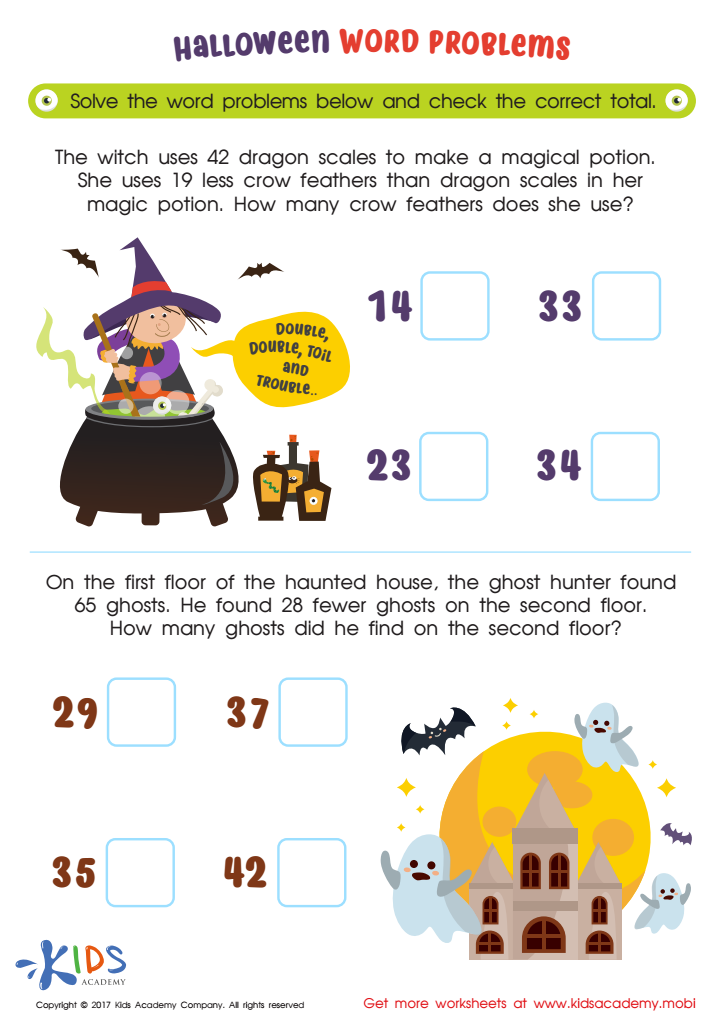
Halloween Word Problems Printable
Ghosts, witches, and other spooky characters make these problems exciting and interactive. Get ready to have some math fun!
Halloween Word Problems Printable
Worksheet
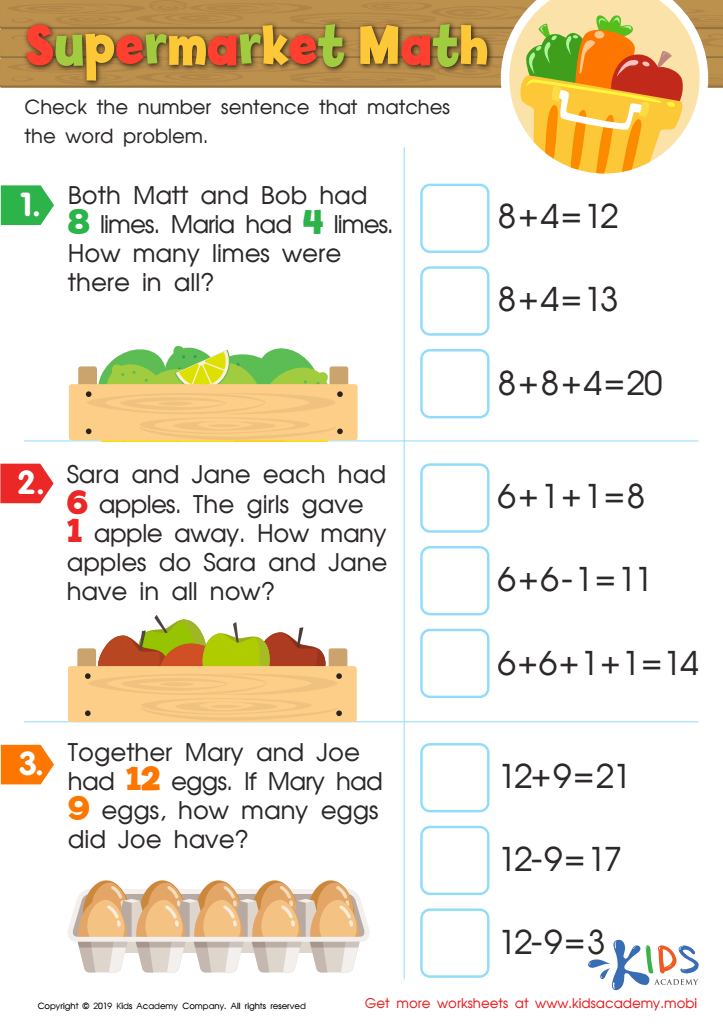
Supermarket Math Worksheet
Take your kids to the supermarket and ask what they're looking forward to buying. Help them solve the three questions in the worksheet by interpreting each one into an equation, then choose the right answer.
Supermarket Math Worksheet
Worksheet
Join Kids Academy for Free
Who is primarily going to use this learning content?








Real-life application word problems are essential for young children, ages 3-4, as they lay the foundation for early cognitive and problem-solving skills. These problems are invaluable for several reasons. Firstly, they make learning relatable and engaging. When young children see math in the context of real-life situations—such as counting fruits in a basket or distributing toys among friends—they are more likely to understand and retain the concepts. This natural context helps demystify abstract numbers and fosters a positive attitude towards learning.
Secondly, solving these problems encourages critical thinking and reasoning. By working through simple scenarios, children learn to analyze situations, identify relevant information, and make decisions—skills that are crucial not just in academics but in everyday life.
Lastly, word problems help develop language and communication skills. Discussing and describing how they solve these problems enhances both vocabulary and the ability to articulate thoughts clearly. This dual development of math and language skills sets a strong educational foundation.
For parents and teachers, incorporating real-life word problems into lessons offers a seamless and effective strategy to nurture a child’s intellectual growth. It ensures that learning is comprehensive, interconnected, and applicable beyond the classroom, preparing young minds for future educational challenges.








