Identifying shapes Sight Words Worksheets for Ages 3-4
5 filtered results
-
From - To
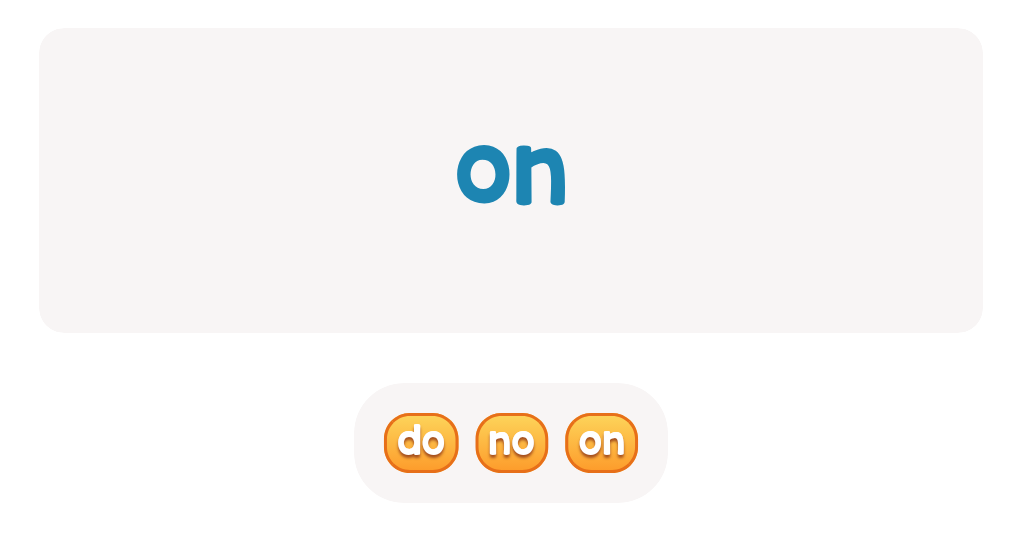
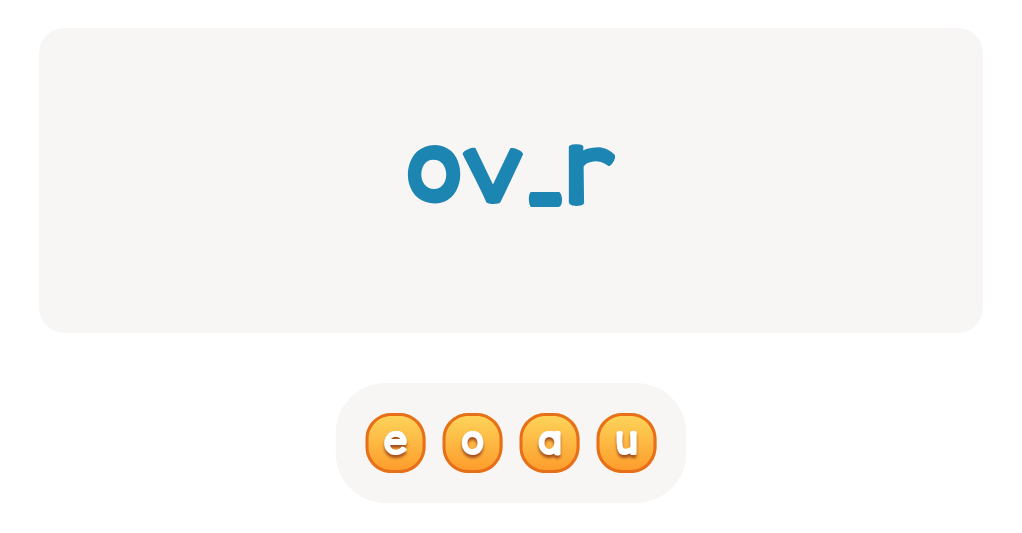
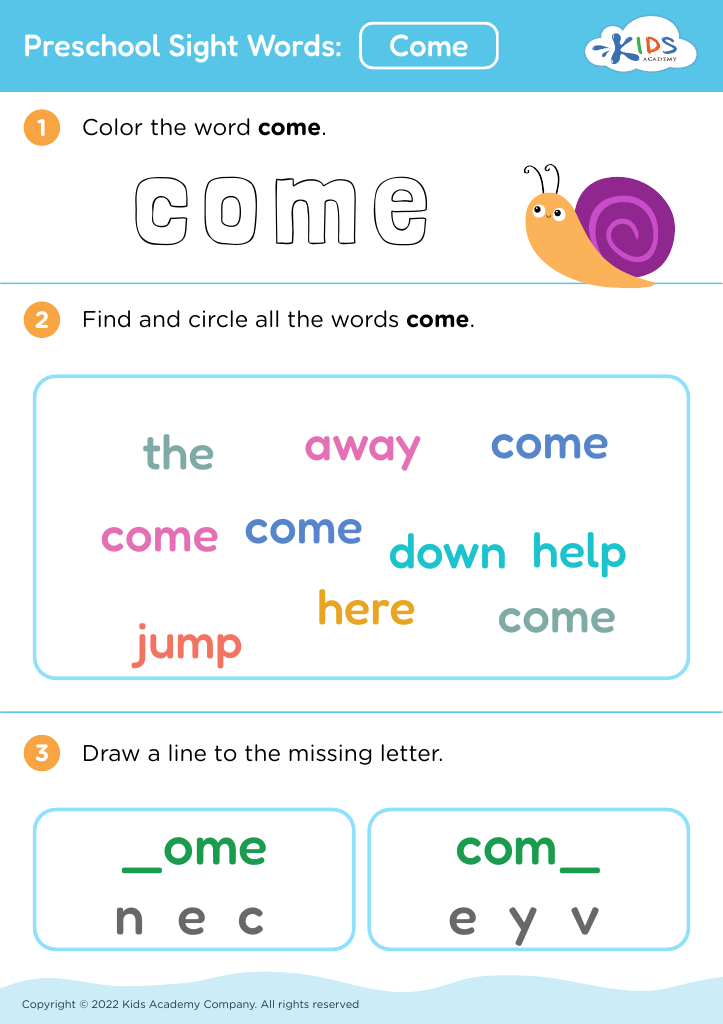
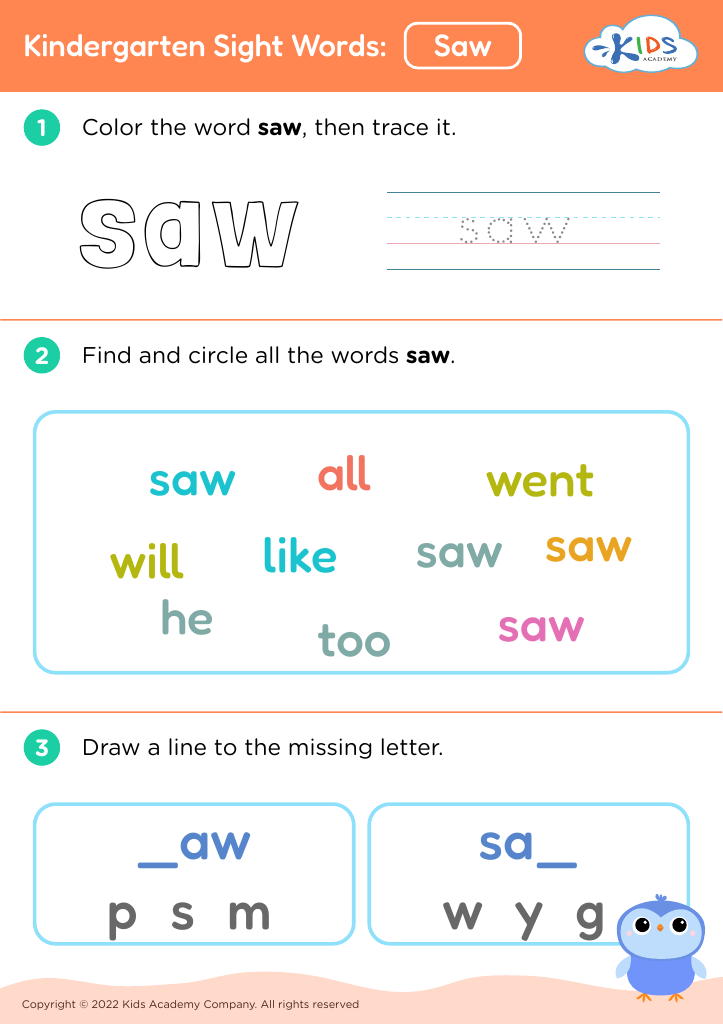
Nurture your child's early literacy and cognitive skills with our "Identifying Shapes Sight Words Worksheets for Ages 3-4." These engaging printables designed by Kids Academy combine the fun of shape recognition with the essential practice of sight words. Perfect for preschoolers, each worksheet uses friendly illustrations and clear instructions to help young learners identify basic shapes while building their vocabulary. Ideal for both classroom and at-home learning, these activities support fine motor skills, reading readiness, and shape recognition. Empower your little scholar with interactive learning experiences that make reading and geometry exciting and accessible!
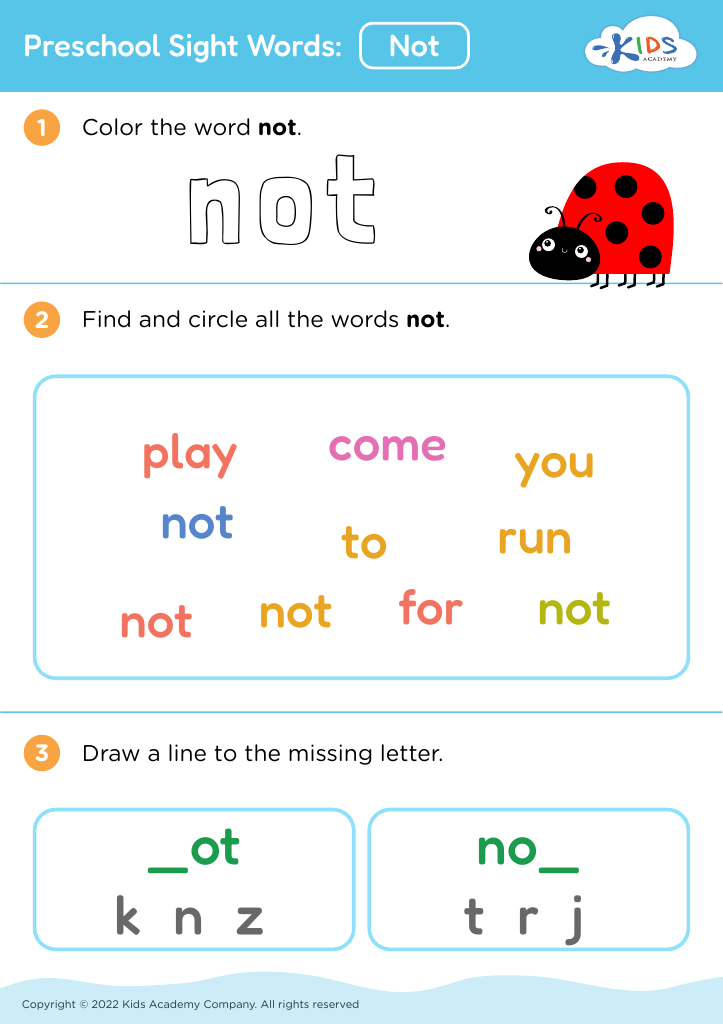

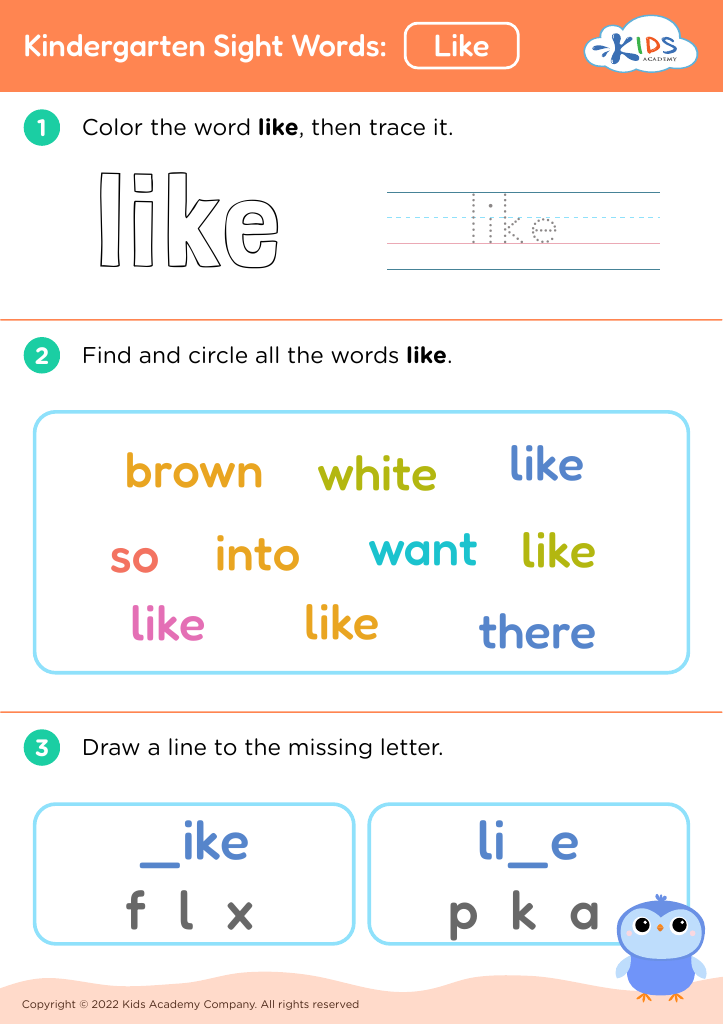
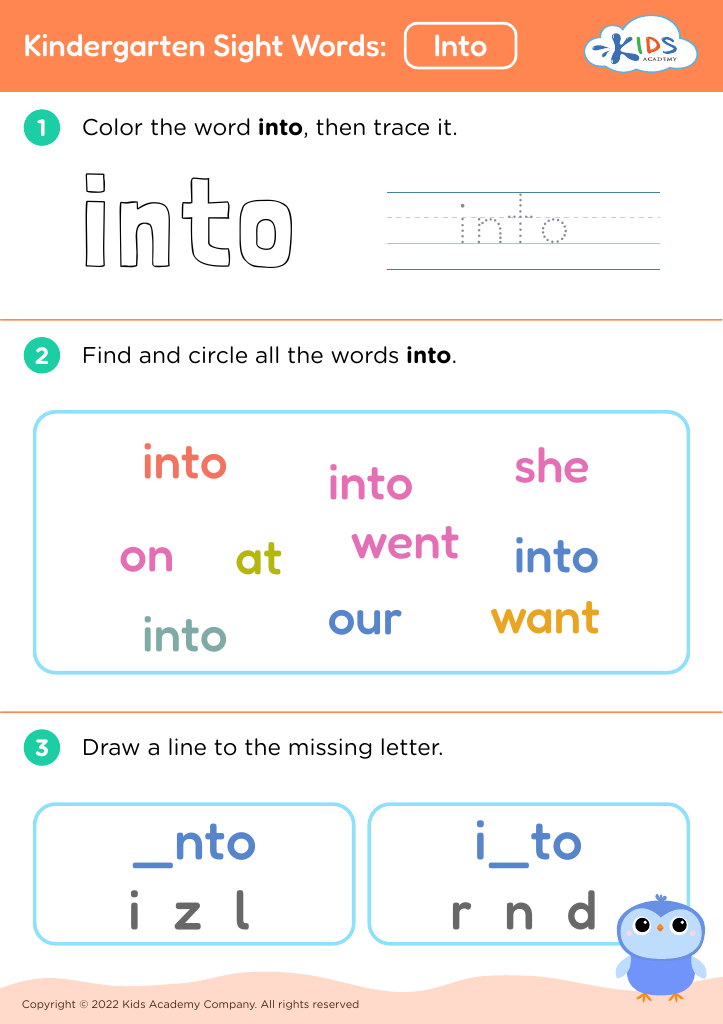








Identifying shapes and recognizing sight words at ages 3-4 are crucial developmental milestones that set the foundation for future learning.
Shapes play an important role in cognitive development. When children identify and differentiate between shapes, they enhance their spatial awareness and visual discrimination skills. These abilities are essential for understanding more complex mathematical concepts later on, such as geometry. Additionally, recognizing shapes in various contexts helps children learn to classify objects, a foundational skill for scientific reasoning.
Sight words are another cornerstone of early education. These are common words that children learn to recognize by sight rather than by sounding out. Mastery of sight words significantly boosts reading fluency, comprehension, and confidence. The early acquisition of sight words enables children to read simple texts more quickly and smoothly, facilitating a greater love for reading.
Overall, focusing on shapes and sight words at an early age paves the way for more advanced academic skills. It also instills a sense of accomplishment in young learners, motivating them to tackle more challenging learning tasks in future. Therefore, parents and teachers should prioritize these basic skills to promote successful and well-rounded early childhood education.