Handwriting practice ABC Letters Worksheets for Ages 3-6 - Page 2
26 filtered results
-
From - To

Letter N Coloring Sheet
 Assign to My Students






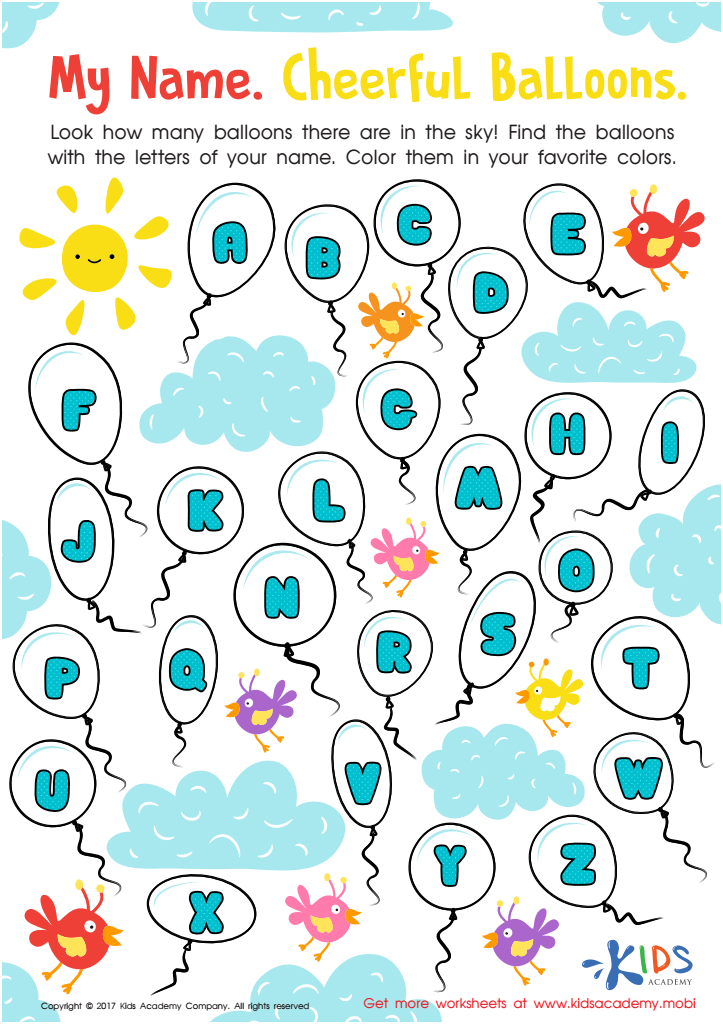
My Name: Cheerful Balloons Worksheet
Assign to My Students








Handwriting practice is crucial for children aged 3-6 as it plays a significant role in their cognitive and motor skill development. During these formative years, children are mastering fine motor skills and hand-eye coordination, both essential for writing. Engaging in handwriting practice helps enhance muscle control in their fingers, leading to improved writing dexterity and confidence.
Moreover, handwriting fosters visual perception and memory. As children learn to recognize and reproduce letters, they develop an understanding of letter shapes and sounds, which reinforces their literacy skills. This connection between writing and reading forms a solid foundation for future academic success.
Additionally, handwriting serves as a creative outlet. It allows children to express themselves, instilling a sense of accomplishment as they form letters, words, and eventually ideas. Practicing handwriting can also promote focus and discipline, teaching children the importance of patience and consistent effort.
By emphasizing handwriting practice, parents and teachers not only contribute to essential academic skills but also nurture children's overall growth and self-esteem. It is an investment in their futures, as it builds foundational skills that will support various learning pathways throughout their lives. Encouraging proper practice now will lead to proficient writing skills as they progress in their education.







