Sound Association Alphabet Coloring Pages Worksheets for Ages 3-6
3 filtered results
-
From - To
Unlock your child's creativity and learning with our "Sound Association Alphabet Coloring Pages" designed specifically for ages 3-6! These engaging worksheets not only provide a fun coloring experience but also help young learners connect letters with their corresponding sounds. Each page includes vibrant illustrations paired with familiar words, enhancing phonetic recognition and language skills in a playful way. Ideal for home or classroom use, our worksheets encourage imaginative expression while reinforcing early literacy concepts. Explore the joy of learning through art as your child develops foundational skills in a fun, interactive environment! Perfect for aspiring readers and young artists alike!
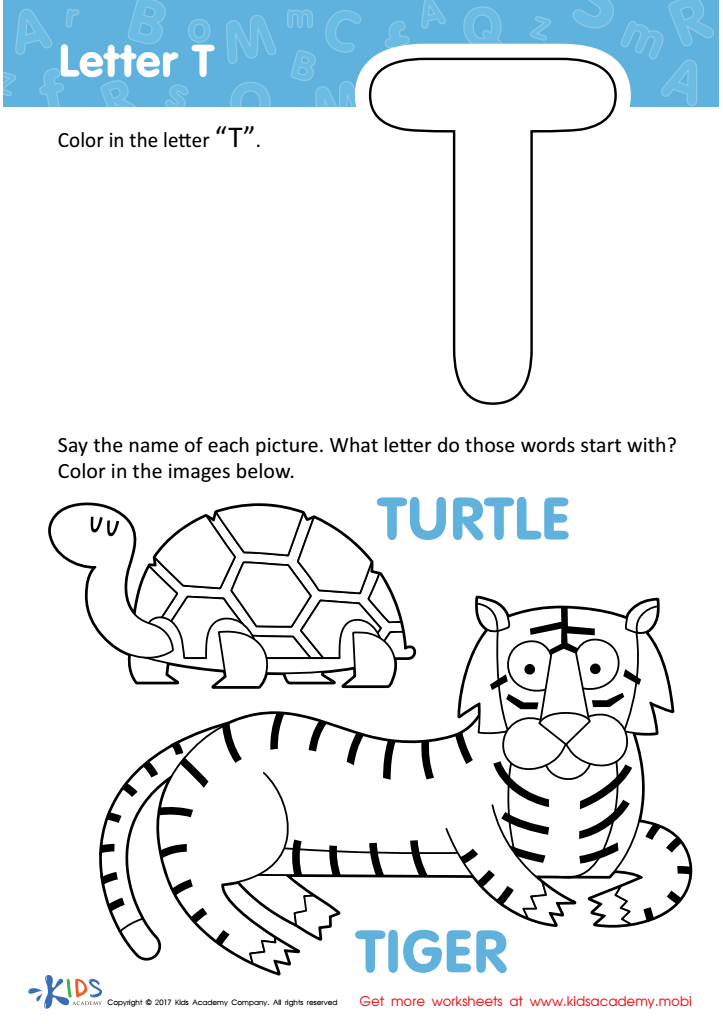
Letter T Coloring Sheet
 Assign to My Students
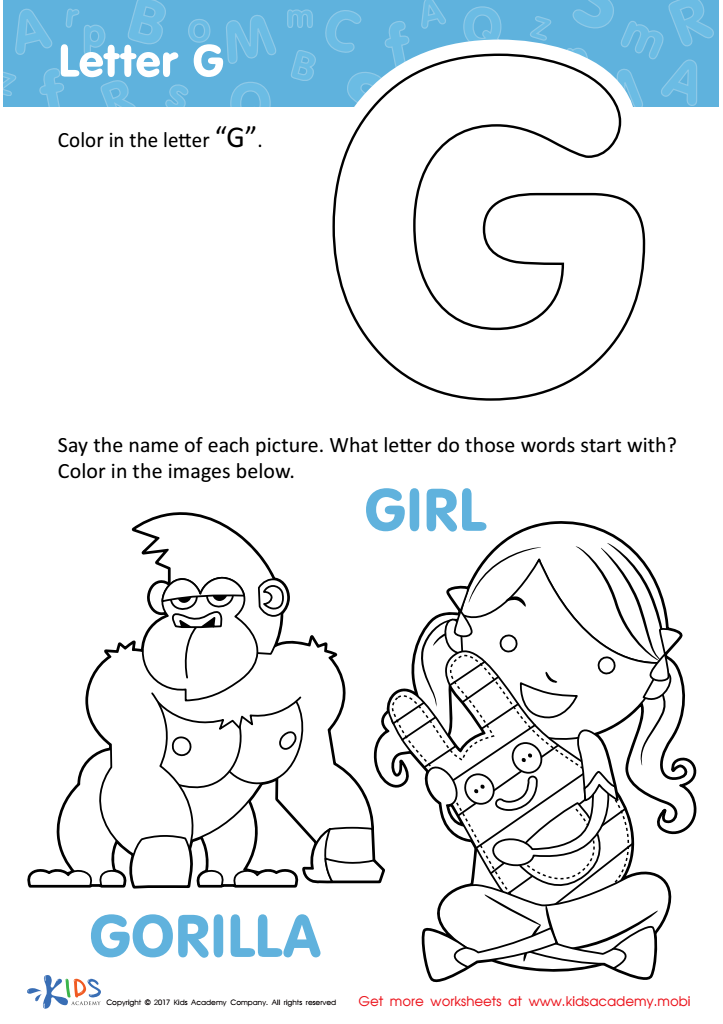
Letter G Coloring Sheet
Assign to My Students
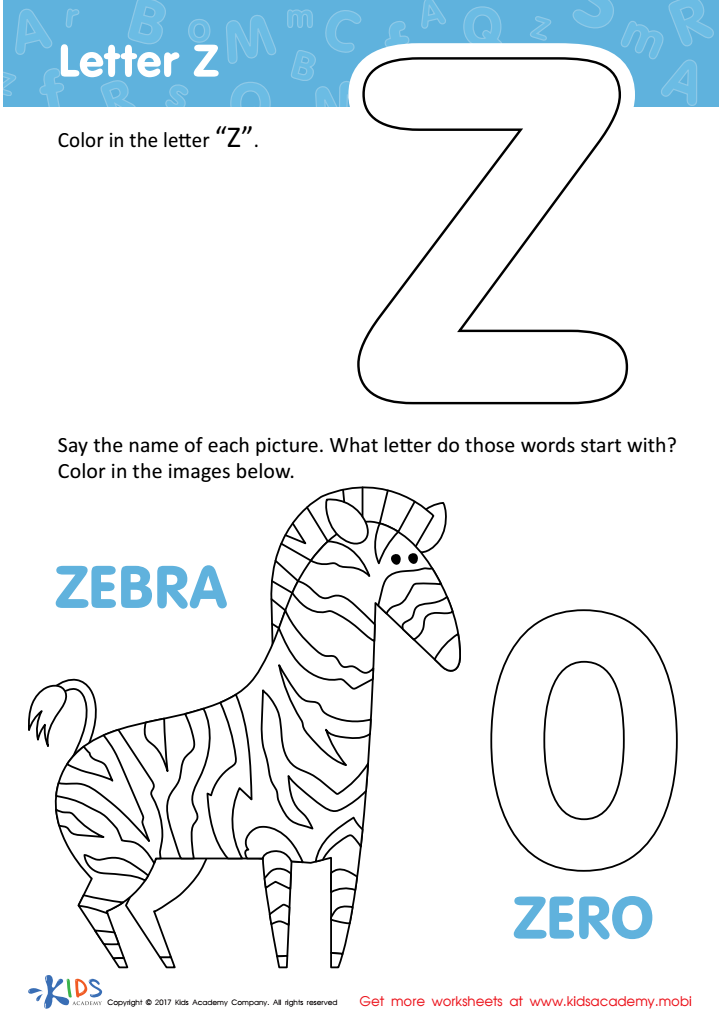
Letter Z Coloring Sheet
Assign to My Students





Sound Association Alphabet Coloring Pages for ages 3-6 are an essential educational resource that parents and teachers should prioritize. These coloring pages not only engage young children in creative expression but also lay a strong foundation for early literacy skills. By associating letters with corresponding sounds and images (for example, “A” for “apple”), children enhance their phonemic awareness, a crucial precursor to reading proficiency.
Coloring activities stimulate fine motor skills as children grasp crayons or markers, promoting hand-eye coordination essential for writing. Additionally, the act of coloring encourages focus and patience, helping build concentration levels in young learners. Moreover, the interactive nature of these coloring pages fosters a love for learning through play, making educational experiences enjoyable.
Socially, when children work on these coloring pages in group settings, they learn to share, collaborate, and communicate effectively with peers. For parents, incorporating these activities into daily routines creates opportunities for meaningful engagement and discussion about letters and sounds.
Overall, Sound Association Alphabet Coloring Pages provide a multifaceted approach to early education, paving the way for essential literacy skills while simultaneously supporting fine motor development and positive social interaction. Therefore, both parents and teachers should recognize their value in fostering holistic child development.







