
Vocabulary enhancement Ending Sounds Worksheets for Ages 3-6
3 filtered results
Difficulty Level
Grade
Age
-
From - To
Subject
Activity
Standards
Enhance your child's vocabulary with our engaging Ending Sounds Worksheets designed for ages 3-6! These fun and interactive resources help young learners identify and practice ending sounds, a crucial step in their reading and language development. With a variety of colorful activities and exercises, kids will enjoy learning through play while building essential phonemic awareness skills. Our worksheets not only foster independent learning but also promote early literacy in a vibrant and supportive way. Perfect for parents and educators eager to enrich preschool education, these worksheets are a fantastic tool to make learning exciting and effective! Start boosting vocabulary today!
Favorites
With answer key
Interactive
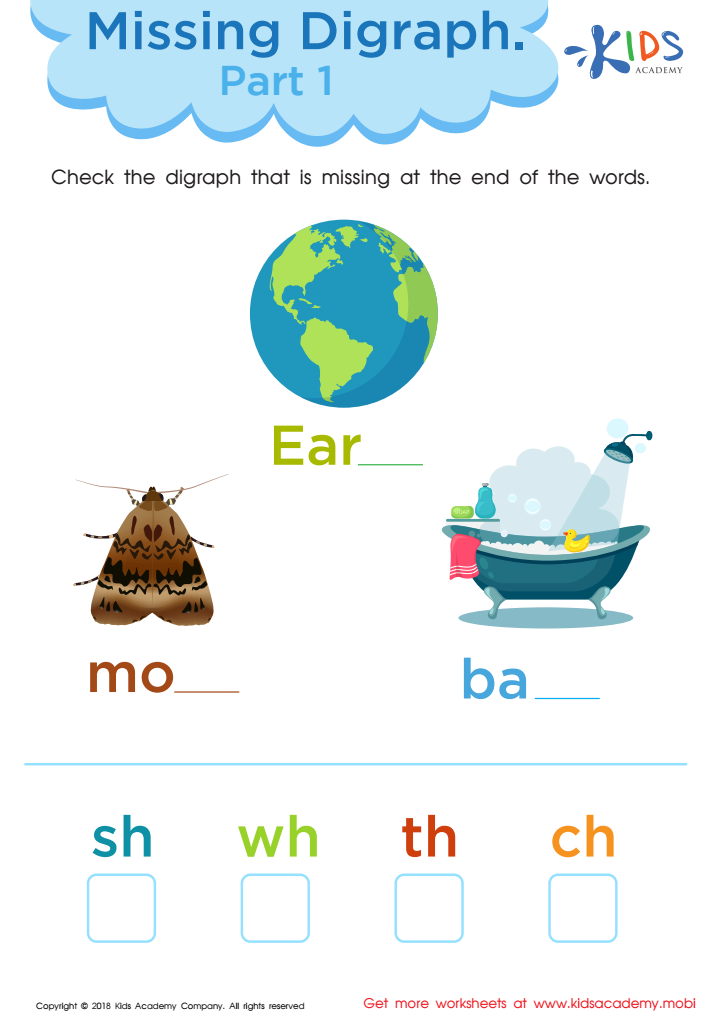
Missing Digraph: Part 1 Worksheet
Practice the 'th' digraph with this worksheet! Ask kids to say the words shown and sound out the letters below each image. Check the box with the correct digraph to complete. Examples include 'earth', 'bath' and 'moth', all ending with the same two letters. Phonics teaches that digraphs are two letters that make one sound.
 Assign to My Students
Missing Digraph: Part 1 Worksheet
Worksheet
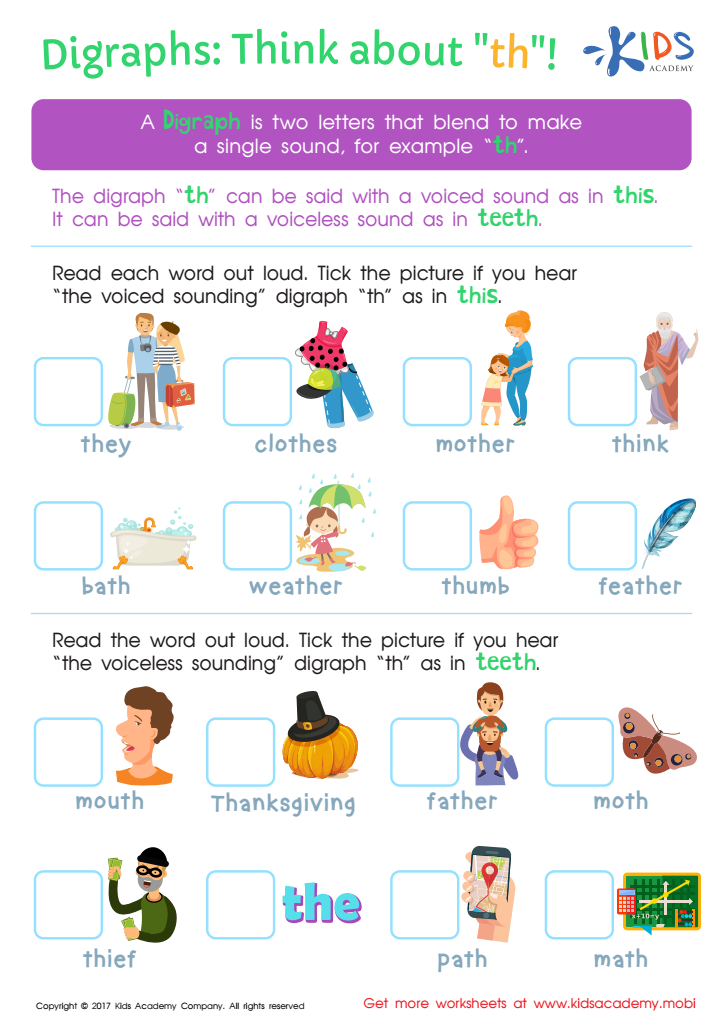
Digraphs: Think About "th" Worksheet
Help your child master phonics with this illustrated digraph Th printable worksheet. It will help recognize "Th" words, differentiate voiced and voiceless sounds and understand key concepts. Use similar words while they work to reap its full benefits!
Digraphs: Think About "th" Worksheet
Worksheet
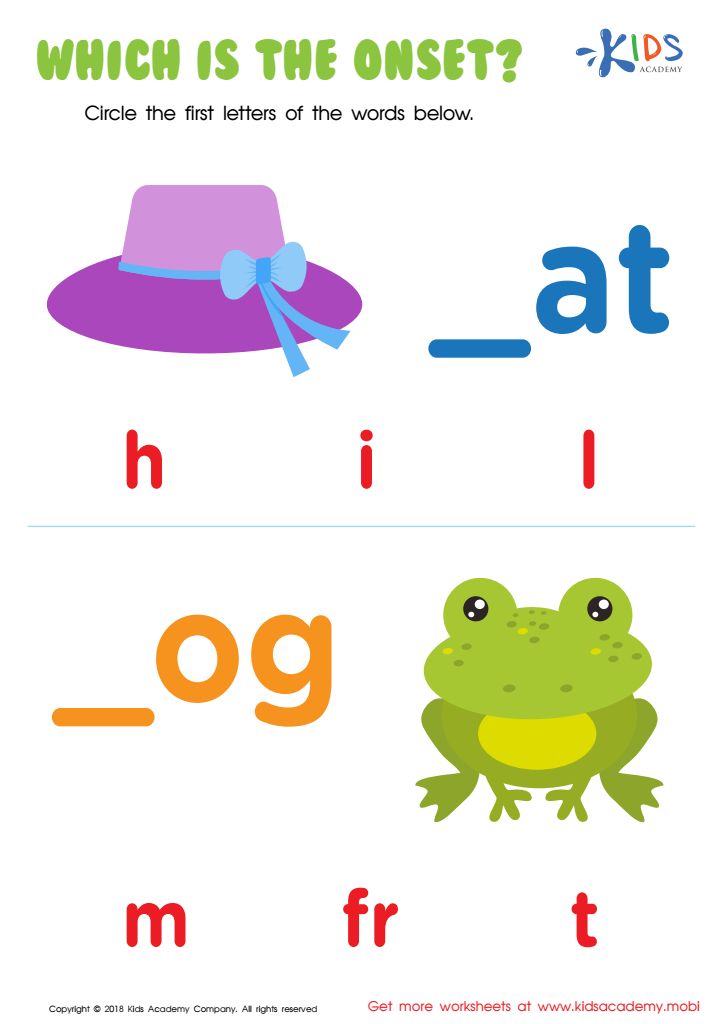
Which Is the Onset? Worksheet
Help your children learn to spell with this bright, fun worksheet. Struggling with spelling small words can make reading and writing sentences difficult. Encourage them to look at the pictures, say the names aloud and circle the correct first letter from the options. They will soon overcome any reluctance to spell.
Which Is the Onset? Worksheet
Worksheet
Join Kids Academy for Free
Who is primarily going to use this learning content?






Vocabulary enhancement, particularly focusing on ending sounds, is crucial for children aged 3-6 for several reasons. First, it lays the foundation for phonemic awareness, a key skill for reading readiness. Recognizing and articulating ending sounds helps children understand that words are made up of smaller sounds, which supports their decoding skills as they begin to read.
Additionally, working on ending sounds promotes vocabulary development. When children focus on the sounds at the end of words, they can make connections between similar words (like “cat” and “hat”), leading to a richer vocabulary. This early practice also aids in improving listening skills, allowing children to identify and categorize words based on their sounds.
Moreover, vocabulary enhancement during these formative years can significantly impact literacy and academic success later on. Research shows that children with a strong vocabulary are better prepared for school, as they can communicate their thoughts more effectively and comprehend more complex materials.
Ultimately, parents and teachers should care about enhancing vocabulary through ending sounds, as it provides a critical building block for language development, reading skills, and overall educational achievement. Engaging children in playful activities and games focused on sounds could make this learning process enjoyable and effective.








